Public sector security

Seven-year contract worth £63 million to deliver digital development services for the UK’s electoral system. Atos, a foremost provider of AI-powered digital transformation and partner, technology transformation specialists Softwire, have been selected by the Ministry of Housing, Communities and Local Government (MHCLG) to deliver the full spectrum of development of Digital Elections Services (DES) portfolio. Delivering critical solutoins for citizens Michael Herron, Head of Atos U...

Mike Cunningham CBE QPM is to start his new role as Chair of the SIA on 1 March 2026. Appointed by the Home Office, his term as Chair will run for 3 years. The Chair of the SIA is responsible for leading the Board in carrying out its responsibilities to deliver ministerial expectations and the strategic objectives of the SIA. The SIA Chair is responsible to the Home Secretary for the governance and performance of the SIA as an arm’s length body of the Home Office. Leadership experience...

Amthal is celebrating 25 years, highlighting the company’s growth in scale, capability and technical expertise to deliver fully integrated life safety and security technology solutions that meet strict compliance requirements. Founded in 2000 by Paul Rosenthal and John Allam, Amthal started as a local residential security company. Over the past quarter-century, it has expanded into a group providing comprehensive fire and security systems across commercial, education, healthcare, retail,...

The S12 Security Guarding Industry Leadership Group has announced the appointment of Paul Fullwood as its Chief of Staff, marking a significant step forward in the group’s mission to strengthen industry collaboration, shape policy, elevate standards and enhance public safety. The appointment follows the formation period for the S12, including the completion of an industry-wide consultation survey, the establishment of 15 distinct workstreams, and the opening of regist...

Cellebrite DI Ltd, global pioneer in premier Digital Investigative and Intelligence solutions for the public and private sectors, announced the appointment of Holly Windham as General Counsel and Chief Compliance Officer. Ms. Windham brings extensive legal leadership experience for growth-oriented technology companies with deep expertise spanning software, cloud platforms, cybersecurity, data privacy and public sector contracting - areas critical to Cellebrite's continued growth and market lead...

i-PRO Co., Ltd. (formerly Panasonic Security), a pioneer in professional security, public safety and medical applications, announced that it has signed an agreement with Panasonic Connect Co., Ltd. to take over the wholesale and marketing functions for i-PRO products in the Japanese market, which are currently managed by Panasonic Connect. The transition is scheduled to be completed on March 31, 2026, following the necessary regulatory approvals. Advanced security products Since bec...
News

Carlisle Support Services announces the appointment of Vinny Singh as Managing Director for Security and Events North, strengthening the company’s leadership team as it continues to expand its footprint across the region. With more than two decades of experience leading national security operations, Vinny brings extensive expertise in operational delivery, risk management, and client partnership across both public and private sectors. Known for his people-first approach and focus on service excellence, he has built a strong reputation for developing teams, enhancing performance, and driving sustainable growth. Carlisle’s operations and client partnerships In his new role, Vinny will lead Carlisle’s Security and Events division across the North, supporting and growing the business’s well-established portfolio of clients. As an internal promotion, his appointment reinforces the company’s continued investment in senior leadership talent to ensure growth, quality assurance, and exceptional service for clients and colleagues alike. Prior to this appointment, Vinny served as Head of Operations for the North, where he championed Carlisle’s operational foundations and team development across a diverse client base. His leadership, adaptability, and client-focused mindset have been instrumental in preparing him for this next step, ensuring a smooth transition and business continuity as he steps into his new role. Vinny’s proven ability to drive performance, foster collaboration, and deliver service excellence will continue to strengthen Carlisle’s operations and client partnerships across the region. Next phase of growth Speaking about his appointment, Vinny Singh, mentioned: “I’m honored to step into this role at such an exciting time for Carlisle. Our Security and Events division continues to evolve, and I look forward to strengthening our foundations of empowering our people, delivering consistent quality, and continuing to exceed expectations while strengthening the partnerships that define our success.” Adrian White, Chief Operating Officer at Carlisle Support Services, added: “Vinny’s appointment represents another crucial step in our journey to enhance leadership capability and deliver best-in-class service for our clients. His depth of industry knowledge and commitment to our values make him ideally placed to lead the next phase of growth for our Security and Events operations in the North.” Prior roles of Vinny Vinny began his journey as a part-time Security Officer at the NEC at just 18. Having worked his way through every level of security operations, from frontline to senior leadership, he has gained invaluable, first-hand industry insights. His inspirational journey is a powerful example of the career potential and personal growth the security industry can offer. Outside of his professional achievements, Vinny is enthusiastic about sport, community engagement, and charitable initiatives, reflecting Carlisle’s broader commitment to social responsibility and people-first values.

Panasonic Connect North America, Division of Panasonic Corporation of North America, announced that its portfolio of TOUGHBOOK® laptops and 2-in-1 computers has been designated “Verizon Frontline Verified.” The distinction was granted after rigorous testing to ensure the solutions meet the durability, reliability, and connectivity standards required by first responders and public safety professionals using the Verizon network. To qualify, companies must be part of the Verizon Frontline Innovation Program, in which Verizon brings together technology vendors and industry partners to identify, test, and advance communications solutions across four key areas: Preparation, Response, Recovery, and Mitigation. Enhancing situational awareness “Panasonic Connect designs TOUGHBOOK rugged laptops and 2-in-1s based on the unique challenges first responders face every day,” said Calvin Jackson, Senior Manager for Crisis Response at Verizon Frontline. “We’re proud to strengthen our collaboration with Panasonic Connect as we work together to deliver innovative, critical solutions for those on the front lines.” For nearly 30 years, Panasonic Connect has been innovating its TOUGHBOOK solutions to support the specific needs of public safety organizations. Purpose-built for reliability and durability, TOUGHBOOK laptops and 2-in-1s are engineered to withstand the harsh environments first responders encounter daily - helping them improve efficiency, enhance situational awareness, and coordinate more effectively. Now, the entire TOUGHBOOK lineup, including the TOUGHBOOK 40, TOUGHBOOK 55, TOUGHBOOK 33 and TOUGHBOOK G2, has been recognized for its ability to power Verizon Frontline’s advanced network and provide the connectivity first responders need to operate seamlessly in the field. Public safety community “At Panasonic Connect, we’re proud to support the public safety community,” said Mike Smola, Director, Product Management and System Engineering/QA at Panasonic Connect. “Earning the Verizon Frontline Verified distinction underscores our shared commitment to delivering rugged, reliable solutions that help first responders stay connected when it matters most. Together with Verizon, we’re continuing to push the boundaries of innovation to ensure those on the front lines have the tools they need to serve and protect their communities.”
Skills for Security has opened its seventh dedicated training site nationwide. The new facility, based in Doncaster, South Yorkshire has welcomed its first fire and security apprentices on site. The new center has been fully renovated to create a modern and practical learning environment, with updated resources and facilities designed specifically for apprentices in the fire and security sector. Learners the hands-on experience Purpose-built classrooms and workshop areas mirror real-world working conditions, giving learners the hands-on experience needed to progress quickly into the workforce. David Scott, Managing Director of Skills for Security, said: “With seven centers now in place, we are better positioned to deliver high-quality training at scale, reaching more apprentices and employers across the UK." "Establishing this center creates new local opportunities for people to enter the industry and helps employers tackle the skills shortage head-on, providing the skilled workforce the sector urgently needs.” Skills for Security’s growing national network This latest opening builds on Skills for Security’s growing national network, which already includes centers in Warrington, Birmingham, Watford, Dagenham, Bristol, and Glasgow. By expanding its footprint into South Yorkshire, the organization is strengthening regional access to training, reducing travel requirements for employers and learners, and boosting the sector’s overall training capacity. The Doncaster center has already started delivering programs for apprentices at the beginning of their careers in fire and security, as well as supporting employers who are looking to upskill their workforce. Demand for skilled professionals David concluded: “The launch comes at a critical time for the industry. The shortage of qualified engineers remains one of the most pressing challenges facing fire and security businesses, with demand for skilled professionals continuing to exceed supply." "Addressing this skills gap is at the core of Skills for Security’s mission, with investment in new centers such as Doncaster and more to follow. We will continue to develop environments and programs that ensure a sustainable pipeline of talent.”

Mark Bridges, CEO of Ranger Fire and Security has been recognized as one of The LDC Top 50 Most Ambitious Business Leaders for 2025. The Top 50 was created by LDC, the private equity investor that is part of Lloyds Banking Group, in partnership with The Times. Now in its eighth year, the program continues to celebrate the drive and ambition of Britain’s best and brightest entrepreneurs. This year the program received almost 700 nominations, showcasing the exceptional individuals that are building successful, growing medium-sized businesses right across the UK. New ideas to innovate and diversify The business pioneers featured in The LDC Top 50 for 2025 are making a powerful impact by creating jobs, making a difference in the communities they serve, championing sustainability and expanding internationally. They are also demonstrating resilience as they drive growth and develop new ideas to innovate and diversify. They operate from 67 towns and cities across the UK and span every sector of the economy, while collectively they employ almost 10,000 people and generate combined revenues of £1.2bn. Nature of the fire and security sector Ranger, which launched in early 2024, was set up by Mark and the founding team to overcome the fractured nature of the fire and security sector, where many businesses struggle to scale. By bringing together high-performing businesses under one group, Ranger is on a mission to become the one-stop shop for all fire and security needs. Since its launch in February 2024, Ranger has acquired 11 companies with expertise across the whole fire and security landscape and serving a broad customer base that includes both the private and public sector clients. This year alone, the company has acquired four new businesses, including its third in Ireland as Ranger looks to continue expanding into markets beyond the UK. Ranger's fire and security needs Mark Bridges, CEO of Ranger Fire and Security, said: “To be part of the LDC’s most ambitious pioneers is a great privilege and I am honored to be named alongside so many excellent pioneers from a wide range of sectors." “Launching Ranger, with a mission to become the one-stop shop for everyone’s fire and security needs, has been an incredible journey to date and I’m so proud of what the team has achieved, leveraging our shared industry knowledge to better serve customers, while creating opportunities to pool our resources and cross-sell across the entire Ranger Group." “I’m now looking forward to building on what we’ve achieved to date, as we continue to grow our reach across the UK and Ireland.” The LDC Top 50 John Garner, Managing Partner at LDC, added: “In the eight years since we launched The LDC Top 50 we’ve had the honor of meeting some exceptional business pioneers." "This year’s cohort has shown drive and ambition in their growth journeys, proven remarkable resilience, and together they are making a real difference to their employees, the communities they work in and society at large." "I’d like to congratulate them on everything they’ve achieved so far. Their success stories are only just beginning, and we’re excited to see where their journey takes them next.”
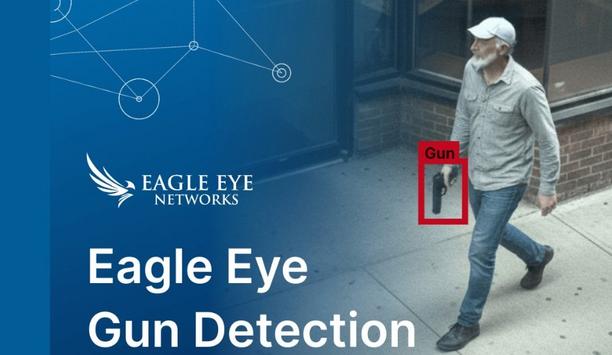
Eagle Eye Networks, the global pioneer in cloud video surveillance, introduced Eagle Eye Gun Detection, a new layer of protection for schools and businesses that works with existing security cameras and infrastructure. Eagle Eye Networks is the first to build gun detection into its platform. At a press conference held at the Capital Factory, leaders from St. Thomas University in Houston, Valor School in Austin, St. Julian Episcopal Church in Austin, the Capital Factory, law enforcement, and security technology experts shared why they are adopting the technology. While millions of security cameras are installed worldwide, they are not generally used for proactive security. Now, with Eagle Eye Gun Detection, schools and businesses can transform their existing security cameras from a passive recording device into a proactive gun detection system, a vital tool for prevention and protection. Eagle Eye Gun Detection Eagle Eye Gun Detection analyzes video streams with AI to detect brandished guns. Early detection gains schools and businesses valuable time to take action and potentially save lives in an active shooter situation. Combined with Eagle Eye 911 Camera Sharing, the 911 center also gains secure access, enabling 911 operators to give first responders vital information about what is happening at the scene of an emergency. Gun violence Gun violence is now the major cause of death for children and teens in the United States, surpassing car accidents and other causes in recent years, according to data from the CDC. In 2024, there were 503 mass shootings in the US. More than 3,700 children and teens under 18 were injured, and 1,403 died. It is also a major public safety, public health, and economic concern. The annual economic impact of gun violence in the U.S. is estimated at $557 billion, according to the Gun Violence Archive. Visual gun detection accuracy To deliver the highest possible visual gun detection accuracy, Eagle Eye engineered a Triple-layer Verification system that uses two levels of AI and one level of human verification. Eagle Eye’s Triple-layer Verification consists of: Rapid Edge AI: Video from security cameras is continuously analyzed for potential brandished guns by the Eagle Eye AI Bridge on location at the school or business. An AI model appropriately sized for widespread edge deployment is utilized. Advanced Cloud AI: When a potential gun is detected, the appropriate video is instantly transmitted to the Eagle Eye Cloud for analysis by a very large-scale Eagle Eye AI model. The use of a very large model in the cloud provides accuracy and reduces false positives. Eagle Eye Human Review Service: When the Advanced Cloud AI detects an actual gun, the Eagle Eye Human Review Service, staffed with trained professionals, verifies that a gun is present. The customer’s emergency response sequence and notifications are then executed. The response typically includes SMS messages, phone calls, and emails to key security or company personnel, law enforcement, response service, key executives, and emergency responders. Additional benefits Additional benefits of the system include: The Eagle Eye Cloud VMS (video management system) is the first and only VMS with integrated gun detection. As part of the Eagle Eye Cloud VMS, an open platform, Eagle Eye Gun Detection customers can easily add additional AI features and integrate with an unlimited number of third-party technology providers. Eagle Eye Gun Detection works in conjunction with Eagle Eye 911 Camera Sharing to give 911 operators access to live and recorded video feeds from security cameras near the scene of an emergency, dramatically improving situational awareness for first responders and response time. Unfortunately, no single technology can solve gun violence, it requires a multi-layered approach where different techniques—such as visual gun detection, access control, metal detectors, panic buttons, training of staff and students, execution of practice drills, fencing, secure areas, and other physical barriers—provide different layers of security and work in concert with human oversight to ensure optimal protection. Eagle Eye Gun Detection adds a crucial new layer that should be used in a comprehensive approach to ensure safety. Praise from school and church leaders Business, school, and church leaders praised Eagle Eye Gun Detection as an essential technology for all organizations. H.E. Jenkins, Chief of Police, St. Thomas University, Houston: “Gun detection that is AI-powered, triple-verified, camera agnostic, and able to work in tandem with other security systems is a game-changer. It’s a layered approach to security, and I think it is what every university should be doing." Matthew Schwandt, Director of Operations, Valor School, Austin: “We want kids to be able to be kids. And students and faculty should be able to focus on learning without having to be distracted by security. We really try to keep security as unobtrusive as possible. Eagle Eye Gun Detection is an additional defensive layer to speed up response, and mitigate and prevent a potentially dangerous situation before it escalates.” Ross Perry, Board Member, St. Julian of Norwich Episcopal Church, Austin: “We want our congregation to feel safe and protected while they’re here to worship and be with others in the community. We hope it is never needed, but we are happy to have Eagle Eye Gun Detection technology in place because it provides additional protection beyond security cameras. It can be more proactive, identifying and alerting the right people to take action if necessary.” John Murphy, Owner, ProTecVideo, Mobile, Alabama (Eagle Eye reseller and former law enforcement. Leading Eagle Eye Gun Detection beta test at Gulf Coast Technology Center): “I was very impressed with the speed and the accuracy of the gun detection alert. I often see situations in schools, hospitals, and public spaces where gun detection could have a major impact. For law enforcement and other first responders, many calls are reactionary. Extra time and early detection are critical to response.” “I also believe if we use Eagle Eye Gun Detection combined with Eagle Eye 911 Camera Sharing, we have the potential to provide crucial early detection, notification, and additional live-scene updates to increase response time and improve law enforcement’s capability to limit or stop life-threatening situations.” Joshua Baer, Founder and CEO, Capital Factory, Austin: “We've been using the Eagle Eye Cloud VMS (video management system) for more than a decade, so it was turnkey and seamless to add Eagle Eye Gun Detection to our existing system. With real-time text message notifications and human verification, we can be confident we'll be the first to know about any potential threats.” Making the world a safer place “At Eagle Eye Networks, making the world a safer place is our mission,” said Dean Drako, CEO of Eagle Eye Networks. “Working with organizations like the Capital Factory, St. Thomas University, Valor Schools, St. Julian Episcopal Church, alongside our dedicated law enforcement and public officials, the launch of Eagle Eye Gun Detection is much more than a product launch, it’s a community-supported security and safety initiative.”

Allied Universal, the world's major security and facility services provider, announced that Cameron Kilberg has joined the company as Vice President of Government Relations, reporting to the Chief Communications and Investor Relations Officer Kilberg will lead the company’s engagement with local, state and federal officials, agencies, and policymakers. Extensive background in government affairs Kilberg brings an extensive background in government affairs and policy leadership Kilberg brings an extensive background in government affairs and policy leadership across multiple industries, including technology, on-demand commerce, and personal transportation solutions. Kilberg established the state legislative team at Bird Global, an electric scooter company, and helped shape regulatory frameworks for micro-mobility in more than 15 states, as well as led efforts to launch operations in major U.S. cities. She also served in government relations leadership roles at Swimply and Gopuff, where she developed a state affairs program and led policy development for e-commerce, labor and employment, alcohol, tobacco, zoning, and privacy. Engagement with stakeholders “We are excited to welcome Cameron to the Allied Universal team where she will serve as our primary liaison with government officials and policymakers,” said Steve Jones, Allied Universal global chairman and CEO. “She will lead engagement with stakeholders at all levels of government to advance Allied Universal’s policy priorities, safeguard our business interests, and strengthen our reputation with policymakers.” Kilberg earned a juris doctor from The George Washington University Law School and a bachelor’s degree in political science from the University of Virginia.

Expert commentary
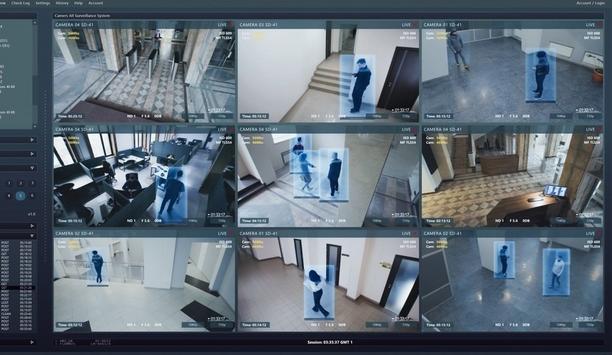
In 2021, New Orleans took bold steps to modernize its public safety strategy after experiencing a dramatic increase in criminal activity. The city invested $70M in advanced video security systems, placing smart cameras in high-risk areas like busy transit hubs and crowded public spaces to promote community safety. The cameras weren’t just traditional CCTV setups—they were smart security solutions equipped with real-time alerts that leverage AI-powered analytics, facial recognition and cloud-based technology. Reinforcing public safety Law enforcement agencies improved their response times and investigative outcomes Within months, the impact was clear: theft and burglaries of vehicles, residential and business properties reduced up to 48% total between 2022 and 2023. With 24-hour monitoring and rapid access to critical footage, law enforcement agencies improved their response times and investigative outcomes, reinforcing public safety across the city. The role of video security in community safety One of the most effective ways to keep communities safe is through video security solutions that allow real-time monitoring and provide rapid responses. Modern Video Surveillance as a Service (VSaaS) platforms allow security professionals to monitor spaces continuously, providing instant alerts for any suspicious activities. Advances in this technology are transforming the way businesses and organizations approach community safety, playing a pivotal role in creating safer environments, deterring crime, and enabling faster incident response. Video security solutions Video security solutions also contribute significantly to public safety by monitoring high-traffic areas such as public parks, busy transportation hubs, and crowded city streets. When security cameras are visible, not only do they act as a deterrent to potential criminals, but they can also significantly reduce the likelihood of theft, vandalism, and violent crime. Video security solutions also contribute greatly to public safety by monitoring high-traffic areas Similarly, large gatherings such as concerts, sporting events, and festivals present unique challenges that require a multifaceted approach to security. With thousands of attendees in a confined space, effective security measures are essential to prevent overcrowding, unauthorized access, and potential threats. In situations like these, advanced video security systems can aid in efficient crowd management, allowing event organizers to respond and react quickly in the event of an emergency. The future of smart security solutions Today, video security solutions are becoming smarter and more adaptable than ever before. For example, innovations such as solar-powered security units ensure continuous monitoring even in remote or off-grid locations, contributing to broader, more sustainable coverage. Recent developments like AI-enhanced analytics help filter out false alarms while focusing on threats, improving response times and efficiency. By embracing modern security solutions, municipalities, businesses, and event organizers can take proactive steps to protect their communities when it matters most. Public safety will always be an ongoing challenge for businesses and organizations alike for a multitude of reasons; however, the role of advanced video security systems in promoting public safety is more important than ever before.

As the backbone of community welfare, healthcare facilities cater to crucial public needs from emergency care to specialized medical treatments, and due to its position as a significant facet of the world's critical infrastructure, the healthcare sector faces a multitude of challenges in ensuring patient and visitor security, managing high traffic, and safeguarding sensitive data. Medical sites, such as large hospitals and urgent care clinics, see a wide variety of patients, medical staff, administrative teams, and visitors throughout the day. In addition to protecting patients, visitors, and staff, healthcare environments must protect medical and patient data, ensure immediate response to urgent medical events, and maintain 24/7 operations. Security challenges Cloud-based solutions have made their mark on healthcare security, offering unparalleled scalability Addressing the security challenges presented by 24/7 availability and high patient and visitor traffic calls for a merging of technology, processes, and security strategies that go beyond what a typical security infrastructure would look like. Cloud-based solutions have made their mark on healthcare security, offering unparalleled scalability, accessibility, and integration capabilities. These advancements address the multifaceted demands of healthcare organizations, ensuring seamless around-the-clock operations while prioritizing patient care and safety. Enhancing Operational Efficiency to Save Lives Cloud-based access control solutions have revolutionized how healthcare security professionals approach collaboration within medical facilities. These solutions offer unparalleled accessibility and insight into patient and visitor security information and access logs, improving coordination among security teams and leading to more accurate monitoring and response to developing medical events. By managing and operating access control solutions via the cloud, healthcare facilities can implement effective physical security measures while ensuring seamless collaboration among staff to deliver the highest medical care possible to patients across facilities. Physical access controls Cloud-based access control systems allow users to securely access and manage physical access controls Cloud-based access control systems allow multiple users to securely access and manage physical access controls and visitor management data simultaneously, enabling them to keep track of patient movements as they are transferred throughout the facility or between different facilities. For larger hospitals or medical campuses with multiple facilities hosting access controls via the cloud empowers users with the ability to find patients and patient data in an instant, as well as opening the door to collaborate with teams separated by long distances, ensuring all team members have access to the information they need to continue saving lives. Scaling the way to top-notch care Healthcare institutions are constantly growing and changing in response to evolving industry regulations and standards, and the access control solutions these organizations rely on should be able to scale to meet their changing needs. To ensure their access control systems can keep up with these growing demands, healthcare security professionals can invest in access control solutions hosted in the cloud to avoid the tedious hardware constraints that come with traditional on-premises solutions. Cloud solutions offer significant levels of scalability, enabling healthcare organizations to adjust their storage requirements and computing resources based on changing requirements on the fly. This capability for flexibility ensures users can manage large amounts of data without significant upfront investments in hardware. Cloud-based access control solutions Cloud-based access control solutions provide healthcare organizations with the flexibility they need to expand their access In addition to compliance with changing regulations, cloud-based access control solutions provide healthcare organizations with the flexibility they need to expand their access control platform across a growing campus or multiple buildings. Larger healthcare facilities typically consist of multiple sites of varying sizes across diverse landscapes, each with distinctive security needs. Systems hosted in the cloud provide scalability and flexibility for user organizations, allowing security teams to modify or expand upon their security infrastructure as needed without spending on costly new hardware. This adaptability is crucial for helping address varying risks over multiple sites, providing security personnel the flexibility they need to ensure patient safety over long distances. Ease of use for security teams To truly understand the value of a cloud-based access control system, healthcare security professionals must consider the long-term savings and ROI these solutions provide by bolstering operational efficiencies and enabling unprecedented scalability. These systems ensure compliance with changing standards and deliver a simplified user experience across platforms, prioritizing security and ease of use for security teams across the healthcare sector.

Changing customer needs can make specifying an alarm system that will continue to deliver in the long term a challenge. However, the latest modular alarm solutions provide the opportunity to build a more individualized system from the outset, as well as offering the ability to up-scale in the future without causing disruption. Martin Wilson, North EMEA Regional Director at Resideo, looks at how alarm specialists can use this style of solution to both benefit customers and build their own business opportunities. Holistic sense of home security An alarm system no longer needs to function on one level, alerting only to a break-in taking place In a survey of 1,000 homeowners undertaken by Resideo, the results revealed that, although deterring burglary was still a top priority, consumers were moving to a more holistic sense of home security, wanting to bring convenience, and property and life safety, into the mix. Indeed, an alarm system no longer needs to function on one level, alerting only to a break-in taking place. The latest modular alarm systems offer the flexibility to create a scalable security and life safety platform for homes and small businesses, as well as giving installers the ability to suggest future update options that can be added as and when budget or requirement allows. Valuable up-scales Finding an alarm that can be scaled over time has the obvious business benefit of ensuring it is easy to revisit and add to as customers naturally expand their existing security. With many modular designs connected via WiFi, this not only means installers can opt for the right mix of sensor options from the get-go but also that any additions can be connected to the panel and system with ease. Many control hubs have winning features in their own right. The ProSeries security panel by Resideo, for instance, has an intuitive touchscreen, easy-to-read, full-color display to reduce false alarms, plus a built-in camera, speaker and microphone, intuitive icons, and even five-day weather alerts. The ProSeries security panel by Resideo has an intuitive touchscreen Natural up-scale opportunities For instance, for those in a property prone to flooding, a flood sensor may be a worthwhile addition For the installer, it has a plug-in power connection, trouble-shooting videos, and end-user-replaceable batteries to reduce unnecessary callouts. However, to build a scalable system, this needs to be coupled with the right, flexible solutions to tackle customer concerns. Taking the time to find out what is important to the end user is vital here and can lead to natural up-scale opportunities. For instance, for those in a property prone to flooding, a flood sensor may be a worthwhile addition. Similarly, a panic button and even medical transmitters may be of benefit to others. All this, as well as other options, such as glass break detectors, door and window sensors, and indoor and outdoor MotionViewers™, are available within the ProSeries range, and can be updated or added to an installation as needed or as a property grows with minimum disruption. Adding life safety The ability to propose an alarm system that can bring together alerts for different threats – for both the home and life – under one platform, also has real appeal. Indeed, in a survey of 1,000 homeowners undertaken on behalf of Resideo, a system’s ability to alert to the dangers presented by fire and CO was mentioned as an important part of the decision-making process by 41% of participants. For many, this increased awareness may stem from the many regulation updates regarding smoke and carbon monoxide (CO) alarms that took place in 2022. In Scotland, for instance, carbon monoxide detectors were required to be fitted in any room with a carbon-fueled appliance in all homes, rented or owned. Social housing properties In England, smoke and carbon monoxide alarms were required in all social housing properties In England, from the 1st of October 2002, smoke and carbon monoxide alarms were required in all social housing properties, with carbon monoxide alarms now mandatory in the private rented sector. Wales followed suit in December for rented accommodation. The new guidance for England and Wales requires at least one smoke alarm to be installed on each storey of a property, to help alert to domestic fires more quickly, ensuring a quicker evacuation and reduced risk of fatality. For professionals, systems such as ProSeries, can be connected to a series of smoke and carbon monoxide detectors, in a ‘one-go-all-go’ setup that means the alarm will go off if one of these threats are identified. Smart and connected benefits The total Connect 2.0 app gives ProSeries end-users the ability to view and control the security platform remotely. The Resideo Pro app currently gives installers the ability to view the system and connect to the central monitoring system. The platform also supports home automation as it works with Zwave devices. The platform also supports home automation as it works with Z-wave devices. The platform also supports home automation as it works with Z-wave devices There are also extra benefits for alarm professionals too. The AlarmNet 360™platform on which ProSeries is configured gives greater insight to improve business operations, increase efficiency and deliver insights on accounts to identify additional upsell opportunities and ongoing services. Providing the ability to remotely diagnose brings valuable time-saving options and avoids unnecessary callouts. It also means the ProSeries panel and peripherals programming can be accessed anytime, anywhere, using the cloud, allowing ease of programming, troubleshooting and account management on the go. Needs and future possibilities Changing a complete alarm system to apply new functions is never going to feature highly with the end user, nor does it work where longevity and sustainability is concerned. Having the ability to build a modular system and add to this as needed, whether this is at a property or a small business, provides benefits for both customers and professionals when it comes to meeting immediate needs and future possibilities. Add connectivity and remote access to this and you have a platform that can help streamline business operations, putting professionals more in touch with customers, and helping to spot future opportunities.
Security beat
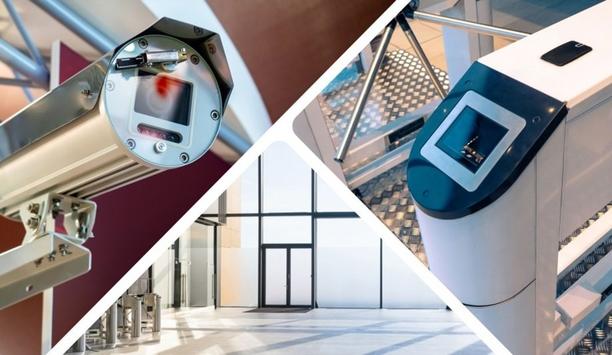
In today's complex security landscape, ensuring the safety of building occupants and assets requires more than just cutting-edge technology. Holistic approach The SHIELD certification, introduced by the Secure Buildings Council, is designed to help building owners, tenants, and security professionals navigate this challenge effectively. SHIELD offers a holistic approach to physical security that emphasizes not just the systems in place, but the collaboration among all stakeholders. With practical, actionable guidance, SHIELD certification seeks to become a benchmark for secure building environments. What is SHIELD? Its primary goal is that buildings are equipped with security systems and protocols that protect against threats SHIELD is a comprehensive certification program developed by the Secure Buildings Council to establish and maintain a standard of excellence in building security. Its primary goal is to ensure that buildings are equipped with security systems and protocols that not only protect against threats but also enhance the overall safety and operational efficiency of the facility. Forward-thinking design It encourages a multi-disciplinary approach, bringing together building owners, managers, security professionals, architects, and engineers to foster an integrated security strategy. By adhering to SHIELD's standards, facilities can assure tenants, visitors, and investors that the building is designed to be a secure and resilient environment. The intent is to create safer spaces through collaboration, forward-thinking design, and stringent security measures. Enhancing security and building resilience SHIELD certification helps to ensure that buildings are not only secure from external threats but are also resilient in the face of internal vulnerabilities. This includes everything from access control systems and surveillance infrastructure to cybersecurity measures and emergency response protocols. Detailed framework SHIELD acts as a roadmap to assess and improve the effectiveness of a building's security architecture The certification process provides a detailed framework for identifying potential risks, implementing best practices, and continuously monitoring security measures. For security professionals, SHIELD acts as a roadmap to assess and improve the effectiveness of a building's security architecture. The program emphasizes the importance of both physical and digital security, recognizing that modern threats often cross over from one realm to the other. Benefits for tenants, investors, and facility managers One of the standout benefits of SHIELD certification is the assurance it provides to tenants and investors. Certified buildings demonstrate a commitment to security that can attract higher-quality tenants and increase the building’s market value. For investors, a SHIELD-certified building represents a lower-risk investment, as the facility is better protected against both physical threats and operational disruptions. Standardized procedures Additionally, facility managers benefit from SHIELD's emphasis on clear, standardized procedures for maintaining and upgrading security measures. The certification helps streamline operations by ensuring that all security protocols are applied consistently and reviewed regularly. This results in a safer, more efficient building environment for everyone involved. Promoting collaboration and industry integration Architects, engineers, and security professionals are encouraged to work together from the earliest stages SHIELD certification is not just about the implementation of security technologies—it is also about fostering collaboration among various stakeholders. Building owners, architects, engineers, and security professionals are encouraged to work together from the earliest stages of design and planning. This collaborative approach helps ensure that security measures are integrated into the fabric of the building, rather than being tacked on as an afterthought. Multi-disciplinary synergy Furthermore, SHIELD works in alignment with other industry standards, such as LEED for environmental sustainability and WELL for health and well-being. This multi-disciplinary synergy allows building owners to pursue multiple certifications concurrently, enhancing the building's overall value and appeal. Achieving SHIELD certification: The process The process to become SHIELD certified involves a comprehensive assessment of a building’s security features and protocols. This begins with a gap analysis, where security professionals evaluate the building's current state against SHIELD's stringent standards. From there, a detailed action plan is developed to address any deficiencies. Once the necessary upgrades and protocols are in place, the building undergoes a final audit before the certification is awarded. Incorporating multiple elements SHIELD takes a holistic approach that encompasses not just physical security but also digital and procedural elements A common misconception about SHIELD is that it is solely focused on physical security systems. In reality, SHIELD takes a holistic approach that encompasses not just physical security but also digital and procedural elements. Another misconception is that SHIELD is only applicable to large-scale commercial properties, when in fact it can be adapted for buildings of various sizes and functions. Global adoption of SHIELD certification SHIELD certification is seeing increased adoption across North America, Europe, and parts of Asia. Its focus on a comprehensive, collaborative approach to security has made it particularly attractive in high-risk industries such as finance, healthcare, and data centers. While it is still gaining traction in some regions, SHIELD is poised to become a global standard for building security in the coming years. SHIELD certification represents a significant step forward for building security. By fostering collaboration and emphasizing a holistic approach, SHIELD helps create safer, more resilient buildings that protect both the physical structure and the people and assets inside.
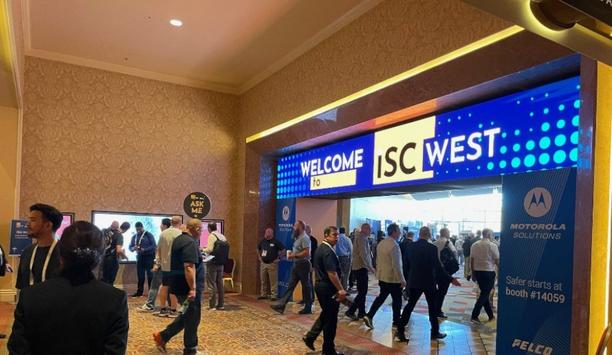
ISC West 2024 mirrored a vibrant industry on the precipice of accelerated change. Factors such as the cloud, artificial intelligence (AI), edge computing, and biometrics are shaping the future of the security marketplace, and they were front-and-center at the industry’s biggest U.S. show in Las Vegas. Foot traffic was steady and impressive, including more than 29,000 security industry professionals viewing 750 exhibitors. A torrent of eager attendees crowded the lobby on the first day and could not wait for the doors to open. When they were admitted, the wealth of technological innovation and business opportunity did not disappoint. Focus on cloud systems Cloud systems were high-profile at ISC West. Camera manufacturer Axis, for example, introduced their Axis Cloud Connect at a press conference. Meanwhile, Genetec officially launched their Security Center SaaS platform, which aims at eliminating points of friction to enable integrators to easily embrace cloud systems from quoting and ordering to provisioning and installing. Camera manufacturer Axis, for example, introduced their Axis Cloud Connect at a press conference Cloud provider Eagle Eye Networks promoted their new “Eagle Eye 911 Camera Sharing” technology under which both non-Eagle Eye Cloud VMS customers (via Eagle Eye 911 Public Safety Camera Sharing) and Eagle Eye customers can opt to share their video feeds for use by 911 operators in case of emergency. If users opt-in, 911 operators can have access to live video as an emergency unfolds. Eagle Eye Networks provides the feature by integrating with RapidSOS call center software. Camera locations are based on geolocation coordinates, and customers can choose if they want to participate and which cameras they want to share. Biometrics in the mainstream Biometrics were well represented at ISC West, including Alcatraz AI, which introduced an outdoor version of their biometric face recognition product. The Rock X works well despite harsh lighting. Alcatraz’s products do not have to be integrated, they communicate just like a card reader using OSDP or Wiegand protocol. “At the show, customers are excited about moving to a frictionless environment and getting rid of existing credentialing,” said Tina D’Agostin, CEO and co-founder of Alcatraz. “We are making access control frictionless, secure and private. The experience can be as passive as possible – people can just walk in.” Multiple types of authentication, and the ability to detect tailgating and stream video SAFR from Real Networks also featured biometric face recognition, emphasizing feature sets, convenience, and price/performance. They offer multiple types of authentication, and the ability to detect tailgating and stream video. A new device is a small mullion mount that is “approaching the price of a card reader, factoring in the need to purchase cards,” said Brad Donaldson, Vice President and General Manager. SAFR focuses on convenience: You don’t have to take out your phone to pass through a door. Enrollment is easy by incorporating existing databases, and costs are lower than competitors, said Donaldson. The system analyses multiple points on the face, turns it into data and then encrypts it, providing a “unique signature for each person.” Credentials in Apple Wallet and Google Wallet AMAG Technology announced the compatibility of credentials with the Apple Wallet and Google Wallet. The company is also embracing a new strategic direction under President David Sullivan. They launched a new website in January, are developing dynamic resources and a partner page, and they now integrate with 120 tech partners. AMAG Technology Financial Services now enables their channel partners to offer leasing and financing options to customers. The big new booth at ISC West reflected an effort to “market different and look different,” according to the company. The big new booth at ISC West reflected an effort to “market different and look different" The new Symmetry Control Room, a command-and-control system, is a relaunch of an earlier AMAG product with enhanced features. Suitable for large enterprise customers, the software enables a big video wall to display all the various systems and incorporates all the data into a single “pane of glass.” Operators can “draw a lasso” around cameras they want to display on the video wall and can follow action across multiple camera feeds. Navigating megatrends A breakfast meeting for integrators, sponsored by Assa Abloy Opening Solutions, was built around the theme “Navigating Megatrends for Sustainable Growth." The megatrends are artificial intelligence, sustainability and cybersecurity. Related to cybersecurity, there are 350 common vulnerabilities and exposures (CVE) published per week, reflecting the continuing threat to cybersecurity. Physical security has a “data lake” of information from various physical security systems that can be an attractive target for cybersecurity breaches. Data sets can be exploited and/or poisoned. The security industry needs to apply “defense in depth” to the challenges of protecting data. “The threat landscape is always changing, and security technology is an iterative process,” said Antoinette King, i-PRO’s head of cyber convergence, one of the panelists. Natural language systems Natural language systems are a newer approach making an early appearance at ISC West Natural language systems are a newer approach making an early appearance at ISC West. Brivo, for example, has an early prototype of its “natural language search capabilities” that can answer questions such as “Who is in the office?” or “Where is Bob and what has he done?” Brivo also promoted its all-in-one door station device that combines a card reader and a camera (for facial authentication) and serves as a video intercom, thus eliminating the need for multiple devices at the door. Brivo is also emphasizing tailgate prevention, facial authentication, and people counting using AI at the edge. Also promoting natural language systems was Verkada, which unveiled a beta version of its AI Search feature that embraces national language capabilities. With AI Search, users will soon be able to use natural language to search for people or items. For example, a search could be “person climbing over a fence” or “person making phone call” or “person wearing football jersey.” Verkada wants to be thoughtful with the rollout and make sure effective guardrails are implemented to prevent abuse and bias. The release should happen in the coming months. Multi-family applications Allegion is promoting the XE360 hardware lock platform in various formats, including cylindrical lock, mortise lock, deadbolt, and exit trim. At the show, Allegion noted an enthusiasm for multi-family applications. “We have been surprised by the people who want to add electronics and to retrofit existing multi-family facilities to compete with newer facilities,” said Henry “Butch” Holland, Allegion’s Regional Director, Channel Sales East Region. Allegion works with 60 different physical access control software providers, including familiar players such as LenelS2 and Genetec Allegion also offers an “indicator” display on its locks, showing at a glance whether a door is locked or unlocked. The “indicator” might also display “occupied” or “vacant.” Allegion works with 60 different physical access control software providers, including familiar players such as LenelS2 and Genetec. Integrator M&A trends Everon looks for acquisitions in areas where they do not currently have support for national accounts A conversation with Everon at ISC West provided insights into the accelerating trend of mergers and acquisitions among the integrator community. Everon, formerly ADT Commercial, has done six acquisitions of local integrators since they changed their name last year. In targeting companies to acquire, they look for a good company with a good reputation, and they consider how the new company’s competencies complement their own. Some M&A strategy is geographic, as Everon looks for acquisitions in areas where they do not currently have support for national accounts. They also consider density, seeking to add new acquisitions in larger markets where they don’t currently have a big market share. “A lot of investment is coming into security because it is seen by investors as recession-proof,” said Michael Kennedy, VP, Mergers and Acquisitions, for Everon. Kennedy met with 95 businesses last year for possible acquisition, and the company only finalized a handful – reflecting that Everon is selective and careful that corporate cultures are aligned. “With an acquisition, the goal is to keep every customer and every employee,” said Kennedy. Voice of the customer ISC West provides an opportunity for manufacturers to listen to the “voice of the customer;” in person, no less. “We have every kind of problem come to the booth,” commented Heather Torrey, Honeywell’s General Manager, Commercial Security, Americas. “People are passionate, interested and very specific with their questions and comments,” she said. “We are driving a complete system, but we are flexible, helping our customers to meet their needs and not try to fit every foot into the same shoe. Sometimes meeting customer needs involves working with competitors," Torrey commented. “It truly comes back to listening to the customer, not just ‘this is what we have to offer,’” she adds. ISC West provides an opportunity for manufacturers to listen to the “voice of the customer;” in person, no less. Edge applications are everywhere at ISC West, and one company is promoting a new approach to expand functionality at the edge. Camera company i-PRO advocates the use of the “Docker” platform for app development, an option they offer on their cameras. Docker “containers” package deep-learning algorithms to make it easier to embed software into edge devices. Anyone can run Docker apps on i-PRO cameras that use the powerful Ambarella chip. A Docker “swarm” can combine multiple edge devices to work together and share resources. For example, the approach can increase computing power at the edge to increase the capabilities of instant analytics. It’s faster and provides better redundancies. A “distributed computing platform” ensures less latency than communicating analytics to a central server. Unification of capabilities Johnson Controls (JCI) also promotes the trend of combining multiple systems into a single pane of glass. Their “Open Blue” platform, with a security version unveiled at the show, integrates various security systems into one, combining data and monitoring device health. Basically, the system manages all resources holistically. JCI also notes a trend toward “unification of capabilities,” e.g., combining access control and video. “The scope of security is evolving from a focus on protection to a broader focus on operations,” commented Julie M. Brandt, JCI’s President, Building Solutions North America.

As the physical security and cybersecurity worlds converge, many industry professionals are finding themselves moving from one realm to the other. Or, more likely, they are embracing both disciplines as integral to the future of security as a whole. One security professional bringing her cybersecurity expertise to the physical security market is Wendy Hoey, Director of Sales, US Sales Leadership, North America, for Milestone Systems. With more than 23 years of experience in cybersecurity, Wendy Hoey now works with a global company dedicated to empowering people, businesses and societies with data-driven video technology. Author's quote Caught up with Wendy Hoey to discuss how the security market can harness innovation “I'm thrilled to be joining the physical security industry at this transformative time when there's such tremendous potential to update legacy systems with pioneering technologies like AI and the Internet of Things,” says Hoey. “I'm energized by the chance to collaborate with colleagues to help transform physical security, enhance predictive capabilities, and realize a shared vision of seamless protection across the digital and physical realms.” Caught up with Wendy Hoey to discuss how the security market can harness innovation to make the world safer and more secure. “The future is bright, and I'm honored to be part of this community,” says Hoey. Q: What can physical security learn from the world of cybersecurity? Hoey: Physical security can learn a great deal from the world of cybersecurity. With the rise of IoT and IP-connected devices, the lines between physical and digital security are blurring. Like cybersecurity, physical security needs to take a proactive approach to protecting core systems and perimeter access points. Understanding potential vulnerabilities and attacks is key. Physical security pros should continuously educate themselves on emerging technologies and threats and stay up to date on best practices. Adopting a customer-centric mindset is also critical. Rather than just selling technologies, physical security providers should focus on understanding clients' unique risks, objectives, and pain points. By taking cues from cybersecurity, the physical security industry can transform itself, innovate, and provide smarter solutions. Q: How is physical security a unique application for IT? How do physical security (and/or video) systems differ from “other” IT systems? Hoey: Physical security has unique challenges compared to traditional IT systems, but also shares some commonalities. At its core, physical security relies on networked hardware like cameras, access control and detectors that must be online and recording effectively at all times. This is like IT infrastructure in that uptime and availability are critical. With the rise of IoT, cyber and physical security are converging. Physical security systems have vulnerabilities that didn't exist before everything became IP-connected. Staying on top of emerging technologies and threats is crucial. At the end of the day, both physical and cyber security share the goal of minimizing organizational risk, and both disciplines must come together and cooperate to optimize security and safety. Q: How can security integrators ensure their workforce (i.e., installers) have the required IT skills to address the needs of the physical security market? Hoey: As security networks converge more deeply with IT infrastructure, integrators must invest in training to ensure their installers have the required skills. Whether pursuing vendor certifications, in-house training programs, or partnerships with IT services firms, integrators must recognize that security solutions require IT fluency. A willingness to upskill installers and keep pace with technological change will prepare integrators to deliver the solutions end users demand in an increasingly connected physical security ecosystem. Q: What is the role of the manufacturer to ease the application of IT technologies to the physical security market? Hoey: The role of the security manufacturer is to simplify and facilitate the application of IT technologies by serving as a trusted advisor and educator. Manufacturers must provide guidance, case studies, and domain expertise to help partners and end users understand the full capabilities of technologies and how they can be leveraged most effectively. Rather than just promoting a specific product, manufacturers should always take an active role in informing the channel and customers on available possibilities, bringing real partnership through tailored advice and solutions. Q: What challenges remain relating to implementing IT technologies in the physical security industry? How will new technologies (e.g., AI) transform the IT environment for physical security now and in the future? Hoey: When implemented thoughtfully, AI has enormous potential to transform physical security by helping security professionals identify anomalies and patterns in data to enable predictive analytics. With the right solutions, AI can act as a force multiplier by monitoring behaviors and giving security teams advance warnings before incidents occur. As AI and other emerging technologies mature, they will bring the industry in line with the most advanced security tools available. The future looks bright for a truly integrated physical and digital security environment with AI pioneering the charge.
Case studies

ZeroEyes, the creators of the first AI-based gun detection video analytics platform to earn the full US Department of Homeland Security SAFETY Act Designation, announced a more than 300% expansion of its deployment with the Regional Transportation Commission of Southern Nevada (RTC). Following a successful pilot, RTC has made the decision to deploy ZeroEyes in many additional strategic locations. RTC became the first transit agency in the United States to fully deploy weapons detection analytics when it launched its ZeroEyes implementation in June 2024. As part of a multi-pronged strategy including armed security officers and GPS-enabled panic buttons for drivers, RTC saw a 40% reduction in passenger-on-passenger assaults and a 26% drop in operator assaults over the course of 2024. RTC’s continued innovation The American Public Transportation Association recently recognized the RTC with two major honors The American Public Transportation Association recently recognized the RTC with two major honors: the 2024 Innovation Award for its ZeroEyes deployment and the 2025 Bus Security Award for the agency’s comprehensive efforts to keep riders, drivers, and staff safe. United Safety & Survivability Corporation (United Safety), a strategic partner of ZeroEyes in the transit industry, applauded RTC’s continued innovation and leadership in transit safety. AI-driven threat detection “RTC’s results clearly demonstrate how we can save lives when cutting-edge technology and a proactive safety mindset come together,” said Joe Mirabile, President and CEO of United Safety. He adds, “We’re proud to work alongside ZeroEyes to bring AI-driven threat detection to the forefront of public transportation and help agencies like RTC protect operators and passengers with unmatched speed and intelligence.” ZeroEyes' AI gun detection ZeroEyes' AI gun detection and intelligent situational awareness software layers onto digital security cameras ZeroEyes' AI gun detection and intelligent situational awareness software layers onto existing digital security cameras. If a gun is identified, images are instantly shared with the ZeroEyes Operations Center (ZOC), the industry's only U.S.-based, fully in-house operation center, which is staffed 24/7/365 by specially trained U.S. military and law enforcement veterans. If these experts determine the threat is valid, they dispatch alerts and actionable intelligence — including visual description, gun type, and last known location — to law enforcement and local security teams as quickly as 3 to 5 seconds from detection. RTC’s initial ZeroEyes implementation “RTC’s initial ZeroEyes implementation set a new benchmark for safety in public transportation systems nationwide,” said Mike Lahiff, CEO and Co-Founder of ZeroEyes. He adds, “We are honored to expand the deployment and continue protecting passengers and staff against gun-related threats.”

Located in the heart of California’s Central Valley, the Clovis Police Department serves the rapidly growing community of Clovis, California—a vibrant city situated just northeast of Fresno in Fresno County. Home to over 129,000 residents, Clovis is known for its strong community values, family-friendly neighborhoods, and forward-thinking city leadership. Once a historic railroad town, Clovis has transformed into a modern, thriving municipality, consistently ranked among California’s best places to live. Real-time public safety technology Clovis maintains a lean public safety model, with about 130 sworn officers and a total department staff Despite its growth, Clovis maintains a lean public safety model, with approximately 130 sworn officers and a total department staff of about 230 employees. The department takes pride in its reputation for innovation, responsiveness, and community trust, often operating with fewer resources than larger metropolitan areas—yet delivering highly efficient and effective policing services. As the city continues to expand—adding new residential developments, commercial centers, and educational infrastructure—the need for advanced, real-time public safety technology has never been greater. Commitment to innovation and collaboration Recognizing this, Clovis PD launched a bold initiative to build a Real Time Information Center (RTIC)—a centralized hub designed to unify data from hundreds of surveillance cameras, license plate readers, dispatch systems, drone feeds, and body-worn cameras. The department’s goal: enhance officer safety, accelerate response times, and support smarter decision-making across the entire public safety ecosystem. With a deep commitment to innovation and collaboration, the Clovis Police Department is setting the standard for what’s possible in modern law enforcement. The challenge For Clovis PD, the answer began with re-imagining how real-time data is gathered, visualized, and acted upon As technology rapidly reshapes the public safety landscape, Clovis PD faced a key question: How could a lean, high-performing department continue to meet the demands of a growing city while maintaining visibility, speed, and responsiveness across a diverse set of threats and situations? For Clovis PD, the answer began with re-imagining how real-time data is gathered, visualized, and acted upon. The department managed streams of mission-critical information from hundreds of surveillance cameras, LPRs, drones, dispatch systems, and body-worn cameras—but these assets were siloed and difficult to manage from a single point of control. Officers and dispatchers needed faster access to the right information at the right time, and leadership needed a way to centralize command operations without overwhelming staff or adding layers of complexity. Future of real-time collaboration What Clovis required was a unified platform that could make sense of multiple inputs, prioritize action, and scale as the city’s needs evolved. It had to be powerful, but also intuitive and accessible to analysts, officers, and supervisors alike. Most importantly, it needed to be built in a way that would support not just the workflows—but the future of real-time collaboration between departments, field units, city pioneers, and neighboring agencies. That vision became the foundation for Clovis PD’s Real Time Information Center (RTIC)—and set the stage for a successful deployment with RGB Spectrum and Wildfire Technology. The RGB Spectrum solution: Zio and XtendPoint in action At the heart of Clovis PD’s RTIC is RGB Spectrum’s Zio® AV-over-IP platform and XtendPoint™ KVM-over-IP system, providing the centralized control, flexible visualization, and easy expandability the department needed. Powering the visual backbone The Zio 4000 video wall processor seamlessly drives a 14’ × 5.6’ Barco TruePix 0.9 mm pixel pitch LED video wall, displaying live video from across the city, interactive maps, drone feeds, dispatch data, and analytic tools. With 16 HDMI inputs and 12 outputs, Zio acts as the visual brain of the RTIC—integrating diverse content streams into a single pane of glass for maximum awareness. Operators can quickly shift between presets for specific scenarios (e.g., drone deployment, vehicle pursuit, or major traffic events). Video streams are not only viewable in the RTIC but are routed to other locations, including Dispatch, the Emergency Operations Center (EOC), supervisor offices, and field units. Zio also supports future integration with remote web access portals—allowing city officials and council members to view situational data during major incidents. Control with confidence Clovis PD operators use RGB Spectrum’s XtendPoint KVM-over-IP to control and interact with up to eight systems Clovis PD operators use RGB Spectrum’s XtendPoint KVM-over-IP to control and interact with up to eight independent systems simultaneously using a single keyboard and mouse. Each operator station features two 43″ curved 4K displays, creating a panoramic, ergonomic environment that consolidates workflows and boosts productivity. “What sold me on RGB was how effortless it was for everyone to manipulate the screen and display what they needed—everyone had access, and it just worked,” Chief Fleming, Chief of Police, Clovis Police Department. This intuitive plug-and-play interface significantly reduces training time and enables officers, dispatchers, and analysts to work fluidly between tasks—whether monitoring cameras, controlling drones, running license plates, or launching live body cam feeds. Future-ready architecture: Built to expand RGB Spectrum’s IP-based architecture offers the flexibility Clovis PD needs to grow and adapt over time: Drone Expansion: As Clovis expands its DFR (Drone as First Responder) program with multiple Brink drone launch sites, the system will support direct drone video integration into the video wall and remote routing to field teams and fire personnel. Body-Worn Cameras: Using Axon’s new Respond technology, live body cam video is now accessible in real time—giving analysts and dispatchers critical visual data, especially when officers can’t communicate via radio. Mobile Command & Trailers: RGB Spectrum’s architecture enables future integration with mobile assets like camera trailers and portable operations centers, giving Clovis PD the tools to bring their RTIC capabilities to festivals, parades, emergencies, and other offsite events. “We’re not just solving for today’s challenges—we’re setting the foundation for tomorrow’s public safety technology,” said Chief Fleming. The human factor: Designed for everyday use From video wall presets to XtendPoint switching, every component was designed with the operator in mind Despite the complexity of the system’s backend, Clovis PD has found it remarkably easy to use. From video wall presets to XtendPoint switching, every component was designed with the operator in mind. Chief Fleming notes that even with staff rotating through dispatch or new to the RTIC, most users are up and running with minimal training. As the department continues to grow its analytics and drone teams, they’re confident in scaling the system further—without retraining or major technical overhauls. Inter-agency collaboration & City Council engagement The new RTIC isn’t just benefiting Clovis PD—it’s elevating collaboration with fire, EMS, and neighboring jurisdictions. Fire & EMS: Fire department command staff are integrated into the drone viewing platform, allowing them to view aerial video in real time from their phones or tablets. County-wide Visibility: Drone video and surveillance feeds are shareable with county partners via secure portals, enabling unified situational awareness across jurisdictions. City Council Access: The Zio platform can generate remote viewing links that allow City Council and department heads to access selected live data and camera feeds during major incidents or EOC activations—keeping decision-makers informed without disrupting operations. This capability has not only improved response times and safety but has also proven to be a valuable selling point for gaining city support. Community pioneers now have full visibility into how investments in public safety technology translate to real-world benefits. The role of Wildfire Technology: Seamless execution As the system integrator, Wildfire Technology delivered end-to-end project success. From vendor selection and budgeting to installation, training, and post-deployment support, Wildfire guided Clovis PD every step of the way. Created detailed project plans and electrical requirements Helped secure sole-source documentation to streamline approval Completed installation and commissioning in under 30 days Provided responsive support and firmware updates post-launch “Everything was clean, professional, and ahead of schedule. Their team cared about the space like it was their own. That kind of integrity is rare,” Chief Fleming. Forward-thinking technology deployment From integrated drone surveillance and mobile command capabilities to remote city leadership access Clovis PD’s RTIC is built not just for now—but for the evolving needs of tomorrow. From integrated drone surveillance and mobile command capabilities to remote city leadership access and future third-party analytics platforms, the department is thinking beyond traditional law enforcement. They’ve already begun planning to host open houses and agency tours, sharing their story to help others nationwide modernize their own public safety operations. “If something doesn’t work, we’ll say so. But RGB Spectrum’s real-time visualization system is absolutely working for us—and we rely on it every day,” Chief Fleming. Final thoughts The partnership between RGB Spectrum and Wildfire Technology helped Clovis PD bring its vision of a fully connected, mission-critical Real Time Information Center to life. The result is a scalable, ergonomic, and operator-friendly environment that strengthens officer safety, improves situational awareness, and increases the department’s ability to respond and adapt in real time. “This isn’t just about the tech—it’s about what the tech enables. And with RGB and Wildfire behind us, we’ve built something that’s going to serve Clovis for years to come,” Chief Fleming.
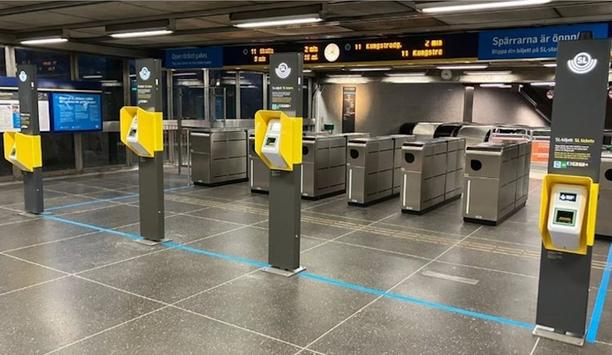
HID, the pioneer in trusted identity and authentication solutions, announced that it successfully supported Stockholm's public transit authority, Storstockholms Lokaltrafik (SL), in transforming the daily travel experience for hundreds of thousands of passengers in the capital through a comprehensive digital ticketing modernization program. The initiative has eliminated paper tickets and enabled seamless contactless payments across buses, ferries, trams and metro stations. The technology upgrade has delivered measurable benefits, including dramatically reduced fare evasion that translates to millions of Swedish Kronos in recovered revenue for SL. Residents experience faster, more convenient travel New ticketing infrastructure was specifically selected because it withstands harsh Nordic winters With the new integrated ticketing devices from HID, citizens can now use the same payment method – whether a mobile app, contactless card or digital wallet – across all 2,600 buses, 140 ferry validators, 320 tram platforms and 1,035 metro fare gates throughout the capital region. Most importantly, the new ticketing infrastructure was specifically selected because it withstands harsh Nordic winters, a crucial factor for passengers who depend on public transit year-round. Legacy hardware, systems and networks “Serving hundreds of thousands of passengers daily across multiple transit modes required a ticketing solution that could scale with our needs while providing a consistent experience for our riders." "We chose HID for its multi-technology ticket validators for buses, ferries, and gates, as well as its ability to run side-by-side with our legacy hardware, systems, and networks. It was a real challenge for everyone involved to get this working, but it was one we overcame together,” said Karin Harrius, Business System Administrator, Ticket Readers at SL. Seamless ecosystem across touchpoints The implementation was designed to ensure a consistent validation experience and deliver a seamless ecosystem across all transit touchpoints. It included: Enhanced passenger convenience on buses: HID VAL100 ticket validators integrated with HID TripTick™ barcode technology and NFC/RFID contactless payment functionality in a single point of presentation for tickets and travel passes Reliable outdoors operation in extreme weather: HID VAL150 validators featuring a waterproof design on ferries and tram platforms Streamlined fare collection across metro stations: HID TripTick 220 OEM barcode, NFC and cEMV ticket modules within fare gates and ticket machines in the Stockholm metro, enabling multi-format ticket reading throughout the system. Significant reduction in fare evasion Improvement ensures that all users contribute fairly to keeping these vital transport links The modernization has delivered substantial financial benefits for SL. Fare evasion dropped from 3.1% in 2019 to just 2.3% in 2023 – a 26% reduction that has recovered millions of Swedish Kronor annually for reinvestment in public transit infrastructure and services. The impact was particularly dramatic on ferry services, where ticket validation rates increased from just 58% in November 2021 to 89% by March 2025. This improvement ensures that all users contribute fairly to maintaining these essential transportation links connecting Stockholm's islands and waterways. Digital-first approach meets evolving expectations Citizens particularly benefit from the system's ability to prevent ticket duplication The comprehensive digital transformation addresses the evolving expectations of Swedes in an increasingly mobile-first society. Citizens particularly benefit from the system's ability to prevent ticket duplication and unauthorized sharing through social media platforms – issues that had previously undermined fare revenue and service sustainability. Future integration of new technologies With Stockholm County – which represents 20% of Sweden's population despite covering only 2% of the country's area – the scalable, open-architecture system ensures SL can adapt to evolving technologies and passenger expectations. The system's flexibility allows for future integration of new technologies and travel services without requiring complete infrastructure replacement, protecting the public investment while maintaining service innovation.

Genetec Inc., the pioneer in enterprise physical security software, announced that its cloud-based vehicle investigation system, Cloudrunner™, is now hosted in Canada on the Microsoft Azure cloud platform. This will ensure that sensitive data for Canadian law enforcement, security agencies, and private-sector organizations remains in Canada while delivering responsiveness, scalability, and reliability. Vehicle-centric investigation system Cloudrunner is a cloud-native vehicle-centric investigation system that helps public safety agencies Cloudrunner is a cloud-native vehicle-centric investigation system that helps public safety agencies and security teams detect, analyze, and respond to vehicle-related crime. Designed with privacy and compliance in mind, Cloudrunner supports proactive policing and community safety. It offers real-time alerts, historical search tools, and an intuitive map-based interface that makes it easy to visualize vehicle activity, collaborate across jurisdictions, and share insights securely. Data-driven tools “With vehicle-related crime on the rise in Canada, law enforcement agencies need powerful, data-driven tools that help them solve cases faster and keep communities safe,” said Larry Legere, Commercial Director at Genetec Inc. "By hosting Cloudrunner in Canada, we're giving agencies the tools they need to make quick, informed decisions that help them stay ahead of criminal activity, while keeping sensitive data within our borders.” Users can quickly identify vehicles Cloudrunner enables users to quickly identify vehicles of interest, even with partial information By combining automated license plate recognition (ALPR) with rich metadata, such as vehicle type, make, model, and color, Cloudrunner enables users to quickly identify vehicles of interest, even with partial information, at any time of day or night, and in any weather condition. The platform supports real-time hotlist alerts, historical search capabilities, and investigative tools that help law enforcement locate suspects on the move, and close cases faster. Evaluation of Cloudrunner "One of our primary considerations during the evaluation of Cloudrunner was ensuring that all collected data would be securely stored and remain within Canadian borders," said Jeff Joyce, Manager - Parking Services, at the University of British Columbia (UBC). "Data sovereignty was a non-negotiable priority for us, as it not only addresses regulatory requirements but also reinforces our commitment to protecting sensitive information and upholding the trust of our campus community." Setting up Cloudrunner Canada now joins a growing list of countries, including the United States, Australia, and New Zealand, where Cloudrunner is hosted locally to meet the needs of agencies that require data to reside within national borders. New and existing Canadian users will automatically use Canada as their hosting region when setting up Cloudrunner, with no changes to existing workflows.
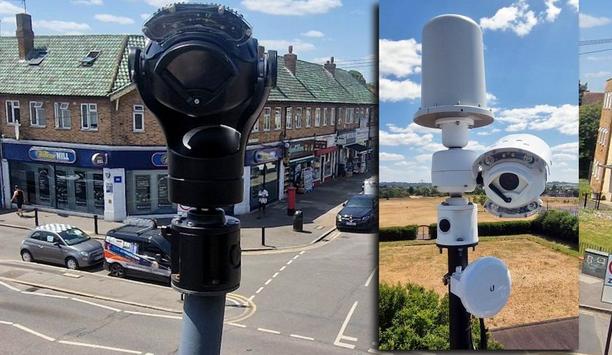
360 Vision Technology, the UK manufacturer of ruggedised HD, radar and thermal PTZ imaging cameras, and OpenView, one of the largest privately owned independent security companies in the UK, are reinforcing their long-standing collaboration with Enfield Council. The partnership aims to enhance public safety through the deployment of state-of-the-art Predator and Invictus HD PTZ cameras, across London Borough of Enfield’s town centre and public parks. Maximize security surveillance coverage To maximize security surveillance coverage, London Borough of Enfield’s town centre, public spaces and parks have been equipped with a combination of 360 Vision Predator and Invictus HD PTZ cameras. In high-risk areas, the Predator cameras, featuring built-in LED IR, or white light illumination, provide unparalleled nighttime imaging. With a lighting range of up to 250 metres and the ability to deliver full-color video even in low-light conditions, they significantly improve security surveillance visibility and safety in dimly lit locations. Impact of installing surveillance cameras Enfield Council’s policy on video surveillance is based on a ward survey, where the potential impact of installing Enfield Council’s policy on video surveillance is based on a ward survey, where the potential impact of installing surveillance cameras to deter incidents of street crime and antisocial behavior was considered. Consultation with partners OpenView, the police and levels of crime in an area, enabled informed decisions about where cameras were to be installed. Deployment of the 360 Vision cameras Utilizing this intelligent data, the location of cameras across London Borough of Enfield was chosen to define the key operational ‘hot spots’, where the deployment of the 360 Vision cameras would yield maximum benefit. Combating anti-social behavior with the aim of keeping London Borough of Enfield’s streets safe for all, in the town centre, a visual overview is provided by Invictus HD PTZ cameras, while a number of long-range Predator HD PTZ cameras fitted with built-in IR LED illumination have been mounted atop tower blocks, providing a comprehensive overview of the town centre, enabling the Enfield Council to monitor street level activity effectively. Pioneering radar detection for crime prevention Surveillance measures are deployed across the London Borough of Enfield’s many public parks Surveillance measures are deployed across the London Borough of Enfield’s many public parks. At Albany Park, a solution was required to prevent the occurrence of regular acts of vandalism to a community café and protect the premises. Responding to the problem, OpenView, who have built an enviable reputation for delivering unique, innovative, and technologically advanced solutions, tailored to meet the specific needs of clients, recommended the use of 360 Vision’s Predator Radar camera. After a successful trial, the Predator Radar camera was installed and the Enfield Council became one of the first authorities in the UK to deploy advanced camera radar detection to identify potential criminal activity within pre-defined ‘sterile’ areas. Integrated high-definition PTZ cameras “Traditionally, the use of radar systems has been considered to be the preserve of high-end installations, such as those at airports or ports,” says David Hall, OpenView’s Framework Manager. “However, deploying 360 Vision Technology’s Predator Radar all-in-one devices, with integrated 360-degree rotational radar and integrated high-definition PTZ cameras, we’ve been able to secure the large, fenced-off areas around the café to provide a far more effective and economical solution versus using many traditional cameras to cover the same area." "In addition, Predator Radar’s advanced detection capability is such that target detection and alarm functionality are continuous, day and night, even within adverse weather conditions." Integrated Predator PTZ optical camera The mix of cameras in the parks is equipped with 360 Vision’s built-in LED white light option Hall added: “The Predator Radar camera creates an alarm on detection of a target, or targets, and instructs its integrated Predator PTZ optical camera to view the target and provide system operators with instant visual verification. Additionally, as the target moves, they are automatically and continuously tracked by the optical camera to maintain real-time visual coverage.” In addition to the Predator Radar cameras, the mix of cameras in the parks are equipped with 360 Vision’s built-in LED white light option, to enable control room operators to be proactive when dealing with certain incidents. ONVIF-compliant Predator and Invictus cameras Apart from providing lighting to achieve high-quality video images in the dark, the use of white light acts as a visible assurance or as a deterrent to subjects under nearby camera surveillance, to make it clear that live surveillance monitoring is being carried out. HD video from the Predator and Invictus cameras is transmitted to the Enfield Council CCTV control room via a fibreoptic and radio transmission network. At the control room, the ONVIF-compliant Predator and Invictus cameras are integrated into a IndigoVision ‘Control Centre’ VMS. Enfield Council’s security surveillance system Map-based monitoring makes security operations easier and faster for the system operators Map-based monitoring makes security operations easier and faster for the system operators, who can simply click on a map point in Control Centre to automatically display any specific 360 Vision camera. “Enfield Council’s security surveillance system is constantly developing, to meet the needs of modern day town centre public safety requirements,” continues David. “We’ve found that the 360 Vison Invictus camera is a great fit for town centre use, where its mix of day and nighttime visual imaging performance vs ROI is highly effective.” Public safety requirements The deployment of the 360 Vision Predator and Invictus HD camera technologies reflects Enfield Council's commitment to evolving its security surveillance system to meet modern public safety requirements. The combination of daytime and nighttime visual imaging performance of the cameras in the London Borough of Enfield’s town centre and parks demonstrates a strong return on investment (ROI) and effectiveness in enhancing the Borough’s overall safety measures. Implementation of advanced security measures The performance of these advanced security steps is part of Enfield Council’s ongoing commitment The implementation of these advanced security measures is part of Enfield Council’s ongoing commitment to maintaining a safe and secure urban environment. Enfield Council will continue to adapt its surveillance infrastructure to meet modern public safety demands, ensuring residents and visitors benefit from the enhanced security measures. Innovative camera surveillance solutions “Working with OpenView on this project has been a great opportunity to enlist innovative camera surveillance solutions that really can help protect public spaces,” says Adrian Kirk, Business Development Director at 360 Vision Technology. “It’s notable how OpenView engineers embrace the latest technologies with ease, which is a tremendous credit to their team and ensures that the company’s long list of local government customers can benefit from cutting edge security solutions which can have a major impact on the quality of life for members of the public.” 360 Vision Technology’s range of products “Enfield Council has been impressed with 360 Vision Technology’s range of products that can be installed on various projects, or applications - this has proved to be an essential part of the ongoing projects in the London Borough of Enfield, whether it be for applications within parks, Street Scene or Housing estates,“ says Darren Woods, Enfield Council’s Public Safety Centre Manager. “The newest installation has used the 360 Vision Predator Radar camera that has been installed in an area that was suffering from high volumes of vandalism and building damage. Since its installation over the last few months, it has been highly effective. The 360 Vision predator range of cameras are currently being installed as part of a system upgrade, replacing older camera units. This investment into market-pioneering camera equipment ensures that Enfield Council is moving forward with affordable and good quality surveillance camera imaging solutions as video technology moves forward.” Innovative characteristics of the 360 Vision product range "We have been highly satisfied with the innovative characteristics of the 360 Vision product range and its suitability for the intended applications,” comments Kevin Hall, OpenView’s Group Director. “Furthermore, the quality of delivery, ongoing support, and operational performance were critical factors influencing our selection of the chosen systems technology." Predator radar cameras OpenView’s Framework Engineering Supervisor, Martin Ivory, enthused: “360 Vision has been a fantastic partner to work closely with, having the chance to use and deploy a large number of the products available from the company. Their ease of deployment and tremendous build quality and ruggedisation, versatility and reliability make them the ideal camera for public safety." "The support provided from Adrian Kirk and the technical team at 360 Vision enabled us to utilize the full capabilities of both the Invictus IP and Hybrid, and also the Predator and Predator Radar cameras, providing a practical solution for any scenario within the public safety sector.”

Newport, a popular vacation destination, has partnered with Sorama to tackle growing noise pollution. By integrating AI technology and products from Axis Communications, Sorama, and FF Group, the city aims to reduce traffic noise and enhance road safety. FF Group’s CAMMRA AI software and DataFactory platform help generate accurate vehicle data in real-time, day or night, to support noise reduction efforts. The challenge How can they address the challenge of traffic noise? What actions can local municipalities take to effectively monitor noise pollution and improve road safety? The solution Newport, hosting 4 million annual visitors, faces traffic noise due to congestion. To address this, the city implemented an AI-based noise camera solution with the Axis Radar-Video Fusion Camera, powered by CAMMRA AI, Sorama Acoustic Monitors, and the DataFactory platform. This system helps adjust noise ordinances and improve traffic safety as part of Newport's smart city initiative. Solution architecture 1. Axis Radar Video Fusion Camera Monitors vehicle speeds up to 125 mph, integrates with CAMMRA AI for license plate recognition and speed tracking. 2. CAMMRA AI Application Recognize vehicle details (make, model, plate) and merge data with speed from the Axis Radar. 3. Sorama L642 Acoustic Monitors Capture sound levels with 64 microphones and integrate with Axis cameras for detailed vehicle data. Offers integrations with Axis camera, Axis Camera Station and FF DataFactory. 4. DataFactory platform Collects data on all vehicles, including sound level, license plate, make, model, color, speed, vehicle type, GPS coordinates, and time, for analysis to help city officials identify emerging patterns. Aggregates real-time data for enforcement, identifying vehicles that exceed sound limits. 5. Axis Camera Station Connected to the City Monitoring Center, providing ready-to-use data from DataFactory for efficient monitoring and response. Offers a single platform to access all data from loud vehicle events, including bookmarked entries for further analysis. AI-powered technologies FF Group is tackling traffic noise pollution and improving urban safety via AI-powered technologies The partnership between the City of Newport, Sorama, Axis Communications, and FF Group is tackling traffic noise pollution and enhancing urban safety through AI-powered technologies. By integrating tools like the Axis Radar-Video Fusion Camera, CAMMRA AI, and Sorama's acoustic monitoring systems, Newport is proactively managing noise in real-time. Traffic management and noise regulation This solution improves quality of life, supports smart city goals, and enables better traffic management and noise regulation enforcement. With real-time data on vehicle speed, license plates, and sound levels, Newport can quickly address violations and detect emerging issues, creating a safer and more sustainable urban environment.
Round table discussion

Technology automates tasks, streamlines processes, and improves efficiency in various fields, including physical security. But the success of today’s latest technologies depends on our ability to use them responsibly and efficiently. Optimising our industry’s use of technology requires that the industry’s workforce have the needed skills to operate the latest equipment. We asked this week’s Expert Panel Roundtable: How does technology innovation in security systems impact the skillsets needed by security operators and officers?

Audio might detect sounds like breaking glass or footsteps before a person even enters the field-of-view of a video camera. Audio also helps to provide context: Someone running in a video image might be suspicious, but the situation is different if they are yelling for help. Furthermore, audio enables operators to talk remotely to people on site, which can deter crime, de-escalate situations, or gather information. And yet, optimizing audio is often an overlooked aspect of physical security system design. We asked this week's Expert Panel Roundtable: What is the expanding role of audio in today's physical security systems?

Migrating to the Cloud can be a cultural shift for some organizations, especially when it comes to physical security systems. Challenges such as concerns about data security and compliance, cost management, and a skills gap can make adopting the Cloud seem onerous. But the benefits are there, aren't they? We asked this week's Expert Panel Roundtable: Will the impact of the Cloud on physical security integrators be net-positive or net-negative?
Products