PoE

barox Kommunikation AG will showcase its powerful integration with Milestone Systems’ XProtect® video management platform at SKYDD 2026, as the company introduces its integrated network management capabilities to the Nordic security market for the first time. Taking place at Stockholmsmässan, Sweden, from 20–22 October, barox will exhibit alongside longstanding technology partner Milestone Systems A/S on stand A03:30, demonstrating how the Smart-barox plug-in brings network...

Award-winning global security manufacturer, Gallagher Security is excited to announce the launch of the new ASSA ABLOY IP lock integration, delivering simplified installation of access control in challenging environments. Launched today, the solution reduces the high costs and complexity of traditional wired access control, by removing the need for extensive cabling and door controllers. It simplifies installation, particularly in retrofit or hard-to-wire locations. Enterprise-gr...

Dust, moisture and high-pressure cleaning place high demands on cameras used for industrial process monitoring. With the new uEye SFA, IDS Imaging Development Systems GmbH is expanding its uEye Live monitoring range with an especially robust model designed for challenging operating conditions. The camera combines an IP69K-rated housing and high image quality with flexible streaming functions. The uEye SFA has been developed for applications that require reliable live images, even in harsh envir...

Altronix, the recognized pioneer in power and data transmission products for the professional security industry, is highlighting its innovative power and data solutions at GSX 2026 in booth 2833. The company is showcasing power, networking and infrastructure technologies that enhance security systems and streamline deployments. Altronix solutions on display at GSX 2026 NEW eFlow™ Pro Series Universal Power Supply Charger supports a wide range of security and access control applic...

AMG Systems, a manufacturer of industrial Ethernet and fiber networking solutions, announces the launch of its AMG577 Series, a new family of industrial-grade Layer 2+ managed Ethernet switches designed to deliver high-performance networking, advanced Power over Ethernet (PoE), and exceptional reliability in demanding industrial environments. Purpose-built for space-constrained industrial 19-inch rack applications, including roadside cabinets, transportation infrastructure, utilities, and criti...

barox Kommunikation AG has announced a new partnership with QR Tech Solutions, a value-added technology distributor serving the UAE and wider MENA region. The agreement will give systems integrators and end users in the region enhanced access to barox’s high-performance Ethernet PoE switches and media converters, and built-in integration tools for professional video security applications. Part of the MultiPower International Group (MPI), QR Tech Solutions is based in the UAE and traces it...
News

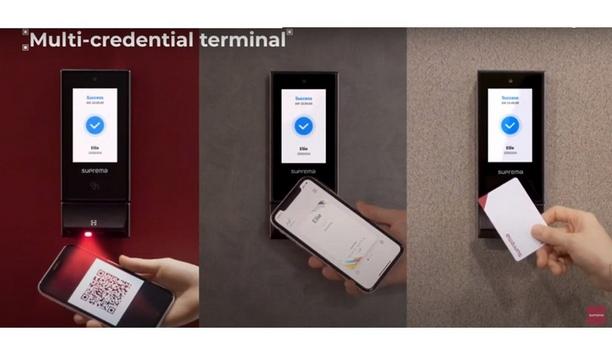
Suprema, a pioneer in intelligent access control and physical security solutions, will showcase BioStation 3, its best-selling biometric terminal to date, and debut its newest flagship terminal, BioStation 3 Max, in India for the first time, at the Fire & Security India Expo (FSIE) 2026. Suprema will also present its access control platforms, BioStar X and BioStar Air. The event will take place September 3–5, 2026, at the Jio World Convention Centre in Mumbai, where Suprema will exhibit at Booth A15. India's enterprise security market continues to expand, driven by the development of new airports, transit systems, data centers, and corporate campuses. As these facilities modernise, organizations increasingly require access control solutions capable of scaling alongside them. In response, Suprema will present its largest FSIE showcase to date, featuring an expanded booth and its most comprehensive hardware and platform lineup for the Indian market, reflecting Suprema's growing brand presence in the region. Robust data protection BioStation 3 is recognized worldwide for its competitiveness, built on three strengths: highly accurate, stable AI-powered facial authentication; a user experience optimized for real-world operating conditions; and robust data protection. Building on that global recognition, with demand that has been especially strong in India, Suprema will present BioStation 3 Max, its newest flagship terminal, to customers in India for the first time. BioStation 3 Max is Suprema's most advanced biometric terminal, featuring enhanced platform security with a CC EAL6+-certified secure element and a full range of authentication methods: face and fingerprint biometrics at its core, alongside RFID, mobile credentials, QR codes, and PINs, all integrated into one hardened, identity-first platform. Campus-wide deployments A large touchscreen display and integrated VoIP intercom support verification workflows at main entry points while Power over Ethernet (PoE) simplifies installation and reduces deployment costs. Rounding out the hardware lineup, XPass Q2, Suprema's intelligent QR/RFID reader, will also be on display for fast scanning at stadium entrances and coworking spaces. Suprema's security platforms offer customers and integrators flexibility to deploy and manage access control in whichever way best suits their business, on-premises or in the cloud by choosing between BioStar X and BioStar Air without compromising on performance. BioStar X, the on-premises platform, integrates access control, video surveillance, and third-party system integrations into a single system. It scales from small sites to large, campus-wide deployments. Faster incident response A unified monitoring console provides real-time visibility into access events and video feeds through interactive maps, enabling faster incident response. BioStar Air, by contrast, is a cloud-native platform built for organizations seeking to expand without maintaining on-premises servers. Additional readers can be deployed within minutes across multiple sites using a single network connection. Mobile credentials are included as standard, saving organizations time and deployment costs. Both platforms run on the same biometric, RFID, and mobile-ready hardware. Additionally, Suprema's Access Control Units (ACUs) let system integrators build either centralized or distributed architectures, allowing customers to select the deployment model that fits operational and IT requirements today and adapt as those needs evolve. Public safety scenarios Suprema is also introducing Q-Face Finder, an AI-powered facial authentication solution designed to identify suspects and locate missing persons in public safety scenarios such as police deployments and across private-sector facilities, including department stores and casinos. By easily integrating with existing CCTV infrastructure, it identifies missing persons and suspects in real time, enabling operators to respond quickly and effectively. Leveraging a Geographic Information System (GIS), the solution visualises a movement path on a smart map, allowing operators to understand the overall situation intuitively and coordinate resources more efficiently. Video management systems To show how seamlessly Suprema’s technology fits into broader security environments, live demonstrations will highlight how Suprema hardware and software integrate with leading global access control and video management systems, such as Genetec and Milestone. Visitors to the booth will also be able to meet local partners in India. “Strong technology alone doesn’t build a market position; a strong ecosystem does,” said Sachin Chadha, Country Manager of Suprema India & South Asia. “At FSIE, we are building exactly that: integrating with the access control and video management systems our customers already rely on and standing alongside partners who understand this market. That is how we will grow Suprema’s brand presence and footprint in India’s physical security industry, starting with proven hardware like BioStation 3 and BioStation 3 Max, and backed by the ecosystem that puts it to work for our customers.”
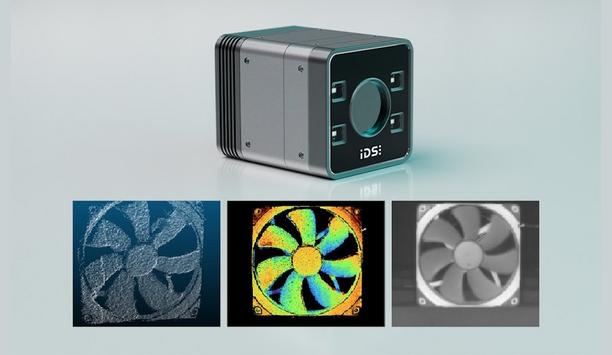
IDS Imaging Development Systems GmbH is expanding its 3D portfolio with Nion, an industrial ToF camera featuring 1.2-megapixel resolution and integrated depth processing. It provides high-resolution and temporally stable depth information at 30 fps, even during rapid movements and in changing lighting conditions. This makes it suitable for applications such as logistics, automation and robotics, where precise 3D data is required at real-world process speeds. The Nion captures moving objects with virtually no blurring. Its high resistance to stray light ensures reproducible measurement results both indoors and outdoors. The measuring range of 0.3 to 7.5 meters covers typical industrial scenarios. The robust IP67-rated housing allows it to be used in more demanding environments. Power over Ethernet (PoE) reduces installation effort and cabling. Variable lighting conditions Patrick Schick, Product Manager for 3D Vision and Imaging Software at IDS, says: "The Nion provides stable depth data even under variable lighting conditions. This provides a solid foundation for automation processes that rely on fast and accurate 3D data." Compared to standard ToF cameras on the market, the onsemi AR0130 depth sensor offers higher resolution, lower noise, more stable results in ambient light and improved motion stability. This enables the Nion to achieve high depth accuracy even when objects are moving quickly and under variable lighting conditions. Cost-effective solution Thanks to its compact design, high measurement quality and excellent value for money, the Nion offers a straightforward introduction to 3D image processing. Companies can integrate the camera flexibly into existing systems and benefit from a cost-effective solution for reliable depth data. “In many cases, existing 2D processes can be retained and supplemented with depth data where necessary, if this aids decision-making within the process,” emphasizes Patrick Schick. The Nion 3D camera is now available in series production. Technical information is available in the IDS Webstore. You can also place orders and make individual enquiries there.

IQSIGHT, formerly Bosch Video Systems and a pioneer in intelligence-first video security, today announced the release of the AUTODOME 7100s and AUTODOME 7100s IR. Designed for outdoor environments, the new pan-tilt-zoom (PTZ) cameras deliver clear images in all lighting conditions and built-in video analytics to secure critical assets day or night. The AUTODOME 7100s series addresses complex surveillance challenges across smart cities, transportation networks, critical infrastructure, and government facilities. Built on IQSIGHT’s intelligence-first platform, both models offer AI-enabled video analytics for precise detection while reducing false positives and are ready for context-aware GenAI capabilities available later this year. Real-world conditions Built for consistent results in real-world conditions and intelligence at the edge, key features of the AUTODOME 7100s series include: Detailed 4MP Video: Capture high-resolution images with a 30x optical zoom lens for reliable object identification up to 919 feet (280 meters). Motion-optimized HDR X technology prevents motion blur and trailing artifacts on fast-moving vehicles and people, even while the camera is actively panning or tracking. Visibility in challenging light conditions: Dynamic IR illumination synchronises beam angle and intensity with the optical zoom level to deliver balanced, glare-free exposure in total darkness up to 1,804 feet (550 meters). Built-in Intelligent Video Analytics Pro (IVA Pro): Comes standard for reliable intrusion detection, alerts, and operational insights in and around buildings and along perimeters. Additional licenses support object classification and counts for a range of security and safety uses. Robust Design for Reliable Operation: Brushless positioning motors deliver precise accuracy and Kevlar-reinforced drive belts are engineered for long-term performance. Positional encoders ensure the camera never loses track of its position, even following power losses or exposure to excessive force. Intelligent Power Modes: Adaptive PoE Management automatically detects available power levels and scales functions, including heaters, IR operation, and pan speeds, for continuous operation on low-power infrastructure. Secure by Design: Features an onboard Secure Element 3.0 certified to Common Criteria EAL6+ and FIPS 140-3 Level 3 to protect sensitive video data.

3xLOGIC, the foremost provider of integrated and intelligent security solutions, has launched VIGIL 13.5, the latest update to its VIGIL Video Management System (VMS). The new release introduces AI Bridge and Face Recognition, allowing organizations to deploy advanced AI-powered video analytics and security intelligence without replacing existing camera infrastructure. VIGIL 13.5 has been designed to support users who wish to improve operational awareness, automate security workflows, and modernise surveillance capabilities while maximising their existing investment. AI Bridge brings AI analytics to legacy ecosystems AI Bridge is a hardware layer that runs deep learning analytics on video from existing IP cameras. It applies edge-based deep learning analytics to existing IP camera deployments, enabling standard cameras to deliver intelligent detection and real-time alerts without the cost and disruption of a complete hardware refresh. For dealers and integrators, AI Bridge creates new opportunities to bring AI capabilities into existing customer environments while reducing barriers to adoption. Organizations can extend the life of their current camera infrastructure, accelerate AI adoption, and build a future-ready surveillance strategy without undertaking costly rip-and-replace projects. AI Bridge supports a broad range of AI-powered analytics, including person, vehicle, object, perimeter and loitering detection, dwell time, people counting, and fall detection. This makes it particularly attractive to retailers, educational institutions, healthcare, hospitality and entertainment, warehouses, and smart city leaders. Object detection, for example, can help operators track unexpected vehicles on an academic campus or warehouse yard. Fall detection ensures a quick response if a person in a clinic or resident in a care home falls, while entry and exit detection will alert to possible absconding. This ensures individuals remain safe while staff can continue their duties with peace of mind that the system will alert them to any unusual behavior or emergencies. In retail settings, people-counting can improve wait times and queue management in a store, ensuring a good customer experience. Intrusion detection can secure back offices and stockrooms, and dwell times can tell leaders what areas of a store are most popular. Vendor-neutral offers greater flexibility The platform is vendor-neutral, supports mixed camera environments, and can be centrally configured through the VIGIL Server Management Utility (VSMU). Customers can also combine AI Bridge along with 3xLOGIC's Edge-Based Deep Learning cameras within a single VIGIL deployment, providing a flexible approach to modernisation across hybrid environments. Supporting proactive security VIGIL 13.5 also introduces Face Recognition capabilities to the VIGIL platform, helping security teams move beyond passive video monitoring to responsible, proactive awareness. Using edge-based AI processing, the feature allows organizations to create secure local watchlists, receive real-time alerts when persons of interest are detected, rapidly search recorded footage, and automate workflows based on facial recognition events. Designed with privacy in mind, facial recognition processing takes place at the edge, helping organizations maintain control of sensitive data while improving investigation speed, situational awareness, and employee efficiency. Part of the wider ecosystem The latest release integrates seamlessly with the wider 3xLOGIC ecosystem, including VIGIL CLOUD, PACOM VIGIL CORE and SONITROL CORE, inviting users to deploy AI analytics across on-premises, cloud and hybrid environments. AI Bridge is available as either a perpetual license for on-premise deployment or as a subscription through VIGIL CLOUD, giving customers the flexibility to align deployment with operation and budget requirements. Mike Poe, Director of Product Management at 3xLOGIC said: "AI is helping organizations unlock more value from the infrastructure they already own. Now, with VIGIL 13.5, customers can add powerful AI analytics and facial recognition to existing camera deployments without the cost and disruption of replacing their entire surveillance estate. Whether they're looking to improve security, increase efficiency or begin their AI journey, VIGIL 13.5 provides a practical and scalable path forward."
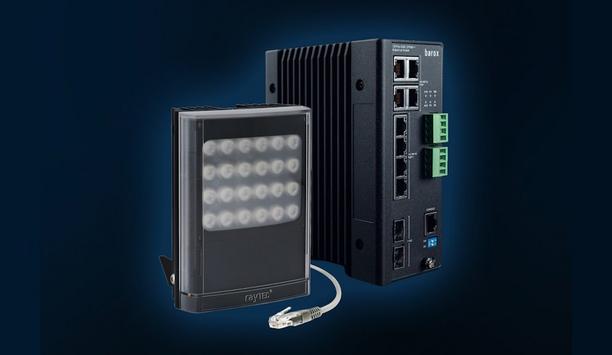
barox Kommunikation AG has partnered with Raytec to confirm compatibility of its range of PoE Ethernet switch and media converter products to power Raytec’s VARIO2 IPPoE LED illuminator products. Raytec is a UK-based manufacturer of LED lighting for security, surveillance and critical infrastructure applications, as well as hazardous area, industrial and transport lighting. Raytec's lighting solutions support CCTV and security systems in over 500,000 locations across more than 70 countries. In response to client and project demand, and to support systems integrators with their specification and set-up of reliable PoE when installing Raytec LED illuminators, barox and Raytec have concluded in-depth ‘proof of concept’ testing. The testing involved Raytec’s VARIO2 IPPoE network range of illuminators which included IR, WL and Hybrid options, and was performed to assess device performance and compatibility with barox’s range of PoE Ethernet switches and media converters. PoE Ethernet switches In the test, the range of barox PoE switches and media converters were assessed for their reliable delivery of power to the VARIO2 IPPoE range of illuminators. In addition, the ability to remotely switch the illuminators On and Off via the barox Smart functionality was also tested. “The device test yielded excellent results, with PoE being supplied to the Raytec illuminators and sustained by the barox switches,” says Rudolf Rohr, barox Co-founder & Managing partner. “The certified barox/Raytec PoE integration enables LED lighting solutions to be configured and installed with complete confidence. barox switches, which cater for the demands of any PoE device, supply their 30, 60 or 90 Watts PoE in compliance with the IEEE802.3af/at/bt standards.” Operation of critical devices The use of barox switches to supply PoE also allows remote on and off powering to the Raytec illuminators and surveillance cameras, potentially removing the need for engineers to go to site in instances where an IP device has just dropped offline. In the case of a power outage, the efficient PoE management features available on barox switches also allow the ability to maintain the operation of critical devices and extend UPS battery life. “On losing mains power supply, CCTV systems can provide temporary back-up power via a UPS battery pack,” Rudolf Rohr continues. “However, if the loss of mains power is prolonged, the local battery power can become depleted and the system blacks out. In this scenario, it would be ideal to prevent the total loss of power and system down-time by remotely switching off certain cameras and/or illuminators. Unlike with simple network PoE injectors, by using barox switches and its efficient PoE management, non-critical cameras or Illuminators can be automatically controlled, to extend battery autonomy.” Cost-effective solution The ability to deliver and support multiple IEEE802.3 PoE standards – up to 90 Watts - on a single edge switch, stands barox apart from multiple Ethernet vendors in the market, enabling end users and systems integrators to support/power cameras, other IP devices and lighting solutions from a single switch. The barox approach simplifies equipment, reduces both points of failure and configuration time on site, whilst also providing the most energy efficient and cost-effective solution. "We're always pleased to work with barox. The compatibility between our illuminators and their PoE switches and converters gives customers real confidence when specifying PoE for the VARIO2 range. This testing in particular confirmed that barox switches deliver reliable, sustained power to our VAR2-IPPOE-i6 and VAR2-POE-i8-1 illuminators, exactly the kind of proven compatibility systems integrators are looking for," Charlotte Lowdon-Smith, Marketing Communications Manager, Raytec. To support the installation of Raytec VARIO2 LED illuminators with barox PoE, configuration information is available from barox on request.

ALE International, operating under the trade name Alcatel-Lucent, announces the general availability of its updated ALE Private 5G offer. With new access points (APs), a new AP-only deployment architecture (AerFlex), an updated edge platform, and an extended professional services portfolio, Private 5G is now simpler and more accessible for multi-site and industrial environments. Industrial worker wearing a white safety helmet, protective eyewear, and a high-visibility orange jacket uses a tablet device at an illuminated industrial processing facility during evening hours, with refinery structures and equipment visible in the background. Existing LAN infrastructure The updated offer responds directly to growing demand from industrial customers, in manufacturing, logistics, transportation, and energy where robotics, Automated Guided Vehicles (AGVs), IoT sensors, and connected workers require deterministic, low-latency connectivity that Wi-Fi alone cannot guarantee. With this release, ALE delivers three core commitments: Simpler to deploy: AerFlex eliminates on-site servers, racks, and custom cabling. APs connect over standard PoE to existing LAN infrastructure Easier to scale: New indoor and outdoor AP options extend coverage to larger, more demanding environments and multi-site deployments. More value beyond connectivity: A complete services portfolio (site surveys, validation, on-site expertise, and managed services) backs every deployment. Dedicated packet cores One of the most significant updates in this release is AerFlex, a new AP-only deployment architecture that fundamentally simplifies how Private 5G is deployed on enterprise sites. Traditional Private 5G deployments require baseband units, dedicated packet cores, custom cabling, and specialist installation, often weeks or months before a single device connects. Authentication, NAC, DHCP, firewall, and Edge AI processing are embedded directly in the AP. APs connect to existing LAN switches via standard Power over Ethernet. Zero-touch cloud provisioning scales multi-site deployments without a specialist engineer on-site at each location. Automatically segmenting devices The updated offer deepens the native integration with the Alcatel-Lucent OmniVista® Network Management Platform. Alcatel-Lucent remains the only vendor delivering LAN, WLAN, and Private 5G management from a single platform. Private 5G access points appear in OmniVista alongside OmniSwitch® and OmniAccess® Stellar assets: one inventory, one alarm console, one topology view. Security is enforced end-to-end, automatically segmenting devices into the correct VLAN and applies the appropriate QoS policy per application. The solution supports an open enterprise device ecosystem, with IoT gateways enabling existing devices to connect to the Private 5G network without replacement. Dedicated cellular network Private 5G is a dedicated cellular network deployed exclusively for a single organization within its own facilities, sites, and operational environment. Unlike public carrier networks, spectrum is licensed privately, data stays on-premises, and performance is a contractual commitment rather than a best-effort promise. Technology addresses the physical limitations of Wi-Fi: large outdoor yards, metal-dense production floors, high electromagnetic interference environments, and mobile assets that must maintain uninterrupted connectivity while in motion. Metal-dense production floors Private 5G is especially adapted to the following industries: Manufacturing & Industry 4.0: AGVs, robotics, Programmable Logic Controllers (PLCs), real-time quality control, and digital twins requiring deterministic, low-latency connectivity across metal-dense production floors. Logistics & warehousing: Large indoor and outdoor facilities, high-speed forklift fleets, automated dispatch, and perimeter operations beyond the reach of indoor Wi-Fi. Transportation: Airports, seaports, and rail facilities requiring wide-area outdoor coverage for autonomous vehicle operations, asset tracking, and safety-critical communications. Energy & utilities: Substations, refineries, and remote field operations where reliable connectivity is a safety requirement, not only an operational convenience. “ALE Private 5G is designed to remove much of the traditional complexity associated with private cellular deployments, making it significantly easier for enterprises to deploy and scale, especially for multi-site and industrial environments — with more flexibility in how the network is designed and operated,” said Christopher Maldonado, Product Line Manager Private 5G, Alcatel-Lucent.

Expert commentary

For years, innovation in physical security has focused on what systems can do: higher-resolution cameras, AI-driven analytics, smarter access control, and cloud-based management. But across deployments, from residential systems to enterprise campuses, a more fundamental issue continues to undermine performance: Connectivity. It is increasingly clear that the effectiveness of modern security systems is not limited by sensors or software, but by the reliability, reach, and architecture of the networks that connect them. As security systems evolve toward real-time detection, automated response, and distributed intelligence, connectivity is no longer a supporting layer. It is the foundation and, too often, the weakest link. When security design is constrained by connectivity In theory, security systems are designed to maximize visibility, coverage, and response time. In practice, they are often designed around the limitations of network infrastructure. Nowhere is this more visible than in video surveillance. Cameras are frequently positioned not where risk is highest, but where connectivity is available. Dead zones in garages, basements, or perimeter edges force compromises in placement, reducing the effectiveness of the system. In some real-world deployments, traditional Wi-Fi has been shown to fail at a meaningful percentage of intended installation points, particularly in challenging environments or at the edges of coverage. This creates a disconnect between security intent and system reality. Instead of enabling proactive deterrence, such as detecting activity at the perimeter, systems are often relegated to recording events after they occur. The same pattern appears in access control. Many deployments rely on fragmented connectivity stacks, combinations of wired links, proprietary wireless protocols, and gateways, each optimized for a specific constraint such as range or power. While functional, these architectures introduce complexity, increase deployment costs, and create additional points of failure. Over time, these workarounds have become normalized. But as systems scale and expectations rise, their limitations are becoming harder to ignore. The hidden cost of fragmentation The consequences of unreliable or overly complex connectivity extend beyond performance. They impact the entire lifecycle of a security system. Advanced security features need consistent, reliable connectivity—not just bandwidthFor integrators, poor connectivity can mean longer installation times, more troubleshooting, and increased reliance on workarounds such as mesh networks or additional infrastructure. For vendors, it can translate into higher product return rates, increased support costs, and reduced customer satisfaction. For end users, the impact is more direct: systems that fail to connect reliably are systems that fail to deliver security. This is particularly critical as security solutions move toward more advanced use cases, including real-time alerts, remote management, and edge-based analytics. These capabilities depend not just on bandwidth, but on consistent, predictable connectivity across the entire deployment environment. Why traditional approaches are reaching their limits The industry has historically relied on a mix of connectivity options, each with its own strengths and tradeoffs. Wired infrastructure, such as Ethernet and PoE, offers reliability and performance but comes with higher installation costs and limited flexibility, particularly in large or distributed environments. Conventional Wi-Fi provides high throughput and seamless integration with IP networks but is optimized for short-range indoor use, where walls, distance, and interference can quickly degrade performance. Low-Power Wide-Area Networks (LPWAN) and cellular solutions extend range and coverage but often sacrifice throughput, increase latency, or introduce recurring operational costs. To compensate, many systems combine multiple technologies—layering gateways, protocol translation, and mesh architectures to bridge gaps. While effective in the short term, this approach increases system complexity and reduces long-term scalability. A shift toward simpler, more unified architectures In response, the industry is beginning to rethink connectivity, not as a patchwork of solutions, but as a unified foundation for modern security systems. The goal is straightforward: deliver long-range, reliable, and secure connectivity without adding architectural complexity. An example of this shift: Extending Wi-Fi beyond traditional limits One example of this shift can be seen in emerging Wi-Fi technologies designed specifically for long-range, low-power environments. Rather than replacing existing wireless approaches, these solutions aim to extend the familiar Wi-Fi model into new deployment scenarios where traditional networks struggle. Wi-Fi HaLow, based on the IEEE 802.11ah standard, is one such approach. Operating in sub-GHz spectrum, it enables significantly greater range and signal penetration compared to conventional 2.4 GHz and 5 GHz Wi-Fi, while maintaining native IP networking and established security frameworks. Wi-Fi trends reduce fragmentation and support data-heavy security systemsIn practical terms, this allows security devices, such as cameras and access control systems, to connect reliably across large properties, multi-building campuses, and outdoor environments without requiring dense access-point deployments or complex mesh configurations. It also supports higher data rates than many low-power wide-area technologies, enabling capabilities such as over-the-air updates, diagnostics, and increasingly, edge-based intelligence. At the same time, no single connectivity approach is universally optimal. Cellular remains essential for mobility, while LPWAN technologies continue to serve ultra-low-power sensing applications. Emerging Wi-Fi-based approaches highlight a broader industry direction: reducing fragmentation while supporting more demanding, data-rich security systems. From coverage to deterrence: A new security model One of the most significant implications of improved connectivity is the ability to rethink how security systems are deployed in the first place. Historically, limitations in wireless performance have pushed devices inward, closer to access points, inside buildings, and away from the perimeter. As a result, many systems are optimized for detection after the fact, rather than prevention at the edge. With more reliable long-range connectivity, this model begins to shift. Cameras and sensors can be placed where they are most effective—at entry points, along property boundaries, and in previously hard-to-reach areas. Combined with edge-based analytics, this enables earlier detection, faster response, and more effective deterrence. In this context, connectivity is not just an enabler of performance, it is a driver of fundamentally different security outcomes. Designing for the next generation of security systems As the industry moves forward, organizations deploying security systems should reassess how connectivity is factored into system design. Several principles are emerging: Prioritize reliability over peak performance Design for the perimeter, not just the interior Reduce architectural complexity Validate real-world performance, not just lab specifications The next wave of innovation in security will not be defined solely by smarter devices or more advanced analytics. It will be defined by whether those systems can connect, reliably, consistently, and at scale. Connectivity has long been treated as an invisible layer in security architecture. Today, it is becoming clear that it deserves far greater attention. As the industry rethinks its approach, one thing is certain: solving the connectivity challenge is not just a technical upgrade. It is a prerequisite for delivering on the full promise of modern security systems.

A security camera installed today has more AI processing power than the systems that guided early autonomous vehicle prototypes. And yet the operator who mounts that camera on a wall will, in all likelihood, never use most of that capability. Industry surveys bear this out: a wide gap persists between the number of security professionals who believe AI can improve outcomes and the much smaller share who have adopted it operationally. The reason has nothing to do with the silicon and everything to do with how the industry has asked people to configure these systems. The problem is not that the industry lacks algorithms. The problem is that physical security has never found a scalable way to personalize systems for each site. The personalisation dilemma hiding in plain sight The problem is that physical security has never found a scalable way to personalize systems for each site A surveillance deployment at an airport, a retail chain, a school campus, and a logistics yard can look strikingly similar in hardware terms. Each installation uses image sensors, edge processors, network connectivity, and a management layer. What changes is what the operator cares about. At a school entrance, the priority might be perimeter approach after hours and controlled access during the day. At a loading dock, the concern is tailgating, vehicle dwell time, and safety incidents near forklifts. At an airport, the operator may need queue-flow analytics one moment, unattended-item detection the next, and then a search for a specific person of interest carrying a particular bag. At a retail store, loss prevention teams want to correlate customer flow patterns with point-of-sale data and identify suspicious behavior near high-value merchandise. This range of needs forces a reality that the industry has acknowledged in principle but never resolved in practice: the application pool across the market is vast, yet each individual site typically requires only a narrow set of outcomes. Each deployment needs personalisation once, at commissioning, and then again whenever the environment or the risk profile shifts. The app store that never became a market For the better part of a decade, the industry’s most visible answer to the personalisation problem was the “app store” model. The logic was straightforward: curate a marketplace of trained neural network algorithms, let integrators browse a catalog, and download the right analytic for each job. Queue counting for a passport control hall. License plate recognition for a parking structure. Occupancy monitoring for a conference room. The concept borrowed directly from the consumer smartphone approach. In practice, it never matched physical security’s purchasing and operating rhythm. A phone owner discovers and downloads new apps continuously. A physical security deployment selects one or two analytics functions at installation and rarely revisits them. Another maintenance burden A queue-counting algorithm trained on airport data is excellent at queue counting The economic incentive to maintain, curate, and update a broad catalog across a fragmented ecosystem of camera OEMs, VMS platforms, and system integrators never materialised when the average buyer drew from only a thin slice of it. And the question of who would operate such a marketplace across that fragmented landscape was never satisfactorily answered. The deeper issue is that distribution was not the hard part. Personalisation was. A queue-counting algorithm trained on airport data is excellent at queue counting. It does not naturally become a general-purpose security tool for whatever the operator needs next. Once a model is trained for a narrow task, adaptation requires another project, another integration cycle, and another maintenance burden. AI-enabled cameras The examples that do exist are instructive. Schiphol Airport in the Netherlands has used trained camera systems for over a decade to measure queue length at passport control and alert staff when additional counters should open. Rome trailed AI-enabled cameras to track pedestrian wait times at crosswalks, measure bus queue length, and monitor parking occupancy to support active transport and reduce vehicle emissions. These are effective, well-regarded deployments. They also illustrate the limitation: each required its own trained model, its own integration effort, and its own maintenance cycle. The queue-counting camera at Schiphol cannot be redeployed to detect an abandoned bag. That is a separate algorithm, a separate procurement, and a separate project. What changes with agentic AI Applied to physical security, this translates into a simpler commissioning experience Agentic AI points to a fundamentally different approach. An agentic system can receive goals expressed in natural language, determine the appropriate actions to fulfill those goals, execute those actions using available tools, and verify the results. Applied to physical security, this translates into a simpler commissioning experience: the operator expresses intent in plain language, and the system configures itself to achieve that intent. Consider the practical implications. An installer commissioning cameras at a retail location could type or speak a set of instructions: “Alert the manager if more than five people are waiting at checkout for longer than two minutes.” A facilities director could ask the system to “Track vehicles that enter the east parking lot after 9 p.m. and flag any that remain for more than 30 minutes.” A school security coordinator might specify: “Notify campus police if anyone approaches the perimeter fence between midnight and 5 a.m.” Appropriate perception capabilities None of these instructions require the operator to select a specific analytic from a catalog, configure a detection model, or define pixel-level zones in a complex VMS interface. The system interprets the intent, selects the appropriate perception capabilities, configures thresholds and context, and validates behavior over time. When the operator’s needs change, a new instruction replaces the old one. The camera hardware stays the same. The AI adapts. This is the core of the shift: minimal user input, maximum flexibility, and a security system that personalises itself without requiring the operator to navigate the traditional customize-certify-deploy cycle. Vision language models make it practical A conventional neural network trained for people counting can count people The enabling technology is the vision language model, or VLM. A VLM combines visual encoders with language reasoning, allowing it to interpret images or video in the context of natural language prompts. This is a qualitative leap beyond traditional convolutional neural networks, which classify or detect predefined objects and have no mechanism for open-ended interpretation. A conventional neural network trained for people counting can count people. It cannot distinguish between a crowd of commuters exiting a train station and a crowd assembling in protest. A VLM, by integrating contextual reasoning with visual analysis, can draw inferences that a task-specific model cannot. It can assess behavioral patterns, interpret spatial relationships, and respond to queries about scenes it has never been explicitly trained to analyze. Where a neural network might register two people carrying objects, a VLM could infer whether the scene suggests travellers with luggage or workers transporting equipment, provided the visual context supports that inference. Supporting multimodal input This matters in physical security because operational questions are rarely phrased as taxonomy labels. Operators want to express outcomes. They want to say “show me anything unusual near the loading bay after hours,” and the system should be able to reason about what “unusual” means given the site context. VLMs also support multimodal input. Audio cues such as a raised voice, a scream, an alarm, or breaking glass can contribute to scene interpretation when paired with video. In security applications, where events routinely unfold across both visual and auditory channels, this capability adds a meaningful layer of situational awareness. The edge constraint that forces discipline Large language models in the cloud use hundreds of billions of parameters and consume hundreds of watts None of this works if the architecture assumes data center conditions. Most surveillance cameras operate under strict power and thermal limits. Power over Ethernet (PoE), the standard delivery mechanism, typically provides between 15 and 30 watts depending on the PoE class, and only a fraction of that budget is available for AI processing after the sensor, ISP, video encoder, and network stack have taken their share. In many installations, the AI workload must fit within a few watts. Large language models in the cloud use hundreds of billions of parameters and consume hundreds of watts. That scale does not translate to a camera mounted on a pole or embedded in a ceiling tile. For agentic AI to work at the edge of a physical security network, the models must be compact, efficient, and designed for the purpose. Neural network acceleration This is where smaller, domain-specific VLMs become essential. Models trained on industry-relevant image and text datasets, combined with techniques such as pruning, quantisation, and parameter-efficient fine-tuning, can deliver meaningful visual reasoning within the compute and memory constraints of an edge processor. The result is a VLM that fits inside a camera’s power budget and still responds to natural language instructions with useful accuracy. Ambarella’s CVflow AI architecture, now in its third generation, was designed for this class of workload. The architecture integrates advanced neural network acceleration with high-resolution image signal processing and video encoding on a single system-on-chip, allowing cameras to run complex AI inference alongside their core imaging functions without exceeding the thermal and power boundaries that define edge deployments. The company's latest addition to its portfolio, the 4-nanometer CV7, runs CNNs and vision language models concurrently across multiple video streams while consuming 20 percent less power than its predecessor. For infrastructure and robotic applications requiring heavier models, the 5-nanometer N1 family supports multimodal LLMs in multi-camera configurations. Distributing intelligence across far edge, near edge, and cloud This tier must respond in milliseconds and operate within a fixed power envelope A workable agentic architecture for physical security distributes intelligence across three tiers, each matched to the processing demands and latency requirements of its role. At the far edge, inside the camera itself, the processor handles real-time perception: object detection, tracking, zone logic, and initial event classification. This tier must respond in milliseconds and operate within a fixed power envelope. At the near edge, on a local gateway or network video recorder, a more capable processor orchestrates across multiple cameras, maintains state, correlates events, retrieves site-specific policies and procedures, and classifies incidents requiring more context than any single camera provides. At the cloud/server tier, available when connectivity permits, the system accesses heavier models for forensic analysis, fleet-wide analytics, model updates, and long-horizon reporting. Periodic cloud access This tiered approach keeps the most time-sensitive decisions local, where latency is lowest and data privacy is strongest. It also means agentic capabilities can scale incrementally. A small installation might run entirely at the far edge with periodic cloud access. A large campus might employ all three tiers, with near-edge orchestration coordinating PTZ patrol patterns across dozens of cameras while the cloud generates shift summaries and updates models based on fleet-wide telemetry. In practice, a security workflow built on this pattern often combines real-time detection at the far edge, behavior-tree orchestration at the near edge for multi-camera coordination, local retrieval over site playbooks, and conservative safe-mode escalation when system confidence is low. The discipline of deterministic guardrails and structured verification loops is essential in security operations, where unpredictable system behavior is not acceptable. A hybrid future, with VLMs orchestrating specialist models The transition to agentic AI does not eliminate specialized neural networks The transition to agentic AI does not eliminate specialized neural networks. Purpose-trained models will continue to deliver superior accuracy for well-defined, high-frequency tasks such as license plate recognition, face matching, and fire and smoke detection. In a mature agentic system, the VLM acts as an orchestrator. It handles open-ended perception and natural language interaction while routing to specialized models when a task demands their precision. A PTZ camera at a transportation hub might receive the instruction “monitor the west concourse for unattended items.” The VLM interprets the request, manages the interface, and reasons over broader scene context. Real-time video processing When it identifies a candidate object, it routes to a dedicated abandoned-item classifier optimized for that specific validation step. The VLM orchestrates. The specialist model validates. The operator receives a refined, actionable alert. That hybrid pattern places specific demands on the silicon. The processor must support both traditional CNN inference and generative AI workloads simultaneously while maintaining real-time video processing within the same power envelope. The value of a tightly integrated SoC, one that combines an advanced ISP, a deep learning accelerator, and a video encoder on a single die, is that it eliminates the multi-chip complexity and power overhead that would otherwise make this approach impractical at the edge. Making agentic AI deployable for the ecosystem Ambarella’s Developer Zone, launched at CES 2026, provides a centralized portal of tools Physical security is built on a broad ecosystem of camera OEMs, VMS providers, independent software vendors, module builders, and system integrators. For agentic AI to reach the market at scale, these participants need model-ready tooling, reference workflows, and a practical path from prototype to production. This is where developer ecosystems become part of the story. Ambarella’s Developer Zone, launched at CES 2026, provides a centralized portal of tools, optimized AI models, agentic blueprints, low-code templates, and documentation aimed at accelerating edge AI application development on Ambarella’s SoCs. Common software stack ISVs and integrators can evaluate models, prototype applications, and deploy using a common software stack that spans the company’s CV7 and N1 SoC families through the Cooper development platform. That consistency across the product range reduces per-project engineering cost and accelerates time-to-market for partners building perception and analytics solutions. The point is broader than any single portal: agentic systems require components that have already been tested and optimized for edge deployment, so that integrators can focus on solving their customers' problems rather than rebuilding the AI pipeline from scratch. The ecosystem participants who lead the transition to agentic AI in physical security will be the ones with access to tooling that fits into their existing development and deployment processes. What comes next Physical security has searched for years for a scalable answer to personalisation Physical security has searched for years for a scalable answer to personalisation. The app store model did not provide it. Manual configuration, while functional on a per-site basis, scales poorly across large portfolios of cameras and changing operational requirements. Agentic AI offers a credible path forward because it aligns with how operators actually think. They express outcomes, not model specifications. They want systems that adapt to new requirements without repeated engineering cycles. Traditional neural networks With VLMs as the interface layer, smaller domain-specific models at the far edge, orchestration at the near edge, and disciplined verification loops throughout, personalisation can become a standard part of deployment rather than a custom project. The building blocks are now in place. Power-efficient edge AI processors can run VLMs and traditional neural networks simultaneously. Developer ecosystems are maturing to support rapid prototyping and deployment. Reference architectures for distributing intelligence across far-edge, near-edge, and cloud tiers are solidifying. For an industry that already installs vast numbers of AI-capable cameras each year, the opportunity is to make the intelligence already embedded in those endpoints genuinely usable for the people who rely on them every day.

The Internet of Things is growing quickly. It has moved far beyond a few smart gadgets at home. Today, connected technology is in homes, factories, hospitals, farms, and cities. Experts expect the global market for IoT devices to rise from about $70 billion in 2024 to more than $181 billion by 2030. This means more devices, more data, and more opportunities for industries everywhere. This growth comes from several advances working together. 5G connections make it possible to send and receive data faster. Edge computing processes information close to where it is created, which helps with quick decisions. Analytics allow organizations to understand and act on the data they collect. Together, these improvements are opening the door to new ways of working, producing, and communicating. IoT: The next generation As devices become more advanced, they use more energy and send more data. Think about high-quality security cameras, detailed environmental sensors, or systems in vehicles that send constant updates. All of these devices require a strong supply of power and a steady connection. In 2024, sensors made up more than 32 percent of all IoT device sales. Sensors are essential, yet the next wave of devices will do even more. They will process information themselves, use artificial intelligence, and include many features in one unit. This progress depends on networks that deliver both the energy and the bandwidth to support them. Into the future Devices and applications keep improving, so networks need the flexibility to handle what comes next Setting up IoT systems is about more than meeting today’s needs. Devices and applications keep improving, so networks need the flexibility to handle what comes next. A future-ready design provides extra capacity in both power and data flow. This way, when it’s time to add new devices or upgrade existing ones, the system is prepared without requiring major changes. One smart approach is to use modular equipment. For example, a network switch might deliver more power than devices currently use, while allowing room to connect more advanced devices later. This helps keep the system ready for growth. Built for all IoT devices often operate in challenging places. Factories, power plants, rail lines, and shipping ports face extreme temperatures, dust, vibration, and other difficult conditions. Network equipment in these locations needs the strength to keep working through heat, cold, and constant use. Industrial-grade gear is designed for these environments. It can run in a wide range of temperatures, handle physical impacts, and resist interference. Features such as port security, which keep a connection safe if a cable is removed, help protect both the equipment and the data it carries. Systems with backup power inputs continue to run even when one power source goes offline. Plug into PoE Power over Ethernet (PoE) sends both energy and data through the same cable Power over Ethernet (PoE) sends both energy and data through the same cable. This makes installation simpler and allows flexibility in where devices are placed. And as devices become more capable, they often need more power to operate. The latest innovation for PoE can deliver up to 90 watts on each port. This is enough to support advanced devices like AI-enabled cameras or multi-sensor units. When every port on a switch can supply that much power at the same time, adding more devices is straightforward and performance stays strong. Protecting the network Every connected device is part of a larger network. Protecting this network means securing data from the moment it leaves the device until it reaches its planned destination. Built-in security features in network equipment — such as secure architecture, encryption support, and physical safeguards — help keep information safe. They also help meet industry and government requirements for equipment sourcing and design. A clear path Organizations leading in IoT think ahead. They prepare for the next stage of technology by building networks with flexibility, durability, and protection in mind. These networks supply extra power, allow more bandwidth, and keep data secure while adapting as the system grows. The focus is on creating a foundation that supports innovation year after year. This means planning for devices that are faster, more capable, and more connected, while making sure the infrastructure grows right along with them. Looking ahead Strong, adaptable, and secure networks will allow connected devices to reach their full potential The IoT of the future will touch nearly every part of daily life. It will help farmers grow food more efficiently, guide self-driving vehicles, improve medical care, and keep cities running smoothly. As devices multiply and gain new abilities, the networks powering them need to grow in step. Strong, adaptable, and secure networks will allow connected devices to reach their full potential. By planning for both today’s needs and tomorrow’s possibilities, organizations can make the most of the opportunities IoT brings—and keep those opportunities expanding for years to come. Key takeaways: Preparing for the future of IoT The IoT market is growing fast The global market for connected devices is expected to grow from $70 billion in 2024 to more than $181 billion by 2030. This means more devices in more industries, from farming to healthcare to transportation. Devices are using more power and data Newer devices have more features — such as high-quality video, built-in AI, and multiple sensors — and these require stronger power supplies and faster connections. Future-ready networks are essential Infrastructure should allow extra capacity for both power and data. This ensures new devices can be added without major changes or delays. Environments vary, so equipment should match the setting Industrial areas, outdoor spaces, and transportation hubs need rugged, reliable equipment that works in extreme conditions and stays secure. Security starts at the network level Built-in protections — like secure architecture, encryption, and physical safeguards — help keep information safe and meet important industry requirements.
Security beat

The security landscape is undergoing a profound transformation, as evidenced by the innovations showcased at the ISC West Expo 2026. From dismantling of silos between physical and digital security to the ongoing transition to cloud and hybrid platforms, much of the discussion on the show floor was familiar, if somehow more urgent than ever. Clearly the industry is moving toward unified, cloud-native, and highly automated ecosystems. In a series of deep-dive meetings and demonstrations at the recent show, I got a first-hand glimpse of the future of the physical security marketplace. Spoiler alert: The future is now! HID Global: Tearing down the silos HID Global is addressing the long-requested convergence of physical and digital security. Recognizing that the industry has historically operated in silos, HID is now leading with a combined implementation team to leverage the power of both sides. HID is supporting the transition by combining its logical and physical security teams to help end users design secure, end-to-end journeys for their employees. By leveraging its massive existing footprint in physical access, HID is uniquely positioned to help organizations upgrade their cybersecurity posture without a total "rip and replace" of their hardware. HID is seeing a surge in demand for converged credentials that unite building access with digital identity. On the digital front, HID has implemented FIDO (Fast Identity Online) and passkeys to replace traditional passwords with more secure, biometric-backed authentication methods. Acre Security: Bridging the gap to the cloud Acre Security previewed a cloud-native video solution, reinforcing its cloud-first security strategyAcre Security is currently consolidating brands, bringing established names like Feenics and AccessIt under a single corporate umbrella. A primary theme for the company at ISC West is the migration of legacy systems to modern infrastructure. To facilitate the transition, they are launching "The Bridge," a technology designed to help on-premise customers transition to the cloud at a pace that suits their operational needs. The company is also expanding its portfolio into video. Attendees at the show received a preview of a new cloud-native video solution slated for release later this year, signaling Acre’s commitment to a holistic, cloud-first security suite. Acoem: Real-time acoustic threat detection With a 35-year foundation in vibration and acoustics—including military sniper detection—Acoem is providing gunshot detection through edge processing. Unlike systems that rely on the cloud and may suffer from latency, Acoem’s technology processes data at the sensor level for instant alerts. Their sensors are engineered for massive outdoor spaces, covering a 500-foot radius (roughly 11 football fields) and can detect high-powered rifle shots from up to half a mile away. The system provides critical intelligence by distinguishing between muzzle blasts and "mach noise" from bullet travel, delivering an audio file to the end-user that maps the location and direction of the threat. They use AI to filter out environmental false positives, such as skateboards hitting metal rails. Alarm.com: The all-in-one dealer ecosystem Beyond hardware, Alarm.com is leveraging AI to streamline the sales process Alarm.com is doubling down on "giving tools to dealers to help them be successful," with a focus on unified commercial solutions. A highlight at ISC West is their new fire communicator, which integrates fire monitoring into their single app, completing what they call the "fourth leg of the stool." The product allows fire systems to benefit from the same real-time customer engagement and push notifications that have long been available for intrusion and video. The key products, such as commercial-grade hardware, are now available for immediate purchase. Beyond hardware, Alarm.com is leveraging AI to streamline the sales process. Their new AI Proposal Builder uses customer meeting notes to automatically generate customized, value-driven sales proposals for dealers. Allegion: A global shift in credentialing Following the acquisition of ELATEC, Allegion is adopting a more global market approach and expanding its OEM business. The company is involved in the development of Aliro, the newly unveiled mobile credentialing standard. Allegion’s strategy is built on versatility: While Aliro serves the burgeoning mobile market, they also offer PKOC for plastic cards, allowing them to provide solutions regardless of the user's preferred credential type. The ELATEC acquisition has effectively filled previous gaps in their use-case portfolio, positioning them as a comprehensive provider for both physical and digital access needs. AtlasIED: Engineering for life safety Transitioning from audio to a fully automated threat detection company, AtlasIED showcased its new IPX line at ISC West. This modular platform uses a single PoE++ port to power various "plug-and-play" modules, allowing for easy system upgrades. Their gun detection technology achieves a 99% confidence rating by "stacking" AI models; it cross-references audio data with infrared signatures to detect muzzle flashes and air quality sensors for particulates. With systems already running in 80% of U.S. international airports, the company maintains 24/7 domestic engineering support to manage these "life-safety adjacent" environments. Axis Communications: Unifying connectivity Axis Communications is advancing network video with 4G/5G surveillance, reducing cabling needs Axis Communications continues to lead in network video, with a new focus on offering surveillance through 4G and 5G networks to eliminate the need for extensive cabling in long-range applications. Axis also introduced several specialized hardware pieces, including the P1486-LE global shutter camera for high-speed traffic monitoring and the Q2802-TE, which integrates thermal and visual monitoring into a single unit. To assist technicians, they launched a new installer app that uses Bluetooth for easier camera pairing and management directly from a mobile device. Axon: De-escalation through enterprise wearables Focusing on frontline safety, Axon is expanding from law enforcement into the enterprise sector with its retail and healthcare-focused body camera. Weighing only 0.25 lb, these cameras are designed to be less intimidating, using colorful designs and acting as a primary de-escalator for aggressive behavior. A clear front display signals when recording is active, striking a balance between safety and a non-intimidating appearance. These devices feature live-streaming and panic alarms that connect workers to a Global Security Operations Center (GSOC). To ensure the footage is legally viable, Axon maintains a rigorous audit trail that authenticates every action recorded. Genetec: The value of the unified platform Genetec is advocating for unified platforms that reduce the time between incident detection and resolution. They argue that AI is becoming a commodity and that the true value lies in unified platforms that reduce the time from incident to resolution. Their approach emphasises the "outcomes" customers need, such as allowing security teams to coalesce around an investigation quickly. Genetec remains a strong supporter of open systems for enterprise customers, ensuring they have the choice to integrate diverse technologies rather than being locked into a manufacturer’s “walled garden.” This flexibility is critical for high-end security environments that require tailored, responsive systems. Johnson Controls: Large-scale enterprise solutions Johnson Controls has made a significant push into the enterprise video market with C-Cure IQ, a standalone VMS designed for major hubs like airports and large campuses. Through a partnership with Scylla, they have integrated 11 advanced analytics—including facial recognition and weapons detection—directly into their cameras. They also showcased new multi-sensor panoramic cameras capable of "stitching" multiple images into a single 360-degree view. While innovating in video, Johnson Controls also confirmed modern upgrades to their intrusion line, including their legacy DSC Neo line. The new DSC PowerSeries Neo 5, a high-end residential and commercial platform, features an all-new user interface and built-in PowerG+. They have also begun shipping the IQ5 family lineup, which is powered by a Qualcomm DragonWing processor. ONVIF: Standardising the future of AI and cloud ONVIF continues to lead the charge in establishing common languages for the security industry. A major focus is their new "Cloud Profile," which enables cameras to connect directly to the cloud through a standardized protocol. They are also expanding into audio standards to ensure IP-based speakers can seamlessly connect to Video Management Systems (VMS). To combat the rise of sophisticated digital manipulation, ONVIF is developing "video signing" standards. ONVIF is actively seeking more diverse enterprise participation to help shape these emerging AI standardsThis feature protects the integrity of video for evidentiary purposes by embedding a digital signature and timestamp directly into the footage at the camera level. Additionally, the organization has formed an AI Working Group to develop common communication methods for "AI agents" within physical security systems. ONVIF is actively seeking more diverse enterprise participation to help shape these emerging AI standards. Roberto Licari is the new ONVIF Ambassador, seeking to attract new companies (even outside the security sector) to ONVIF as they look to expand their offerings. SwiftConnect: Bridging digital and physical identity SwiftConnect is redefining access control by shifting the focus from physical cards to digital identity. As a cloud-based "connected access network," the platform bridges the gap between IT identity providers (like Okta or Azure AD) and legacy physical access control systems. At the show's Security Experience Center demonstrations, SwiftConnect showcased its ability to integrate mobile credentials within Apple and Google Wallets across multiple technology platforms. By aligning physical security with Zero Trust principles, they ensure that access is governed by the same rigorous standards as digital networks. Their software-centric approach allows for a more seamless employee experience while simplifying the management of complex, multi-site building security. This emphasises a future where the mobile device becomes the primary tool for navigating the physical workspace. Wasabi Technologies: Redefining cloud storage economics With cloud technology becoming a baseline requirement at every booth, Wasabi Technologies highlighted its "hot cloud storage" as a cost-effective alternative to major hyperscalers. Their model claims to be 80% less expensive than competitors, notably removing hidden fees. Wasabi is increasingly bundled at the "back end" of security solutions through partnerships with integrators and end users. A key feature for law enforcement and high-security sectors is their "Object Lock" capability, which ensures that video evidence remains untampered with and immutable during defined retention periods. By providing high-performance storage without the unpredictable costs typically associated with the cloud, Wasabi is positioning itself as the foundational layer for data-heavy video surveillance applications that require long-term, secure retention. Wasabi is positioning itself as the foundational layer for data-heavy video surveillance applications ZKTeco USA: Versatile and integrated access ZKTeco USA showcased a range of integrated solutions, including turnstiles, visitor management, and access control. Their Atlas access control series offers versatility, supporting everything from traditional readers and keypads to QR codes and fingerprint scanning, with the flexibility to operate on-premise or in the cloud. For tight environments, they introduced the Mars 100 turnstile, which features a compact 2x3-foot footprint. They also highlighted the Omni series, an all-in-one standalone reader-controller that manages access, intercom, and visitor functions in a single device. Innovation in portability was evident in their new walk-through metal detectors, which consist of two poles with an 8-hour battery life—ideal for schools and temporary events. While they offer their own Armatura readers, ZKTeco emphasized that their solutions can integrate with other industry leaders to fit diverse customer needs.

The pattern of veins in the hand contains unique information that can be used for identity. Blood flowing through veins in the human body can absorb light waves of specific wavelengths. Irradiating the human palm with near-infrared light waves yields an image of the vascular pattern. A venous distribution map can be processed and compared to pre-registered data to match and confirm identity. Palm vein biometrics The idea of palm vein biometrics goes back to the 1980s when palm vein scanners emerged as commercial products in the 1990s. The devices gained some traction in military-grade and high-security applications, although the technology was too expensive to become popular among mainstream applications such as physical access control. Anviz Global is expanding palm vein technology into mainstream applications, featuring a lower price point that will open new market opportunities. Palm vein technology “Palm vein technology has been viewed as a boutique product because it is costly and has not developed as a mainstream product,” says Mark Vena, Senior Director of Business Strategy and Development for Anviz Global. “With a more compelling price point, the market can see the technology more broadly. We can change the game in terms of how people think about palm vein technology.” FAR and FRR Palm vein technology is more accurate than either fingerprint (0.0001% FAR) or facial recognition (0.001% FAR) Iris recognition is considered the gold standard in biometric identification, but palm vein technology can almost achieve the accuracy of iris. The false accept rate (FAR) for palm vein technology is 0.00008%, compared to 0.00005% for iris recognition systems. The false reject rate (FRR) is comparable at 0.01% for either technology. Palm vein technology is more accurate than either fingerprint (0.0001% FAR) or facial recognition (0.001% FAR). Palm vein identification occurs in less than half a second. M7 Palm “Anviz is seeking to bring a high level of capability to more mainstream commercial applications,” says Vena, specifically providing a lower-cost palm vein unit. The M7 Palm by Anviz can achieve next-generation biometric access control for greater security and intelligence. The door-mounted unit combines palm vein recognition with an RFID card reader and PIN code (using a 17-button keypad), all configurable for multi-factor authentication. Outdoor applications The robust unit, including a narrow metal exterior design, provides strong vandal resistance (IK10) and stability for outdoor applications. To ensure a weatherproof design, the IP66 rating indicates the product is completely protected against dust and can withstand strong jets of water from any direction. Power-over-ethernet (PoE) enables centralized power management and the ability to remotely reboot devices. Wiegand-out interface The unit communicates using RS-485 or TCP/IP and can connect locks, exit buttons, door contacts, doorbells, etc The unit communicates using RS-485 or TCP/IP and can connect locks, exit buttons, door contacts, doorbells, etc. The Wiegand-out interface can connect to standard third-party controllers, or a built-in relay can trigger a lock directly. Capacity is 500 users. Because palm vein recognition originates from the physiological characteristics of the human body, it represents a “credential” that cannot be forged, lost, or left at home. It is not easily counterfeited or worn out. Multi-factor authentication Applications include industries requiring high security such as government, judicial, and banking. Multi-factor authentication eliminates fraud and ensures safety at banks, data centers, airports, prisons, and government. An end user might opt for higher levels of access control for a laboratory or server room. For dealers and integrators, palm vein technology, including multi-factor authentication, provides an additional option for customers seeking to protect high-security areas on a large campus. Card readers Card readers may suffice for most of the doors, but an important laboratory or cash-handling area requires more protection. Palm vein technology can secure a casino cash cage or a room containing corporate secrets. Time of Flight ToF laser-ranging uses a laser to measure the distance to an object by calculating the time Time of Flight (ToF) laser-ranging achieves accurate measurement to ensure the right distance for operation. ToF laser-ranging uses a laser to measure the distance to an object by calculating the time it takes for the laser light to travel to the object and back. Palm vein technology operates in the range of 10 to 30cm (4 to 12 inches). The proprietary BioNANO palm vein recognition algorithm enables accurate and fast scanning speed. Non-contact biometric The non-contact biometric performs in touchless environments and does not contribute to lingering health concerns in the post-COVID world. The technology is accurate across all hand types and skin tones. Users may feel more comfortable scanning their hands than their eyes. Optimal human-machine interaction M7 Palm’s optimal human-machine interaction and user experience include a low-power-consumption OLED screen to deliver clear text notifications to the user. Advantages of M7 Palm include accuracy, stability, security, and privacy. Features include easy installation with standard processes and no special tools, centralized power management, simplified cabling, and less maintenance. Managing the system is expedited by integration with the Anviz CrossChex Standard access control and time management dashboard, used by more than 30,000 enterprises, and the system can be integrated with any access control system. Security for SMBs Anviz Global is a converged intelligent security provider for SMBs and enterprise organizations Anviz Global is a converged intelligent security provider for small- and medium-sized businesses (SMBs) and enterprise organizations. The company’s product line includes biometrics, video surveillance, and security management solutions based on the cloud, Internet of Things (IoT) and artificial intelligence (AI) technologies. Privacy concerns Anviz is part of the Xthings family of companies, which includes Ultraloq (smart locks), Utec (smart home), Bright (smart lighting), Secu365 (SaaS Platform), and Ulticam (smart cameras). Privacy concerns are minimized because palm vein recognition does not directly store the original image but rather extracts feature information through algorithmic models. Personal data is protected through obfuscation and encryption.
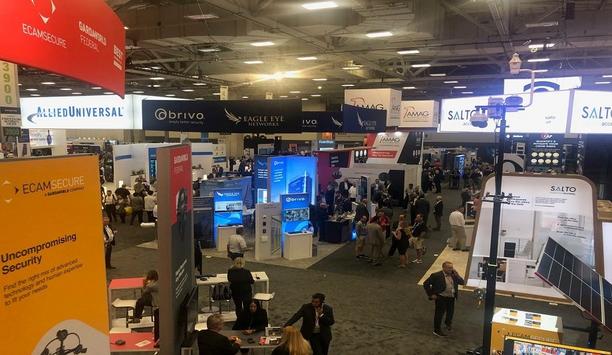
Companies at GSX 2023 emphasized new ways that technologies such as artificial intelligence (AI) and the cloud can address long-standing issues in the security market. Among the exhibitors at the event in Dallas were companies seeking creative ways to apply technology, lower costs, and make the world a safer place. Reflecting on the exhibition, here are some additional takeaways. Expanding AI at the edge i-PRO is a company reflecting the continued expansion of edge AI capability in the security market. Today, more than half of the company’s lineup supports AI at the edge so the customer has a wide choice of form factors when seeking to leverage the feature set. AI processing relay, extended warranty i-PRO is increasing their warranty period from 5 to 7 years, which could be a lifetime warranty in some cases I-PRO also has an “AI processing relay” device that accepts non-AI video streams and applies edge analytics. AI has progressed from a high-end technology to a feature available in a variety of cameras at different price points. i-PRO is also increasing its warranty period from 5 to 7 years, which could be a lifetime warranty in some cases depending on a customer’s refresh schedule and lifecycle management. Active Guard, MonitorCast The company’s video management system (Video Insight) is continuing to build new features including “Active Guard,” an integrated metadata sorter. Their access control platform, MonitorCast, is a Mercury-based solution that is tightly integrated with Video Insight. Their embedded recorders now have PoE built in. “We can move at a faster pace to fill out our product line since leaving Panasonic,” says Adam Lowenstein, Director of Product Management. “We can focus our business on adapting to the market.” Emphasis on retail and other verticals Shoplifting is a timely issue, and retail is a vertical market that got a lot of attention at GSX 2023. “We see a lot of retailers who are primarily interested in protecting employee safety, but also assets,” says Brandon Davito, Verkada’s SVP of Product and Operations. “Shrinkage is a CEO-level priority.” “Retailers are getting more engaged with security posture, instead of letting perpetrators walk,” Davito adds. Intrusion detection Verkada has an intrusion product that will notify a central station if there is an alarm On the alarm side, Verkada has an intrusion product that will notify a central station if there is an alarm, and operators can review videos to confirm the alarm. Other capabilities seeking to discourage trespassers include sirens, strobes, and “talkdown” capabilities. International expansion Verkada continues to expand internationally with 16 offices in all, including Sydney, Tokyo, and London. The core value proposition is to enable customers to manage their onsite infrastructure more simply, including new elements such as PTZ cameras, intercoms, and visitor management. Verkada emphasizes ease of use, including a mobile application to allow access to be managed across the user base. Forging partnerships “We are committed to the channel and industry, and we continue to build relationships and expand our reach,” says Davito. Among the industry relationships is a new partnership with Convergint, which was hinted at during the show and announced later the same day. They are also expanding their partnerships with Schlage, Allegion, and ASSA ABLOY. Working with other verticals They offer new features for K -12 schools, and a new alarm platform is easier to deploy and manage Verkada has also found success across multiple other verticals, notably healthcare, where they integrate with an electronic medical records system. They offer new features for K-12 schools, and a new alarm platform is easier to deploy and manage. They are integrating wireless locks to secure interior doors in schools, looking to secure the perimeter, and installing guest management systems. Transitioning the Mid-Market to the Cloud Salient is squarely focused on the “mid-market,” a large swath of systems somewhere between small businesses and enterprise-level systems. Pure cloud systems are not as attractive to this market, which has a built-out infrastructure of on-premise systems. Adding a camera to an existing system is easier and less expensive than tying it to the cloud. Benefits of cloud It’s a market that may not be ready for pure cloud, but there are benefits to be realized from adding a cloud element to existing systems. “We are continuing to augment our premise-based solutions with added cloud capabilities and flexibility,” says Sanjay Challa, Salient’s Chief Product Officer. The feedback Salient hears from their customers is “I want to own my data.” The hybrid cloud approach offers the right mix of control, flexibility, and unit economics. Cloud add-on capabilities We want to provide the flexibility for customers to go full-cloud as it becomes more economically attractive" Cloud add-on capabilities include bringing more intelligence about system operation to the user via the cloud. Over time, Salient expects to sell more cloud-centric offerings based on feedback from integrators and customers. “We want to provide the flexibility for customers to go full-cloud as it becomes more economically attractive over time,” says Challa. Vaidio AI technology Salient seeks to be a transition pioneer to help customers realize the path to the cloud. Their approach is “crawl, walk, run,” and helping customers make the transition at each stage. Salient has added AI to its product offering, incorporating Vaidio AI technology from IronYun into a powerful suite and broad array of on-premise analytics, which are gaining traction. The seamless approach makes it easy for customers to embrace AI analytics, although Salient remains broadly committed to open systems. Addressing ‘Soft’ Features for Integrators AMAG is in the process of enhancing its product line with the next generation of access control panels. However, “product” is just part of the new developments at AMAG. In addition to “hard” features (such as products), the company is looking to improve its “soft” features, too; that is, how they work with the integrator channel. Integrator channel Rebuilding a process to make your organization more efficient, is relatively easy; it just takes a lot of persistence" “We have the depth of our legacy customer base we can learn from, we just need to close the feedback loop quicker,” says Kyle Gordon, AMAG’s Executive Vice President of Global Sales, Marketing, and commercial Excellence, who acknowledges the value of reinstating face-to-face meetings after COVID. “We are laser-focused on nurturing our integrator channel,” he says. “Developing new features takes time, but rebuilding a process to make your organization more efficient, that’s relatively easy; it just takes a lot of persistence,” says Gordon. More cohesive internal communication is another useful tool, he says. Disrupting the cloud based on price Wasabi is working to make cloud applications less expensive by offering a “disruptive” price on cloud storage, $6.99 per terabyte per month (80% less than hyperscalers). Contending “hyperscalers” like AWS are charging too much for cloud storage, Wasabi is using its own intellectual property and server equipment co-located in data centers around the world. Wasabi sells “hot cloud storage,” which refers to the fact that they only have one tier of storage and data is always accessible. In contrast, a company such as AWS might charge an “egress fee” for access to data stored in a “colder” tier. Cloud storage “We saw that several video surveillance companies had not yet adopted cloud storage, and we saw an opportunity to make it easy to use,” said Drew Schlussel, Wasabi’s Senior Director of Product Marketing. “We just install a little bit of software that allows them to store data in the cloud and bring it back from the cloud.” Performance, protection (cybersecurity), and price Wasabi works with integrators, resellers, and distributors and also integrates with VMS companies Wasabi works with integrators, resellers, and distributors and also integrates with VMS companies such as Genetec and Milestone. Emphasizing performance, protection (cybersecurity), and price, their data centers are certified to SOC 2 and ISO 27001 standards. Faster throughput for weapons detection Xtract One is a young company focusing on weapons detection in a time of accelerated concern about gun issues post-COVID. Founded in Canada and based on technology developed at McMaster University, Xtract One has found a niche in providing weapons detection at stadiums and arenas. These customers already have budgets, and it is easy to shift the money to a newer, faster technology. Madison Square Garden in New York City is among its customers. Cost savings solution Xtract One can increase throughput to 30 to 50 people per entrance per minute (compared to 5 to 6 people per minute when using metal detectors). The solution doesn’t require anyone to empty their pockets and the system alarms on items beyond guns and knives. Using Xtract One allows customers to reduce the number of screening lanes and security staff, providing additional cost savings, all while getting fans through the screening process in half the time. Purpose-built sensors The system uses purpose-built sensors looking for specific characteristics, such as reflective and density properties In addition to stadiums and arenas, Xtract One, formerly Patriot One, is also getting “inbound” interest from schools, hospitals, manufacturers, and other verticals that makeup 50% of their business. “We’re on a rocket ride, mainly because the weapons issues are not going away,” says Peter Evans, CEO and Director at Xtract One. The system uses purpose-built sensors looking for specific characteristics, such as reflective and density properties, all correlated by an AI engine. Providing early warning of violence ZeroEyes is another company focused on weapons detection. Their AI gun detection system works with video images to identify if someone is “brandishing” (carrying) a weapon. In other words, the system does not detect concealed weapons. Identifying someone carrying a weapon provides early warning of a possible violent act. Increased response with AI-enables images Images are identified by AI and sent to a monitoring center where a human confirms the image before contacting first responders. Knowing the location of a shooter enables staff to lock entry points, move people to safety, and direct first responders. The company was founded to leverage existing camera views to stop mass shootings and gun violence by reducing response times.
Case studies
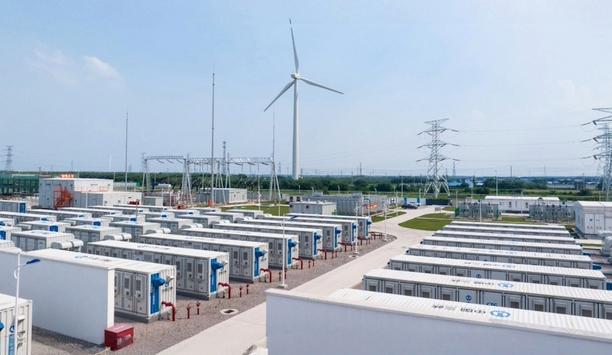
The global energy landscape is evolving at an unprecedented pace. With the increased adoption of renewable energy sources and the drive for a more sustainable future, the demand for efficient energy storage has never been greater. Enter Battery Energy Storage Systems (BESS)—the backbone of modern energy infrastructure, ensuring stability, resilience, and efficiency in power distribution. Record-breaking growth in storage In 2024, the US battery storage market saw record-breaking growth, with nearly 9.2 gigawatts (GW) of new capacity installed in late November alone, according to figures from S&P Global. But how is this supercharged leap into more stable power distribution fairing on a fundamental level? Despite an estimated capacity increase in the United States of a staggering 89% in 2024, according to U.S. Energy Information Administration (EIA), there is still more to be done to ensure this rapid rollout of these mainly Lithium-ion battery systems don’t pose a threat to workers, communities and the energy infrastructure. US battery storage market saw record-breaking growth, with nearly 9.2 GW of new capacity The global importance of battery energy storage systems BESS helps to bridge the gap by storing excess energy when supply is high BESS plays a critical role in balancing power supply and demand, especially as more countries transition to renewable energy sources like solar and wind. Typically, renewable energy sources are inherently intermittent—meaning they don’t produce electricity consistently throughout the day, due to a variety of uncontrollable environmental factors. BESS helps to bridge the gap by storing excess energy when supply is high and distributing it when demand peaks. While the idea of shoring up the energy infrastructure to greater withstand periods of intense strain is a laudable (and indeed, logical) one, they must ensure that in the haste to erect new BESS sites, they don’t overlook vital safety concerns. How BESS underpins growing support for the electrification In addition to grid stabilization, BESS is instrumental in enhancing energy reliability. By storing surplus electricity, BESS ensures that power remains available even during blackouts or grid failures. It’s also an important element of reducing carbon emissions, as with stored renewable energy, reliance on fossil fuel-powered plants decreases, leading to a more sustainable energy mix. Let’s not forget how BESS underpins growing support for the electrification of transportation. As electric vehicles (EVs) gain traction, BESS can facilitate fast-charging infrastructure without overloading the grid. Prominence of BESS installations can mean greater risks Renewable energy producers added 10.5 GWh power to the energy network, according to market intelligence In February 2025 alone, renewable energy producers added 10.5 GWh capacity to the global energy network, according to market intelligence firm Rho Motion’s Battery Energy Stationary Storage Monthly Database. But while BESS sites are a useful way to prevent overloading the world’s power supplies—releasing stored energy at peak times when power generators come under greater strain—they come with challenges. One of the greatest concerns is thermal runaway, a dangerous chain reaction in which rising temperatures spread from one battery cell to another. Why advanced thermal imaging solutions are essential Without proper monitoring and early detection of potential failures, thermal runaway incidents can easily snowball into devastating fires. These fires spread rapidly, passing from unit to unit, causing sizable financial losses, environmental damage, and, of course, safety hazards—including releasing toxic substances such as hydrogen fluoride gas. Advanced thermal imaging solutions are becoming essential to keep BESS sites safe That’s why advanced thermal imaging solutions are becoming essential to keep BESS sites safe and operational. Fixed thermal cameras with advanced analytics are the go-to solution, as they can trigger alarms and suppression systems when temperatures pass a set threshold.
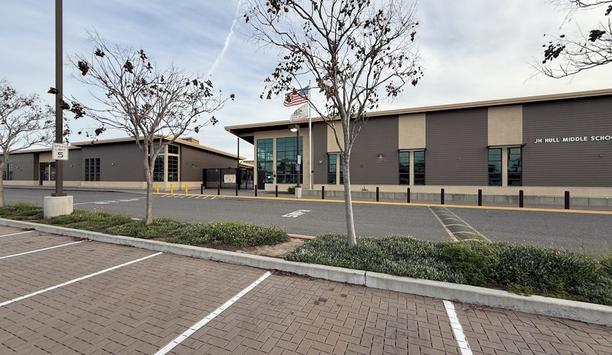
The Torrance Unified School District is a cornerstone of the Torrance community, dedicated to providing a high-quality education that prepares students for success in college, career, and life. Serving a diverse student population, Torrance USD delivers a comprehensive and enriching educational experience from kindergarten through high school. The school district comprises 17 elementary, eight middle, and five high schools, one continuation high school, and one alternative high school. Vendor solutions Torrance USD had a mashup of different technologies and vendor solutions across its schools Like many school districts, Torrance USD had a mashup of different technologies and vendor solutions across its schools regarding the ability to broadcast announcements and alerts. Each school had separate systems for bells, clocks, and loudspeakers. There was no central management of these systems, and the school district couldn't create pre-recorded messages for emergencies. Many system components were also end-of-life, and maintaining everything was cumbersome at best. Focusing on consolidation for reliability and consistency Torrance USD began planning district-wide communication improvements in 2020, with the overarching goal of deploying one uniform system through all 32 campuses, with one dashboard to manage communications. The school district achieved its goal by deploying Cisco Call Manager coupled with Singlewire’s InformaCast communications software and hundreds of IPX endpoints from AtlasIED. Vetted integration technology partners like Cisco, Singlewire, and AtlasIED ensure that interoperability, reliability, and usability have all been verified and validated through extensive testing. Surveillance cameras for emergency alerting Torrance USD began planning district-wide communication improvements in 2020 “This project was part of a larger strategic plan to secure each campus — improve perimeter security, add surveillance cameras, allow for emergency alerting, consolidate the speaker systems, and standardize the bells,” said Gil Mara, Chief EdTech and Information Services Officer at Torrance USD. “For example, when you went from one campus to another, campuses had different bell sequences for scenarios like lockdowns. So, there was no consistency of the alerting mechanisms, and we wanted to ensure it was consistent across all the schools.” Digital and physical security of K-12 schools District staff contacted Nilkanth Radadia, Senior Account Manager at NIC Partners, to design the desired district-wide communications solution. NIC Partners has over two decades of experience enhancing the digital and physical security of K-12 schools and was well-suited to take on a project of Torrance USD’s scale. Focusing on what’s most important “Many stakeholders were involved in this project,” said Radadia. ”Given the project’s scope and requirements, there were a lot of conversations beforehand to get the district comfortable with understanding how the system would work." "Some key elements were customizability, two-way talk, multicolor visual message capabilities, and ADA compliance for the visual and hearing impaired. When AtlasIED came out with their full LCD screen speaker, that was a game changer.” Feature set and industrial design NIC Partners installed nearly 1700 IP-SDMF speakers throughout the schools to ensure messages AtlasIED was chosen as the vendor for the system upgrades after a thorough evaluation of various vendors. Their feature set and industrial design, particularly the full LCD screen speaker, stood out. NIC Partners installed nearly 1700 IP-SDMF speakers throughout the schools to ensure messages were audible, visible, and intelligible. WAN or LAN network architecture Leveraging standard WAN or LAN network architecture, each speaker is equipped with an integrated talkback microphone, LCD, and LED flasher, supporting both visual text and audio broadcast to enhance physical security while improving day-to-day communications through advanced alerting, bell schedules, and pre-recorded and scheduled announcements. For example, at 8:30 each morning, the Pledge of Allegiance is broadcast to all schools with a patriotic color palette appearing on the IPX endpoints. LED blinker “We needed to implement a solution that would serve the needs of all the students, including those with visual or audio impairments,” said Mara. “That's why having the LED blinker and the message crawler was essential. That solved the issues regarding accessibility for our students and staff to ensure they got the message(s) every time.” Network-wide communication For campus exteriors, NIC Partners chose the IP-HVP speaker from AtlasIED For campus exteriors, NIC Partners chose the IP-HVP speaker from AtlasIED. The IP-HVP is a vandal-proof, IP45 weather-resistant, wall-mount IP speaker well-suited for environments where network-wide communication is desired, and high output is required to overcome excessive ambient noise or large spaces. Almost 600 IP-HVP speakers were installed district-wide. Additionally, the Power over Ethernet (PoE+)-enabled IPX endpoints connect through the same IT network the school uses to deliver Internet access. InformaCast mass communications software The platform simplifies the installation process for integrators and reduces the need to introduce multiple cable types to a project. The IPX platform also offers scalability benefits, allowing schools the flexibility to expand their systems as the district’s communications evolve. The IPX Series also helped Torrance USD incorporate new and expanded campus safety capabilities with the help of InformaCast mass communications software. IPX LCD screens Torrance USD is trying out various color combinations on the IPX LCD screens to indicate alerts Using InformaCast, designated school personnel can initiate an alert from a mobile device wherever they are. The software then sends text messages to faculty, students, and parents' mobile devices, alerts law enforcement, and activates attention-grabbing audio alarms and LCD text messages on the installed IPX devices throughout the school or district. Currently, Torrance USD is trying out various color combinations on the IPX LCD screens to indicate different kinds of alerts, including earthquakes, shelter-in-place, and all-clear messages. Intentional and Phased Deployment Leads To Consistent Use NIC Partners started with the smallest school to establish best practices for implementation. Once the first school was completed and future implementation methods documented, NIC Partners went full-on with the remaining schools, working second shift during the school year and completing all the upgrades district-wide in less than five months. The communication system is in the final phase of upgrading all the schools to InformaCast Fusion servers and upgrading Cisco Call Manager to Webex calling. These updates will allow select school and district staff members to make emergency announcements or push out notifications directly from their cell phones. NIC Partners and AtlasIED Staff and students appreciate the audio upgrades, albeit for different reasons. Teachers are relieved by the improved audio clarity, as they can finally hear things “loud and clear,” and emergency alerts include visual messaging. Students love the music played at the end of each period to indicate a class transition. “Before the upgrades, you couldn't make a good page,” said Mara. “Now, the audio clarity is way better. We’re delighted with the IPX products and even happier to have NIC Partners and AtlasIED as our partners for such a huge undertaking. We wouldn't have been successful without their help.”
Like any retail franchise, car dealerships that have multiple locations nationwide require comprehensive, reliable, and scalable video surveillance solutions to protect their businesses. With dealership theft increasing by 7% since 2021, protecting high-value inventory, mitigating liability risks, and ensuring compliance with video data retention standards have become critical priorities. Future surveillance solutions BCD is vital to guarding functions, protecting valuable assets, and maintaining peace of mind Additionally, managing surveillance across multiple sites demands systems that are easy to deploy, cyber-hardened, and capable of centralized oversight. As dealerships continue to expand, investing in future-ready surveillance solutions with a trusted systems builder like BCD is essential to safeguarding operations, protecting valuable assets, and maintaining peace of mind. The challenge Car dealerships face distinct challenges when it comes to security and operations, such as: Asset Protection: Showrooms and lots house high-value vehicles and parts, making them prime targets for theft and vandalism. Cybersecurity Threats: Surveillance systems needed to be cyber-hardened to prevent breaches that could compromise sensitive footage or customer information. Reliable Recording: Continuous operation is essential to ensure no gaps in security coverage, particularly during off-hours or high-traffic events. Scalable Storage Across Locations: With multiple sites generating large volumes of video footage, dealerships need a solution to store data for 30-90 days to comply with industry regulations and internal policies. Centralized Management: Managing surveillance across dozens of locations required a solution that simplified oversight while enabling scalability for future growth. The solution BCD’s All-in-One Hybrid Cloud NVR is a cutting-edge video surveillance solution designed to address these challenges. The solution offers: Integrated PoE Switch: The All-in-One NVR includes a built-in Power over Ethernet (PoE) switch, simplifying installation and reducing the need for additional network infrastructure, which saves time and costs while simplifying the overall infrastructure. Cyber-Hardened Security: BCD’s solutions are all certified as cyber-hardened solutions to maximize data protection and minimize the risk of data breaches. Always-On Recording: With features like RAID storage for redundancy and failover capabilities, along with the Harmonize Remote Monitoring and Management plugin, the All-in-One solution ensures uninterrupted recording, and with customized notifications, can mitigate hardware or network disruptions. Hybrid Cloud Architecture: The All-in-One NVR provides 80TB of local storage for immediate access to live footage while seamlessly integrating with cloud storage for long-term retention. This hybrid approach ensures franchises can store footage for 30 days or more without overwhelming local resources. Centralized, Scalable Management: BCD’s solution is simple to deploy and typically takes 30 minutes or less, allowing franchises to monitor and manage surveillance across all locations from a single interface, simplifying administration and reducing operational overhead. The results Deploying BCD’s All-in-One Hybrid Cloud solution has the potential to drive significant improvements across multiple aspects of a franchise’s video surveillance operations, including: Enhanced Security: Reliable and cyber-hardened surveillance protect valuable inventory and reduce the risk of theft or vandalism. Continuous Uptime: The system’s failover mechanisms along with Harmonize Remote Monitoring and Management Plug-in ensures 24/7 recording with no interruptions, providing full coverage for liability and security events. Regulatory Compliance: Hybrid cloud storage allows each location to easily meet the 30-90-day retention requirement without costly local storage upgrades. Operational Efficiency: Centralized management and user-friendly tools reduce the complexity of overseeing surveillance across multiple locations, cutting costs and improving oversight. Future-Ready Scalability: As franchises expand, BCD’s solutions are designed to scale effortlessly to accommodate new locations and increased storage demands, providing a future-proof investment. Conclusion BCD’s All-in-One Hybrid Cloud NVR is an ideal solution for national franchises, such as car dealerships, and offers a secure, reliable, and scalable video data infrastructure. By leveraging hybrid cloud technology and simplified management, franchises will experience peace of mind knowing their assets are protected, compliance requirements are met, and their operations will be optimized for growth.
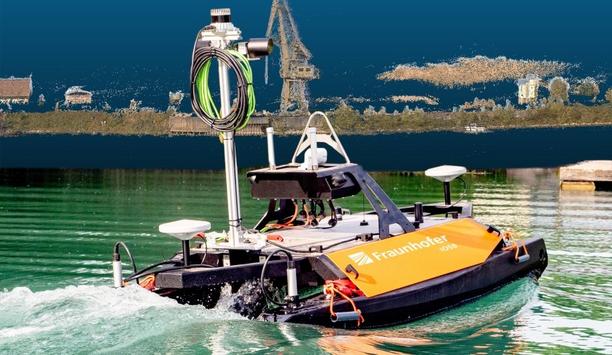
Up-to-date and accurate maps of the waterways are a prerequisite for safe and efficient shipping in Germany. Authorities such as the Federal Maritime and Hydrographic Agency, but also private harbor operators, are obliged to provide these in an up-to-date form at all times. The main reason for this is to avoid accidents caused by an incorrect or outdated card. This includes the classification of federal waterways, their kilometers, existing locks, lifting and barrages, other surrounding waters, places, and borders. Currently, mapping is carried out by conventional ships with trained personnel, which is time-consuming and expensive. This can result in long intervals between measurements at a particular location. 3D map of the surroundings Bank areas and surface forms are monitored by an optical system with two integrated cameras (Semi-)automated monitoring of waterways by autonomous platforms with obstacle avoidance and traffic detection could optimize this process and provide maps in less time. To this end, the Fraunhofer Institute of Optronics, System Technologies and Image Exploitation IOSB has developed an autonomous surface vehicle capable of autonomously surveying bodies of water as part of a three-year in-house research project. For this purpose, the river bed is recorded using sonar. Furthermore, the bank areas and surface structures are monitored by an optical system with two integrated industrial cameras from IDS Imaging Development Systems GmbH. The information obtained in this way is then merged and transferred to a 3D map of the surroundings. Application The precise surveying of water bodies is a demanding task. TAPS, the Fraunhofer IOSB's semi-automatic direction-finding system for rivers and lakes is able to perform this task both under and above water. The vehicle, which measures approximately 2 x 1.5 x 1 meters, travels along the relevant waterway and automatically avoids obstacles, whether stationary or moving. At a speed of two knots - which corresponds to around 3.7 kilometers per hour - such a mission can last up to 20 hours. For visual mapping of the shore areas, TAPS has two cameras attached to a mast, each pointing to a starboard or port and whose fields of view do not overlap. Due to their high resolution, they allow a visual inspection of relevant infrastructure, such as quay walls, as well as 3D modeling of the shore area based on the recorded image data. Orientation of the TAPS platform GNSS and IMU data serve as the basis for picking the position and exposure of the TAPS platform "We use an automated system for intelligent image capture. As soon as one or both cameras are focused on a predefined area of interest, image recording is started. The vehicle's own movement is also used to store only image data that is recorded from different angles and therefore offers added value in terms of content," explains Boitumelo Ruf, expert in photogrammetry in the Autonomous Robot Systems research group at Fraunhofer IOSB. GNSS (Global Navigation Satellite Systems, such as GPS) and IMU (Inertial Measurement Unit for position determination) data serve as the basis for determining the position and orientation of the TAPS platform. "When the images are captured, they are enriched with the current GNSS position data. The latter are required later for the assignment of precise coordinates," Ruf continues. COLMAP photogrammetric toolbox After data acquisition, the recorded images are transmitted together with the GNSS data to a ground control station, where a photogrammetric reconstruction is carried out. Boitumelo Ruf describes the procedure in more detail: "Among other things, we use the COLMAP photogrammetric toolbox. It uses outstanding image features to first compare the input images, calculate their relative positions and create a true-to-life 3D model of the environment." "We then use the tool to match the images pixel by pixel, i.e. we search for corresponding pixels and merge them exactly. The result is a dense 3D point cloud that is georeferenced using the GNSS positions, i.e. provided with the corresponding current coordinates." The 3D model can then be used for other tasks, such as visual inspections or bank monitoring. Robust industrial cameras defy wind and weather On the camera side, the Fraunhofer Institute relies on two uEye FA industrial cameras from IDS. The robust and resilient models with PoE are ideal for demanding environments. Camera housings, lens tubes, and screwable connectors meet the requirements of IP code IP65/67 and are thus optimally protected against dirt, dust, and splash water. The robust and resilient models with PoE are ideal for demanding environments The model used has the large-format 1.1" CMOS sensor IMX304 from Sony and delivers very clear, noise-free images with a resolution of 4096 x 3000 pixels. Thanks to its remarkable dynamic range and very high sensitivity, the global shutter sensor of the second-pixel generation of the Pregius series is particularly suitable for metrology applications, among others. It was precisely these characteristics that were decisive for the Fraunhofer IOSB's choice of camera. In addition to robustness and weather protection, important requirements for the cameras included a compact form factor and high image resolution to enable detailed visual inspections. The sensor should also offer a high dynamic range in order to capture images with a high level of detail in both sunny and shady areas. Integration via the standard GigE Vision interface enables the development and use of one driver for several systems with different cameras. Outlook The shortage of skilled labor is also a major issue in the surveying of waterways. Automated mapping of the waterways could not only reduce costs but also the time and, above all, the labor required. The aim of the TAPS project was to develop a prototype for this task and to demonstrate its potential in relevant scenarios. As a research organization, Fraunhofer typically develops technologies up to a level at which the functionality and suitability of the system have been proven. The next step is now cooperation with industrial partners. Dr. Janko Petereit, head of the Autonomous Robot Systems research group at Fraunhofer IOSB, explains: "We are actively looking for partners to take this final step towards commercialization together. In view of the positive results of our initial tests and the increasing demand for accurate, up-to-date waterway maps, we expect strong demand for our technology in the coming years. The knowledge gained can be used in a variety of ways. Autonomous watercraft can be used to transport people and goods by sea or inland waterways. The excavation of waterways and the autonomous surveying of fairways are also conceivable. “ The project demonstrates the high potential of the interaction between robot systems and digital image processing. The cards could be reshuffled in the future, particularly with regard to visual environment detection and scene interpretation.
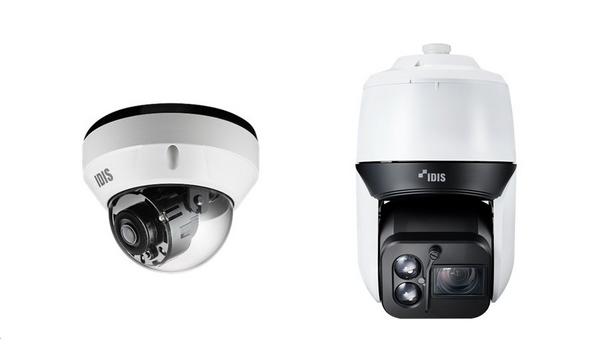
An end-to-end IDIS video solution has overcome performance, quality, and affordability challenges that had hampered public space surveillance in Bristol city center. The upgrade, which tackled a growing list of problems including degraded picture quality, unreliable transmission and data storage, and poor usability, has been completed at Temple Quay and Glass Wharf by KIS Fire & Security. GDPR-compliant video surveillance The successful project is enabling significant operational improvements by the 24/7 security team that manages the site, according to Property Manager, Avison Young. The company reports faster responses to medical incidents and more effective prevention of petty crime and antisocial behavior, thanks to surveillance coverage without blind spots and the ease with which officers can retrieve and export GDPR-compliant video evidence to support police investigations. Temple Quay and Glass Wharf The original video system at the site was almost twenty years old and proving to be increasingly unreliable Temple Quay and Glass Wharf are part of the Bristol Temple Quarter Enterprise Zone which is home to hundreds of businesses, government offices, serviced offices and co-working spaces, bars, restaurants, and residential properties. The original video system at the site was almost twenty years old and proving to be increasingly unreliable, with underground cabling and equipment prone to flooding and cameras producing increasingly poor-quality images. Challenges faced "The problems were made worse by a cumbersome VMS operating system," says KIS Director - Rob Morgan, adding “The prospect of a complete system upgrade seemed daunting because it would need a complete replacement of the backbone infrastructure, cameras, recorders, etc. and a new VMS management system." He continues, "But we were able to satisfy Avison Young with IDIS technology, showing them a major public space system that we’d recently completed for Bristol Zoological Society.” IDIS Center VMS The new solution, managed by the cost and license-free IDIS Center VMS, includes NDAA-compliant 8MP IDIS PTZ cameras delivering superior images at up to 31x zoom; vandal-resistant 5MP IR dome cameras; 8-ch 4K recorders supporting UHD display; a specialist network operator’s keyboard; plus, mountings, POE switches, and all other network accessories. The system is easier to use and gives the security team complete area coverage, including full visibility KIS completed the upgrade ahead of schedule in under four months, with rapid installation supported by IDIS plug-and-play DirectIP® technology ensuring instant and seamless functionality of all devices. The system is also easier to use and gives the security team complete area coverage, including full visibility along – and across – a waterway that runs through the site. Instant device functionality “With IDIS, the instant full functionality of all devices means we can be more certain about completion times, even for major public space projects like Temple Quay and Glass Wharf,” says Rob Morgan. He adds, “The system also comes with extended warranties, and failover protection against loss of data in the event of network instability - for public area surveillance this kind of reliability is essential.” Award-winning solution “Following our successful partnership with the award-winning solution for Bristol Zoo, IDIS was delighted to support KIS with this major city center surveillance project,” says Jamie Barnfield, Senior Sales Director, IDIS Europe. He adds, “Both these projects show video technology at its best, helping to create welcoming public spaces where people can feel safe.”

Crystal Mountain Resort is Washington's largest winter and summer getaway. For over 60 years, the picturesque resort near Mount Rainier has drawn millions of sports enthusiasts around the world. An early adopter of new technology, the resort was also the first in Washington to install a high-speed, detachable quad chairlift, Rainier Express. Technology solution needed As the resort's Director of IT, Perry Turner is in charge of protecting over 400,000 guests and 2,600 acres of land all year long. The resort is open for skiing and snowboarding from November to April, and summer activities with scenic gondola rides from May to September. This meant that any technology solution had to withstand snow and low temperatures during the winter and high humidity levels during the warmer months. "The elevation tops out at a little over 7,000 feet, so the weather conditions can get extreme. The technology we use needs to be able to withstand everything from snowstorms to 100 MPH winds." The challenges Low-quality legacy cameras and limited connectivity led to gaps in coverage with lens fogging and weather-sealing issues "The combination of moisture and cold temperatures was wrecking our older cameras, which couldn't survive the harsh conditions.” Remote areas with limited infrastructure are difficult to wire and get power to. Low-quality legacy cameras and limited connectivity led to gaps in coverage, while lens fogging and weather-sealing issues led to malfunctioning cameras and poor visibility. Loss of time in retrieving images If footage was available, retrieving and sharing even a minute from two different network video recorder (NVR) systems was an excruciating process. "If I had to pull 10 minutes of footage, it would take three to four hours to get the right clip and to download it. It would crash all the time, and I'd have to start the process all over again." Why Verkada? "The interface is excellent, the app is easy to use and the cameras are rock solid. The hybrid cloud infrastructure also helps with reliability. I don't need an on-premise device to handle all the recording since the camera does that. It's a lot less to maintain from my end." Seamless operation From a single pane of glass, Perry simplifies management and ensures the seamless operation of the resort. He was an early adopter and beta tester for the Verkada Cellular Gateway, a new product that allows him to deploy cameras in any location. With more coverage and connectivity solutions, he leaves no room for oversight – no matter how minute the detail is. "We have Verkada coverage in remote areas with access to power but no internet. Across our 2,600 acres, the possibilities are endless: up on the mountains, out in parking lots, over shuttle stops, and even gondola stations." The results Cellular deployments in remote and hard-to-wire areas Cameras built to handle 100 MPH winds and -40°F Livestream ski conditions in high-image resolution A platform that saves time and reduces work Risk and liability prevention 1. Cellular deployments in remote and hard-to-wire areas Until recently, Perry's camera deployments were limited to places where he could run ethernet cable. While cellular data was available, it would require him to piece together different components - an LTE router, a PoE switch, a NEMA enclosure, and a data plan - all sourced from disparate vendors. His GC31 Cellular Gateway combines all the above into a single device that provides both power and data to any Verkada device. The result is a simple, seamless operating experience with minimal setup needed. LTE coverage “It took only a few minutes to install the cellular gateway and connect it to our PTZ, which monitors our moving snow stake." "The snow stake has to be in a remote corner so it’s not wind-affected, but we can now use the cellular gateway to take advantage of LTE coverage in the area.” 24/7 technical support Perry has Verkada’s unlimited data plan on the cellular gateway, which comes with the 24/7 technical support he’s used to from Verkada. The cellular gateway bridges gaps in coverage and opens a new world of use cases for Perry, "The GC31 allows us to install cameras along the road coming into the resort and at our parking lots. On busy weekends, we can easily monitor traffic and parking lot capacity.” 2. Cameras built to handle 100 MPH winds and -40°F The lack of issues with their hardware surprised Perry and his team. All the Verkada cameras onsite are enterprise-graded and are IP67 and IK10-rated. Additionally, they come with an integrated temperature gauge and built-in heaters that automatically turn on once the temperature hits -20°C (-4°F). Verkada outdoor cameras are fully functional at sub-zero and high heat temperatures and can withstand temperatures ranging from -40°C to 50°C (-40°F to 122°F). 10-year warranty Backed with an industry-pioneering 10-year warranty, Perry can install cameras anywhere at the resort – from the retail shops to the top of Mt. Rainier – and not have to touch them again. "We mounted a camera on top of a building that gets hit by 100 MPH winds and beyond freezing conditions, and it's had zero problems. We just set it and forget it." 3. Livestream ski conditions in high-image resolution Low-quality images and footage are no longer an issue with Verkada. The cameras come with advanced image sensor technology, which allows them to produce crystal-clear footage. Even in low-light conditions, like the resort's "Night Skiing" events, the built-in infrared LEDs make capturing footage in darker environments possible. Live video feeds No matter the conditions or location, Perry and his team have a clear view of the people and property at the resort No matter the conditions or location, Perry and his team have a clear view of the people and property at the resort. The Marketing department shares current skiing and snowboarding conditions on the website, and they have multiple cameras placed throughout the resort that share live video feeds. "Our website has live video feeds of the slopes, and as soon as we switched to our first Verkada camera, the jump in image quality was evident. The guests love it. The Marketing team now wants to add more for the public-facing side of things." 4. A platform that saves time and reduces work Verkada cameras come with built-in video storage capabilities of up to 365 days, removing the need for on-premise servers and all the associated work and time required to maintain them. Plug-and-play cameras are pre-configured and fully operational within minutes. When it comes to pulling footage, the process is night and day. Footage on Command Before, there were a lot of requests for footage pulls from the Security and Lift Operations teams. These teams can securely access footage themselves on Command through their mobile phones, eliminating most of these requests. If Perry does have to pull and share a snippet of footage, it takes a fraction of the time it did beforehand. With Verkada, that process is straightforward and seamless. "Pulling and sharing video footage now takes minutes, not hours. And when other teams need to pull footage, they can access it directly from their phones. This has removed multiple steps in our workflow and saves everyone a ton of time." 5. Risk and liability prevention Placing Verkada cameras at vulnerable and high-risk areas at the resorts (including retail shops and chairlifts) has helped thwart thefts of thousands of dollars worth of ski equipment and dispute false claims. If an incident arises, Perry can corroborate the witness accounts with easily accessible footage to see how the facts line up. Within Command, Perry can choose the camera he wants to view the history of, jump to a specific date and time, and review other data and analytics. Once he finds what he's looking for, he can share the footage with anyone through text, email, or a link. Guest safety Safety issues can arise if someone falls in the chairlift area so additional visibility is crucial Guest safety is another key priority for the resort, especially on the slopes. The cameras positioned at and near the chairlifts help monitor that guests are seated correctly. Safety issues can arise if someone falls in the chairlift area so additional visibility is crucial to protect both the guests and the resort. "Verkada provides peace of mind and liability protection. We can quickly verify what happened with a past incident and address any security or safety issue as it's happening. If someone is in trouble at the chairlifts or on the slopes, we can respond immediately." Looking Ahead Crystal Mountain Resort's success in deploying Verkada cameras has led to rave reviews from various internal teams. They are exploring how they can leverage the platform to improve the customer experience at the resort. "We recently learned about the Occupancy Trends feature, and there are so many potential applications. Foot traffic is just one thing that we want to keep track of in our rental shops and restaurants." Lower cost of ownership Most critically, leadership loved the enthusiasm surrounding the platform and has performed further financial analysis. What they found were more possible benefits, including a lower cost of ownership. "The more teams interact with the platform, the more buy-in we've received from leadership. They realized that Verkada is more cost-effective in the long run.”
Products
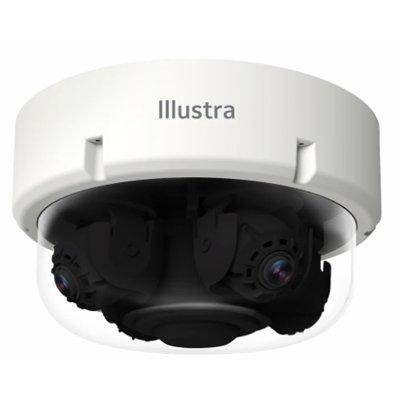
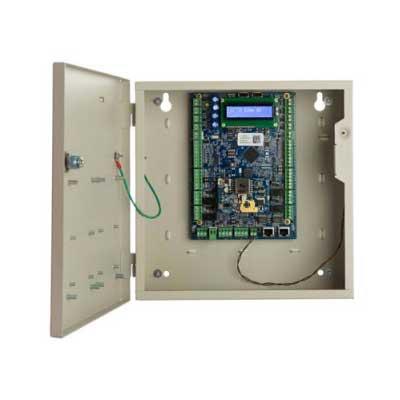

Round table discussion

As physical security technologies become more complex, it is incumbent on the dealer/integrator to have the skills and expertise needed to ensure that a system operates smoothly. The value of integrators increasingly rests on the skill sets they bring to bear when installing a system. If the skills are missing, there is a problem. We asked this week’s Expert Panel Roundtable: What missing skills among security integrators can cause problems for customers?

Cost is a reality to be managed. No matter how powerful or desirable a technology may be to a customer, the sale often comes down to the basic question: Can I afford it? And affordability extends not just to the purchase price, but to the cost of technology over its lifespan. In addition to advances in technology capabilities, the security industry has also achieved inroads to make its offerings more worth the cost. We asked this week’s Expert Panel Roundtable: What is the physical security industry doing to make more affordable and cost-effective technology solutions for end users?

2019 was a big year for the Expert Panel Roundtable. The range of topics expanded, and we had more participation from more contributors than ever before. In closing out the year of contemplative discussions, we came across some final observations to share. They can serve both as a postscript for 2019 and a teaser for a whole new year of industry conversations in our Expert Panel Roundtable in 2020.