Physical Security Information Management (PSIM) - Round table discussions
If AI is the dominant buzzword in the physical security industry, it is the second letter (I for intelligence) that is having the biggest impact. Simply put, intelligence transforms computer systems, including those used for physical security, from rigid, rule-following calculators into adaptable, problem-solving partners to human operators. We asked our Expert Panel Roundtable: What is the changing role of intelligence in physical security?

Adequate video surveillance coverage depends entirely on a facility's layout, square footage, and security goals. Historically, better coverage required more cameras, but technology innovations are changing those expectations and undermining previously held rules of thumb. We asked our Expert Panel Roundtable: Do today's video systems generally require more cameras or fewer cameras, and why?

Next-generation (Next-Gen) technologies are products, services, or infrastructures that represent a significant leap forward rather than a small, incremental update. In the physical security industry, NextGen products are those that enable disruptive change, breakthrough performance, and a fundamental change that renders previous products obsolete. We asked our Expert Panel Roundtable: What is the next generation of physical security solutions, and how will they change the industry?
To serve various vertical markets and industries effectively, security professionals must recognize that each sector has unique assets, risks, compliance requirements, and operational needs. Instead of offering a one-size-fits-all solution, security system providers must tailor their products, services, and integration strategies to address the distinct requirements of vertical markets. We asked our Expert Panel Roundtable: Which vertical markets have the greatest growth potential for physical s...
Transportation systems need robust physical security to protect human life, to ensure economic stability, and to maintain national security. Because transportation involves moving large numbers of people and critical goods across vast, often interconnected infrastructure, it presents a highly attractive target for various threats. More threats equate to a greater need for security. We asked our Expert Panel Roundtable: What are the emerging applications of physical security in the transportation...
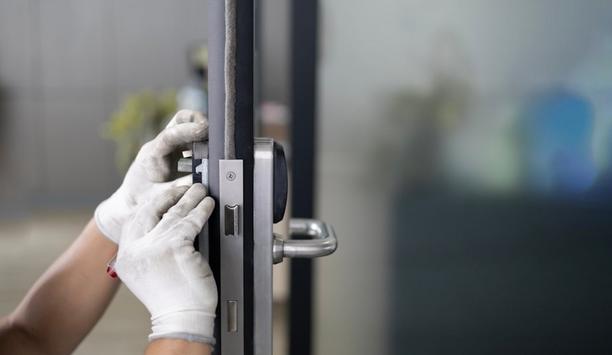
Installing physical security systems requires integrating diverse technologies (e.g., cameras, access control, alarms) that often use different protocols and must be adapted to a building's unique physical layout and legacy infrastructure. Specialized technical expertise is required for seamless networking and proper configuration. Hopefully, no important factors are overlooked in the installation process. We asked our Expert Panel Roundtable: What is the most overlooked factor when inst...

The healthcare industry faces unique and significant security challenges. Healthcare security professionals must balance an open, welcoming environment for patients and visitors with the need to protect valuable assets and personnel in a high-stress, 24/7 setting. These requirements direct the physical security technologies deployed in medical facilities. We asked our Expert Panel Roundtable: What are the unique aspects of the healthcare market, and how should the physical security industry ad...
Data overload is real. Sometimes it seems we are bombarded by the sheer volume, velocity, and variety of data available in our personal lives, and in our work lives. The solution is to figure out how to make sense of the data and transform it into real information we can use. In the case of physical security systems, new opportunities are emerging every day to utilize data to make our businesses safer and better managed. We asked our Expert Panel Roundtable: What is the expanding role of...

Students deserve a safe and positive environment where they can learn and thrive. Teachers and administrators should be able to focus on their primary role of educating students because they feel supported and protected by a comprehensive security plan. Staff require a clear protocol for responding to emergencies. And parents deserve peace of mind that their children are safe during the school day. One of the tools for safer schools is physical security technology. We asked our Expert Panel Roun...

Access control, video surveillance, and intrusion detection systems evolved largely independently in the physical security industry. Integrating those systems to the benefit of an enterprise's overall security has traditionally fallen on security integrators working in cooperation with manufacturers. However, today's market has also evolved to include companies that provide "unified platforms,” bringing together various disparate security systems and functions under a single, centralized...

In the past, security installers and integrators were used almost exclusively to install hardware. However, the role is changing and expanding along with the technologies used in the physical security industry. Nowadays, an installer or systems integrator is much more likely to use a strategic, IT-centric, and data-driven approach. To gain additional insights, we asked our Expert Panel Roundtable: How is the role of the security installer/integrator changing?

New technology advancements significantly increase efficiency and productivity in any industry, including physical security. Enhanced innovation both creates new products and services and improves existing products, all for the benefit of security manufacturers, integrators, and end users. Companies that embrace new technology stay ahead of the curve and gain a significant competitive advantage. In addition, they can differentiate themselves in the marketplace. We asked this week's Expert Panel...

The Internet of Things (IoT) has revolutionized many industries, including physical security. By connecting physical devices to the internet, IoT technology offers significant enhancements to security systems. Benefits include real-time monitoring, remote access, and the utility of new devices such as temperature and humidity sensors. At the same time, IoT devices come with challenges, including greater cybersecurity vulnerability. We asked this week's Expert Panel Roundtable: How is the Interne...

In the complex world of physical security systems, standards can enable disparate systems to be combined to function together as a cohesive whole. Standards help to ensure that all the “pieces” fit together to create a clear, unified picture. More broadly speaking, standards also play a role in ensuring best practices are deployed in a range of security-related situations. We asked this week’s Expert Panel Roundtable: Which standards have had the greatest positive impact...

Faces captured by video cameras could be perceived as an invasion of privacy, as could images captured through residential windows or that involve private or proprietary information. Fortunately, modern video systems incorporate technological features that help avoid an inadvertent invasion of privacy, while preserving any data that may be needed by authorized persons. For the latest commentary, we turn to our Expert Panel Roundtable with this week’s question: What new features of video sy...

Like any year, 2022 was full of surprises for the physical security industry. Adapting to supply chain shortages, lightning-fast technology development, and changing occupancy patterns in a shifting labor market were just a few of the factors that kept security professionals guessing in 2022. Wonder what the new year will hold? We asked this week’s Expert Panel Roundtable: What will be the biggest surprise for security in the year ahead (2023)?

For decades now, usernames and passwords have been a critical, and highly visible, element in data protection and cybersecurity. However, the use of passwords is a far-from-perfect approach to protecting access to computer systems. Nowadays, newer, more sophisticated forms of user identification and authentication have emerged on the scene. We asked this week’s Expert Panel Roundtable: Is the password on the brink of extinction in physical security? Why or why not?

Since they were invented, video surveillance cameras have been used mostly for security applications. However, the advent of video analytics and artificial intelligence (AI) has paved the way for use of video data in a variety of other applications, from process control to measuring occupancy to analyzing customer traffic trends. The ‘data’ aspects of ‘video data’ are feeding many new applications that no longer involve operators looking at video images on a screen. We as...

Connectivity is literally the difference between products operating individually and those combined into a more powerful system. Many of the devices that connect today’s security products reflect mature technologies that have been proven over time. However, innovation is also driving the need for new approaches to connectivity and networking. We asked this week’s Expert Panel Roundtable: What are the new developments in networking and connectivity for security?

Machine learning refers to the evolving ability of computer systems to learn and adapt without following explicit instructions. It essentially involves the use of algorithms and statistical models to analyze and draw conclusions from patterns in data. In the security industry, when it comes to buzzwords, artificial intelligence (AI) has a higher profile than the more specific related term, although machine learning is a better description of tools that are gaining popularity in physical security...

How has the security end user’s ‘buying journey’ changed in the age of the Internet? If nothing else, the online age has simplified access to information about various security products and systems. However, easily accessible information could enable a customer to delay contacting a manufacturer or systems integrator until further along the decision-making process. We asked this week’s Expert Panel Roundtable: What role should the Internet play when customers are research...

Cloud systems faced early resistance from physical security end users concerned about a perceived lack of control of data that ‘leaves’ their premises. More recently, mass adoption of cloud systems reflects widespread confidence in these systems to protect the data they handle. However, there are physical security professionals who remain concerned about cloud-based systems from the perspective of cybersecurity. We asked this week’s Expert Panel Roundtable: How can the industry...

Who needs cards when everyone has a smartphone? That’s the key question underlying the access control industry’s transition to mobile credentials. But the transition is easier said than done, and mobile credentialing, for all its advantages, also has limitations, which further innovation continues to address. Wider acceptance comes next, driven by use cases in various vertical markets. We asked this week’s Expert Panel Roundtable: What are the latest developments in mobile acce...

With fewer employees working in the office, and more of them working from home, it is no longer necessary for each employee to have their ‘own’ desk. Rather, desks may be used by various people at different times, as needed on an ad hoc basis. This arrangement, known as ‘hot desking,’ maximises space efficiency and reduces unneeded office space. We asked this week’s Expert Panel Roundtable: What will be the impact of ‘hot desking’ on the security marketp...

PropTech (property technology) is a term that describes electronic tools used in the real estate industry. It’s a buzzword that has made its way into the physical security industry, often in connection with access control. For the latest insights on the trends of security in PropTech, we asked this week’s Expert Panel Roundtable: What is the role of security as property technology (PropTech) transforms the real estate market?
Six months can go by in the blink of an eye. In 2022, it almost seems as if it has. Here we are already at mid-year after what has been an eventful six months for the security marketplace. There is still a lot ahead in 2022 for the industry, and our Expert Panel Roundtable has been considering what the coming months might hold in terms of technology change. We asked this week’s panelists: What will likely be the most important technology development in the security marketplace in the secon...

The Metaverse sounds like the plot of the latest summer action movie. In reality, it’s a technology - or, more accurately, a group of technologies - that will likely have a transformational impact on a host of markets. For security, the Metaverse has an extensive list of needs. It also presents some opportunities. We asked this week’s Expert Panel Roundtable: What does the Metaverse mean for security?
The Internet of Things (IoT) is driving innovation in the security marketplace, just as it is in almost every other market. IoT devices, also known as ‘edge devices’, provide sensing, processing ability, software, and other technologies to connect and exchange data. The most common edge devices in the world of IP security are video cameras, which are becoming more intelligent and capable of processing the data they collect. We asked this week’s Expert Panel Roundtable: How are...

The buzzwords in security provide a decent parallel to the technology advancements in our industry. Over the years, our language has evolved to encompass new concepts that have transformed our business. Buzzwords can sometimes be dismissed as overblown compared to the current state of the technology, or even as marketing hype. But the language we use to describe the industry’s technologies often reflect our changing marketplace. Sometimes the challenge is keeping up with the latest buzz. W...

The price of a security system and the value it provides are two different things. For end users, the objective is to minimize price, while maximizing value. A system may both have a higher price and provide greater value, but not always. Because customers want to pay as little as they can, it is necessary to make a case that a system provides the best possible value, whatever the cost. We asked this week’s Expert Panel Roundtable: How can customers go beyond price to maximize the ‘...