ONVIF

Imagine, for a moment, sitting in parents’ or grandparents' living room. There’s a coffee table, and it’s cluttered with three or four different remotes, all controlling different systems. One for the TV, one for the set-top box, one for the DVD player (remember that?), and a fourth for the audio system. Simply tuning into the evening news involved a complex process of turning on the TV with one, switching the HDMI over with another, and adjusting the sound with yet another re...

DICE Corporation announces a new edge artificial intelligence platform that runs AI processing inside the customer's network and reports into Ceila.ai as a native component. The platform was previewed with corporate and national account clients at GSX 2026 in Atlanta this week. It is currently in trials with monitoring centers and enterprise accounts including Clear Watch, one of the industry's larger interactive virtual guarding services, with general availability planned for the first quarter...
ONVIF®, whose open standards make IP-based physical security products interoperable worldwide, announces the Release Candidate for the ONVIF Media Signing Add-on, a standardized method for confirming the authenticity and integrity of surveillance video. Surveillance footage matters most when it is relied upon after an incident, in settings such as law enforcement casework, corporate and internal investigations, insurance claims, and legal proceedings. Yet as manipulated and AI-generated vid...

Observation Without Limits (O.W.L.), a U.S.-based manufacturer of 2D and 3D radars for ground and low-altitude airspace surveillance applications, is proud to announce its upgraded GroundAware® GA1360LH 2D 360-degree digital multi-beamforming radar system. Now available, the customisable GA1360LH target classification distinguishes among humans, animals, and ground and water vehicles for alarming on targets of concern within and around critical sites. “Our original GA1360 radar was de...

Artificial intelligence is transforming video surveillance from a passive recording system into an intelligent platform for real-time decision-making. Powered by deep learning, computer vision, and edge computing, AI-driven video intelligence enables organizations to move beyond post-incident investigation toward proactive security, operational efficiency, and predictive insights. As governments, enterprises, and critical infrastructure expand surveillance networks, the focus is shifting from d...

ONVIF®, whose open standards make IP-based physical security products interoperable worldwide, has introduced the Release Candidate for ONVIF Profile V, a draft standard for cloud-based video surveillance. Profile V extends the ONVIF brand-independent approach to the cloud, giving system integrators, consultants and end users a way to build cloud video systems that are not tied to a single vendor. A cloud-based video management system reduces or replaces on-site hardware and runs video thro...
News

Digital Monitoring Products (DMP) is building on an established professional-grade video portfolio with the launch of VUE Plus cameras, a significant expansion that adds varifocal, panoramic and fisheye models to the existing VUE line. The new models offer higher resolution, direct panel integration, lower light use and onboard analytics purpose-built for the demands of professional alarm monitoring. VUE Plus cameras bring DMP’s proprietary AlarmVision® technology to the edge—a defining advantage that combines two capabilities most video solutions treat as separate. First, it enables VUE Plus cameras to connect directly to DMP’s XR and XT Series intrusion control panels, allowing the camera to understand when a system is armed and respond accordingly. Improving response confidence Second, VUE Plus cameras use onboard analytics to distinguish meaningful threats from routine activity, helping ensure only true alarm events are communicated to the panel. The result is a smarter approach to alarm management, where intelligent analytics and intrusion detection work together to reduce nuisance alarms and improve response confidence. VUE Plus cameras are available in a variety of 6MP, 8MP and 12MP resolutions, supporting up to four areas of interest or boundary boxes per camera for precise, zone-level alarm verification. Select models add red/blue or white deterrence lighting and two-way audio, enabling real-time response to suspicious activity directly from the camera. Combining onboard intelligence VUE Plus cameras are ONVIF-compliant and built on an open architecture, giving dealers and end users greater control over how video systems are deployed, integrated and expanded over time. “The security industry is being asked to verify alarms faster, respond smarter and reduce false dispatches. VUE Plus cameras do exactly that by combining onboard intelligence with direct panel integration,” said CEO Rick Britton. “By bringing AlarmVision directly to the edge, your cameras will know when your panel is armed without additional hardware or complex integrations—helping you deliver smarter monitoring and greater confidence in alarm events." VUE Plus Cameras are available now through authorized DMP dealers worldwide, backed by DMP’s support, training and warranty programs.

ASPEED Technology Inc., the global pioneer in Baseboard Management Controllers (BMC), together with its subsidiary Cupola360 Inc., is co-exhibiting at COMPUTEX 2026. This year, focusing on next-generation highly integrated server solutions and data center control security, ASPEED is debuting its latest integrated platform control solution, AST1840 Satellite Management Controller (SMC)+eFPGA, alongside a full lineup of products featuring the Caliptra 2.x security architecture. Meanwhile, Cupola360 is featuring "Reality Remote Management (RRM)" to showcase its comprehensive solutions combining hardware, platform software, AI, and IoT control. These solutions are designed to help enterprises address global labor shortages, dispersed sites, and the operation and maintenance of high-value venues, fulfilling the demand for automated patrol and smart upgrades across all industries. Platform management expertise At this year's exhibition, ASPEED is unveiling its latest integrated platform control solution: AST1840 SMC+eFPGA. Seamlessly blending ASPEED's platform management expertise, this SoC is the result of a strategic partnership with Lattice Semiconductor, a pioneer in low-power programmable solutions, marking the first time an embedded FPGA (eFPGA) has been integrated into a single SoC. Based on an Arm Cortex-M4 processing system and 25K LUT programmable logic, AST1840 allows development teams to utilize the mature Lattice Diamond tool for custom functionality. This significantly simplifies server design without increasing system complexity, offering greater flexibility and growth-oriented control capabilities for next-generation data center systems. Furthermore, AST1840 supports the LTPI interface with 1Gb/s bandwidth, OCP’s OBMF-ICP standard protocol, and Streaming Boot functionality based on the Caliptra 2.x Silicon Root of Trust (SiRoT), enabling developers to instantly align with industry standards and achieve differentiated system designs. Unbreachable system security barrier ASPEED is also showcasing its diverse portfolio of platform management and security chips. Among them, AST1040 SMC is tailored for modern servers, effectively offloading computing tasks from the main control chip while expanding and optimising the management flexibility of peripheral control and monitoring nodes. AST1080 Platform Root of Trust (PRoT) SoC focuses on hardware security and firmware protection, executing core defense mechanisms to ensure system security before boot-up. To address the stringent cybersecurity demands of modern data centers, the entire product line on display, including AST2700 8th-generation BMC, AST1040 SMC, AST1840 SMC+eFPGA, and AST1080 PRoT SoC, has fully adopted the Caliptra 2.x SiRoT architecture, featuring physical anti-tampering capabilities. By embedding security defenses directly into the chip hardware, ASPEED builds an unbreachable system security barrier for data centers. Image stitching technology This year, Cupola360, ASPEED’s subsidiary, is expanding from its 360-degree panoramic camera modules to present full-scale solutions integrating hardware, platform software, AI, and IoT control. Making its debut at the exhibition is the "Next-Gen Omni Speed Dome," equipped with patented image stitching technology. It achieves real-time 360-degree panoramic monitoring without physical rotation and supports simultaneously locking, zooming, and tracking multiple targets in a single view. This effectively eliminates the blind spots and latency issues inherent in traditional mechanical speed domes. It also complies with international ONVIF standards, allowing seamless compatibility with existing VMS and NVR systems. Smart environmental perception Cupola360 has set up three major demo zones at COMPUTEX: AI Smart Mobile 360°: This zone defines the 360-degree panoramic camera module as the "visual core" of smart vehicles, showcasing various panoramic patrol robots and robot dogs. This ensures moving vehicles maintain a blind-spot-free, wrap-around vision during movement, obstacle avoidance, and AI analysis, significantly enhancing automated inspection efficiency and smart environmental perception. Reality Remote Management: Centered around the Cupola360⁺ software-hardware integrated inspection platform, this zone demonstrates integrated applications with multiple new RX2000 Smart Patrol Cameras. The platform comprehensively integrates the six key components required for reality remote management: panoramic vision serves as the "eyes" of the remote avatar; IoT interaction acts as the "hands"; viewpoint switching and vehicle movement function as the "feet"; and the visual AI computing core operates as the "brain," alongside an On-Screen Display (OSD) tool to make security inspection truly real-time and preventive. Server replacement trajectories Cupola360 Modular Bundles: Tailored for enterprises, this zone showcases several turnkey standardized product solutions. This includes integrated systems optimized for AI data center operation and maintenance, allowing remote managers an immersive view to precisely track personnel movement, server replacement trajectories, and indicator light statuses. Additionally, the "Panoramic Time Capsule" connected to network attached storage (NAS) is on display, enabling users to rotate and switch camera angles arbitrarily with zero latency during event playback, fully recreating the authentic scene at the exact moment of the incident. Through this rich technological layout, Cupola360 continues to embody its strategy that "whatever can be managed remotely is a potential market," expanding comprehensive applications across various fields. They welcome all guests to visit ASPEED and Cupola360 at Booth M0403a, 4F, Taipei Nangang Exhibition Center, Hall 1, to experience these technologies firsthand.

Physical security has always involved a trade-off: the most capable systems were often the most complex to run. On-premise servers, siloed video and access control platforms, and multi-dashboard workflows became the norm; not because anyone wanted it that way, but because the integrations weren’t there to do better. That’s changing. Rhombus is excited to announce their strategic partnership with Honeywell, bringing Rhombus’ cloud-managed video security platform together with LenelS2 Elements - Honeywell’s cloud-native access control system - in a deeply integrated, single-pane-of-glass solution. This isn’t a standard API handshake; it’s a purpose-built integration between two platforms that were both designed from the ground up for the cloud. Why this partnership, why now The physical security market isin the middle of a genuine platform shift. Organizations that have spent years managing disparate on-premise systems are moving to the cloud; not because it’s a trend, but because the operational benefits are real and measurable. Faster deployment, lower infrastructure overhead, remote management, automatic updates, and AI capabilities that simply can’t run cost-effectively on local hardware. Rhombus has been building toward this moment since day one. Thier platform is cloud-native by design; every camera, sensor, and AI capability is managed through a single console, with noNVRs or on-site servers required. LenelS2 Elements takes the same approach to access control: cloud-managed doors, mobile-first credentials, and centralized control across any number of sites. When both your video and your access control are built for the cloud, connecting them becomes significantly more powerful than bolting two legacy systems together. That’s the foundation this partnership is built on. What the integration actually does The practical outcome is bidirectional: Rhombus cameras, AI analytics, and IoT sensors are accessible directly within the Elements platform, and LenelS2 access control events are surfaced within the Rhombus Console. Security teams can work from whichever interface they prefer without losing visibility into either system. A few things this unlocks in practice: Correlated access and video: When a badge event fires -a door access, a failed credential attempt, a forced door - Rhombus automatically surfaces the relevant video clip alongside it. No more jumping between systems to piece together what happened. Edge AI built into your access control workflows: Rhombus’ on-camera AI - human detection, facial recognition, vehicle and license plate recognition, tailgating detection, anomaly alerts - surfaces directly within Elements, giving access control events the visual context they’ve always lacked. No on-premise servers required: Both platforms arefully cloud-managed, so there’s nothing to rack, patch, or maintain on-site.Deployment across new locations is fast, and management stays centralized regardless of how many sites you operate. Rhombus Relay for existing infrastructure: If you’re not ready to replace every camera on day one, Rhombus Relay lets you pull existing ONVIF cameras into the Rhombus cloud platform, turning them into AI-enabled devices; protecting your current investment and avoiding a full-scale rip-and-replace while still unlocking the integration benefits. AI that does more than detect motion The security industry has used the word “AI” loosely for years. Motion detection got rebranded, filters got repackaged, and not much actually changed for the people trying to run buildings more safely and efficiently. What Rhombus has built is different.Rhombus processes AI inference directly on the camera, which means analysis happens in real time without routing video through the cloud for every frame.The result is genuinely fast, accurate detection that works at scale, whether you’re managing five doors or five hundred. Combined with Elements, thoseAI Analytics capabilities become part of your access control story. Occupancy data helps you understand how spaces are being used. Movement analysis surfaces patterns you wouldn’t catch manually. And Rhombus Insights - thier LLM-powered investigation tool - lets your team ask plain-language questions about what’s happened across your facilities, getting answers in seconds rather than spending hours scrubbing footage. Security data becomes operational intelligence. That’s a meaningful shift for the teams managing these environments every day. Open by design One thing Rhombus feels strongly about: physical security platforms shouldn’t lock customers in. The integration between Rhombus and Elements is built on an open architecture, so organizations can deploy the combined solution through their existing reseller relationships and continue working with the partners they trust. This isn’t a case of two vendors building a walled garden together. The goal is to give customers the best tools available, connected in a way that actually works — and to keep extending that openness as the platform grows. What’s next: Global expansion and deeper LenelS2 integration The initial launch is focused on North America; a region where both Rhombus and Honeywell already have strong customer bases and established go-to-market infrastructure. But this is explicitly a starting point, not a ceiling. Expanding availability globally isa core part of the roadmap, and Rhombus is building toward that with their own teams on the ground and Honeywell’s international reach behind us. On the product side, theLenelS2 integration extends well beyond Elements. Rhombus is actively working toward deeper integration with the broader LenelS2 portfolio, including OnGuard, one of the most widely deployed enterprise access control platforms in the world, and NetBox, LenelS2’s networked hardware management solution. For organizations already running OnGuard or NetBox deployments, this means Rhombus video and AI capabilities will be available within the systems they already rely on, without requiring a platform migration. Rhombus will have more to share on timelines and specifics as those integrations mature. The direction is clear: we’re building a comprehensive bridge between Rhombus and the full Honeywell LenelS2 security ecosystem.

At COMPUTEX 2026, Cupola360 introduces its Omni Speed Dome and integrated Reality Remote Management ecosystem, combining panoramic AI vision, IoT control, and remote patrol technologies for industrial and high-value infrastructure applications. Cupola360 Inc., a wholly-owned subsidiary of ASPEED Technology, will co-exhibit with ASPEED at COMPUTEX 2026, centering its showcase around "Reality Remote Management" (RRM). Building upon its core 360-degree panoramic camera modules, Cupola360 will unveil a versatile array of comprehensive solutions this year, seamlessly integrating hardware, platform software, AI, and IoT control. 360-degree panoramic monitoring Alongside the debut of the next-generation Omni Speed Dome, which redefines traditional mechanical speed dome cameras, the booth will feature three themed zones: "Mobile 360°," "Reality Remote Management," and "Cupola360 Modular Bundles." These solutions aim to help enterprises address global challenges such as labor shortages, geographically dispersed sites, and high-value facility operations, fulfilling the smart upgrade and automated patrol needs across various industries. Cupola360’s newly unveiled Omni Speed Dome features patented image-stitching technology that delivers instant 360-degree panoramic monitoring without requiring physical rotation. By eliminating mechanical movement, it removes the blind spots and panning delays inherent in conventional speed dome cameras, while also bypassing mechanical wear-and-tear and durability issues entirely. Legacy surveillance infrastructure This advanced system maintains a continuous, comprehensive overview of the entire environment, empowering operators to digitally lock, zoom, and track multiple targets simultaneously on a single screen without losing situational awareness due to mechanical shifts. Compliant with ONVIF international protocols, Omni Speed Dome integrates seamlessly into existing video management systems (VMS) and network video recorders (NVR), offering enterprises an effortless and immediate upgrade path for legacy surveillance infrastructure. In the Mobile 360° Zone, Cupola360 demonstrates how its 360-degree panoramic camera modules serve as the vital "eyes" for autonomous systems, featuring a lineup of panoramic smart patrol robots and robotic dogs. Powered by the Cupola360 panoramic AI vision module, these mobile platforms gain a seamless 360-degree view that optimizes movement, obstacle avoidance, remote control, and AI analytics. Real-time anomaly detection This breakthrough drastically boosts situational awareness and autonomous capabilities during patrols, warehouse inspections, and high-risk missions. With instant alerting for real-time anomaly detection, it empowers enterprises to reduce labor-intensive patrol overhead and shift workforce focus toward critical decision-making roles. This smart mobility framework has already seen successful commercial deployment in a tier-one data center in Taiwan, where it manages operational personnel access and powers immersive remote site visits for guests. The Reality Remote Management Zone highlights the Cupola360⁺ hardware-software integrated patrol system platform, featuring live AI demonstrations paired with multiple next-generation RX2000 Panoramic Smart Patrol cameras. The platform seamlessly integrates the core elements required for remote field management: using panoramic vision as the "eyes" of the remote digital twin presence, IoT control as the "hands," view-switching and mobile patrol as the "legs," and vision AI as the "brain." Real-time monitoring It also incorporates real-time On-Screen Display (OSD) data overlay and customized third-party system integration tools. Through this platform, various edge AI applications are demonstrated on-site, including customisable electronic fence intrusion alerts, Personal Protective Equipment (PPE) recognition, and people counting, effectively shifting patrol operations from "post-event review" to "real-time prevention." To assist enterprises with rapid deployment while satisfying the mobility and versatility requirements of diverse locations, the Cupola360 Modular Bundles Zone showcases several ready-to-deploy standard solutions. This includes an integrated solution built specifically for AI data center operations, enabling remote real-time monitoring and status evaluation of all personnel entry and exit activities, as well as server rack and server indicator light status. Cross-video tracking While providing comprehensive, blind-spot-free protection without disrupting data center operations, administrators can remotely and immersively monitor on-site personnel workflows, server additions, replacements, relocations, and the accuracy and real-time progress of specific maintenance tasks. This ensures a complete contextual log and management record, thoroughly safeguarding critical and high-value data center assets. This zone also features the "Panoramic Time Capsule" integrated with network-attached storage (NAS). Utilising a built-in NVR to comprehensively record event activity, it allows users to freely switch perspectives with zero lag during playback. This fully reconstructs event context and significantly reduces the manpower and time required for cross-video tracking, thereby facilitating incident reconstruction and liability clarification. Through its extensive technological portfolio, Cupola360 continues to enrich the reality remote management ecosystem across diverse sectors, fully embodying its strategic vision: "Wherever remote management is possible, a potential market exists." Its application scenarios span large-scale factories, data centres, and airport mass transit systems, extending to parking lots, warehouses, and convenience store chains.

With the Panomera® S4 Skyview, Dallmeier introduces an innovative camera solution specifically developed for high-resolution airspace surveillance at airports. The unique sensor alignment enables reliable coverage of areas far above ground level, thus purposefully expanding the application range of modern video security systems. Optimized for airspace surveillance The Panomera® S4 Skyview is based on the patented multifocal sensor technology and provides continuous coverage of large areas while maintaining a high level of detail. Thanks to its wide vertical capture angle directed upward, airport airspace can be monitored efficiently. This makes the system ideally suited for the detection and observation of all types of airborne objects. For example, aircraft in approach or holding patterns can be reliably tracked. Larger flocks of birds or unauthorized flying objects can also be detected and assessed at an early stage. All relevant image areas are continuously recorded in full and remain available for evaluation. This enables seamless event tracking and detailed forensic analysis, even after the event. Innovative design with practical advantages The exceptional performance of the Panomera® S4 Skyview is based on the special arrangement of the lenses inside the housing. This design enables the monitoring of the sky area while allowing horizontal installation of the camera. This form factor offers decisive advantages in practical operation: The lens front is better protected against precipitation such as rain or snow. In combination with the Panomera® Sunshield, direct sunlight is prevented while weather protection is further enhanced. In addition, the camera can be combined with innovative technologies such as the Dallmeier Air Blast System to actively remove dirt from the front surface and ensure permanently clear visibility. This is achieved contact-free and therefore wear-free by means of compressed air. Open system integration The combination of multiple sensors enables a real-time resolution of 40 MP as well as an effective dynamic range of 130 dB UWDR. As a result, clear and detailed images are generated even under difficult lighting conditions. Modern video compression with H.265 at up to 30 fps as well as support for EdgeStorage ensure efficient recording. In addition, the system fulfills all requirements for open system integration and data protection with ONVIF Profile M, S and T as well as GDPR-compliant functions. Robust system design and easy installation The Panomera® S4 Skyview is designed for permanent outdoor operation. An IP69 housing with integrated heating and double-shell convection cooling ensures reliable operation even under demanding environmental conditions. The absence of moving components – such as those required for PTZ cameras – also significantly reduces maintenance effort. Full compatibility with the Mountera® mounting system enables easy and flexible installation. Comprehensive airport solutions portfolio The Panomera® S4 Skyview is part of Dallmeier’s comprehensive solutions portfolio for airports. While Panomera® S8 Runway systems provide high-resolution monitoring of ground areas and runways, the Panomera® S4 Skyview enables targeted airspace surveillance. In Virtual and Remote Tower scenarios, the Panomera® S4 Skyview also provides additional security by covering areas behind the tower. Combined, this creates a seamless Panomera® solution that fully captures both ground and airspace areas, providing a comprehensive overview of all security-relevant activities at the airport. In 1984, Dieter Dallmeier founded what is now Dallmeier electronic – not in the proverbial garage, but in a garden shed in Regensburg, Germany. Today, the company, which can justifiably call itself a hidden champion for video information technology "Made in Germany", has several hundred employees worldwide, more than 250 of them at the company headquarters in the center of Regensburg alone. Medium-sized companies Dallmeier's camera, recording, software, and analysis solutions optimize security and processes for B2B end customers in a wide range of industries in over 60 countries. The focus is on users from the casino, smart city, airports, logistics, stadiums, and industrial sectors. But also, banks, critical infrastructure facilities as well as medium-sized companies from all sectors. With pioneering innovations, Dallmeier has succeeded time and again in placing itself at the forefront of technology: From the world's first digital image storage system with motion analysis in 1992, the patented "multifocal sensor technology" Panomera® with its "Mountera®" mounting system, to the latest Domera® camera family, which allows up to 300 camera variants with only 18 components. These and many other innovations provide real, tangible customer benefits. And with a low Total Cost of Ownership (TCO) and a high Return on Investment (ROI) they can easily compete with systems produced and supplied from low-wage countries. Maximum vertical integration With "Made in Germany", they also guarantee the customers the highest standards in data protection, cybersecurity, and ethical responsibility. With high quality and short supply chains, they also ensure – almost incidentally – sustainability and environmental protection. From their prestigious headquarters in the centre of Regensburg, Dallmeier not only carries out its own research and development but also the complete manufacturing process – from component to product to solution.

Hikvision, a global pioneer in the AI-powered Internet of Things (AIoT), has announced that its Dual-Lens Passenger Counting Camera has officially received ITxPT (Information Technology for Public Transport) certification. This milestone marks a significant step forward in Hikvision's commitment to smarter, more connected, and more interoperable public transportation systems. As one of the most widely recognized standards in the European public transportation industry, ITxPT focuses on onboard IT architecture, interoperability, and data standardization. The certification confirms that Hikvision’s Dual-Lens Passenger Counting Camera (DS-2XM6825G1) integrates smoothly with ITxPT-compliant onboard systems and can deliver standardized passenger flow data for bus and rail transit applications. This helps public transport operators build more unified and efficient systems, even when using devices from different manufacturers. Public transport operators The certification comes at a time when public transport operators are facing increasing pressure to improve both passenger safety and operational efficiency. Many traditional onboard systems, for example, struggle with limited visibility inside vehicles and incomplete passenger flow data. As a result, many operators face challenges in route planning, vehicle scheduling, capacity management, and service optimization. The certification comes at a time when public transport operators are facing increasing pressure Hikvision’s Dual-Lens Passenger Counting Camera helps address these challenges by providing accurate passenger flow statistics at vehicle doors and transit passageways. The solution supports data display and export based on buses, routes, and stops, helping operators better understand passenger traffic patterns and make more informed operational decisions. Real transit environments The camera includes many features designed for real transit environments: Advanced perception: Using dual-lens stereo vision, the camera reconstructs a 3D view of the scene—much like how human eyes perceive depth. It accurately identifies not just people, but also strollers, bicycles, and wheelchairs, giving operators a comprehensive, real-time overview of the boarding activity. 98%+ counting accuracy: The camera detects each person from the moment they appear in frame and only registers a count when they fully enter or exit—filtering out people who pause or linger near the door. Flexible installation: The adjustable mounting bracket supports a minimum installation height of just 1.9 meters, making it compatible with a wide range of vehicle types—from city buses to metro carriages and articulated coaches. Broad protocol support: In addition to ITxPT, the camera supports multiple streaming formats, door signal integration, and a range of protocols including ONVIF (Open Network Video Interface Forum), RS-485, and Hikvision SDK, ensuring smooth integration into existing fleet management systems. Built for the road: With an IP66 and IK08 protection rating and an operating temperature range of -30°C to 75°C, the camera is built to handle the demands of real-world transit environments. Public transportation industry “Receiving the ITxPT certification demonstrates Hikvision’s commitment to open standards and long-term compatibility in the public transportation industry,” said Jake Song, Onboard Security Product Director at Hikvision. “Public transport operators need reliable and standardized data to support smarter decisions. This certification helps ensure our onboard solution can integrate more efficiently into multi-vendor transport systems.” With the ITxPT certification, Hikvision further strengthens its ability to support transportation operators seeking standardized, scalable, and data-driven onboard solutions. The certification also creates broader opportunities for deployment in European transit projects, where ITxPT compliance is often a key requirement for system integration and project approval.

Expert commentary

Modernizing security infrastructure requires research and planning to build intelligent, connected systems that are secure, scalable and positioned to take the organization into the future. Prioritising needs, total cost of ownership, interoperability, resilience and sustained value will help ensure that a surveillance system upgrade will deliver both protection and measurable operational impact. Before making that investment, however, security leaders must answer a few key questions to manage expectations, gain buy-in, and minimize disruptions or hurdles during the upgrade itself. What are our needs? First and foremost, leadership must define the overall need for a surveillance system. Some organizations use surveillance purely for security and protection. Others will have additional operational requirements or wants, such as streamlining visitor management, providing data to other departments, or automating specific operations. Defining current and potential future applications is an important starting point. First and foremost, leadership must define the overall need for a surveillance system Surveillance systems are more capable than ever of tackling applications beyond security, including safety, business intelligence, and operational efficiency. Therefore, security teams should loop those areas of business that may have a stake in the system into the discussion as early as possible to further determine must-haves and manage expectations. Managing specific access Next, security teams ought to consider lapses in the capabilities of their current system, along with protocols or compliance requirements already in place. Other considerations include determining how many locations and users will access the system (which is especially important if considering business intelligence opportunities), how many cameras and which types are necessary, and whether the organization plans to manage specific access. Unless already specified by their business, security leaders should also weigh the pros and cons of a cloud-based system, on-prem system or hybrid approach — taking into account the rising costs of memory and servers. How can we plan for the future? AI and advanced analytics have rapidly changed the security landscape AI and advanced analytics have rapidly changed the security landscape, enabling businesses to ramp up protection and operational efficiencies with just an upgrade. But, in order to take advantage of many of these intelligent advancements, security leaders have to verify that their surveillance system, and the manufacturing partners they are working with, can handle today’s — and tomorrow’s — technology. An open platform, open standards system gives security teams the flexibility to upgrade, add or integrate other systems or new technology over time as the organization’s needs evolve, technology advances or compliance changes. Open platform systems Flexibility can benefit organizations when it comes to video camera compression. For example, while much of the compression currently is driven by the H.264 codec, the industry is moving toward AV1. Considering cameras that handle multiple types of compression, including H.264, H.265 and AV1, empowers the organization to pivot and adapt without ripping and replacing all devices. Flexibility can benefit organizations when it comes to video camera compression When taking a long-term approach to planning, if a path toward interoperability could potentially help with operations, communication or workflows in the future, security leaders should confirm that a new surveillance system has those capabilities before upgrading. Open platform systems that support ONVIF open standards protocols, for example, allow organizations to create interoperable platforms with other systems across the enterprise, including mass notification, two-way audio, access control and HVAC systems. What infrastructure do we have in place? Understanding system capabilities is imperative to managing expectations and determining the best system for the organization, but it’s crucial for security leaders to look at the existing infrastructure in place, from cabling, network and servers to operations staffing and number of locations — all during the research and planning phase. It’s important to take a current assessment of existing equipment and complete a needs analysis to determine which systems should work together or be integrated with the surveillance system. These findings can change potential capabilities and budgetary requirements. Cutting-edge analytics Another consideration when looking at infrastructure is bandwidth and storage capabilities From a practical standpoint, evaluating the existing network, along with cabling and conduit, is critical to understanding if adding additional systems or devices are physically possible within the current infrastructure. Another consideration when looking at infrastructure is bandwidth and storage capabilities. If bandwidth and storage are pain points or roadblocks for a surveillance system, unless businesses are required to process at the server for compliance reasons, processing analytics at the edge could be more economically feasible. Some cameras come with built-in analytics for a wide range of applications and, with an open platform system, custom, cutting-edge analytics can be loaded directly onto the camera without purchasing additional servers as needs or technologies evolve. How can we manage cybersecurity across device lifecycles? In today’s world, with systems such as surveillance often living on a shared network or network governed by IT, it’s necessary for security teams to understand compliance requirements from a cybersecurity perspective. Researching manufacturing partners and their built-in protections to aid with compliance and tighter cybersecurity is an important consideration before any surveillance system investment. Features such as signed firmware prevent third parties from loading firmware that could contain malware onto a camera or other device on the network. Another feature such as secure boot assures that a device boots up using only software that is trusted by the original equipment manufacturer or OEM. Mitigating larger risks Security teams must also factor in when a manufacturer will stop supporting specific firmware Built-in cybersecurity features, health checks and batch updates are essential for ensuring the physical security technology is not the weak point on the network. Many video management systems can alert staff when a camera is not working or there is a problem with network communication. Cloud-based automated device management can perform health checks, track warranties and streamline updates. Security teams must also factor in when a manufacturer will stop supporting specific firmware and confirm that that timeline matches with the organization’s replacement strategy. Robust lifecycle management will not only address vulnerabilities and mitigate larger risks, but contribute toward a lower cost of ownership as well. Can we quantify our total cost of ownership? Tracking the total cost of ownership (TCO) of the organization's current surveillance system and planned upgrade empowers leadership to compare similar solutions to find the best long-term option, taking into account, purchase price, implementation, training, maintenance and hidden costs. TCO is much more than the cost of the hardware, itself, but the cost of bandwidth, storage, operations staffing, maintenance costs, and even energy consumption of the devices on the network. For example, if an organization has 1,000 cameras across the enterprise, quantifying the energy costs between devices and product offerings can add up to significant differences. New technology capabilities Third-party consultants can help organizations with planning and design Security stakeholders can turn to a number of resources to help them make an informed decision about upgrading their surveillance system, as well as to help ensure their current and future needs will be met. Third-party consultants can help organizations with planning and design. Some manufacturers have customer-facing teams and field sales engineers that can conduct site walks and help security teams understand new technology capabilities, current infrastructure and potential use cases. Researching case studies and custom applications both online and through manufacturers is another avenue that allows security leaders to see how specific technologies can help their organization. By remaining agile and understanding where to start and what possibilities exist before a surveillance system investment, security teams can justify the cost of ownership and future-proof their organization with stronger, more integrated, traceable security that leads to a strong return on investment.
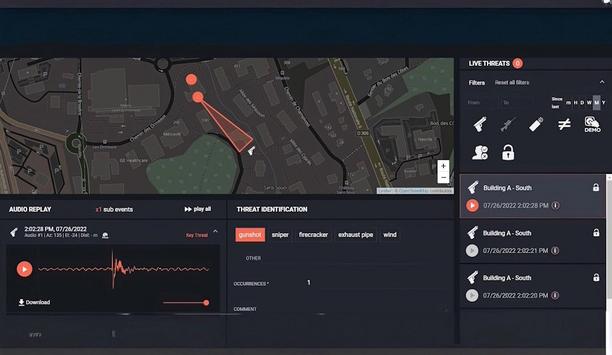
Gun violence remains one of the most unpredictable threats in today’s physical security landscape. When it strikes, seconds matter. The ability to detect and respond to gunfire almost instantaneously can determine outcomes. Security pioneers and first responders know this, and yet too many gunshot detection systems in operation today are shackled by outdated assumptions and aging architecture. The demand now is not for incremental improvements, but for a complete rethinking of how these systems function. Prevailing model For years, the prevailing model has relied on server-heavy frameworks and complex sensor networks that introduce unnecessary latency and complexity. Systems that depend on sending audio data to remote servers for analysis are inherently slower. In a live gunfire situation, waiting even a few seconds for confirmation can be the difference between life and death. The expectation in 2025 is clear: detection and actionable intelligence must occur in real time, with no delays. Edge-based intelligence: The new standard Deploying three or more sensors to cover an area imposes significant cost and operational burdens To minimize points of failure and latency, the future of gunshot detection lies in edge processing. Intelligence must reside inside the sensor itself, not in a data center or a remote server. Edge-based acoustic sensors can now detect and geolocate gunshots in under three seconds without external dependencies. They do not require triangulation or corroboration from multiple devices. One sensor, one shot, one instant location—that is the new standard. Consider the limitations of traditional perimeter-based systems. Deploying three or more sensors to cover an area imposes significant cost and operational burdens. Maintaining this infrastructure often means trade-offs in coverage and flexibility. For example, if a detection system can only triangulate within a ring of sensors, there will be no information available for shots fired outside this restricted perimeter, even from a short distance away. Worse, these older models are prone to false positives triggered by fireworks, construction noise, or other environmental sounds. Each false alert erodes confidence in the system and burdens response teams unnecessarily. Contrast this with modern edge-AI sensors that not only detect the muzzle blast of a firearm but also analyze the ballistic wave of a hypersonic projectile in motion. This dual-signature capability delivers a level of accuracy far beyond what older systems can offer. When a shot is fired, the sensor detects, classifies, and pinpoints the event almost instantly. There is no reliance on back-end processing or corroborative triangulation. The sensor acts autonomously and decisively. Real-time response with visual confirmation The level of integration changes gunshot detection from a passive alerting tool into an active part These advancements do not stop at detection. Integration with existing security infrastructure is crucial. Modern sensors leverage open standards such as ONVIF Profile S to control pan-tilt-zoom (PTZ) cameras directly. As soon as a gunshot is detected, the sensor can automatically cue a camera to the exact coordinates of the event. This process happens in less than three seconds, giving operators live visual intelligence of the situation as it unfolds. The days of security personnel scouring multiple camera feeds or responding to vague reports are over. Today, they can focus their attention on the precise location of the threat. This level of integration transforms gunshot detection from a passive alerting tool into an active part of situational awareness. It provides command centers and first responders with actionable intelligence, enabling them to make informed decisions in real time. It is not enough to know that a shot was fired; security teams need to see where it happened and assess the scene immediately. Adapting to the environment Environmental adaptability is another area where modern edge-based systems excel. Acoustic detection has long struggled with ambient noise. Urban environments are filled with loud, impulsive sounds that can easily be mistaken for gunfire. However, edge-AI sensors can now be trained to understand the acoustic profile of their specific environment. They learn what constitutes normal background noise and adjust accordingly. If a venue frequently hosts fireworks displays or is situated near construction zones, edge-processed AI systems can be trained to differentiate those sounds from genuine threats. This site-specific learning dramatically reduces false positives and enhances overall system reliability. Flexibility in deployment A single intelligent sensor can now provide broad coverage with minimal setup Flexibility in deployment is equally important. Today’s security needs are not confined to permanent installations. Large public events, temporary venues, and rapidly evolving threat environments require portable solutions. Edge-based sensors can be deployed on mobile platforms such as trailers or temporary masts, providing high-precision detection wherever it is needed. Because all processing occurs at the edge, these mobile systems do not rely on centralized servers to function effectively. The sensor is the system. This shift represents a fundamental change in how security professionals approach gunshot detection. The industry is moving away from reactive, infrastructure-heavy models toward proactive, efficient, and adaptable solutions. A single intelligent sensor can now provide broad coverage with minimal setup. It detects, locates, and visually confirms threats autonomously. Interoperability further enhances the value of modern systems. By embracing open protocols, these sensors integrate seamlessly with existing video management systems (VMS) and security platforms. Organizations are no longer locked into proprietary ecosystems. They can deploy best-in-class solutions that work together harmoniously. This openness accelerates deployment and reduces friction, a critical advantage when securing dynamic environments on tight timelines. Privacy by design Alert signals contain location, timing, and sound type data only with no continuous listening Privacy concerns are front and center in any surveillance deployment and the thought of an audio listening device can raise eyebrows. Modern gunshot sensors are event-driven and only share short recordings (such as a 1.5-second clip for verification) triggered by gunshot levels (over 100 dB). Conversations and other ambient audio are neither captured nor stored. Alert signals contain location, timing, and sound classification information only with no continuous listening or streaming. Closing the gap between detection and response Ultimately, doing gunshot detection right demands a new mindset. Edge processing is not a technical novelty; it is an operational necessity. Security pioneers must expect and demand more from their detection systems—faster alerts, smarter filtering, real-time visual confirmation, seamless integration, and scalable deployment. The technology to achieve this exists today. High-accuracy, real-time gunshot detection is not a future promise; it is a present reality. The responsibility now lies with the industry to embrace this better way forward. Communities and the professionals who protect them deserve solutions that rise to meet today’s challenges with intelligence, speed, and precision.
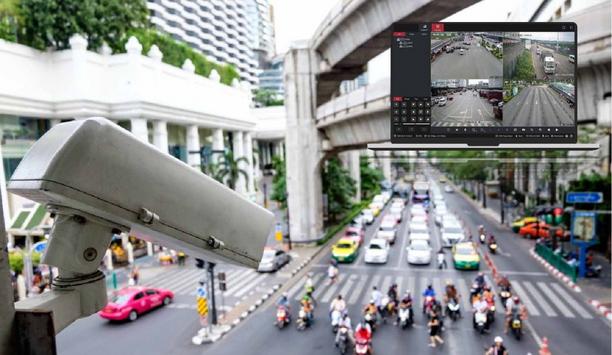
Enable third-party application system quickly to incorporate the visual data, as part of their solutions. Each and every user has a unique set of platforms that they need to efficiently run their business. In the security and surveillance field, increasing interest in visual sensor networks drives the development of multi-camera applications in private and public areas. Thus, middleware is needed to facilitate video data sharing connections between software platforms. It works like video plumbing, as it connects two ends of software platforms together so video data and databases can be easily passed between the ‘pipe’ for various applications. How does a middleware for video surveillance work? Video retrieval The middleware should work as software platform to receive and collect video from multi-cameras First, the middleware should work as software platform to receive and collect video from multi-cameras. Thus, those features are required for the middleware to work with video that can help user easily add various video sources into the application. The middleware platform should support many protocols, such as ONVIF, GB/T28181, GA/T1400 etc. The more protocols it supports, the more cameras it can access. Set ONVIF protocol for example. Nearly 80% famous overseas video surveillance manufacturers in the world all support the standard protocol ONVIF, if the middleware system supports ONVIF, which means it can communicate with above 80% cameras and receive the video from them with no problem. And, also the middleware platform can be set up to work with an RTSP,HLS,HTTP-FLV, WebSocket video source with an URL – for example, a synthetic video source, like VLC stream server, which make the integration process simple and easy. Video management Second, after collecting the video, middleware should allow the integrating application to manage video archives from multi-cameras in geographically distributed locations, and realize video management functions, such as video monitoring, local or network or cloud-based storage options, intuitive E-map display, gathering information on remote objects alarms, quick and convenient search and playback etc. After realizing video management performance, the middleware becomes video management middleware. And, it should contain a ready video management mechanism available via REST API, while integrating application defines management policy. Easily integrate with third-party application The video management middleware is better to designed as an SDK Third, the middleware should easily integrate with third-party application, so that video data sharing connections between software platforms can be put through, and the third-party application can easily incorporate video, as part of their own video solution. In order to realize this, the video management middleware is better to designed as an SDK. That is every piece of functionality implemented in middleware is available via programming interface, and the functionality is said to be implemented. Standard video data for third-party industry platforms And what’s more, standardized media stream formats, such as HTML5 are better to provide for the convenient interaction with third-party applications, particularly in media interchange. So that it will be easily to push the standard video data to many third-party industry application platforms, and make video playback possible on most of popular browsers, and mobile devices. When you are giving those information to a third party application system, it will be able to acquire the video data and sync information to perform other task via middleware. What are benefits the video management middleware brings? Enable third party application system quickly to incorporate the visual data as part of their solutions. As the easy integration features the video management middleware brings, the third parties don’t need to put more energy on aggregating video sources from multi-cameras and waste more cost on developing. All they need is to enjoy the visual data via convenience and quick integration from the video management middleware, and then focus more energy on application-level development, while saving developing costs. Easy deployment and saving cost With the progress of the security technology, some old security infrastructures need to be upgraded as well, such as community security project, school security projects. If replacing all the front-end cameras, it will cost a lot. The most economical and efficient way is to add new functional cameras at most important monitoring spot, while still keep some old cameras. Thus, the video management middleware is needed. Users only need to install middleware software on the computer. By the video management middleware, users can collect and manage the video resources from various brands front-end video device without replacing the original monitoring equipment and deployment, thus making full use of old devices and greatly reduce the cost of video integration and application.
Security beat

The security landscape is undergoing a profound transformation, as evidenced by the innovations showcased at the ISC West Expo 2026. From dismantling of silos between physical and digital security to the ongoing transition to cloud and hybrid platforms, much of the discussion on the show floor was familiar, if somehow more urgent than ever. Clearly the industry is moving toward unified, cloud-native, and highly automated ecosystems. In a series of deep-dive meetings and demonstrations at the recent show, I got a first-hand glimpse of the future of the physical security marketplace. Spoiler alert: The future is now! HID Global: Tearing down the silos HID Global is addressing the long-requested convergence of physical and digital security. Recognizing that the industry has historically operated in silos, HID is now leading with a combined implementation team to leverage the power of both sides. HID is supporting the transition by combining its logical and physical security teams to help end users design secure, end-to-end journeys for their employees. By leveraging its massive existing footprint in physical access, HID is uniquely positioned to help organizations upgrade their cybersecurity posture without a total "rip and replace" of their hardware. HID is seeing a surge in demand for converged credentials that unite building access with digital identity. On the digital front, HID has implemented FIDO (Fast Identity Online) and passkeys to replace traditional passwords with more secure, biometric-backed authentication methods. Acre Security: Bridging the gap to the cloud Acre Security previewed a cloud-native video solution, reinforcing its cloud-first security strategyAcre Security is currently consolidating brands, bringing established names like Feenics and AccessIt under a single corporate umbrella. A primary theme for the company at ISC West is the migration of legacy systems to modern infrastructure. To facilitate the transition, they are launching "The Bridge," a technology designed to help on-premise customers transition to the cloud at a pace that suits their operational needs. The company is also expanding its portfolio into video. Attendees at the show received a preview of a new cloud-native video solution slated for release later this year, signaling Acre’s commitment to a holistic, cloud-first security suite. Acoem: Real-time acoustic threat detection With a 35-year foundation in vibration and acoustics—including military sniper detection—Acoem is providing gunshot detection through edge processing. Unlike systems that rely on the cloud and may suffer from latency, Acoem’s technology processes data at the sensor level for instant alerts. Their sensors are engineered for massive outdoor spaces, covering a 500-foot radius (roughly 11 football fields) and can detect high-powered rifle shots from up to half a mile away. The system provides critical intelligence by distinguishing between muzzle blasts and "mach noise" from bullet travel, delivering an audio file to the end-user that maps the location and direction of the threat. They use AI to filter out environmental false positives, such as skateboards hitting metal rails. Alarm.com: The all-in-one dealer ecosystem Beyond hardware, Alarm.com is leveraging AI to streamline the sales process Alarm.com is doubling down on "giving tools to dealers to help them be successful," with a focus on unified commercial solutions. A highlight at ISC West is their new fire communicator, which integrates fire monitoring into their single app, completing what they call the "fourth leg of the stool." The product allows fire systems to benefit from the same real-time customer engagement and push notifications that have long been available for intrusion and video. The key products, such as commercial-grade hardware, are now available for immediate purchase. Beyond hardware, Alarm.com is leveraging AI to streamline the sales process. Their new AI Proposal Builder uses customer meeting notes to automatically generate customized, value-driven sales proposals for dealers. Allegion: A global shift in credentialing Following the acquisition of ELATEC, Allegion is adopting a more global market approach and expanding its OEM business. The company is involved in the development of Aliro, the newly unveiled mobile credentialing standard. Allegion’s strategy is built on versatility: While Aliro serves the burgeoning mobile market, they also offer PKOC for plastic cards, allowing them to provide solutions regardless of the user's preferred credential type. The ELATEC acquisition has effectively filled previous gaps in their use-case portfolio, positioning them as a comprehensive provider for both physical and digital access needs. AtlasIED: Engineering for life safety Transitioning from audio to a fully automated threat detection company, AtlasIED showcased its new IPX line at ISC West. This modular platform uses a single PoE++ port to power various "plug-and-play" modules, allowing for easy system upgrades. Their gun detection technology achieves a 99% confidence rating by "stacking" AI models; it cross-references audio data with infrared signatures to detect muzzle flashes and air quality sensors for particulates. With systems already running in 80% of U.S. international airports, the company maintains 24/7 domestic engineering support to manage these "life-safety adjacent" environments. Axis Communications: Unifying connectivity Axis Communications is advancing network video with 4G/5G surveillance, reducing cabling needs Axis Communications continues to lead in network video, with a new focus on offering surveillance through 4G and 5G networks to eliminate the need for extensive cabling in long-range applications. Axis also introduced several specialized hardware pieces, including the P1486-LE global shutter camera for high-speed traffic monitoring and the Q2802-TE, which integrates thermal and visual monitoring into a single unit. To assist technicians, they launched a new installer app that uses Bluetooth for easier camera pairing and management directly from a mobile device. Axon: De-escalation through enterprise wearables Focusing on frontline safety, Axon is expanding from law enforcement into the enterprise sector with its retail and healthcare-focused body camera. Weighing only 0.25 lb, these cameras are designed to be less intimidating, using colorful designs and acting as a primary de-escalator for aggressive behavior. A clear front display signals when recording is active, striking a balance between safety and a non-intimidating appearance. These devices feature live-streaming and panic alarms that connect workers to a Global Security Operations Center (GSOC). To ensure the footage is legally viable, Axon maintains a rigorous audit trail that authenticates every action recorded. Genetec: The value of the unified platform Genetec is advocating for unified platforms that reduce the time between incident detection and resolution. They argue that AI is becoming a commodity and that the true value lies in unified platforms that reduce the time from incident to resolution. Their approach emphasises the "outcomes" customers need, such as allowing security teams to coalesce around an investigation quickly. Genetec remains a strong supporter of open systems for enterprise customers, ensuring they have the choice to integrate diverse technologies rather than being locked into a manufacturer’s “walled garden.” This flexibility is critical for high-end security environments that require tailored, responsive systems. Johnson Controls: Large-scale enterprise solutions Johnson Controls has made a significant push into the enterprise video market with C-Cure IQ, a standalone VMS designed for major hubs like airports and large campuses. Through a partnership with Scylla, they have integrated 11 advanced analytics—including facial recognition and weapons detection—directly into their cameras. They also showcased new multi-sensor panoramic cameras capable of "stitching" multiple images into a single 360-degree view. While innovating in video, Johnson Controls also confirmed modern upgrades to their intrusion line, including their legacy DSC Neo line. The new DSC PowerSeries Neo 5, a high-end residential and commercial platform, features an all-new user interface and built-in PowerG+. They have also begun shipping the IQ5 family lineup, which is powered by a Qualcomm DragonWing processor. ONVIF: Standardising the future of AI and cloud ONVIF continues to lead the charge in establishing common languages for the security industry. A major focus is their new "Cloud Profile," which enables cameras to connect directly to the cloud through a standardized protocol. They are also expanding into audio standards to ensure IP-based speakers can seamlessly connect to Video Management Systems (VMS). To combat the rise of sophisticated digital manipulation, ONVIF is developing "video signing" standards. ONVIF is actively seeking more diverse enterprise participation to help shape these emerging AI standardsThis feature protects the integrity of video for evidentiary purposes by embedding a digital signature and timestamp directly into the footage at the camera level. Additionally, the organization has formed an AI Working Group to develop common communication methods for "AI agents" within physical security systems. ONVIF is actively seeking more diverse enterprise participation to help shape these emerging AI standards. Roberto Licari is the new ONVIF Ambassador, seeking to attract new companies (even outside the security sector) to ONVIF as they look to expand their offerings. SwiftConnect: Bridging digital and physical identity SwiftConnect is redefining access control by shifting the focus from physical cards to digital identity. As a cloud-based "connected access network," the platform bridges the gap between IT identity providers (like Okta or Azure AD) and legacy physical access control systems. At the show's Security Experience Center demonstrations, SwiftConnect showcased its ability to integrate mobile credentials within Apple and Google Wallets across multiple technology platforms. By aligning physical security with Zero Trust principles, they ensure that access is governed by the same rigorous standards as digital networks. Their software-centric approach allows for a more seamless employee experience while simplifying the management of complex, multi-site building security. This emphasises a future where the mobile device becomes the primary tool for navigating the physical workspace. Wasabi Technologies: Redefining cloud storage economics With cloud technology becoming a baseline requirement at every booth, Wasabi Technologies highlighted its "hot cloud storage" as a cost-effective alternative to major hyperscalers. Their model claims to be 80% less expensive than competitors, notably removing hidden fees. Wasabi is increasingly bundled at the "back end" of security solutions through partnerships with integrators and end users. A key feature for law enforcement and high-security sectors is their "Object Lock" capability, which ensures that video evidence remains untampered with and immutable during defined retention periods. By providing high-performance storage without the unpredictable costs typically associated with the cloud, Wasabi is positioning itself as the foundational layer for data-heavy video surveillance applications that require long-term, secure retention. Wasabi is positioning itself as the foundational layer for data-heavy video surveillance applications ZKTeco USA: Versatile and integrated access ZKTeco USA showcased a range of integrated solutions, including turnstiles, visitor management, and access control. Their Atlas access control series offers versatility, supporting everything from traditional readers and keypads to QR codes and fingerprint scanning, with the flexibility to operate on-premise or in the cloud. For tight environments, they introduced the Mars 100 turnstile, which features a compact 2x3-foot footprint. They also highlighted the Omni series, an all-in-one standalone reader-controller that manages access, intercom, and visitor functions in a single device. Innovation in portability was evident in their new walk-through metal detectors, which consist of two poles with an 8-hour battery life—ideal for schools and temporary events. While they offer their own Armatura readers, ZKTeco emphasized that their solutions can integrate with other industry leaders to fit diverse customer needs.

The Physical Security Interoperability Alliance (PSIA) was founded in 2008 with a goal of creating ‘plug-and-play interoperability’ among physical security devices, systems and services. Since then, the organization’s mission has both expanded to include logical security and focused more narrowly on identity, a critical aspect of security today. In recent years, PSIA has concentrated on its PLAI (Physical Logical Access Interoperability) specification, which provides a means to enable disparate physical access control systems (PACS) to communicate to each other and share employee identity data. This is especially important for companies who have made acquisitions and inherited different incompatible PACS systems. “PLAI can unify a security environment through one trusted source, even if there are multiple PACS systems,” says David Bunzel, Executive Director of the Physical Security Interoperability Alliance (PSIA). Bridge between disparate PACS The PLAI specification provides a bridge between disparate PACS, allowing a single trusted source for identity management. Leading PACS vendors including JCI (Software House), Lenel, and Kastle Systems and biometric vendors including Eyelock, Idemia, and Princeton Identity, have each implemented PLAI adapters, supporting this specification. AMAG will have their adapter in the coming months, and Honeywell and Siemens have it on their road maps. At ISC West last April, PSIA was able to demonstrate five of these vendors sharing records and the ability to add and terminate an employee and have it updated across each PACS and biometric system. PSIA was able to demonstrate five of these vendors sharing records at ISC West last April The Physical Security Interoperability Alliance (PSIA) has evolved from supporting physical security to also integrating logical security. Access to facilities and secure areas of buildings is increasingly dependent on software and hardware systems which can validate a person’s identity. “The PSIA has chosen to focus on interoperability between identity management systems and access control devices,” says Bunzel. “We have successfully demonstrated the technology, and it is now being specified by consultants, integrators and enterprise customers in actual security systems. We expect to see some large companies announcing PLAI implementations in the next quarter.” Open standards processes PSIA relies on an open standards process, with collaboration among leaders in the various parts of the security industry. Specifications are architected, discussed, drafted, and reviewed by members of the organization in technical committees. The process is dynamic, with periodic updates added, which will improve and enhance the specifications as appropriate. The PSIA has focused on identity management for enterprise customers, says Bunzel. “We have active members who make devices that support access hardware (for example, locks and biometric systems) who by design complement PACS vendors and HR management systems.” PLAI also enables a variety of services for enterprise customers that may rely on a security credential" “We continue to add more PACS and biometrics vendors to the PLAI ecosystem, expanding the value of the specification in the market,” says Bunzel. “PLAI also enables a variety of services for enterprise customers that may rely on a security credential, including printing services, parking, and facility management. In the near future, the PSIA expects to extend PLAI into elevators. There are other identity management capabilities, and the PSIA will evaluate opportunities as the market demands them,” says Bunzel. In addition to PLAI, PSIA has several ‘legacy’ specs, but they are not actively working on further iterations. PSIA could always consider new development on legacy specs if the market demanded it. Some legacy specs address video, and security cameras often work with access control systems. However, PSIA currently is leaving video to ONVIF. The near-term direction and plan for the PSIA is to focus on PLAI and its commercialization.

Whether it is video analytic platforms to monitor traffic patterns or cameras deployed to help law enforcement ensure public safety, many cities are looking at advancements in video technology. Upgrade costs and technology compatibility issues are often front-and-center when it comes to blending new technology with existing infrastructure. For example, if the city law enforcement officials want to improve video camera image quality, which can improve the evidentiary value of footage in prosecutions, they may look at newer HD or IP-based video systems. Upgrading To A Hybrid DVR System Applications include perimeter monitoring, public parking, city transportation, square/town safetyTo stretch a tight budget, a migration plan to an IP-based camera system could be phased in over time by centering the upgrade on a new hybrid DVR system. This way, both existing analog and newer IP-based cameras can be hooked into the system. For example, Hikvision’s Smart City Solutions include systems for government services, transportation and traffic management, or any combinations of these. Applications include perimeter monitoring, public parking, city transportation, square/town safety and temporary surveillance. Data capture form to appear here! Heart Of City Strategy Dahua Technology, a video-centric smart IoT solution and service provider, has introduced its ‘Heart of City (HOC)’ strategy, which is in line with the top-level design experience from hundreds of city projects. The strategy is based on the maturity of five technologies – artificial intelligence (AI), big data, cloud computing, IoT and 5G. The combination will enable the evolution of smart city 3.0 and bring great changes to our life, according to Dahua. A 300-plus camera city center video surveillance scheme in the UK city of Lincoln has been installed and commissioned using Dahua's cameras, monitors and switching equipment A 300-plus camera city center video surveillance scheme in the UK city of Lincoln has been installed and commissioned using cameras, monitors and switching equipment from Dahua Technology. The design of the new all-wireless encrypted system was based around delivering flexible technology, reducing the total cost of ownership, ease of installation, lower maintenance requirements, smart edge analytics and remote connectivity. Future-Proof Radio Network Design Environmentally friendly aspects of the project included specifying lower-energy equipment, integrating remote support and recycling hardware wherever possible. The installation of the new IP full HD system and network is part of Lincoln’s smart city strategy – Vision 2020 – which seeks to harness new technologies to improve the lives of citizens. One of the results is the provision of free Wi-Fi in the city, working alongside the Dahua cameras using the same IP wireless network. Wearables are another new aspect of city surveillance system. For example, FLIR Systems, Inc. has announced FLIR TruWITNESS, a wearable sensor platform designed for city-level security and public safety operations. TruWITNESS combines video, audio, location data, Internet of Things (IoT) capabilities, and cloud and management software in one solution, allowing organizations to reach a new level of situational awareness. TruWITNESS is worn on an individual’s body or mounted inside vehicles and is designed for any public safety organization that requires on-scene, real-time mobile surveillance TruWITNESS is designed for any public safety organization that requires on-scene, real-time mobile surveillance. Worn on an individual’s body or mounted inside vehicles, TruWITNESS includes visible-video, audio, global navigation satellite system (GNSS), gyroscope, accelerometer and magnetometer sensors. These sensors combine to send alerts and stream data to a central command center in real-time to ensure full situational awareness and global event handling. Featuring FLIR Neighbor Aware inter-device connectivity, TruWITNESS acts as an IoT device, triggering nearby TruWITNESS devices, fixed and motorized Pan-Tilt-Zoom (PTZ) security cameras, and other connected sensors to act upon an alarm event. TruWITNESS becomes a key component of FLIR Systems’ Video Management System, United VMS, which command centers use to manage video surveillance. United VMS combines video, audio, and other related data and makes it available for real-time situation management and forensic purposes. Video Analytics For Crowd Monitoring Crowd monitoring video analytics solutions continuously monitor vast areas instantly alerting police of any overcrowding areas. Qognify’s crowd monitoring video analytics solution was successfully used during the Maratha Morcha in the city of Kolhapur, India, on October 15th, 2016. The system monitored approximately one million protestors through 165 cameras installed across city. Smart threshold alerts were streamed directly into the control room while the crowd was building up, so that action could be taken before the crowd density reached dangerous levels, alleviating crowd safety and stability. Crowd monitoring video analytics solutions monitor vast areas instantly alerting police of any overcrowding areas At the core of the solution is Situator, Qognify’s advanced PSIM/Situation Management solution, which manages a myriad of security systems and sensors, including Qognify’s video management solution, from a newly built state-of-the-art Command and Control Center. Security operators and officials have advanced situational awareness of what is happening in their city and where. Automated, pre-defined Standard Operating Procedures (SOPs) were designed, in the local language Marathi, for handling routine security incidents as well as disaster management, ensuring that the most effective response is initiated, and procedures are executed in a consistent manner. Maintaining Law, Order And Safety Qognify also implemented its Safe City solution in Navi Mumbai, a planned township that was established to handle the population overflow from the overcrowded and ever-growing city of Mumbai, India. Together with CIDCO (City and Industrial Development Corporation, the agency established for managing the new city) and system integrator WIPRO, Qognify designed an integrated and holistic solution that helps Navi police to maintain law, order and safety. Qognify’s Video Management Solution controls hundreds of surveillance camerasAs a planned township, Navi Mumbai officials have the benefit of operating in a modern environment, allowing them to maximize Qognify’s Safe City solution. The Qognify Situator is an advanced Situation Management platform, and Qognify’s Video Management Solution controls the hundreds of surveillance cameras throughout the city. Role Of Standards In Smart Cities “Standards can assist in successfully deploying a comprehensive [safe cities] system with multiple technologies into a single, cohesive entity,” said Per Björkdahl, Chair of the ONVIF Steering Committee. “With the ability to integrate various sensors and data from many different devices synthesized through one interface, government officials and law enforcement are afforded a more complete picture of their city’s security.” Deployment Of Facial Recognition Technology Live video streaming within the smart and safe city’s infrastructure means video’s capabilities can go beyond simple evidence recording and evolve into a tool that allows operations teams to monitor and remediate against incidents as they are happening. Facial recognition technology can be added on to any video surveillance camera that is recording at a high quality This can be taken one step further with the deployment of facial recognition via live streaming video. Facial recognition technology can be added on to any video surveillance camera that is recording at a high enough quality to identify faces. The technology works by capturing video, streaming the live video back to a control center and matching faces against any watch lists that the control center owns. Importantly, the data of people who aren’t on watch lists is not stored by the technology. This technology can work to make the city safer in a number of ways. For example, facial recognition could spot a known drug dealer in a city center where they weren’t supposed to be, or facial recognition could identify if a group of known terror suspects were visiting the same location at the same time, and this would send an alert to the police. Read parts one and three of our Smart Cities miniseries.
Case studies

360 Vision Technology, the UK manufacturer of rugged HD, radar and thermal PTZ imaging cameras, has confirmed a roll-out of its innovative TX Direct, wireless static IP address PTZ cameras, across Weston-Super-Mare, North Somerset. Deployed across areas popular during hours of night-time economy but not yet covered by the fixed cable North Somerset CCTV system, TX Direct cameras have been installed by Select Electrics, primarily to protect areas identified where woman maybe vulnerable when heading home after evenings out. New TX Direct camera The introduction of the new TX Direct camera now means that woman don’t feel as vulnerable returning from Weston’s vibrant nighttime economy, and are more likely to frequent venues and boost footfall in the knowledge that they can safely travel from the area. Ten TX Direct wireless cameras have been installed, to help tackle a mix of safety issues With funding from the Government-backed Safer Streets Fund, currently, ten TX Direct wireless cameras have been installed, to help tackle a mix of safety issues. Located at points along popular routes out of the town center and a local car park, the new 360 Vision TX Direct cameras are now in service and making a positive impact on street safety. Suitable solution “The latest TX Direct version of the Invictus camera from 360 Vision Technology was simply the best solution for the challenge,” says Ray Murphy, Installer, Select Electrics. He adds, “We have deployed 360 Vision Technology cameras across varied applications over many years and we’ve always been delighted with their results. The quality of construction of the camera, combined with the advanced TX Direct wireless transmission technology, meant that not only was it the most economical choice, but it was also the best performing solution for the demanding requirements at Weston-Super-Mare.” ONVIF integration Offered alongside the existing wireless TX camera range, 360 Vision TX Direct camera technology provides installers and end users with the advantage of seamless, direct ONVIF integration into Video Management Systems (VMS), rather than via a hosted server or third-party software. This installation flexibility meant that camera locations for each of the individual cameras could be prioritized without the constraints of ‘line-of sight’ or problematic cable routing associated with traditional fixed cable dependant camera video transmission methods. Cost-effective deployment Unlike other wireless transmission solutions, TX Direct cameras drive down the cost-of-ownership even further Providing high definition 1080p, 25fps, 2048 kbps, CVBR images, the TX Direct cameras enabled Select Electrics to easily add and set-up new surveillance cameras beyond the coverage of existing hardwired CCTV cable infrastructure, and as a cost-effective alternative to using expensive leased fiber networks. Furthermore, unlike other wireless transmission solutions, TX Direct cameras drive down the cost-of ownership even further, as the wireless camera is supplied ‘license free’, meaning there are no recuring fees to pay. Traditional limitation Using 4/5G networks for CCTV connectivity has traditionally been limited due to the lack of large data cellular connections with a static IP address, which is required to access and control the camera. Traditional rapid deployment systems either record locally with footage downloaded as required, or their data streams are highly compressed and frame rates are reduced to cut down on expensive data usage. A typical traditional static IP address solution will consume 20Gb of data at best per month. If streamed live and uncompressed, this allowance would be used in less than a day! With its fixed IP address, TX Direct offers North Somerset a viable alternative, delivering data allowances of 1000Gb and above, allowing cameras to be streamed 24/7 back to a central monitoring location, with minimal installation time and no adverse impact on infrastructure. Cost savings 360 Vision have changed this with their TX Direct, which has no competition in the current camera marketplace “Up until recently, the cost of transmission using a SIM card has been financially prohibitive to most councils and authorities,” says Chris Harrison, CCTV Manager, Corporate Services, North Somerset Council. He adds, “360 Vision have changed this with their TX Direct, which has no competition in the current camera marketplace.We know this because here at North Somerset, we trialed ‘market leading’ SIM package alternatives, which ran through data so fast that cameras could only realistically be used for a few minutes a day – a solution that was not fit for purpose.” Chris Harrison continues, “Our yearly transmission costs with the 360 TX Direct solution are just £480 per year, just a fraction of the cost of the SIM alternative or rented fiber-optic solution. Wireless is cheaper, but its coverage is limited to an unusable amount. With 360 TX Direct, whatever the mobile network used, there is always over 95% coverage. So as long as you have power and somewhere to mount the camera it’s a highly practical solution.” Cyber secure TX Direct cameras also provide the tightest cyber security, in the form of AES (256 bit) encryption using a high-speed AEGIS 256 (chip-on-chip) with authenticated data construction (AEAD), integrity and replay protection of the transmitted data. In addition, further security is provided via TX Direct’s tamper resistant design, tamper-proof key storage (layer 2), protection from VPN attacks, multipath TCP (MPTCP) for multiple internet connection aggregation, and bonding / aggregation capabilities (up to 4 different carriers, fixed line or cellular). Suitable for many applications, TX Direct is network agnostic, providing the ultimate flexibility to perform with any carrier and take advantage of the best available SIM contracts. Securing the area In the control room, the ten additional TX Direct cameras are seamlessly integrated In the control room, the ten additional TX Direct cameras are seamlessly integrated into the North Somerset VMS (Video Management Solution) via the ONFIV protocol. If any suspicious activity is detected, or a person appears vulnerable or needs help, control room operators can contact police instantly, to assist via the Police Airwave network, which is directly linked to the control room. “We chose 360 Vision Technology as their deployable cameras are head and shoulders above competitors,” said Chris Harrison, adding “The quality of the camera unit is the starting point but the fact that we could integrate them seamlessly into our VMS was invaluable. In fact, our operators don’t know it’s even a deployable. So, from an operator point-of-view, it’s no different than any other fixed camera, meaning no additional training for staff or additional equipment required in the control room, a true plug and play solution.” Authority comment “With the potential to change the face of public space and remote surveillance camera deployment in towns like Weston-Super-Mare, TX Direct wireless PTZ cameras provide a high performance, supremely cost-effective alternative to any traditionally wired solution,” says Sara Fisher, 360 Vision Technology’s Sales Director. She adds, “With easy deployment in areas where additional coverage is required, and flexible mobile network connectivity combined with very low operational costs, the TX Direct camera solution has proven to be the perfect, safe and secure way to expand camera surveillance capacity and protect people enjoying their nights out in Weston-Super-Mare.”
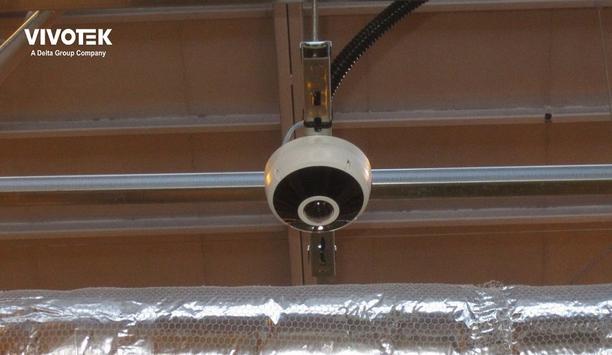
A well-known century-old Japanese brewery revered locally for its sake, shochu, plum wine, beer, and flavorings. It operates five large-scale breweries in Japan and continues to expand in scale and scope. To ensure product safety, the Japanese brewery is committed to improving process stringency. In this context, it noted the growing insufficiency of its current surveillance system and recognized the need to replace total surveillance solutions to improve cost control and maximize product safety. Challenge Not all the surveillance solutions such as hardware, software, and video management system within the breweries needed to be replaced. Therefore, the Japanese brewery hoped to build an open system with cross-brand compatibility to reduce overhead without sacrificing operational efficiency. The Japanese brewery opted for fisheye cameras to reduce the number of cameras needed for the system. However, most fisheye cameras currently marketed are image-based and lack real-time surveillance capability. More importantly, because the Japanese brewery operated several locations throughout Japan, an online management platform was needed to consolidate the whole package. The solution VAST 2 video management software The platform supports off-brand cameras compatible with ONVIF specifications providing users with unrestricted control Vivotek came up with a comprehensive solution comprising 260 devices (incl., 200 IB9368-HT cameras, 50 FE9391-EHV cameras, and 10 PoE network devices) managed using the VAST 2 video management software. The platform supports off-brand cameras compatible with ONVIF specifications and features useful built-in features, such as real-time warnings and video playback, to facilitate ad-hoc and post-doc searches, providing users with unrestricted control and greatly enhancing management efficiency. Bullet and 360° fisheye network cameras The IB9368-HT bullet network cameras and FE9391-EHV 360° fisheye network cameras were installed within the breweries to monitor production line processes. The IB9368-HT camera features a remote focus lens that can be adjusted for different segments of the production line. It also supports dynamic scaling for more detailed process monitoring, greatly enhancing food safety. By comparison, the FE9391-EHV camera can single-handedly cover areas that would otherwise require 2 to 3 non-fisheye cameras. Therefore, they were installed in the Japanese brewery's new production line to comprehensively monitor the bottle-filling, packing, and palletizing processes. WDR Pro and Smart Stream III technologies Both camera models feature Vivotek's WDR Pro and Smart Stream III technologies, reliably providing high-quality footage of the production lines, even in the contrasted environment. Furthermore, H.265 compression technology support reduces bandwidth use by up to 90%, freeing up storage space to ensure footage integrity. The result Vivotek tailors its high-end network camera, PoE, and image management products into IP surveillance solutions Vivotek tailors its high-end network camera, PoE, and image management products into IP surveillance solutions that meet the individual needs of the Japanese brewery. In this case, Vivotek partnered with ForceMedia, Inc. and ACTUNI Co., Ltd to ensure seamless integration/upgrade. The Japanese brewery was extremely satisfied with the security upgrade and plans to add even more Vivotek products shortly to maximize food safety and process integrity. Customer feedback "Fisheye cameras are effective IP surveillance tools. The VAST 2 software integrates our new and existing cameras into a single, flexible interface," said the century-old Japanese brewery. "System operations are stable, and technical issues are few and far between," said ACTUNI Co., Ltd.
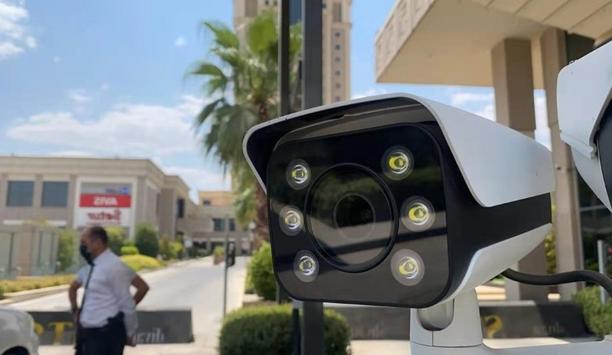
The Divan Hotel is a famous five-star hotel located in Erbil, Iraq. It keeps attracting tourists from all over the world with its innovative style, state-of-the-art luxury, and high-standard services. To ensure a secure trip for customers, the hotel found the urgent need to upgrade its security system which had been out of date. Dahua Technology, as a video-centric smart IoT solution and service provider, helped the hotel improve its security system and customer experience. The old cameras in the Divan Hotel had unclear images with poor definition, especially in low-light conditions, while AI functions were absent. Access control system Moreover, the original ANPR cameras for the street were unable to read complete license plate numbers at night. The old Under Vehicle Surveillance System (UVSS) had stopped working. In important places, there was no access control system for the staff or special personnel. Therefore, removing these security vulnerabilities became one of the priorities for the Divan Hotel. Dahua's customized security solutions have a great reputation for excellent performance and stability Dahua's customized security solutions have a great reputation for excellent performance and stability. The new security system provided to the Divan Hotel includes multiple advanced technologies such as Full-color, Dahua Security Software Pro (DSS Pro), ANPR, WizSense, access control, smart motion detection, etc. Products including WizSense cameras, Full-color cameras, and access controllers were installed for better security operation and management. With upgraded H.265 encoding technology, Dahua 4MP lite full-color fixed-focal bullet network camera has efficient video encoding capacity, which saves bandwidth and storage space. Deep learning algorithm This camera adopts the latest starlight technology and displays better color image in the condition of low illumination. It supports SD card storage, dust-proof function, waterproof function, and vandal-proof function, complying with the standards of IP67 (Supported by some select models). The 4MP IR fixed focal dome WizSense network camera with advanced deep learning algorithm supports intelligent functions, such as perimeter protection and smart motion detection. The system also applied 24-HDD Enterprise Video Storage (EVS), four-door two-way access controller, RFID reader, and ultra-HD Network Video Decoder (NVD). The EVS is ideal for hotel resorts that demand expansion flexibility, high reliability, and centralized storage management. It is compatible with numerous third-party devices making it the perfect solution for surveillance systems with or without a Video Management System (VMS). High decoding ability With the new security system from Dahua, the Divan Hotel freed its security team from false alarms Its open architecture supports multi-user access and is compatible with ONVIF 2.4. The NVD with ultra-high decoding ability has a plug-in board design, which makes it easy to use and maintain. With the new security system from Dahua, the Divan Hotel freed its security team from false alarms. They could focus on key tasks and react rapidly to timely notifications of unauthorized entrances of people and vehicles into the hotel and other emergencies. The access control system prevented unauthorized visitors in restricted areas, while AI-powered cameras protected the whole resort day and night. The Divan Hotel has spoken highly of Dahua's solution. The feedback said that no problem has ever occurred after the upgrade, thanks to the stability of the system, quick support from the Dahua team, and the integrated software for both the access control system and CCTV cameras.
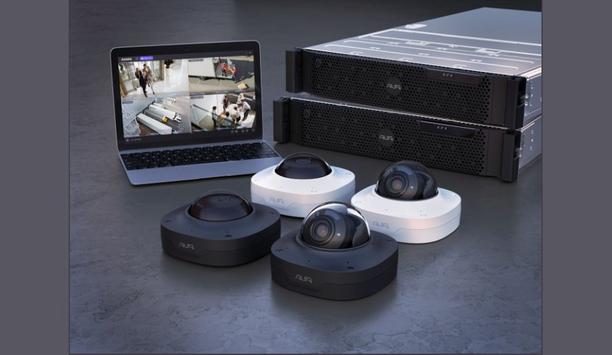
As a multi-faceted community with several buildings, public safety services, healthcare facilities, schools, childcare, barracks, a commissary and a visitor’s center, a typical U.S. Military base is a city in itself. Beyond the protection of armed forces personnel, the base is responsible for the safety of many civilians and civil servants. With such high standards and complex needs, U.S Military bases recognize the need for intelligent security systems that enable proactive monitoring, provide fast and smart forensics and comply with NDAA Section 889. Challenges faced by the US Military Base Inadequate situational awareness - The size and diversity of the military base pose a challenge. Past security measures led to gaps in coverage, leaving the base vulnerable to both internal and external threats. In addition, the COVID-19 pandemic created the need for increased situational awareness. Without a real-time and dynamic understanding of the environment, it became increasingly difficult to enforce preventative measures to control and mitigate the risk of transmission. Slow incident response time - Speed is critical. Within the confines of the military base, the consequences of slow incident response time can be devastating and even sometimes deadly. The longer it takes for the Security Operation Center (SOC) to gather, understand, and analyze the details of the incident, the greater the threat becomes. It became clear that responding to an Active Shooter, vehicle breach, or an assault, required immediate action that wasn’t available through their existing technology. Limited real-time analytic capabilities - The base wanted to prevent incidents from occurring rather than reacting after an incident has occurred. The traditional method of receiving an emergency call and responding after the fact was too costly. The US Base needed a platform that would provide the security team with automation notifications and alerts based on anomalies and rule-violations that were captured on video. NDAA-889 compliance - All military bases must meet the NDAA-889 compliance which states that the U.S. Government has banned specific telecommunications and video surveillance equipment utilising chips manufactured in China. Government contractors must help agencies remove/ replace banned equipment by Aug 12, 2021. Why Ava? One U.S. Military Base recently turned to Ava for an end-to-end intelligent security solution that would meet its full range of needs. Their requirements were a platform that was: Proactive - When there is a need to respond to a threat, the response needed to be immediate. Precise - On a base of this size, it was critical to pinpoint the exact location and nature of a security event in seconds - not hours or days. Simple - The system needed be straightforward to implement, manage and use within the existing infrastructure and cameras. Ease of use saves time and lives. Scalable - The system needed to be able to scale to thousands of cameras. Protecting military personnel and staff at the base Using Ava, operators can add maps of all the US Military Bases’ locations to gain situational awareness and insights Ava understood that the ability to protect military personnel and civilians that run the US Military Base is of utmost importance with even seconds being critical. Ava’s wicked-fast and smart forensic searches and powerful analytics transform the manually intensive examination of massive surveillance footage into accurate and useful results within mere minutes. Security operators are using powerful appearance, event, or image search functions to narrow down and track people or objects of interest. Using Ava, security operators can add maps of all the US Military Bases’ locations to gain situational awareness and insights. Each map can be configured and includes camera views, alarm views, as well as the ability to track people and objects as they move around the campus. Only Ava could meet their challenges by providing: Advanced Situational Awareness: Powered by Ava’s Smart Presence, the company’s use of AI and machine learning allows security personnel and operators to detect anything unusual at any time. Ava Aware VMS understands perimeters and behaviours, identifies, classifies, and tracks people of interest, vehicles, or other objects to send alerts before threats escalate. Operators now receive immediate alerts on unidentified loud noises including the exact source of the sound through microphones. The US Military Base’s security teams are now able to stop threatening actions, before there is damage to property or people. Rapid Incident Response: Powered by Ava’s Spotlight, video streams change dynamically to bring only the relevant feeds to the attention of the operator. Real-time alerts and notifications show up on the video wall to describe the incident, the time, and place it occurred. Using Ava’s Smart Search, the base is able to search by event and similarity to perform appearance and image detection powered by machine learning capabilities to comb through countless hours of video within seconds. Real-time Analytics: Ava provided the US Military Base with threat detection and notifications in real-time and uses intelligent algorithms and self-learning to detect abnormal behavior. The platform will alert the base’s security operators in real-time. It will intelligently highlight what’s relevant from all of the US Base’s cameras, in real-time, all the time. NDAA Compliant - Ava’s video hardware is TAA (Trade Agreement Act) Compliant, enabling any base to be fully NDAA 889 compliant. Ava’s solution provided operational efficiencies, such as: Seamless integration with existing cameras - Whether a military base is replacing all or some of their cameras, Ava Aware VMS easily integrates into and enhances existing cameras with the same AI capabilities. Now, existing ONVIF cameras are enhanced with analytics such as object detection, people and vehicle count, similarity based searching and more. By linking all existing cameras into a larger, AI-based video analytic platform, the base can leverage these powerful analytics across ‘all the cameras, all the time’. Access Control Integration - Ava’s solution easily integrates into access control, remote monitoring, and existing infrastructure. Monitoring the entire military base can be done as part of a single video management system. Scalable - The platform can easily be clustered to meet the growing needs of a base, from hundreds to thousands of cameras. Deployment simplicity - Ava’s system is designed for overall simplicity and readiness for deployment. With security cameras that were ready to go, fully loaded with out-of-the-box Ava Aware software, the base could easily replace cameras in a phased implementation, minimizing installation time and eliminating downtime. Ava’s simplified licensing/pricing model further simplified deployment. Plug and play configuration Plug and play configuration removes the need for user names and passwords The same simplicity extends to maintaining scalable management within a base’s group configuration policies. Plug and play configuration removes the need for user names and passwords, pre-configuration steps, and default settings. And finally, the base chose the Ava system for its general ease of use. Security operators now have access to detailed camera information, activity logs, and advanced video adjustments in a single, user-friendly screen view. Set up for success with intelligent video security The US Military Base is now set up for success with an end-to-end intelligent video security system that will scale with their needs. Highlights include: Camera installation, which will put the base into full compliance with NDAA-889. The US Military Base now has the highest level of security, to protect against the vulnerabilities of the connected world. The equipment has end-to-end encryption, factory-installed certificates, and records detailed audit trails of both operators and administrators to assist with any other compliance requirements. Security operators have gone from having ‘data overload’ to easily and quickly accessing ‘actionable insights’ to drive more confident and proactive security decisions. By leveraging powerful analytics, the base’s operators are able to respond in real-time and investigate incidents faster and with fewer resources. Operators are able to act on the system’s identification of objects, events, anomalies, and similarities that detect issues as they unfold. Furthermore, operators also have full occupancy insight to manage the flow of people and traffic across the base, in support of COVID-19 rules and regulations. Ava Smart Presence includes a people and vehicle counter to track objects in real-time, allowing for historical analysis and reporting. Configurable maps of all locations provide instant situational awareness and insights. The US Military Base seamlessly integrated the new system with existing access controls and non-banned cameras to cost-effectively meet the mandate and fully leverage analytics across the entire security system. Security teams at the base can trust in a powerful security solution that doesn’t inadvertently contain technology that poses a new threat. Whether enhancing existing cameras with advanced video analytics, replacing the entire video security system to meet the NDAA mandate, or creating a solution from scratch, the U.S. Military and supporting agencies can benefit from Ava’s secure cameras and leverage Ava’s powerful analytics for the highest levels of proactive security.
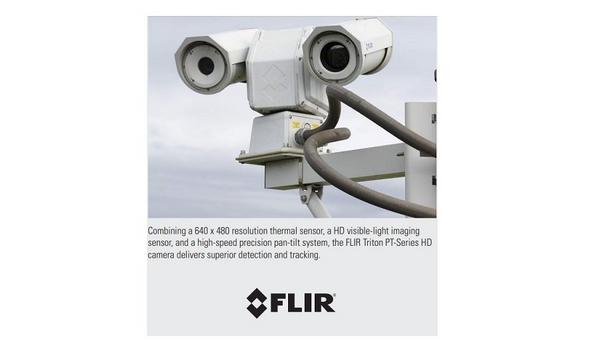
When it comes to airport security, there is a critical need for technologies that detect exterior threats and protect the perimeter. By using an advanced FLIR perimeter intrusion detection system, airports receive unmatched threat recognition, target tracking, perimeter defense and response capabilities. The result is greater efficiency, exceptional safety and enhanced customer experience for passengers, employees, aircraft and facilities. Norman Y. Mineta San Jose International Airport (SJC) is the gateway to Silicon Valley, providing transportation to 15 million passengers annually. SJC is recognized within the industry as one of America’s fastest‐growing major airports over the past four-year period, based on percentage increase in passenger seat capacity. Perimeter security upgrade Located in San Jose California, SJC is a robust engine of economic stimulus, transportation and international commerce. The airport is within an 18-mile radius of 6,600 technology companies in Silicon Valley and serves travelers employed by many of the world’s Fortune 500 enterprises, including Apple, Google, Facebook and Intel. Ensuring secure operations is critical to the success and customer experience of SJC users. The airport occupies 1,050 acres of land and its perimeter spans six miles. With such a vast property and a high throughput of traffic, protecting the perimeter from external threats is essential. Driven by high-profile intrusion incidents, perimeter security has become a top priority for airports in recent years. From 2004-2016, there were 345 perimeter breaches at 31 major U.S. airports, according to a report by the Associated Press. Like many airports around the country, SJC also faced challenges and crises of illegal trespassing of unauthorized individuals, despite the airport meeting all federal security regulations. This raised concerns about passenger safety. Mineta San Jose International Airport With a heightened need for better perimeter protection, SJC launched a multi-million dollar, three-phase initiative to upgrade its entire outdoor perimeter security system. The first two phases focused on physical upgrades to the fence line, raising 10,000 linear feet of fence from seven feet to 11 feet in critical areas of the airport. FLIR Elara FC-Series ID, ioi HD Analytics, Triton PT-Series cameras with FLIR Latitude Network Video Management System FLIR Elara FC-Series ID, ioi HD Analytics and Triton PT-Series cameras with FLIR Latitude Network Video Management System provide multiple layers of protection. Phase three was designated for fence technology enhancements through state-of-the-art video surveillance and detection systems. “In response to the cluster of perimeter breaches within a relatively short time period, our evaluation showed that the airport perimeter, with its seven-foot-tall fence, was indeed technically in compliance with current federal security requirements,” said Airport Deputy Director of Operations Bob Lockhart. “However, we also recognized some opportunities to improve the effectiveness of our perimeter, both from a perception perspective, as well as an actual strengthening of some of our perimeter,” he continued. Trial with various security solutions To find the best fence line analytic detection technology, SJC consulted National Alliance for Safe Skies, Inc. (Safe Skies), which is a federally funded non-profit organization that assists airports in the research, testing and evaluation of security technologies. SJC’s partnership with Safe Skies began in 2014 when the non-profit first discussed the airport’s perimeter security needs. Safe Skies was later tasked to review a variety of perimeter defense systems to determine what solutions would be most effective at SJC. Safe Skies tested and evaluated six different types of technology on-site including, thermal cameras, thermal cameras with video analytics, behavioral video analytic systems, pressure sensor buried cables, laser detection systems and wireless cameras. Each system was tested for two weeks, and Safe Skies presented a performance report to SJC for each one. After a detailed analysis, SJC selected an end-to-end perimeter intrusion detection system (PIDS) from FLIR Systems Inc. FLIR PIDS solution The FLIR PIDS solution is composed of 57 FLIR Elara FC-Series ID thermal analytic cameras and 50 FLIR ioi HD Analytics Bullet cameras along the fence line. The system also includes four FLIR Triton PT-Series dual sensor cameras with thermal and visible light sensors with pan-tilt tracking. For the SJC deployment, Latitude VMS integrates with the Software House’s C-CURE access control platform All of this technology fully integrates into the existing FLIR Latitude Network Video Management System, which is part of the FLIR United VMS family of products. As an ONVIF Profile S compliant platform, Latitude VMS enables seamless integration with edge devices and third-party systems. For the SJC deployment, Latitude VMS integrates with the Software House’s C-CURE access control platform. Distinguishing between an animal and human “The additional thermal and infrared camera coverage has greatly enhanced our abilities to detect unauthorized activities around the perimeter of our airfield,” Lockhart explained. Ken Castle, Vice President of business development at Ojo Technology, the systems integrator for the project, also described the advantages of the FLIR thermal technology. “Thermal cameras provide the data and visual confirmations that are lacking from so-called traditional fiber-based ‘shaker fence’ systems, which generate alarms when objects strike a fence or something creates vibration,” Castle explained. “The problem is that such alerts could be caused by dogs, wildlife, bicyclists bumping into the fence, tree branches or winds—none of which pose security threats.” Castle continued, “With thermal cameras, the embedded analytics can immediately distinguish between an animal at 50 yards and a human at 300 yards, following their direction of movement. The viewing trajectory can be narrowed to cover just the fence, or widened to include territory in front of or behind the fence. The bottom line is that thermal analytics provide definitive visual information and virtually eliminate unnecessary or inconsequential alerts.” Thermal cameras continue to be the industry standard for 24/7 perimeter monitoring and the technology is a key part of SJC’s PIDS solution. Installation of a perimeter fence technology system In September 2016, the U.S. Department of Transportation and the Federal Aviation Administration awarded SJC an $8.1 million grant for the design, purchase and installation of a perimeter fence technology system. Deployment of the FLIR PIDS solution began shortly thereafter. The project had an initial 150-day or a five-month turnaround with work beginning around the holidays in December 2016. As the systems integrator, Ojo Technology oversaw the phased commissioning of the project. Ojo engineers preconfigured the cameras and servers, programmed the analytics for all thermal cameras, tested the functionality of each camera under a variety of lighting conditions, and worked with the airport security command center and its systems subcontractor to incorporate the new cameras into the existing network. Installation was completed in the fall of 2017, and, afterward, Ojo worked closely with FLIR and SJC to fine-tune the system for optimal functionality. Integrator for PIDS “With such an aggressive schedule, Ojo Technology was instrumental in seeing the PIDS solution deployment through,” said Daniel Gundlach, Vice President and General Manager of security at FLIR. “Likewise, the collaboration, technical skill and ingenuity among the FLIR, SJC and Ojo teams was remarkable and a key reason why the project is such a success.” Upon detection of an object approaching the fence line, the FC-Series ID thermal camera, initiates an analytic alarm hand-off “The success of a technical solution like the San Jose Airport PIDS project is dependent upon a strong partnership among all participants—from FLIR as the manufacturer to the integrator to the end user,” said Neil Roberts, FLIR security director for the PIDS deployment. “In this case, all parties were committed to seeing this project through to the end and addressing any technical needs that arose along the way.” Threat recognition and response The advanced FLIR PIDS solution is designed to deliver superior threat recognition and response. Upon detection of an object approaching the fence line, the FC-Series ID thermal camera, initiates an analytic alarm hand-off to the PT-Series camera for auto-tracking. The FLIR HD cameras provide a color visual of the target for identification and verification. Through Latitude VMS, security operators manage response capabilities such as alarm functions, notifications and real-time interactive alarm maps. Video monitoring with perimeter intrusion detection “SJC has used FLIR cameras and Latitude products for many years,” said Lockhart. “We appreciate our FLIR end-to-end solution and the ability to expand our current camera system with new perimeter cameras to enhance our current video monitoring and provide additional perimeter intrusion detection.”The safety of passengers, airline employees and service workers is greatly enhanced" A defining feature of the airport’s PIDS solution was that all technology components were provided by FLIR, which created an advantage for integration and solution performance. Open platform software management system “An all-FLIR system provided a tight integration to accomplish the goal of heightening security for the airport,” Castle said. Castle continued, “In theory, an open platform software management system can accommodate a variety of camera manufacturers and models in addition to ancillary security systems such as access control, intrusion alarms, public address and intercom systems, and blue light emergency phones. However, in actuality, the integration of various third-party components can be challenging as different brands of firmware in varying camera models and manufacturers don’t always provide consistent levels of performance, such as resolution and other features. This can be avoided entirely by deploying one end-to-end solution from a single manufacturer.” “The upfront and early design services that FLIR offers through sales support engineers and through our Raven Site Planning Tool help reduce the risk of non-conformance and ensure design stays on budget. The end result is optimal system performance and peace of mind,” Roberts from FLIR explained. “At FLIR, we strive to be the airport’s trusted partner not just for today’s security needs, but also for the future.” Enhanced security and safety at the airport “The solution provides ongoing visibility of vehicle and cycling traffic along the outer fence line, as well as the movement of aircraft, cargo loaders, delivery trucks and service vehicles within the perimeter,” Castle said. He added, “Bottom line is that the safety of passengers, airline employees and service workers is greatly enhanced, and the expanded situational awareness gives the airport more options for responding to potential areas of concern.” Having successfully implemented a robust FLIR PIDS solution to protect the airport perimeter, SJC plans to execute more security improvements on the interior side of the airport. Future upgrade SJC has a robust network of security cameras throughout ticketing areas, Transportation Security Administration entry points, terminals, concourses and additional newly built airport areas. The airport is continually evaluating camera locations for upgrades to newer equipment to provide increased coverage or higher resolution camera views. Storage archivers and updated client workstations are also planned for as budgets get approved. By partnering with FLIR, SJC is able to utilize the advanced technology available on the market to provide safety and security and ensure the airport remains a thriving transportation hub that attracts new travelers.

FLIR PT Series cameras were used in a surveillance project to detect and monitor illegal fishing and poaching activities along the Spanish Galician coast. The FLIR thermal imaging cameras combined with maritime video analytics from Gradiant were ideal for spotting illegal vessels on a 24/7 basis and at a long range. The vastness of the Galician coastline and the multitude of fishing and farming activities call for a more automated surveillance approach. Fishing, shellfish harvesting, and marine aquaculture - mainly mussel farming in inshore waters are important economic activities in Galicia (northwest of Spain). Local public authorities strictly control these activities to prevent exploitation, fish stock depletion and resulting economical losses. They are fighting a constant battle against this unfair and illegal competition that affects thousands of professionals who make a living from the fishing and seafood industry. Challenges of coastal monitoring Illegal fishing and poaching has an enormous impact on the environment and food safety Illegal fishing and poaching of seafood resources also has an enormous impact on the environment and food safety; especially during periods of toxic algal bloom (red tides), when fishing conditions are hazardous for public health. The detection of unauthorized fishing and shellfish harvesting is of paramount importance for the Galician authorities. However, monitoring and protecting all of Galicia’s inshore and offshore fisheries, shellfish harvesting areas, and marine aquaculture farms is a challenging task. Galicia has 1,200 km of coastline. Its protection involves the surveillance of activity in 122 ports, including around 5,000 fishing boats, 400 beaches dedicated to shellfish harvesting, and 47 mussel aquaculture farms, with a total of more than 3,000 bateas (floating mussel farms). Long-range thermal imaging Moreover, most illegal activity takes place at night, making it extra difficult for law enforcers to detect any type of vessel. The Galician climate does not help either. With an average of 128 days per year of rain, visibility conditions are usually not ideal for surveillance operations. Manned surveillance patrols can only do so much; they are hindered by the climate and visibility conditions, making it impossible (from a practical and financial standpoint) for coast guards to cover the entire Galician coastline. In 2017, the Galician Coast Guard started a project to test video surveillance of the coastline based on thermal imaging cameras. The pilot included the use of FLIR’s PT Series multi-sensor camera, combined with maritime video analytics software from Gradiant (Pontevedra, Spain). Multi-sensor installation FLIR thermal images were enhanced by Gradiant’s intelligent video analytics software for maritime applications The multi-sensor installation was extensively tested on two different locations along the Galician coast. One set-up was used to monitor illegal vessels on coastal waters at short/medium range, while another set-up was used for long-range monitoring. The PT Series thermal cameras allowed the Galician Coast Guard to monitor the required area over a long range on a 24/7 basis, even at night and in adverse weather conditions. In addition, the FLIR thermal images were enhanced by Gradiant’s intelligent video analytics software for maritime applications. This software is specifically adapted for monitoring coastal environments and allowed the coast guard to detect, track and geo-localise people and vessels, including small wooden and plastic boats. Visible-light camera The software enabled the thermal cameras to detect objects and people despite adverse maritime conditions, such as high waves, low contrast due to low light, fog and rain, reflections on the sea surface, camera vibrations, and the presence of distractors, such as birds and vessel wakes. The FLIR PT Series is a high-performance multi-sensor pan/tilt security camera, incorporating an uncooled thermal camera with sensitivity of <35mK and a visible-light camera with 36x optical zoom. While the thermal camera is used to detect threats over a long range based on their heat signatures, the visible-light camera can be used for verification and identification. Long-range surveillance The requirements for this long-range application were extremely challenging for any thermal camera" “FLIR is the reference for long-range surveillance applications with thermal imaging,” says José Antonio Rodríguez, Head of Video Analytics at Gradiant. “The thermal performance of the camera and the fact that this technology is easy to set up makes it ideal for this type of application. In addition, FLIR supported us from the start for lens selection, calibration of the system and much more.” “The requirements for this long-range application were extremely challenging for any thermal camera,” says Nikitas Koutsourais, Product Marketing Manager at FLIR Systems. “Thanks to the FLIR PT Series’ unique thermal sensitivity of less than 35mK, we could provide the best image performance in the market.” IP video streaming Two different configurations were used in this application. The long-range surveillance station used a FLIR PT-606 camera, and was able to detect a rubber inflatable boat at 4,000m. Despite its narrow field of view, this camera allowed for wide coverage thanks to the high-precision pan/tilt unit. The camera was able to sweep a wide field of view span in a pre-programmed sequence of pan/tilt presets. The port surveillance station used a PT-625, offering a good compromise between detection range and field of view with a single pan/tilt preset. The integration of the video analytics software with the camera was easy thanks to IP video streaming and the camera’s ONVIF compliant interfaces for pan/tilt control. Long-range surveillance typically requires the use of lenses with a narrow field of view, which is a problem when you want to monitor wide areas. Coastal protection applications The FLIR thermal cameras provided the Galician coastguard with increased situational awareness However, the video analytics from Gradiant was able to take advantage of the Preset Sequencing mode of the FLIR PT Series. This allowed the coastguard to cover a wide field of view with a single camera and to perform video analysis on each pan/tilt preset. The FLIR thermal cameras provided the Galician coastguard with increased situational awareness and allowed them to respond much quicker to illegal fishing activities. The pilot project was performed in a realistic surveillance environment along the Galician coast and generated very positive results. The combination of a multi-sensor system with Gradiant’s maritime video analytics proved to be effective to deal with the intricate Galician coast lines and a lack of open view. In addition, this technology combination is a cost-effective alternative, making automated surveillance applications accessible for fish farm companies worldwide. Extremely rugged systems Finally, the PT-Series are extremely rugged systems, which makes them ideal for coastal surveillance, especially in an extremely humid environment such as the Atlantic coast of Spain. The system’s vital core is well protected against dust and water ingress, and complies with IP66 requirements.
Round table discussion

Connectivity is literally the difference between products operating individually and those combined into a more powerful system. Many of the devices that connect today’s security products reflect mature technologies that have been proven over time. However, innovation is also driving the need for new approaches to connectivity and networking. We asked this week’s Expert Panel Roundtable: What are the new developments in networking and connectivity for security?
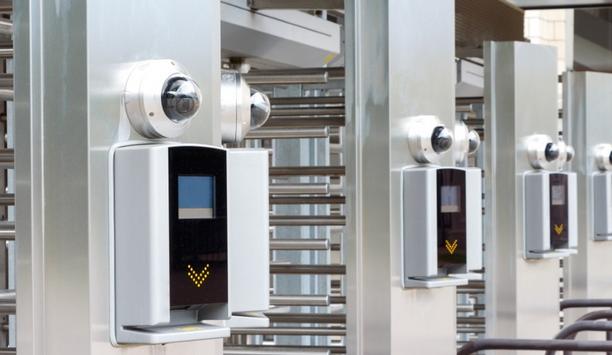
Integration of access control and video has been a reality for decades. The combination of our industry’s dominant technologies provides a one-two punch when it comes to maximizing the security benefits of a system. Access control tracks ‘events,’ while video provides visibility into those events. But the benefits of integrating video and access control are far from static. Rather, today’s systems are becoming even more valuable as they incorporate elements such as artificial intelligence (AI) and the cloud. Regarding integration of video and access control, we asked this week’s Expert Panel Roundtable a simple question: What’s new?

It’s safe to say there has been more change in the workplace in the last two years than ever before. Driven by the pandemic, technology has both allowed greater flexibility for employees and enabled continuing prosperity for many companies that otherwise would have had to cease operation. But have security protocols and practices done enough to enable companies to keep pace with the changes? We asked this week’s Expert Panel Roundtable: Have security protocols and practices kept up with the changing ways people work?
Products
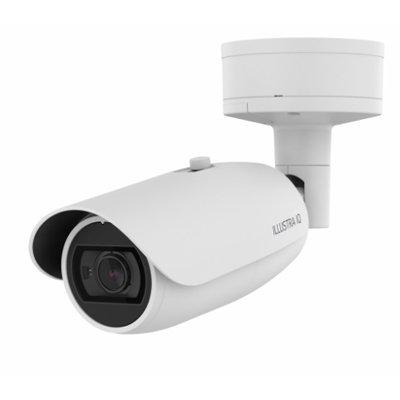
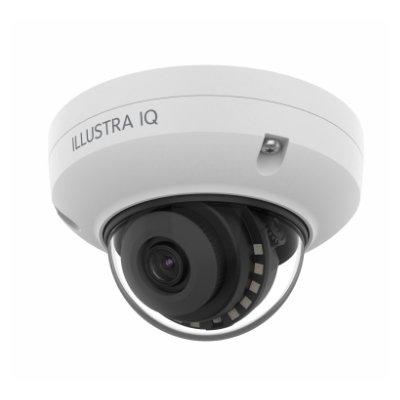
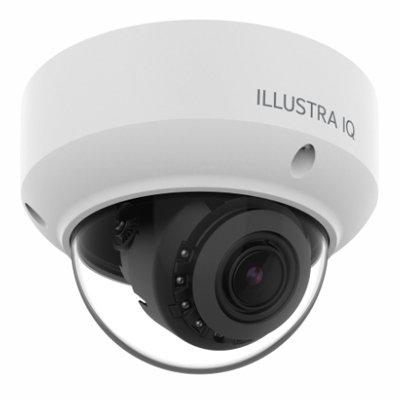
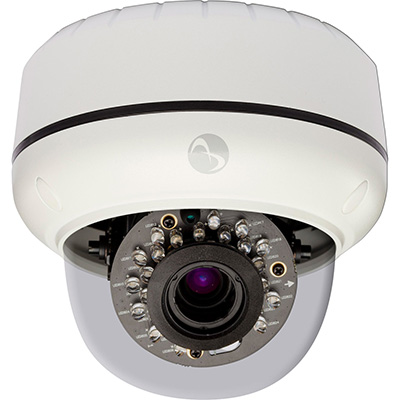
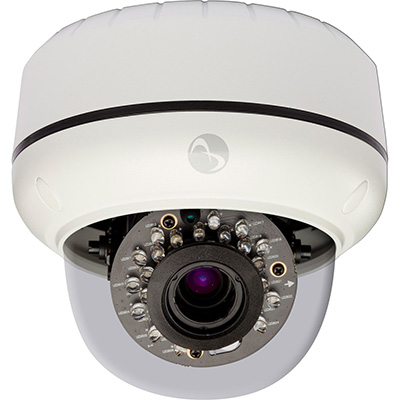
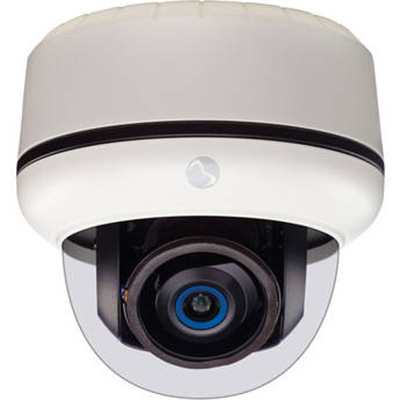
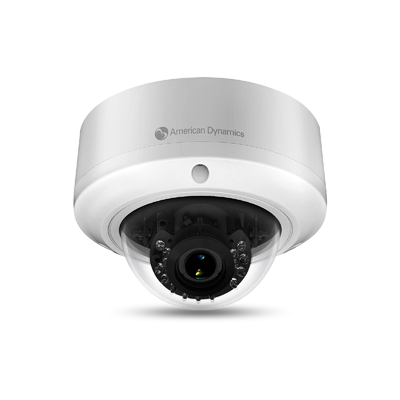
Videos




ONVIF: Manufacturers & Suppliers
- Honeywell Security ONVIF
- LILIN ONVIF
- Hikvision ONVIF
- Dahua Technology ONVIF
- Bosch ONVIF
- Axis Communications ONVIF
- IDIS ONVIF
- Illustra ONVIF
- Hanwha Vision ONVIF
- Vicon ONVIF
- Infinova ONVIF
- DRS ONVIF
- Pelco ONVIF
- eneo ONVIF
- TruVision ONVIF
- Sony ONVIF
- AV Costar ONVIF
- Messoa ONVIF
- IndigoVision ONVIF
- Avigilon ONVIF