Museum security

When news broke that a Renoir painting had been stolen from an exhibition in the south of France, days after 600 diamonds were taken from a museum in Vienna, few in the art or security worlds would have been surprised. Europol had recently published “Changing Tactics, Changing Targets: The Evolving Nature of Museum Heists,” highlighting criminals’ growing focus on high-value objects and their increasing use of force. The latest theft also echoes the Louvre heist almost a year...

GISEC Global 2026, the Middle East & Africa’s largest and most impactful cybersecurity event, concluded its 15th edition following three days of international collaboration, technology innovation and high-level dialog on the future of cyber resilience. Held for the first time at Dubai Exhibition Centre, Expo City Dubai, the 2026 edition welcomed thousands of visitors from more than 130 countries, alongside 750+ global cybersecurity brands and 350+ speakers. The international turn...

OPTEX, a pioneer in sensing technologies, will present its latest perimeter and asset protection solutions at Security Essen 2026, one of Europe’s pioneer security trade fairs. Throughout the exhibition OPTEX will showcase its expertise in intrusion detection technologies, alongside its continued investment in the DACH market and its customer-focused approach. Security Essen will also mark Dirk Schiller’s first event as OPTEX’s new Head of Sales DACH, giving customers and part...

Secutech Vietnam 2026 came to a close on 12 September at the Friendship Cultural Palace in Hanoi, with exhibitors and visitors exploring how safety, security, fire protection and smart building technologies can be applied across Vietnam’s buildings, factories and infrastructure projects. Held alongside Fire & Safety Vietnam and SMABuilding, the fair highlighted solutions for facility management, emergency response, automation and connected building operations. The 19th edition spanned...

The sell-out success of the 15th edition of GISEC Global, attended by thousands of cyber professionals from over 130 countries on the opening day at the Dubai Exhibition Centre (DEC) has reaffirmed the high international demand for tech collaboration in Dubai, catalysing the launch of a new show uniting the world’s quantum and cybersecurity sectors. Global Quantum X (GQX) by GITEX, announces, will convene governments, quantum technology leaders, national cybersecurity authorities, researc...

As artificial intelligence, geopolitical tensions and emerging quantum computing capabilities reshape the global cyber threat landscape, organizations are rethinking how they protect critical infrastructure, safeguard digital assets and prepare for the emerging cyber risks. GISEC Global 2026, the biggest and most influential cybersecurity event in the MENA, organized by inD, will bring together governments, critical infrastructure operators, technology innovators and cybersecurity leaders at Du...
News

From AI-powered hazard detection and connected factories to fire prevention, smart buildings, and robot demonstrations, Secutech Vietnam 2026 opens today in Hanoi with a focus on technologies that help protect, manage, and operate urban environments and production facilities more effectively. Taking place from 9 – 12 September 2026 at the Friendship Cultural Palace alongside Fire & Safety Vietnam and SMABuilding, the 19th edition will host 480 exhibiting brands from 16 countries and regions across 13,000 sqm of exhibition space. Representing Bulgaria, China, Germany, Hong Kong, India, Japan, Korea, Malaysia, Singapore, Spain, Switzerland, Taiwan, Türkiye, the UAE, the US, and Vietnam, exhibitors will present solutions spanning safety, security, emergency response, industrial automation, ICT infrastructure, and smart building technologies. Digital facility management Commenting on the fair, Ms Regina Tsai, General Manager of Messe Frankfurt (HK) Ltd – Taiwan Branch, said: “This year’s edition reflects how safety and security needs are becoming more closely connected with digital transformation, facility management, and industrial modernisation. Across factories, commercial buildings, public facilities and infrastructure projects, end users are looking for solutions that can improve risk prevention, response efficiency, and daily operations at the same time. By bringing these different technology fields together, Secutech Vietnam gives visitors a clearer view of how systems can be planned and applied in real project settings. It also helps suppliers present their solutions in a way that matches the practical needs of Vietnam’s fast-developing market.” This year’s exhibition will feature a broad mix of international and local suppliers across video surveillance, AI analytics, access control, intrusion detection, network transmission, fire protection, hazard detection, voice evacuation, testing and certification, and digital facility management. Mobile facility management Featured brands include Ajax Systems, AMG Systems, Dahua Wisualarm, Dräger, Hanwha Vision, Hikvision, NAFFCO, Network Optix, Nittan, Securiton, Sony, TOA, TVT, UL and VdS. Software and AI solution providers such as Advancis, Bien Ba, Certis, CSA International, emCT, HTI Group, JAON Inc, Sunggeon Engineering and Ventionex Innovations will also present applications covering hazardous zone monitoring, C2 platforms, identity management, system integration, VMS, AI orchestration, forensic video analytics, construction safety, IoT monitoring and mobile facility management. International participation will be further supported by country and regional showcases, including the Japan Pavilion and Korea Pavilion, which will present fire safety, inspection, emergency response, rescue, PPE and smart safety technologies. Together with specialist exhibitors and certification bodies, these showcases will help visitors compare solutions for local project requirements and safety standards. Supporting digital transformation The 2026 fringe program will place practical application at the forefront, with forums, workshops, and product presentations covering AI and software, factory automation, hands-on sessions for installers, fire prevention, emergency response, and live technology displays. Key highlights include: AI & Software for Intelligent Industries: Accelerating Vietnam’s Digital Transformation - This business-focused forum will examine how AI, software, cloud, networking, IoT, and intelligent platforms are supporting digital transformation across industrial facilities, commercial buildings and smart cities. The sessions will connect technology providers with end users through discussions on video intelligence, AI data infrastructure, hazard detection, intelligent manufacturing, IT network optimization, and smart city platforms. SPS Stage Vietnam – Building the Next-Generation Factory: AI, Robotics and Connected Industrial Automation - Co-organized by the Ho Chi Minh City Automation Association, this forum will focus on how AI, robotics, industrial automation, and connected factory technologies are transforming Vietnam’s manufacturing sector. Topics will include AI and robotics in modern manufacturing, the transition from industrial automation to smart manufacturing, and the development of connected factory ecosystems. Tech Stage - Exhibitors will present their latest products, technologies, and solutions through product presentations and live showcases. The platform will give distributors, system integrators, installers, consultants, engineers, project owners, and end users a closer look at new applications across security, fire safety, smart building, AI, and IoT technologies. Industry Installer Workshop - Focused on practical learning, the workshop hosted by Nhà An Toàn will offer product knowledge and skills-based training for installers and industry professionals. Sessions will cover AI-powered video surveillance, intelligent object search, AI-managed switch solutions, fire alarm systems, and robot applications for Vietnamese enterprises, helping participants apply new knowledge in installation and project environments. Fire seminar organized by the Fire Association - Industry representatives will examine the development of Vietnam’s fire prevention, firefighting, rescue, and emergency response sector, with attention to its role in public safety, national security, and social order. The seminar will also consider how fire safety capabilities can support the continued growth of the wider safety and security industries. Dialog with enterprises and business associations on fire prevention and firefighting - This session will address implementation challenges, regulatory requirements, and emergency preparedness, while encouraging closer public-private communication on improving safety practices across workplaces and facilities. AI & Robotic Display Demo Time - Live demonstrations will give visitors a closer look at intelligent machines, automation equipment, and AI-enabled tools in operation. The area is intended to reveal how these technologies can support tasks such as monitoring, inspection, response, and facility management, while allowing direct exchange with solution providers.

Artificial intelligence is transforming the global cybersecurity landscape, strengthening cyber defences while simultaneously enabling faster, more sophisticated attacks. According to the World Economic Forum's Global Cybersecurity Outlook 2026, 94% of organizations expect AI to be the biggest driver of cybersecurity change over the coming year, while 87% identify AI-related vulnerabilities as the fastest-growing cyber risk. Against this backdrop, GISEC Global 2026, organized by inD, a joint venture between the Dubai World Trade Centre (DWTC) and Informa, enters a new chapter at Dubai Exhibition Centre, Expo City Dubai, from 16–18 September 2026 under the theme ‘Cyber First: The New Digital Order.’ Fastest-growing cyber risk GISEC Global, the world's third largest cybersecurity event and the Middle East & Africa's most influential cybersecurity platform, will open its 15th edition this month having expanded 20 percent year-on-year, reflecting increasing international demand for cybersecurity innovation, collaboration and investment. Hosted and endorsed by the UAE Cyber Security Council, Dubai Electronic Security Center (DESC), Ministry of Interior and Dubai Police, GISEC Global 2026 will bring together more than 25,000 cybersecurity professionals, 750+ exhibiting brands, 350+ expert speakers and participants from 180+ countries to address the defining cybersecurity challenges shaping the future of the global digital economy. Fostering international collaboration H.E. Dr Mohamed Al Kuwaiti, Head of the UAE Cyber Security Council, said: "Artificial intelligence, geopolitical instability and the rapid evolution of digital technologies are fundamentally reshaping the cybersecurity landscape. As cyber threats become increasingly sophisticated and interconnected, no single nation or organization can address these challenges alone.” “The UAE is committed to fostering international collaboration, advancing cyber resilience and building trusted digital ecosystems that enable innovation and sustainable economic growth. GISEC Global 2026 will bring together governments, industry and the global cybersecurity community to develop practical solutions that help safeguard our shared digital future." Strengthening cyber capabilities H.E. Yousuf Hamad Al Shaibani, Chief Executive of the Dubai Electronic Security Center said: “GISEC Global has consistently been an important platform for DESC to engage with the cybersecurity community, exchange expertise and advance Dubai’s cyber resilience. This year, we are building on that momentum with the second editions of two of our flagship competitions, the Dubai Cyber Challenge – Government Edition, and the School of Cyber Defense, giving university students across the UAE an opportunity to demonstrate and develop their skills. Together, they reflect our continued investment in strengthening cyber capabilities at every level, from developing the next generation of talent to advancing the skills of professionals safeguarding our government entities.” “Our participation this year will also go beyond the competitions, with new initiatives and developments that reflect DESC’s continued focus on anticipating emerging challenges and strengthening Dubai’s cybersecurity ecosystem. We look forward to unveiling more at GISEC Global 2026.” Resilience and secure innovation Trixie LohMirmand, Executive Vice President, inD, said: "The digital economy can only thrive if it is built on trust, resilience and secure innovation. Today, cybersecurity is no longer solely a technology issue. It is fundamental to economic growth, national resilience and international competitiveness.” “At a time when cyber threats are no longer isolated IT issues but direct challenges to economies, sovereignty and public trust, GISEC Global becomes a critical platform that helps nations strengthen resilience, accelerate capability, and connect with the world’s foremost cybersecurity leaders.” Impact of artificial intelligence Reflecting cybersecurity's growing role in national resilience, economic competitiveness and digital trust, GISEC Global 2026 introduces Cyber First as its overarching strategic theme and thought leadership platform, recognising that cybersecurity has evolved beyond a technical discipline to become a boardroom, government and national priority. At the heart of Cyber First is the new Cyber First Leadership Summit, which will bring together ministers, national cyber authorities, global CISOs and technology leaders to examine the geopolitical impact of artificial intelligence, digital sovereignty, nation-state cyber threats and the resilience of tomorrow's digital economies. National cyber authorities Confirmed speakers include H.E. Dr Mohamed Al Kuwaiti, Head of the UAE Cyber Security Council; Subra Kumaraswamy, SVP & CISO, VISA, USA, Alex Attumalil, Global CISO, Under Armour (USA); and Roeland Delrue, Co-founder & COO, Aikido Security (Belgium), with additional international government leaders. The expanded conference program reflects a rapidly evolving cyber landscape, where artificial intelligence, quantum computing, dual-use technologies, geopolitical instability and critical infrastructure resilience are reshaping the global security agenda. Critical infrastructure resilience Building on the Cyber First agenda, this year's edition’s expanded conference program reflects the changing nature of cyber risk and the growing importance of cybersecurity in national resilience, economic competitiveness and digital trust. Alongside the Cyber First Leadership Summit, the new National Defense & Sovereign Cyber Track will explore cyber resilience through a national security lens, while the Quantum Security Summit, which is hosted by UAE Cyber Security Council and Technology Innovation Institute will prepare governments and organizations for the transition to the post-quantum era. AI-powered cyber defense The program also introduces the Global Quantum Drill, evolving the former Global Cyber Drill into what is planned to be the world's largest quantum readiness exercise, alongside an expanded Government Program hosted by DESC and the UAE Cyber Security Council. Dedicated conference stages will explore operational technology (OT) security, critical infrastructure protection, cyber diplomacy, ethical hacking, AI-powered cyber defense, cloud security and workforce development. The exhibition will feature global technology leaders, cloud hyperscalers and cybersecurity innovators including Amazon Web Services (AWS), Google Cloud, Huawei, EDGE, CPX Holding, CyberKnight and Spire Solutions, alongside hundreds of international companies showcasing the latest advances in cyber resilience, AI-enabled defense and secure digital transformation. Secure digital transformation Corey Deng, Chief Security Officer of Huawei Middle East & Central Asia, said: “The new digital order is fundamentally changing what cybersecurity means. As AI, cloud and digital technologies become increasingly embedded in critical operations, security must evolve beyond protection to become a foundation for intelligence and resilience.” “GISEC GLOBAL is an important platform for bringing together the leaders shaping this future, and Huawei is proud to contribute to this dialog through our vision of ‘Embedded Intelligence, Built-in Resilience’ and our experience in building secure, resilient, and intelligent infrastructure.” International cyber cooperation As cyber threats become increasingly sophisticated and artificial intelligence accelerates both opportunity and risk, international collaboration has never been more important. GISEC Global provides a platform where governments, industry and academia come together to exchange knowledge, strengthen partnerships and develop practical solutions to protect critical infrastructure, secure digital transformation and build more resilient economies. The event also supports the ambitions of the Dubai Cyber Security Strategy, the Dubai Economic Agenda D33, the Digital Economy Strategy and We the UAE 2031, reinforcing the UAE's commitment to secure digital transformation and international cyber cooperation.

International publications will give professional audiences greater access to African capability requirements, industrial development and emerging technologies ahead of the inaugural Lagos exhibition. The Africa International Defense Exhibition has announced a 26-strong Official Media Partnership Program designed to expand international reporting and analysis of the defense and security priorities shaping Africa. Covering defense policy Led by Defense News as Platinum Media Partner, DefenceWeb as Strategic Partner and Military Africa as Gold Media Partner, the program brings together specialist publications serving professional audiences across Africa, Europe, the Middle East, Asia and the Americas. The network includes publications covering defense policy, military capability, procurement, aerospace, aviation, biometrics, cybersecurity, industrial development and emerging technology. Together, they will provide different regional and specialist perspectives on the issues represented at AFRIDEX 2026. Resilient supply chains For defense and security professionals, the partnership program will provide wider access to reporting on: African capability development and modernisation priorities Defense-industrial capacity and resilient supply chains Training, operational readiness and interoperability Procurement requirements and international cooperation pathways Emerging technologies across Land, Maritime, Air, Cybersecurity and Space For participating publications, AFRIDEX will provide a pipeline of original editorial material, including expert briefings, interview opportunities, data-led insights, event imagery and access to government, military and industry perspectives as confirmations are secured. This will enable media partners to develop stories tailored to their own geographic markets and specialist readerships, extending the value of the program beyond event promotion. Highly targeted professional audiences Securing this breadth and calibre of international specialist media support represents a significant achievement for the first edition of AFRIDEX. The network combines globally recognized defense publications with established African, Middle Eastern, Asian, European, North American and Latin American titles. It also includes specialist publications focused on procurement, aerospace, aviation, biometrics and security technology. Several partners bring substantial and highly targeted professional audiences. The official AFRIDEX partner profiles state that Biometric Update reaches 3.5 million annual readers, while Aerospace Defense Review reaches more than 45,000 qualified readers across the United States. These figures illustrate the programs ability to connect AFRIDEX with both broad international audiences and specialist decision-making communities. Decision-making communities Nick Ornstien, Vice President, dmg events, said: “Securing this calibre of specialist media support for the inaugural edition of AFRIDEX is exceptional. Across our wider event portfolio, media networks of this depth are more commonly associated with established exhibitions that have spent several years building their profile, audience and industry relationships.” “The significance extends beyond visibility for the exhibition. This program will give defense and security professionals around the world more opportunities to understand the priorities, capabilities and innovations emerging from Africa. It will also give publications credible access to experts, perspectives and original stories that matter to their readers. The support we have received reflects confidence in AFRIDEX and growing belief in Africa’s role as an increasingly important hub for defense and security capability, industrial cooperation and innovation.” Changing operational requirements Defense and security organizations worldwide are responding to changing operational requirements, pressure on industrial capacity and supply chains, and the rapid development of technologies including autonomous systems, artificial intelligence, cyber capabilities and space-enabled services. These developments create a need for accurate reporting that reflects African priorities, operating environments and capability requirements. The Africa International Defense Exhibition will provide a structured platform through which publications can explore these subjects with government, armed forces, industry, technology providers and capability specialists. Taking place from 26–29 October 2026 at Eko Atlantic, Lagos, Nigeria, the exhibition will convene stakeholders across the Land, Maritime, Air, Cybersecurity and Space domains. It will focus on capability development, interoperability, industrial and supply-chain resilience, training-led readiness and structured engagement. Subject-matter specialists The AFRIDEX communications team will support journalists and Official Media Partners with: Interviews with confirmed government, military and industry representatives Operational-domain briefings and background materials Data and research relating to African capability and industrial priorities High-resolution photography, video and approved event assets Access to onsite announcements, briefings and reporting opportunities Introductions to relevant spokespeople and subject-matter specialists Official Media Partners Platinum Media Partner - Defense News Strategic Partner - DefenceWeb Gold Media Partner - Military Africa Silver Media Partners 21st Century Asian Arms Race Aeromag Asia Aerospace Global News African Security Magazine Arabian Defense Defense Arabia Defense Here EuroAtlantic Defense News Global Aviator Remayah S News S.r.l. Bronze media partners Aerospace Defense Review Air&Spaceshows International Magazine Biometric Update Defense Fulcrum Defense Procurement International Defense Star defensa.com International Defense Buyer Military Systems and Technology Security Africa Magazine Turkish Defense Industry News Group Aviation & Defense Universe The Africa International Defense Exhibition will take place from 26–29 October 2026 at Eko Atlantic, Lagos, Nigeria. Registration is open to eligible defense and security professionals, government representatives, armed forces personnel, industry stakeholders and qualified attendees. All registrations are subject to security vetting and approval.

RecFaces, a global developer of enterprise-grade facial biometric software, will participate in FIRE & SECURITY INDIA EXPO 2026 (FSIE 2026), taking place September 3–5 at Jio World Convention Centre in Mumbai, India. Visitors will be able to meet the RecFaces team and explore three of the company’s flagship products — Id-Time, Id-Guard and Id-Gate — at the stand of its partner, Startologic Technologies (A9). At FSIE 2026, RecFaces will demonstrate how facial biometrics can address practical business and security tasks across large and complex enterprise environments. The company will focus on applications relevant to enterprises in construction, retail, education and smart offices, where organizations need reliable tools to manage workforce attendance, control access to facilities and strengthen the capabilities of existing video surveillance infrastructure. Video surveillance infrastructure Visitors to the stand will be able to explore three different applications of facial biometrics. Id-Time is designed for biometric workforce time and attendance management, helping organizations gain more accurate visibility into employee presence and working time. Id-Gate brings facial recognition into access control scenarios, while Id-Guard enhances video surveillance with facial biometric capabilities. Together, the three products demonstrate how RecFaces approaches facial recognition not as a standalone technology, but as a tool for addressing specific enterprise tasks within existing business and security infrastructure. The RecFaces team attending FSIE 2026 will include Tamara Morozova, CEO at RecFaces; Farida Baichora, Product Owner at RecFaces; and Oleg Kurochkin, the company’s strategic partner. During the exhibition, they will meet with enterprise representatives and industry professionals to discuss practical facial biometric use cases and explore how the technology can support their operational needs. Rapidly developing industries “India brings together rapidly developing industries and enterprises managing increasingly complex facilities and operations. For RecFaces, FSIE is valuable because it gives us the opportunity to speak directly with the people responsible for these environments and understand the business tasks behind their technology decisions,” said Tamara Morozova, CEO at RecFaces. “Our goal is not simply to demonstrate facial recognition, but to show how it can become a practical part of everyday enterprise processes — from managing access and security to gaining better visibility into workforce attendance. These live conversations also help us understand where the market is heading and ensure that our products continue to address real business needs.” For organizations in construction, facial biometrics can be relevant across environments ranging from infrastructure and residential projects to shopping malls and corporate facilities. Large retail businesses, meanwhile, often operate networks of stores with significant employee and visitor flows. Education and smart office environments bring their own requirements for access, security and workforce management. Lengthy development project “From a product perspective, the value of facial biometrics becomes clear when it is connected to a specific process,” said Farida Baichora, Product Owner at RecFaces. “With Id-Time, Id-Gate and Id-Guard, we address three distinct scenarios: workforce time and attendance management, access control and facial recognition within video surveillance. At FSIE, visitors can discuss with us which product fits their particular task, what role facial biometrics plays within the existing infrastructure, and how organizations can introduce the technology without turning biometric deployment into a lengthy development project.” FIRE & SECURITY INDIA EXPO brings together professionals and companies working across fire protection, life safety, security, building automation, loss prevention and risk management. For RecFaces, participation in the exhibition provides an opportunity to engage with India’s security community and enterprise decision-makers, demonstrate facial biometric software in practice, and exchange expertise on its application in modern business environments. RecFaces invites enterprises, security professionals, technology partners and industry representatives attending FIRE & SECURITY INDIA EXPO 2026 to visit Startologic Technologies’ Stand A9 on September 3–5 at Jio World Convention Centre in Mumbai to meet the RecFaces team and explore Id-Time, Id-Guard and Id-Gate in action.

The UK-based Keynetics will exhibit at Security Essen for the first time, showcasing SentriGuard, its smart key-management solution for controlled, auditable access to physical keys. On Keynetics’ Stand 5A40 in Hall 5, exhibition visitors will have the opportunity to see the independently attack-tested and LPS 1175 C1 and C3-certified SentriGuard smart key safes in action. The team will also demonstrate the Access+ platform and mobile app that enable remote access management and offer a full audit trail while allowing organizations to retain their existing locks and keys. Smart key-management solution Taking place from 22–25 September in Essen, Germany, Security Essen provides an important platform for Keynetics as it expands through security partnerships and customer projects in Germany, Belgium, Switzerland, Austria and the Netherlands. Stuart Wheeler, Managing Director of Keynetics, comments, “We are delighted to exhibit at Security Essen and introduce SentriGuard to a wider audience of security professionals and organizations across Europe.” He continues, “Security organizations need to respond faster, control physical keys more effectively and know who accessed a site and when, and SentriGuard supports those goals.” Alarm-response applications “We are looking forward to demonstrating the system, its ease of use, audit capabilities and workflow to visitors, and we are equally as excited to meet our existing partners, customers and industry contacts at the exhibition to continue our conversations about effective, technology-enabled keyholding.” A German security partner will join Keynetics on the stand to support SentriGuard demonstrations and discuss mobile security, keyholding and alarm-response applications with attendees.

The 19th edition of Secutech Vietnam will take place from 9 – 12 September 2026 at the Friendship Cultural Palace in Hanoi. The fair will bring together 480 exhibiting brands from 14 countries and regions across 13,000sqm of exhibition space. With supports from the Vietnam Fire and Rescue Police Department and the Ministry of Public Safety, Secutech Vietnam continues to promote the adoption of advanced fire safety, emergency response, and security technologies across factories, buildings, public facilities, and infrastructure projects within the country. The exhibition will run alongside Fire & Safety Vietnam and SMABuilding, expanding its scope to include applications in AI, loT, ICT, smart buildings, and industrial automation. Integrated safety solutions The Vietnamese government has pinpointed the digital technology industry as a key driver of productivity, competitiveness, and long-term growth. Under the country’s five-year digital technology industry development plan, Vietnam is aiming to achieve USD 300 billion in digital technology industry revenue and USD 55 billion in annual digital technology export revenue by 2030. The plan also targets the creation of 100,000 digital technology enterprises, training of more than 3 million workers, and the building of modern digital industrial capabilities. These ambitions are expected to accelerate demand for connected infrastructure, intelligent operations, smart building systems, and integrated safety solutions across industrial, commercial and urban projects. Visitors practical insights Commenting on the upcoming fair, Ms Regina Tsai, General Manager of Messe Frankfurt (HK) Ltd – Taiwan Branch, commented: “Vietnam’s digital transformation is entering a new stage of long-term growth, supported by national goals for enterprise development, workforce training, and industrial modernisation. As factories, buildings, and public facilities adopt more digital tools, safety and security planning must advance at the same pace.” “This year, Secutech Vietnam responds with a broader solution-focused format, covering six key themes from critical infrastructure protection and smart factory automation to fire safety, AI operations, smart buildings, and ICT infrastructure. By presenting these cross-sector offerings side by side, the fair will offer visitors practical insights into how different technologies can be implemented together in real-world projects that align with Vietnam’s long-term goals.” Greater operational resilience The 2026 edition will bring together both local and international suppliers with attendance from key decision-makers across government, construction, manufacturing, commercial real estate, industrial parks, system integration, facility management, public safety, and critical sites. Exhibitors from Bulgaria, China, Germany, India, Japan, Korea, Malaysia, Singapore, Spain, Switzerland, Taiwan, the UAE, the US and Vietnam, will present an international breadth of technologies that support safer facilities, smarter performance, and greater operational resilience. Across the show floor, international exhibitors such as Ateis SE, Detnov Security, Matrix Comsec, Potter Global Technologies, Sony Electronics, and Xiamen Leelen Smart Technology will appear alongside Vietnam-based suppliers including Fire Front Vietnam, S-Tec Vina, and TOA Electronics Vietnam, among others. Their displays will span access control, AI surveillance, fire detection, fire suppression, emergency response, public safety, industrial safety, smart buildings, connected infrastructure, and digital enterprise applications. Digital enterprise applications Specialized showcases will add further international and technical depth, with the Japan Pavilion featuring fire safety, inspection, and emergency response technologies; the Korea Pavilion presenting fire protection, rescue, PPE, and smart safety products; and the UL Pavilion focusing on testing, certification, and compliance services. Another key highlight of the fair is its six integrated solution themes, covering: Security & critical infrastructure protection – showcasing technologies for safeguarding airports, factories, industrial parks, utilities, transport hubs, and other high-risk sites through surveillance, access control, intrusion detection, and control room coordination Smart factory & industrial automation – presenting tools that support safer and more efficient production, including factory automation, machine monitoring, robotics, workplace protection, and connected manufacturing Fire safety & emergency management – spanning equipment for detection, alarm, suppression, evacuation, rescue, and incidence response across buildings, factories, warehouses, public spaces, and major projects AI & intelligent operations – including AI-powered systems that allow operators to monitor sites, identify risks, analyze data, and respond faster across security, safety, and facility operations Smart buildings & connected infrastructure – focusing on building technologies that improve safety, comfort and efficiency, including access control, building management, energy monitoring, smart parking, and facility control ICT Infrastructure & digital enterprise – serving as the digital backbone for modern operations, including networks, data platforms, cybersecurity, cloud systems, and enterprise software Together, these themes will give buyers and project owners a strong foundation for comparing safety, security, and smart building technologies across factories, industrial parks, warehouses, commercial buildings, and large-scale developments. This structure will help visitors identify practical solutions that support risk prevention, faster incident handling, operational continuity, and safer site management.

Expert commentary
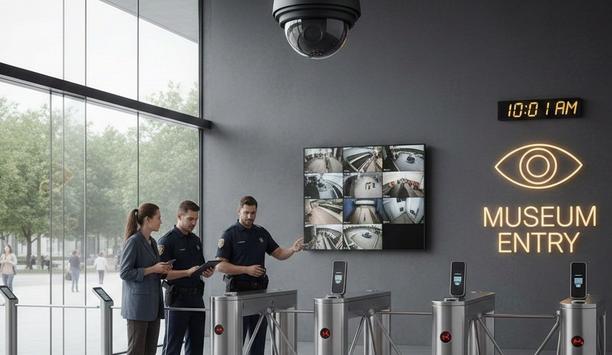
It took just seven minutes to steal more than $100 million in jewels from the Louvre, in an operation so swift and precise it exposed a deeper flaw in how even the most secure institutions protect what matters most. It's reignited global scrutiny of both physical and digital security, revealing how gaps in coordination can turn sophisticated systems into operational failures. Video intelligence and integrated monitoring Across museums, government facilities, and corporate campuses, video security, analytics, and access control often operate in isolation. In the Louvre’s case, investigators later discovered that the only exterior camera near the Apollo Gallery was pointed west, leaving a point of entry completely unseen. Emerging video intelligence and integrated monitoring technologies show how unified systems could have changed the outcome by preventing the breach altogether or dramatically accelerating the investigation that followed. As threats grow more sophisticated, so must the systems that defend against them. Disciplined system design, measurable performance standards, and continuous validation are what close security gaps. The Louvre incident highlights the industry’s shift toward a new expectation: security systems must not only capture video but understand context, anticipate failure points and maintain reliable performance under real-world conditions. From blind spots to comprehensive awareness Modern systems combine wide dynamic range, infrared and low-light capabilities, and flexible mounting designs Fragmented visibility and weak system governance often create the very conditions that allow sophisticated breaches to occur, where technology can exist, but coordination, oversight, and accountability often fall short. A high-performing perimeter begins with quantifiable coverage targets — field of view, redundancy thresholds, and camera utilization rates — rather than assumptions about what “should” be visible. Modern systems combine wide dynamic range, infrared and low-light capabilities, and flexible mounting designs to ensure 24-hour situational awareness, even in visually complex environments like the Louvre. When combined with redundant recording and cross-camera correlation, these features ensure that even if one device is compromised or obstructed, others maintain continuous visibility. The result is a perimeter with resilient coverage. Systems should be engineered to maintain visibility under failure conditions, measure performance against predefined KPIs, and surface anomalies automatically. Intelligent detection and real-time response Advanced analytics would have recognized the Louvre intrusion sequence as it unfolded. For instance, detecting the window breach, identifying unauthorized movement, and immediately notifying on-site security. What became a seven-minute heist could instead have been a single, automated alert cycle. These systems interpret what’s happening by reading patterns of movement, environmental cues, and timing. They learn to tell the difference between ordinary activity and something that’s off. Here’s how that works in practice: Unauthorized Access Detection: Spots break-ins or forced entry by recognizing sudden motion or environmental changes that don’t match normal use, like a window opening when it shouldn’t. Loitering and Suspicious Behavior Recognition: Flags individuals lingering too long near restricted areas, giving security teams an early signal to check in before a situation escalates. Abnormal Motion Tracking: Picks up on unusual movements like running, erratic pacing, or carrying hidden objects. Object and Intrusion Differentiation: Knows the difference between a person and a passing shadow, cutting down on false alarms triggered by lighting shifts or reflections. Real-Time Alerts and Escalation: Sends instant notifications to control rooms or mobile devices so teams can coordinate a response within seconds. Together, these capabilities shift security from passive recording to active interpretation, enabling faster decision-making that can be measured, refined, and validated over time. Cybersecurity: The overlooked layer of physical security The foundation of strong digital power lies in protecting the technology that protects everything else Investigators later discovered that the Louvre’s security system was protected by the password: “Louvre.” It’s a reminder that even the most sophisticated physical security system can be undone by the weakest digital link. A state-of-the-art camera system or motion sensor grid can underperform if the software is exposed or improperly managed. The foundation of strong digital governance lies in protecting the technology that protects everything else. Cybersecurity: Defences and system access controls Protection of the security system itself. One of the most fundamental defenses is enforcing robust credentials and multi-factor authentication for every user. Many organizations still rely on static passwords or shared logins for convenience, leaving systems vulnerable to both external intrusion and insider misuse. Multi-factor authentication ensures that even if a password is stolen, attackers can’t gain access without a verified secondary factor. Whether that’s a physical token, mobile verification, or biometric check. For security operations centers, where access often extends across multiple facilities or cloud environments, this extra layer can mean the difference between a minor attempt and a full-scale breach. Vetted system administration management. Another equally important defense is the establishment of tiered administrative privileges. Not every user needs full access to system configurations, live feeds, or stored recordings. Limiting permissions based on role and responsibility not only reduces the potential impact of human error but also minimizes the damage if an account is compromised. Tiered access also introduces operational accountability, ensuring that sensitive functions, such as disabling cameras or altering detection zones, are limited to authorized personnel and subject to approval of workflows. Secure audit trails. Comprehensive audit logging is what brings digital oversight and accountability full circle. Every access attempt, system change, and data export should be recorded, timestamped, and monitored for anomalies. When properly implemented, audit trails not only support investigations after an incident but can also serve as early warning systems for suspicious behavior. Automated alerts tied to unusual access patterns or repeated failed login attempts can prevent breaches before they escalate. Integrating these principles aligns physical security with modern cybersecurity standards, ensuring resilience against both external and insider threats. Future designs for resilient security High-profile cases like this year’s security breach at the Louvre rarely stem from a single flaw. They arise from the absence of integrated oversight and collaboration between physical, digital, and operational layers. The path forward lies in a unified model of security that blends comprehensive coverage, intelligent analytics, and secure system governance into a continuous, adaptive framework. When these elements work together, institutions can evolve from reacting to incidents toward anticipating and preventing them. Again, as threats grow more sophisticated, so must the systems that defend against them. Whether protecting cultural landmarks, critical infrastructure, or enterprise environments, the future of video security must anticipate, protect, and build trust by design.
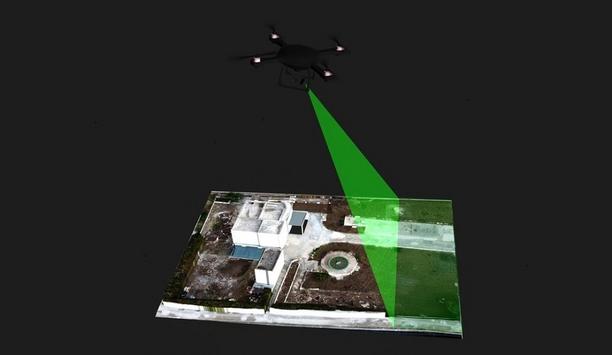
Seven minutes. That’s how long the recent Louvre heist took. In broad daylight, a group of thieves rode up on a construction platform, smashed display cases, stole several historical jewels tied to the Napoleonic dynasty and escaped on scooters before anyone in the control room even realized what was happening. It sounds like a scene straight out of “Mission: Impossible.” Only this time, Tom Cruise wasn’t there. In movies, we often see tight webs of red laser beams guarding treasures, with the hero gracefully sliding between them. Reality, however, is far less cinematic. Most museums still rely on mechanical sensors, simple infrared barriers, cameras and the most fallible component of all: the human eye. But the human eye doesn’t measure space. A camera records an image, but it doesn’t know that a display case has shifted by three centimeters, or that a visitor’s hand just crossed an invisible boundary. That’s where a new kind of perception comes in — LiDAR. From Hollywood fantasy to real-world security Forget the tangled maze of laser beams you’ve seen in films. A modern 128-channel rotating LiDAR fires hundreds of thousands of laser pulses per rotation — and it does this up to 10 times per second. That’s millions of spatial measurements every second, creating an invisible web of light that maps the scene in 3D, without anyone ever noticing. What LiDAR builds is called a point cloud — a live three-dimensional model of the environment. The system constantly compares this “snapshot” with the current scene. If anything changes — a hand moves closer to an artifact, a case is displaced or an object disappears — LiDAR detects it instantly. When technology sees in 3D Pan-tilt-zoom (PTZ) cameras automatically turn to the exact spot and start recording LiDAR technology (such as LidarVision, developed by Hexagon), brings true 3D situational awareness into museums and galleries. It doesn’t just see that someone is moving; it knows where, how fast and in what trajectory. Each detected object is tracked with its precise dimensions, velocity and spatial position. If a visitor steps too close to a protected exhibit, the system triggers an alarm. Pan-tilt-zoom (PTZ) cameras automatically turn to the exact spot and start recording. The operator no longer has to stare at dozens of screens, hoping to catch the right moment. LiDAR data also serves as forensic evidence — allowing investigators to replay the incident as a full 3D reconstruction. They can see exactly how intruders moved, from entry to exit, with centimeter precision. Beyond thieves: Everyday situational awareness LiDAR isn’t just a tool against master criminals. It helps with daily operations, too — recognizing when someone lingers suspiciously near a sensitive exhibit, when an unauthorized object enters the room or even when a visitor collapses. The system can trigger a silent alert, notify security staff or automatically redirect nearby cameras. History that never comes back 13 paintings worth more than half a billion dollars vanished from Boston’s Isabella Stewart Gardner Museum Art theft is not a cinematic rarity — it’s a recurring tragedy. In 1990, 13 paintings worth more than half a billion dollars vanished from Boston’s Isabella Stewart Gardner Museum. None have ever been recovered. Even Leonardo da Vinci’s Mona Lisa was stolen from the Louvre in 1911 — though it was miraculously found two years later. That case, however, remains the exception. Thieves often fail to realize that cultural artifacts are not commodities. When they melt them down for gold or strip them for gems, they don’t just destroy value — they erase history. Spatial understanding is the future of security No security system is flawless. But while cameras merely watch, LiDAR understands space. From a single compact device, it monitors the 3D environment in real time, detects anomalies and reacts immediately. Modern security is no longer about higher fences or better cameras. It’s about spatial understanding — knowing what is happening in the room right now. And that’s something even Tom Cruise wouldn’t be able to slip through.

The average business owner or investor has some kind of security precaution in place, especially in the after-hours when there are fewer deterrents to inhibit criminal activity. Security guards, video surveillance systems, motion sensor lights, or even just fake cameras placed around the property are some of the common options people choose. Future of overnight security Smart business owners are starting to realize, however, that some of these traditional security measures are becoming antiquated and no longer cutting. The now and future of overnight security is in remote guarding. Pioneered by companies like Los Angeles-based Elite Interactive Solutions, which was founded back in 2007, remote guarding is revolutionizing the overnight security business. Minimizing criminal activity Remote guarding is fast becoming the most popular choice among commercial end-user property owners Remote guarding utilizes a combination of cutting-edge technology, “digital guards,” highly trained security agents, and local law enforcement if and when necessary to minimize the potential of criminal activity. For those adequately enlightened to its overwhelmingly impressive crime prevention capabilities, remote guarding is fast becoming the most popular choice among commercial end-user property owners to secure and protect their investments. What Is Remote Guarding? Remote guarding is a revolutionary concept and increasing trend in security systems that utilize a combination of methods to effectively analyze potential threats to property. Cameras and/or other monitoring devices running highly advanced algorithmic software are installed in strategic areas or vulnerable places onsite and remotely located security agents are immediately notified of any activity within a designated perimeter of the property. A blend of AI, cybersecurity, and video analytics When properly deployed by an expert provider, the technology stack includes a proprietary blend of video analytics, artificial intelligence, cybersecurity, and more. Done right, “noise” is effectively filtered out, allowing agents to act on legitimate alerts and achieve zero false alarms communicated to first responders. Today, there are a lot of terms and descriptions tossed around about remote guarding, remote video, virtual guarding, etc., but those attributes must be present to represent the true definition of the offering and its many virtues. Realtime situational awareness Many systems have a two-way speaker that allows the security agent to give a verbal warning When specially trained security agents are alerted to trespassers, possible intruders, or other suspicious activity, they analyze the situation in real time and determine the necessary level of action. Many systems have a two-way speaker that allows the security agent to give a verbal warning, known as a voice-down, to the individual(s) that they are being watched. Most perpetrators, often believing the response is emanating directly from security personnel on the property itself rather than from a remote command center, flee immediately. However, if the threat persists, the security agent enlists local law enforcement to get on the scene. Customized remote guarding When properly deployed, remote guarding systems are also customized to specific properties. A team of consultants visits the client’s property to evaluate its vulnerabilities and where to best place cameras and/or other monitoring devices for system efficacy. Traditional Security Shortfalls According to Keith Bushey, a retired commander for the Los Angeles Police Department, there is much frustration between law enforcement officers and potential victims of crime due to the historically unreliable performance of traditional burglar alarm systems and central monitoring stations. He states about 90% of security-related calls are false alarms, a problem that has been well-documented through the years. Onsite challenges When a legitimate emergency does occur, the perpetrators have often already done their damage When a legitimate emergency does occur, the perpetrators have often already done their damage and/or escaped by the time law enforcement arrives. Onsite security guards are not the remedy either as they bring their own set of issues and challenges. Unexpected costs Traditional security systems can also have unexpected costs. The cost is not only in the security guards’ paycheck or the cost of the equipment itself. The cost comes when an actual incident occurs. In worst-case scenarios, the security guard(s) are injured, the business suffers inventory loss, and/or damage is sustained to the property. The medical and other costs for the security guard(s), the loss of inventory, property damage, deployment of law enforcement resources, and possible fallout of legal expenses all add up. Even in the best-case scenario, false alarm expenses incur if law enforcement is dispatched. These, among many others, are some of the primary issues that remote guarding resoundingly answers as a superior alternative. A Bounty of Benefits Remote guarding systems have been proven to cut costs and be more effective than traditional security systems. Even though the monthly monitoring costs of remote guarding are significantly higher than traditional intrusion detection system monitoring, the much higher effectiveness in crime reduction, elimination of false alarms, and augmenting or replacement of manned guards result in a substantially higher return on investment (ROI) to the end user. Easy tracking of threats The security cameras already have their image captured on record, making them easier to track down For example, case studies have demonstrated reduced security costs for clients by 60%, on average. These reductions have come from the costs of security staff, inventory, or property loss, plus saving money on insurance premiums and deductibles. The nature of remote guarding reduces the risk and costs of false alarms, with professional security agents able to determine an actual threat before law enforcement is called. In a rare instance when a perpetrator escapes before law enforcement arrives or can detain the individual(s), the security cameras already have their image captured on record, making them easier to track down and identify. Reduction of false alarms The significant reduction in false alarms is greatly appreciated by law enforcement, as it allows them to focus on real emergencies or crises. Better relationships are also developed between clients and law enforcement, as remote guarding systems are highly reliable in providing accurate and real-time information to officers as they approach the scene. In short, it assists law enforcement in doing their job more effectively, as well as more safely thanks to having eyewitness information before engaging in an active crime scene. Partnership When you combine the decreased cost with the increased efficiency and success rate, it is easy to see why many commercial end-user property owners across the country are making the shift to remote guarding. It’s also an outstanding opportunity for professional security dealers and integrators to partner with a remote guarding services provider to bring a superior solution to their end customers and pick up a recurring monthly revenue stream in the process.
Security beat
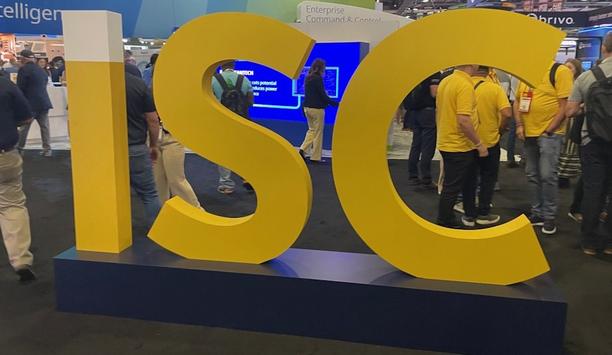
Artificial Intelligence (AI) had a major presence at the ISC West 2026 show in Las Vegas. Almost every booth offered some variation on AI and how intelligence is transforming the physical security industry. Several industry leaders led the way, showcasing how they are tackling complex security challenges with smarter, more efficient solutions. Obviously, the security industry will never be the same. Milestone Systems: Responsible AI and open platforms Milestone has declared 2026 the "year of delivery” on previously announced developments and enhancements. A standout feature is their new natural language AI search, which is being integrated across XProtect, Arcules, and Briefcam platforms to simplify how users interact with vast amounts of video data. A core pillar of their strategy is responsible AI development, which prioritises using licensed data over "scraped" data. They have introduced new anonymisation tools that protect privacy by replacing faces with AI-generated characteristics like hair color while keeping the person unrecognisable. Furthermore, Milestone is moving workloads to Linux to reduce costs, transitioning toward an app marketplace, and has partnered with NVIDIA for the "Hafnia" project to ensure high-quality data to train AI models. Ambarella: Powering the edge with AI chips With their presence at ISC West in a meeting room near the trade show floor, Ambarella is the "engine" behind many high-performance intelligent video products, specializing in low-power AI chips like the N1 and CV7 families. Their technology is moving beyond cameras, where they provide systems-on-chips [SOCs] to many manufacturers. They have expanded into "AI boxes" that can process 64+ video channels simultaneously. A standout feature is the Natural Language technology, which allows users to search for specific objects or abstract scenes using simple prompts. To address modern security concerns, Ambarella has implemented "agentic" programming for a no-code development of automated workflows and media signing to combat AI-generated deepfakes by verifying video integrity through metadata. Motorola Solutions: Simplifying intelligence Motorola Solutions shows physical security evolving into a real-time enterprise intelligence layerMotorola Solutions is prioritising user accessibility by integrating natural language processing into its system configuration. Motorola's portfolio demonstrates how physical security technology is evolving into a real-time operational intelligence layer across the enterprise. Instead of requiring custom coding, operators can now use simple commands—like asking the system to "show me when someone fell down"—to set up advanced analytics and search parameters. The company is also deploying AI agents designed to aggregate data and automatically flag safety or compliance risks, such as perimeter breaches or blocked fire exits. To ensure maximum utility of the hardware, Motorola Solutions’ system can ingest massive, complex physical manuals and automatically generate monitoring rules based on those standard operating procedures. Furthermore, Motorola is focusing on interoperability, using industry-standard interfaces to ingest data from various hardware brands and networks. This approach aims to provide operators with clear, recommended next steps during critical events, streamlining the decision-making process in high-pressure environments. i-PRO: Putting generative AI at the edge i-PRO is bringing generative AI directly to the edge with a new fisheye camera, which processes complex analytics locally rather than relying solely on the cloud. These cameras, on display at ISC West, have moved beyond simple attribute-based tracking to identify complex behaviors like aggression, fighting, and slip-and-fall incidents. By running on the latest Ambarella chips, i-PRO cameras can use generative AI to improve image quality and analyze scenes in real-time without external processing. This focus on edge-based intelligence ensures high-performance analytics are available even in environments where constant cloud connectivity might be a challenge. Brivo: The rise of agentic AI Eagle Eye Video Assistant (EEVA) acts as a natural language AI agent that can monitor for specific threats Brivo and Eagle Eye Networks have officially unified under the Brivo name, focusing on streamlining the experience for large integrators. They are pioneers in agentic AI, introducing features that allow users to talk to their mobile apps to initiate lockdowns or add users. Their Eagle Eye Video Assistant (EEVA) acts as a natural language AI agent that can monitor for specific threats, such as a brandished weapon or a specific vehicle, and automatically trigger access control responses. By treating access and video as a unified system, Brivo enables users to connect specific video skills—like detecting a red car or a brandished weapon—to automated access control actions. They are also using AI to achieve "zero-cost integration," linking disparate cloud systems using AI-generated instructions. Everon: Emphasis on video monitoring Everon is making a massive investment in active video monitoring, using AI-driven systems to deter crime even before it happens. “The market is ripe for it, and customers are demanding it,” says David Charney, Everon’s Sr. Vice President, Video Command Center. Employing virtual guards who can use voice commands, lights, and horns to "shoo away" unauthorized individuals. The company has implemented senior-level leadership that has facilitated more than 5,000 video-based apprehensions. Everon, specializing in integrated systems for multi-site businesses, uses a rigorous selection process to choose AI providers that can accurately filter alerts for specific applications, such as identifying when a fire door is blocked. As a "trusted advisor" to their 300,000 customers, the company focuses on delivering professional-level results that move beyond basic recording to proactive threat mitigation. Hanwha: New hybrid VMS combines cloud and on-prem Hanwha Vision highlighted the official public launch of Blaze, a hybrid video management system (VMS). The platform uses a hybrid architecture to manage on-premise and cloud-connected devices across multiple sites without complex port forwarding. Blaze features native AI capabilities, including semantic search that allows operators to find specific incidents using natural language queries, such as "person with a safety jacket." The AI security platform lets teams search surveillance footage the way they search Google. AI similarity detection allows operators to quickly trace a person’s movement and investigate incidents faster (useful in active shooter behavior, medical emergencies, or crowd panic scenarios, and more). The system also provides a "histogram" view of traffic patterns to help security professionals quickly identify anomalies in historical footage. OpenEye: Operational intelligence and shift to OpEx OpenEye unveiled AI-powered features such as visual chat and scene analysisOpenEye is redefining video surveillance by moving intelligence from the camera level to the cloud, significantly reducing the need for on-site server management. At ISC West, OpenEye introduced new AI-driven tools like visual chat and scene analysis. Beyond security, these tools provide valuable operational alerts, such as identifying overflowing dumpsters, dirty tables in restaurants, or vehicles blocking dock doors. The system also utilizes natural language for search, allowing users to find specific attributes like "people wearing backpacks" within designated timeframes. OpenEye also highlighted an industry-wide shift toward operational expenditures (OpEx) billing models, as users increasingly prefer predictable monthly or yearly payments over large upfront capital expenditures (CapEx). This model aligns with their channel-based operations, meeting customers where they currently operate without the burden of high fees. IQSIGHT: New name, same mission for Bosch video Formerly Bosch Video, the newly named IQSIGHT seeks to maintain the “Bosch pedigree” under the new name. It’s the same engineering, manufacturing, etc. IQSIGHT also pledges to be "easier to do business with" by improving user interfaces and end-to-end user experiences. Despite the transition, the company has increased their pace of innovation and reinforced the open systems philosophy with enhanced integrations with Milestone, Genetec, and others. The major product release at the show is IVA Pro Context, which uses generative AI to provide human-level scene understanding. Through a partnership with Laelaps AI, a robotics startup, IQSIGHT is exploring autonomous dispatch and response. When a camera identifies a scene, it triggers a robot to provide a tailored response. Commercialisation is expected in 12 to 18 months. Verkada: How their system can solve a crime But how does AI operate in the real world? Verkada had a “themed” exhibit demonstrating how their system could solve a hypothetical theft at the Louvre museum in Paris. The exhibit took attendees through and showed how Verkada technologies (e.g., license plate recognition and search capabilities) could provide fast results to solve the crime. AI-powered tools, like their newest unified timeline, demonstrate value in the real world of investigations.
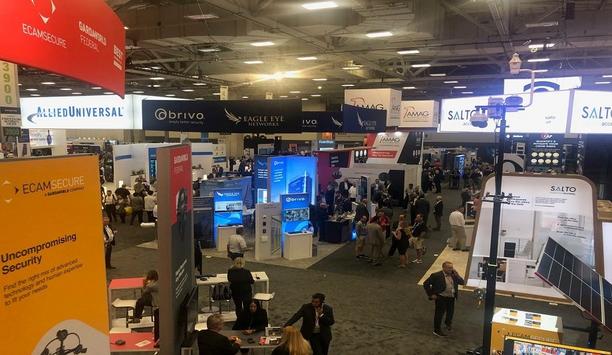
Companies at GSX 2023 emphasized new ways that technologies such as artificial intelligence (AI) and the cloud can address long-standing issues in the security market. Among the exhibitors at the event in Dallas were companies seeking creative ways to apply technology, lower costs, and make the world a safer place. Reflecting on the exhibition, here are some additional takeaways. Expanding AI at the edge i-PRO is a company reflecting the continued expansion of edge AI capability in the security market. Today, more than half of the company’s lineup supports AI at the edge so the customer has a wide choice of form factors when seeking to leverage the feature set. AI processing relay, extended warranty i-PRO is increasing their warranty period from 5 to 7 years, which could be a lifetime warranty in some cases I-PRO also has an “AI processing relay” device that accepts non-AI video streams and applies edge analytics. AI has progressed from a high-end technology to a feature available in a variety of cameras at different price points. i-PRO is also increasing its warranty period from 5 to 7 years, which could be a lifetime warranty in some cases depending on a customer’s refresh schedule and lifecycle management. Active Guard, MonitorCast The company’s video management system (Video Insight) is continuing to build new features including “Active Guard,” an integrated metadata sorter. Their access control platform, MonitorCast, is a Mercury-based solution that is tightly integrated with Video Insight. Their embedded recorders now have PoE built in. “We can move at a faster pace to fill out our product line since leaving Panasonic,” says Adam Lowenstein, Director of Product Management. “We can focus our business on adapting to the market.” Emphasis on retail and other verticals Shoplifting is a timely issue, and retail is a vertical market that got a lot of attention at GSX 2023. “We see a lot of retailers who are primarily interested in protecting employee safety, but also assets,” says Brandon Davito, Verkada’s SVP of Product and Operations. “Shrinkage is a CEO-level priority.” “Retailers are getting more engaged with security posture, instead of letting perpetrators walk,” Davito adds. Intrusion detection Verkada has an intrusion product that will notify a central station if there is an alarm On the alarm side, Verkada has an intrusion product that will notify a central station if there is an alarm, and operators can review videos to confirm the alarm. Other capabilities seeking to discourage trespassers include sirens, strobes, and “talkdown” capabilities. International expansion Verkada continues to expand internationally with 16 offices in all, including Sydney, Tokyo, and London. The core value proposition is to enable customers to manage their onsite infrastructure more simply, including new elements such as PTZ cameras, intercoms, and visitor management. Verkada emphasizes ease of use, including a mobile application to allow access to be managed across the user base. Forging partnerships “We are committed to the channel and industry, and we continue to build relationships and expand our reach,” says Davito. Among the industry relationships is a new partnership with Convergint, which was hinted at during the show and announced later the same day. They are also expanding their partnerships with Schlage, Allegion, and ASSA ABLOY. Working with other verticals They offer new features for K -12 schools, and a new alarm platform is easier to deploy and manage Verkada has also found success across multiple other verticals, notably healthcare, where they integrate with an electronic medical records system. They offer new features for K-12 schools, and a new alarm platform is easier to deploy and manage. They are integrating wireless locks to secure interior doors in schools, looking to secure the perimeter, and installing guest management systems. Transitioning the Mid-Market to the Cloud Salient is squarely focused on the “mid-market,” a large swath of systems somewhere between small businesses and enterprise-level systems. Pure cloud systems are not as attractive to this market, which has a built-out infrastructure of on-premise systems. Adding a camera to an existing system is easier and less expensive than tying it to the cloud. Benefits of cloud It’s a market that may not be ready for pure cloud, but there are benefits to be realized from adding a cloud element to existing systems. “We are continuing to augment our premise-based solutions with added cloud capabilities and flexibility,” says Sanjay Challa, Salient’s Chief Product Officer. The feedback Salient hears from their customers is “I want to own my data.” The hybrid cloud approach offers the right mix of control, flexibility, and unit economics. Cloud add-on capabilities We want to provide the flexibility for customers to go full-cloud as it becomes more economically attractive" Cloud add-on capabilities include bringing more intelligence about system operation to the user via the cloud. Over time, Salient expects to sell more cloud-centric offerings based on feedback from integrators and customers. “We want to provide the flexibility for customers to go full-cloud as it becomes more economically attractive over time,” says Challa. Vaidio AI technology Salient seeks to be a transition pioneer to help customers realize the path to the cloud. Their approach is “crawl, walk, run,” and helping customers make the transition at each stage. Salient has added AI to its product offering, incorporating Vaidio AI technology from IronYun into a powerful suite and broad array of on-premise analytics, which are gaining traction. The seamless approach makes it easy for customers to embrace AI analytics, although Salient remains broadly committed to open systems. Addressing ‘Soft’ Features for Integrators AMAG is in the process of enhancing its product line with the next generation of access control panels. However, “product” is just part of the new developments at AMAG. In addition to “hard” features (such as products), the company is looking to improve its “soft” features, too; that is, how they work with the integrator channel. Integrator channel Rebuilding a process to make your organization more efficient, is relatively easy; it just takes a lot of persistence" “We have the depth of our legacy customer base we can learn from, we just need to close the feedback loop quicker,” says Kyle Gordon, AMAG’s Executive Vice President of Global Sales, Marketing, and commercial Excellence, who acknowledges the value of reinstating face-to-face meetings after COVID. “We are laser-focused on nurturing our integrator channel,” he says. “Developing new features takes time, but rebuilding a process to make your organization more efficient, that’s relatively easy; it just takes a lot of persistence,” says Gordon. More cohesive internal communication is another useful tool, he says. Disrupting the cloud based on price Wasabi is working to make cloud applications less expensive by offering a “disruptive” price on cloud storage, $6.99 per terabyte per month (80% less than hyperscalers). Contending “hyperscalers” like AWS are charging too much for cloud storage, Wasabi is using its own intellectual property and server equipment co-located in data centers around the world. Wasabi sells “hot cloud storage,” which refers to the fact that they only have one tier of storage and data is always accessible. In contrast, a company such as AWS might charge an “egress fee” for access to data stored in a “colder” tier. Cloud storage “We saw that several video surveillance companies had not yet adopted cloud storage, and we saw an opportunity to make it easy to use,” said Drew Schlussel, Wasabi’s Senior Director of Product Marketing. “We just install a little bit of software that allows them to store data in the cloud and bring it back from the cloud.” Performance, protection (cybersecurity), and price Wasabi works with integrators, resellers, and distributors and also integrates with VMS companies Wasabi works with integrators, resellers, and distributors and also integrates with VMS companies such as Genetec and Milestone. Emphasizing performance, protection (cybersecurity), and price, their data centers are certified to SOC 2 and ISO 27001 standards. Faster throughput for weapons detection Xtract One is a young company focusing on weapons detection in a time of accelerated concern about gun issues post-COVID. Founded in Canada and based on technology developed at McMaster University, Xtract One has found a niche in providing weapons detection at stadiums and arenas. These customers already have budgets, and it is easy to shift the money to a newer, faster technology. Madison Square Garden in New York City is among its customers. Cost savings solution Xtract One can increase throughput to 30 to 50 people per entrance per minute (compared to 5 to 6 people per minute when using metal detectors). The solution doesn’t require anyone to empty their pockets and the system alarms on items beyond guns and knives. Using Xtract One allows customers to reduce the number of screening lanes and security staff, providing additional cost savings, all while getting fans through the screening process in half the time. Purpose-built sensors The system uses purpose-built sensors looking for specific characteristics, such as reflective and density properties In addition to stadiums and arenas, Xtract One, formerly Patriot One, is also getting “inbound” interest from schools, hospitals, manufacturers, and other verticals that makeup 50% of their business. “We’re on a rocket ride, mainly because the weapons issues are not going away,” says Peter Evans, CEO and Director at Xtract One. The system uses purpose-built sensors looking for specific characteristics, such as reflective and density properties, all correlated by an AI engine. Providing early warning of violence ZeroEyes is another company focused on weapons detection. Their AI gun detection system works with video images to identify if someone is “brandishing” (carrying) a weapon. In other words, the system does not detect concealed weapons. Identifying someone carrying a weapon provides early warning of a possible violent act. Increased response with AI-enables images Images are identified by AI and sent to a monitoring center where a human confirms the image before contacting first responders. Knowing the location of a shooter enables staff to lock entry points, move people to safety, and direct first responders. The company was founded to leverage existing camera views to stop mass shootings and gun violence by reducing response times.
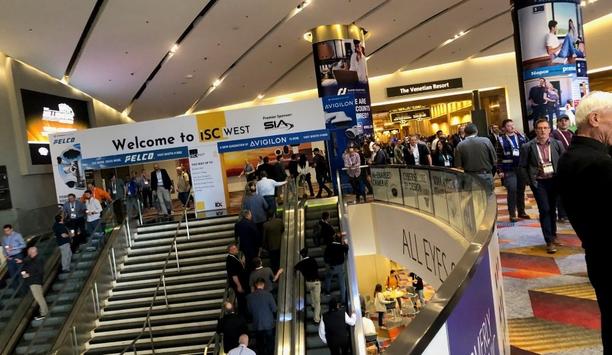
Well attended and generating levels of excitement not seen since before the pandemic, ISC West may provide just the shot of adrenaline we need to drive industry success through the uncertain economic times ahead. Buzzwords like artificial intelligence (AI) and the cloud were still prevalent at the conference and exhibition in Las Vegas, but the hype of yesteryear seemed more subdued. Rather than breakthroughs to be celebrated, AI and cloud were discussed more as ways systems can realize even greater potential. Rampant cybersecurity attacks Rather than hype, discussions seemed much more practical and down-to-earth, encompassing shifting customer needs and how to address pain points. There was more discussion of the shift of security from a cost center to a profit center, where industry technologies can contribute to an enterprise’s bottom line. More companies seemed to be vigorously addressing the challenges of cybersecurity More companies seemed to be vigorously addressing the challenges of cybersecurity, although perpetually an obstacle. The industry seems more devoted than ever to protecting physical security systems in an age of rampant cybersecurity attacks. But more than in years past, it was the ISC West event itself that generated the most buzz. The crowded aisles of the exhibition seemed both reminiscent of the pre-covid past and prescient of the industry’s even brighter future. From booth to booth and attendee to attendee, the enthusiasm was both conspicuous and contagious. Everybody was thinking: ‘Wow! What a show!’ Pushing Technology to the Edge “The practice of physical security is about more than understanding threats, and end users are thinking now about the bigger picture of security and how networks work in the broader context of the business,” said Andrew Elvish, Vice President, Marketing at Genetec. Problems of latency and miscommunication are elements pushing technology to the network edge, he says. For example, in an access control scenario, decision-making should be as close to the door as possible to avoid network congestion, delays, or failure. Andrew Elvish, Vice President, Marketing at Genetec, displays Axis network door controller ‘powered by Genetec’ Elements pushing technology Reflecting the philosophy is a new collaboration introduced at the show called ‘Axis Powered by Genetec,’ an enterprise-level access control offering that combines Genetec Synergis software with A1210 and A1610 network door controllers by Axis Communications. Elvish says lines are blurring when it comes to edge versus cloud technologies. Rather than choosing ‘either-or,’ a blending of approaches is optimum, always ensuring that “Decision-making is close to the point of actuation,” he says. On-Premise versus cloud systems Elvish also points to changing assumptions about the industry roles of on-premise versus cloud systems Elvish also points to changing assumptions about the industry roles of on-premise versus cloud systems. Historically, the assumption was that on-premise systems are most appropriate for enterprise customers, while the cloud is the best approach for small- to medium businesses (SMBs). Depending on the end customer’s needs, a system can be either or both at the same time. Rather than debate cloud versus edge, customers should consider the outcomes they seek, and how technologies can be merged to provide those outcomes. “They should consider a solution where they do both, with the gradation of controls provided at their fingertips,” says Elvish. Combining Security into One Platform Unifying security and related functions on a single platform was a widely evident trend at ISC West. An example is Verkada which now offers a unified platform that includes video, access control, and intrusion detection, as well as other functions such as air quality sensors, visitor management, and a door intercom. David Tsang, Product Director of Verkada, predicts demand to combine technologies into a single platform will grow in the industry. Furthermore, as data is collected in the single system, enterprises will find new ways to ‘connect the dots’ to provide better business intelligence. Air quality sensors Verkada’s cloud-based system enables fast deployment of the single platform “Our approach to building products is based around the idea that every company has different needs, and they want technologies to integrate seamlessly and operate off the same platform,” says Tsang. In addition to seamless integration, each product must also be able to stand on its own. Tsang manages Verkada’s various product categories, including access control, air quality sensors, intercoms, etc. Verkada’s cloud-based system enables fast deployment of the single platform, and the company works with dealers to ensure delivery of a 'better partner experience.' What Happens After a Binge of Acquisitions? Acre Security unveiled a new corporate ‘identity’ and a big booth highlighting the technology brands the company has acquired over the last several years. Brands such as Feenics, ACTMobile, Comnet, Razberi, and others reflect Acre’s acquisition of these companies but are now being promoted as technology choices under the ‘one Acre’ approach. Don Joos, CEO of Acre Security, looked ahead to the future of the company at ISC West Visitor management product categories Change is in the air, and the booth’s unified visual design signifies the new direction for the company, says Don Joos, Acre’s CEO. Various technologies can be delivered via the cloud, through an on-premise installation, or using a hybrid approach Acre is highlighting ACTMobile’s mustering capability, useful in the K-12 market In tying technologies together, the ACTMobile product will play a key role in two major verticals -- command-and-control and K-12 schools. Acre is highlighting ACTMobile’s mustering capability, useful in the K-12 market, which was adapted from a technology used in the cruise industry. The Acre approach is to embrace the variety of opportunities available in the access control, intrusion, and visitor management product categories within a broad definition of ‘security’ that embraces both core capabilities and ‘adjacencies,’ says Joos. Acre seeks to enable customers to protect people, facilities, and critical assets. They manage customers’ security data and provide the insights they need. Ensuring a Cohesive Security System A challenge in the industry is combining various single products into a cohesive whole. “There are many products that do one thing well, but it’s harder to build a cohesive security platform,” says Ryan Schonfeld, Founder and CEO of Hivewatch. Hivewatch is a software platform that performs the functions previously associated with a ‘PSIM,’ which is a physical security information management system. The term PSIM has earned a questionable reputation in the industry, plagued by added costs and the perpetual challenges of integrating with ever-changing software platforms. Information management system Hivewatch seeks to bypass other software systems and to integrate as closely as possible with devices Hivewatch seeks to bypass other software systems and to integrate as closely as possible with devices on the edge, thus avoiding the impact of software system changes. They integrate with data in a ‘different way’ that eliminates the need to conform to other software systems. In today’s climate, the term ‘security’ could be seen as limiting when it comes to the various functions our industry’s systems can perform in the broader enterprise, says Schonfeld. Traditional enterprise reporting structures that have physical security reporting to the facilities or real estate department are limiting the broader role security can play in the enterprise. Positioning physical security Changing norms are positioning physical security to report to the CIO or CISO, thus reflecting physical security’s role in collecting and analyzing data. Higher visibility within the enterprise can help security expand its influence and impact. “Security is too limiting, and it can keep us from getting a seat at the table,” says Schonfeld. “We need to shift from being a cost center to generating revenue and/or driving business — and data is the key. Rather than leading by fear, we need to show the value security can drive.”
Case studies

At the Toronto Zoo, every person on site – whether that’s a keeper, security officer, scientist, or volunteer - shares one vision: create a world where people, wildlife, and wild spaces thrive. Thirty minutes from downtown Toronto lies a 500-acre campus that is home to over 2000 animals across 200 species. Welcoming 1.3 million guests each year, Toronto Zoo is a world-class operation on a mission to connect people, animals, conservation science, and traditional knowledge to fight extinction. When Toronto Zoo Supervisor of Health & Safety Services, Graham Birtles, set out to modernise the Zoo’s legacy access and alarm infrastructure, he discovered that the partner he already trusted for animal enclosure fencing was the same one now leading the way in physical security and access control. World-class operation The Toronto Zoo opened in 1974 with a goal that extended well beyond exhibition. Today, its work spans conservation science, breeding programs for endangered species, community education, and climate advocacy. Its Guardians of Wild program extends that belief outward, inviting staff, guests, and partner organizations to champion wildlife beyond the Zoo’s borders: in policy, community relations, and corporate engagement. “My everyday is somebody else’s once-in-a-lifetime experience,” says Graham. “We want every person who comes through these gates to leave understanding what the Toronto Zoo is about, and what they can personally do to make a change.” Delivering that experience safely for guests, staff, and the animals themselves demanded a security platform fit for the job. Rapid emergency response Before Gallagher Security, the Zoo’s access control and alarm infrastructure had not kept pace with the scale of operations. Mobile alerting was unavailable to officers in the field, credentialling hundreds of seasonal staff required plastic cards that were slow to issue and difficult to track, and there was no integration with the Zoo’s video management system to support rapid emergency response. There was also a unique challenge facing the Zoo team: the electric perimeter fencing around animal enclosures - the secondary layer of protection between the animals and the wider Zoo environment - operated as an entirely separate system, disconnected from the broader infrastructure. Following an animal containment incident that was escalated to security leadership, the need to bridge those two systems became urgent. Graham found the solution at a security trade show, when his integrator walked him toward a familiar orange booth. Higher voltage requirements “I said, I already know Gallagher. They’re my fence people. They’ve been taking care of our fencing systems for over 50 years at the Toronto Zoo.” What Graham didn’t yet know was that Gallagher also delivered enterprise-grade physical security, making Toronto Zoo’s path to world-class operations clear. Working together, Gallagher Security and Gallagher Animal Management designed and implemented an integration between Gallagher Command Centre and the Zoo’s Animal Management energiser systems, enabling real-time communication between animal fencing infrastructure and the security platform for the first time. Higher voltage requirements The implementation required calibration for significantly higher voltage requirements than traditional smaller animal environments, ensuring safe and effective management across large species habitats. The Zoo team worked closely with Gallagher’s experts to configure their setup, and the solution is now fully operational within the orangutan habitat. “Now we can see the voltage of our fences at all times,” says Graham. “We can send alerts to our wildlife care team the moment something touches the hot wire so we can make sure the animals are safe.” When an alert is triggered, integrated CCTV allows the wildlife care team to immediately verify the event and assess the situation before responding; a critical functionality for animal safety. The Zoo’s security needs extend well beyond its animal habitats, and the Gallagher platform has delivered. Persistent administrative challenges Mobile Credentials have addressed one of the most persistent administrative challenges on site. With hundreds of contractors and seasonal catering staff requiring access at any given time, the previous reliance on plastic cards was slow and difficult to manage. Now, time-limited mobile credentials are issued on sign-in and revoked automatically on sign-out, removing the risk of residual access. For officers in the field, Gallagher Mobile Connect removed the need to return to base to manage alarms. Officers maintain full situational awareness from their vehicles around the clock, long after the central control center closes. Further integration with 27 Axis intercoms in high-risk spaces - housing venomous snakes, spiders, and other dangerous species - ensure staff working alone in those environments are never out of reach. Restricting workshop equipment “We can monitor alarms throughout the Zoo; not just for traditional break-and-enter or door-open scenarios. We are monitoring life-safety systems, fire systems, animal conditions, and more,” says Graham. What has distinguished the Toronto Zoo’s deployment is not any single feature, but the broad range of problems the Gallagher platform has been called on to solve. New challenges from across the organization are allowing Graham and his team to unlock more value from their security system. Whether it is monitoring environmental conditions within animal habitats, restricting workshop equipment to trained operators, or ensuring staff cannot access sensitive areas until their training is verified, the answer has consistently been found within the same platform. Conventional vendor relationship “I like that I can call on the Gallagher team and they will work with us to find a solution,” says Graham. “Gallagher has become a house brand here at the Toronto Zoo. It’s integrated with everything we do,” Graham Birtles, Supervisor of Health & Safety Service. The Zoo’s collaboration with Gallagher has not been a conventional vendor relationship. Graham describes it as a convergence of purpose. “When we partner with organizations such as Gallagher, they become Guardians of Wild,” he says. “Because they help me and the Toronto Zoo accomplish our mission.” The Gallagher platform will play a central role in the Zoo’s next chapter. A new Community Conservation Centre, developed with a local university, will soon bring classrooms, laboratories, and a new otter river habitat into a shared community space; with Command Centre managing access for students, professors, and visiting groups. “Gallagher understands our mission,” says Graham. “They are very helpful, and everything they have put in place for us has worked. The flexibility has been fantastic.” This installation was deployed in partnership with Met-Scan Canada Ltd

Wesleyan University is a private liberal arts college, founded in 1831, and located in Middletown, CT. It is one of the nation’s most highly ranked colleges with approximately 2700 full time undergraduates and 200 graduate students, as well as more than 400 part time students. High Street, which is the old center of campus, was once described by Charles Dickens as “the handsomest street in America.” The University boasts of more than 340 buildings and, along with the historic structures, includes the recently constructed Freeman Athletic Center, the Center for Film Studies and the Usdan University Center. Various additional applications Technology Objective - The objective of the University is twofold: the original and primary objective is to implement a key control solution within the Public Safety Department that will allow the staff to maintain better control of master keys and the keys used for high value areas including the President’s office and the Art Gallery. The companion objective is to apply the same key control solution to various additional applications (i.e. residential life, maintenance, etc.) across the campus. The Challenge - The Wesleyan Public Safety Department is tasked with ensuring the safety and security of the campus, including high profile areas such as the President’s office and home as well as the Art Gallery and affiliated storage areas. Only one key is issued to the Department for each of these high profile facilities and the old manual system requires the security officer to log the key in and out. Often however, keys are unaccounted for throughout the day or not returned at the end of a shift, and this necessitates individuals having to return to campus to put the key back. The log and keys are kept in the dispatch area and the office staff is continually interrupted to log keys in and out or search for keys. At the end of every day, a visual/manual check is required to ensure all keys are accounted for. Manual logging system Using a manual logging system, the Residential Life Staff allows keys to be accessed by certain individuals, with the necessary approvals, but only for short periods of time. It is an honor system but the keys are regularly not returned within the required time frame and the Residential Life Staff must take the time to follow up and track down the overdue keys. The concern is that duplicate keys may be made or the key could be misplaced or lost and this could result in the expensive re-keying of a building. The University needed a key control system to address and resolve these issues in a secure yet easy to use fashion and without requiring continual manual oversight. Additionally, management needed to be notified immediately if a key is not returned within the programmed parameters as well as who may have returned a damaged key. Proper authorization code Solution - KeyWatcher® Key Control System – The KeyWatcher is a custom configured solution that meets the requirements of the University to maintain key control. It automatically records the access history of each key, including user, date and time of key access/return. The system releases assigned keys only to users with the proper authorization code (either fingerprint identification or numerical code), and cannot be manipulated or easily tampered with. The illuminated key slots make accessing and returning keys easier and the system as configured readily accommodates both hard keys and plastic key cards. Biometric access data KeyPro® Performance Software – The user-friendly PC application software delivers real-time polling transactions, status, alarm and reporting capabilities for the KeyWatcher system. Activity reports can be customized to trace key movements by time, date and user code or biometric access data. And because the software allows the KeyWatcher Key Control System to be conveniently accessed and programmed remotely via an IP connection, control of the keys can be more efficiently and safely managed remotely as well. Priority email alerts can be sent to management to keep them informed of the whereabouts of high security keys or if they have been accessed at odd hours. Priority email alert A KeyWatcher system is installed in the briefing room within the Public Safety Department at the University and houses approximately 50 one-of-a-kind keys as well as master keys. Based on the success of the Public Safety Department application, the Residential Life Department installed three KeyWatcher systems at various locations for control and management of building and room keys under their authority. Public Safety staff can still access keys as required but without disturbing other employees and without the bother of having to manually log a key out and/or in. With just a visual check, management can see which keys are out and at the end of the day all keys can accurately be accounted for. With the SmartKey secured to each individual key or ring of keys, the Residential Life staff can program the keys for the length of time they are allowed to be out and if the key is not returned within the scheduled time period, management is notified via a priority email alert. The KeyPro Performance Software generates reports which provide accurate and detailed information, such as which individuals had which keys, when they had them and for how long, etc. Manual logging system The Results - The KeyWatcher system has allowed the University Public Safety department to improve control and management of the keys and has removed any vulnerabilities associated with a manual logging system. The whereabouts of keys can be instantly traced and the end-of-day status report immediately identifies any non-returned keys and the individual responsible. The Residential Life KeyWatcher systems have helped to improve the safety and security of the buildings because the staff knows who has or has had keys signed out. In addition, because key control is automated, staff is notified immediately if a key is not returned within the prescribed amount of time.
The Musée du Quai Branly known in English as the Quai Branly Museum and nicknamed MQB, is a museum in Paris, France that features indigenous art, cultures and civilisations from Africa, Asia, Oceania, and the Americas. Situated close to the Eiffel Tower, the museum is located at 37, Quai Branly – Portail Debilly in Paris. The location and the museum are named for the physicist Édouard Branly. Encompasses several buildings Technology objective - The museum complex encompasses several buildings, as well as a multimedia library and a garden. It is open 6 days a week with occasional evening hours. The museum’s valuable collection is watched over by security officers, who utilize many sets of keys as part of their jobs. Challenge - Approximately 1000 keys needed to be kept secure and accessible 24/7; most of these keys give access to rooms in several buildings where valuable objects are displayed. To select a vendor, the museum wrote a competitive bidding process that included security and management reporting and the use of differing key management systems for keys depending on the level of priority. Proper authorization code KeyWatcher key control system helps guard against stolen or misplaced keys by only releasing assigned keys to users with the proper authorization code. When a key is missing or overdue, an alarm alerts the security personnel of the situation. Simple and elegant in design, the wall-mounted key storage cabinet eliminates outdated lock boxes, unreliable manual logs and messy key identification tags. KeyWatcher records the access history of each key, including user, date and time of checkout/return. The Results - The museum installed Morse Watchmans KeyWatcher for the high level priority keys (safe, ticketing) and Morse Watchmans KeyBank for less sensitive keys (duplicate keys). The software generates a report which provides accurate and detailed information, such as which employees accessed which keys, who has taken out any given key and how long each key was out.

The MAK – Museum of Applied Arts in Vienna bridges the gap between past and future, design and contemporary art. As one of the oldest museums of applied arts in the world, the MAK stands for diversity, inclusion, innovation, and sustainable development — values that are also reflected in its ongoing infrastructure modernisation efforts. A prime example: security. To protect rotating exhibitions and the high number of visitors, the MAK relies on state-of-the-art video surveillance technology from Dallmeier. Security in a dynamic environment The museum’s historic building with its high ceilings, changing exhibitions, and demanding lighting conditions presents unique challenges for security infrastructure. The varying spatial configurations and atmospheric lighting – designed to enhance the presentation of the art – make it particularly difficult for conventional surveillance cameras. Effective monitoring calls for precisely tailored installation solutions to ensure uninterrupted visual coverage. “The technology used must not only deliver high quality but also be flexible and efficient enough to adapt to frequently changing conditions. By installing more than 100 high-resolution single-sensor cameras, Dallmeier created a customized solution capable of meeting all our challenges,” says Gerald Schön, Owner of Gerald Schön Elektro- & Sicherheitstechnik. Discreet and unobtrusive In addition to the protection of exhibits and the prevention of theft, burglary and vandalism, MAK´s focus is on visitor safety. At the same time, security technology should help to maintain a pleasant atmosphere. The surveillance cameras are therefore installed very discreetly throughout the museum complex, including the exhibition rooms, corridors, the MAK Design Shop, access roads, and entrances. The installed 4K Domera® cameras deliver high resolution images even in difficult lighting conditions. Thanks to the innovative “RPoD” (Remote Positioning Dome) function, camera angles can be adjusted remotely via the video management system — eliminating the need for labor-intensive physical reconfiguration. This is especially advantageous for the museum’s high ceilings and frequently changing exhibitions. AI-based features such as Intrusion Detection and Loitering Detection ensure precise alarms and significantly reduce false alerts. These technologies not only detect manipulation attempts during operating hours but also play a vital role in protecting sensitive areas after hours. Video management system Fisheye cameras provide full situational awareness, even in the museum’s largest exhibit halls. The integration of Dallmeier’s SeMSy® Compact video management system enables centralized management of recordings, intuitive operator control, and powerful tools like the AI-driven “SmartFinder” function. This allows staff to analyze incidents quickly and with minimal effort. The MAK’s decision to use Dallmeier products wasn’t based solely on image quality and innovative features. Data protection and cybersecurity were equally decisive — areas where Dallmeier, with its “Made in Germany” promise, delivers strong value. Disrupting daily operations Dallmeier products feature the highest level of technical security, enabling customers to implement and operate their video security solutions in a GDPR-compliant and cyber-secure manner. They also meet all the criteria crucial for successfully presenting evidence in court. Executing the project without disrupting daily operations was a logistical feat. From the initial planning phase to final installation, every detail was carefully coordinated. Working closely together, Gerald Schön Elektro- & Sicherheitstechnik and the MAK’s internal security department analyzed the museum’s needs and developed a tailored solution. “Thanks to thorough planning and close coordination, we were able to complete the project with 100% planning reliability and zero complications,” explains Gerald Schön. Frequent exhibition changes With the modernisation of its security infrastructure, the MAK has taken a significant step toward the future. The video system integrates seamlessly with the museum’s historic and architectural features, ensuring reliable protection of valuable exhibits and a smooth, undisturbed experience for all visitors. “The ability to remotely adjust the camera angles has proven to be an invaluable benefit — especially with our high ceilings and the frequent exhibition changes,” emphasizes Peter Tampier, MSc, Head of Security at the MAK. The transition from “blurry images” to Ultra HD was executed smoothly thanks to the outstanding teamwork and deep expertise of all involved partners.

When Jogja National Museum needed to protect priceless artworks while maintaining visitor accessibility, they turned to a smart security solution. This story reveals how this intelligent security system transformed their operations, reducing response times from hours to minutes, and enhancing protection of modern masterpieces by artists such as Affandi and Bagong Kussudiardja. Quest for wide artwork protection The institution houses an impressive collection that includes masterpieces by contemporary painters like Affandi Jogja National Museum stands as a guardian of Indonesia's artistic heritage, welcoming over 100,000 visitors each year to experience the country's rich cultural legacy. The institution houses an impressive collection that includes masterpieces by contemporary painters like Affandi, Abas Alibasyah, and Bagong Kussudiardja. But as the institution’s reputation grew, and visitor numbers increased, the museum team recognized the need for a more comprehensive approach to artwork protection. As custodians of Indonesia's artistic treasures, they recognized the need to enhance the security of their valuable collections while maintaining an enjoyable experience for visitors. Safeguarding the nation's identity "As museum caretakers, we're not just preserving artworks—we're safeguarding the nation's identity," explained Arka Njela Tevua Lestavi, the Marketing Manager at Jogja National Museum. “But the challenges are real: how do we ensure these pieces remain intact, meaningful, and accessible for future generations?” The museum team wanted to establish a system that could provide consistent monitoring throughout their galleries, particularly during busy periods and special exhibitions. The system should also help staff respond more effectively to various situations while maintaining the welcoming atmosphere that visitors expect. The goal was to create an environment where cultural preservation and visitor accessibility could coexist seamlessly. Deploying an AI-powered protection system Jogja National Museum partnered with Hikvision to create a protective network throughout the museum To address these needs, Jogja National Museum partnered with Hikvision to create a protective network throughout the museum's gallery spaces. Four 4 MP ColorVu with Smart Hybrid Light Fixed Bullet Network Cameras (DS-2CD1047G2H-LIUF(2.8mm)) and four 2 MP Smart Hybrid Light Fixed Turret Network Cameras (DS-2CD1321G2-LIUF/SL(2.8mm)) have been strategically placed across the exhibition areas. These cameras provide continuous, high-quality color imaging even in challenging lighting conditions. With the Smart Hybrid Light technology, the cameras maintain infrared illumination at night when the museum is closed and lights are turned off, until an event triggers color imaging to capture critical details. Built-in audio capabilities and alert systems The cameras also feature built-in audio capabilities and alert systems that allow security staff to provide guidance to visitors directly from the command center if necessary. At the heart of the system is an AcuSeek NVR (DS-7616NI-Q2). This uses sophisticated algorithms to distinguish between normal movement and activities that require attention. It can, for example, identify when someone approaches restricted areas or lingers too close to artworks, while intelligently filtering out routine activities like cleaning. Hikvision’s Guanlan large-scale AI models AcuSeek NVR utilizes massive parameter training and sample datasets to establish cross-modal Moreover, powered by Hikvision’s Guanlan large-scale AI models, the AcuSeek NVR utilizes massive parameter training and sample datasets to establish cross-modal text-image comprehension capabilities. Museum staff uses the smart search functions, such as Target Search and Intrusion Event Search, to streamline incident reviews and improve response times. Improved protection; faster response; better service The implementation has brought significant improvements to the museum's daily operations and long-term preservation goals. The most immediate benefit has been enhanced protection for the artwork collection. Staff can now respond quickly and appropriately to various situations, whether it's guiding visitors away from restricted areas or addressing concerns before they escalate. Ms. Lestavi noted, “We now have a peace of mind we never had before. This intelligent technology respects cultural values. For us, it’s not just a tool. It’s the new guardian of Indonesia’s legacy.” System's intelligent features Video review processes that previously required over an hour can now be completed in just a few minutes The system's intelligent features have dramatically improved operational efficiency. Video review processes that previously required over an hour can now be completed in just a few minutes using the AcuSeek smart search functions. This time savings allows staff to focus more attention on visitor services and collection care rather than lengthy manual reviews. Another valuable feature has been the system's ability to assist with visitor services. When guests misplace personal items during busy exhibitions, the smart search capabilities enable staff to quickly locate lost belongings. How AIoT can revolutionize cultural preservation Not long ago, security staff has successfully recovered a visitor's camera during a crowded exhibition by rapidly reviewing footage to identify where the item was left behind. Building on this success, Jogja National Museum plans to extend the solution to a three-story complex hosting the prestigious annual "Artjog" festival. The museum's transformation showcases how AIoT (AI-powered Internet of Things) can revolutionize cultural preservation, proving that technology and heritage protection create a powerful partnership for safeguarding artistic legacies.

Inaugurated on May 25, 1999, the Museo Antropológico de la Comunidad de Madrid began construction in 1987. It wasn't until ten years later, in 1997, that the decree establishing the museum was issued, thus formalizing the institution's existence. As part of the museum’s modernization, the client needed an SMD LED solution that includes a glass in front of it to avoid dead pixels and any possible damage or accidents caused by museum visitors. Dahua, together with Epsilon Media, provided an innovative solution that overcame these limitations and optimized the museum experience. Renovation of The Museum The Museo Antropológico de la Comunidad de Madrid was converted from the former Dominican Convent of the Mother of God, built in several phases between the 17th and 18th centuries. As an old establishment, the client wanted to renovate the installation step by step, with the first stage comprised of an LED wall in the main entrance. Their first idea was to install an SMD LED solution with a glass front in order to protect the LED wall and avoid issues with all visitors visiting the museum. Building such a solution is costly and may not be the right solution due to the lack of front-line maintenance. Flip COB Indoor Fine Pixel Pitch LED The Dahua Flip COB Indoor Fine Pixel Pitch LED offers mini flip Chips on Board (COB) technology Together with the Epsilon Media and the Dahua team, the museum evaluated the Dahua Flip COB Indoor Fine Pixel Pitch LED solution in person. After a deliberate discussion, the client agreed that it is the right solution for their facilities. The Dahua Flip COB Indoor Fine Pixel Pitch LED offers mini flip Chips on Board (COB) technology that enables full illumination and softer light without pixel particles, effectively combating digital visual fatigue. Key Features Another notable feature of this LED is its dustproof and anti-fingerprint surface that leaves no visible traces when touched It allows full front maintenance that makes disassembly and maintenance highly efficient. With the full control of the ink color parameters on the surface of the light board, the ink color at all angles is guaranteed to be uniform, which helps solve the industry’s issue regarding ink color differences in batches. Other benefits include high contrast of 10,000:1, energy-saving and power-saving capabilities (less than 75 watts per box, 40% lower than other SMD products), and 160° super wide viewing angle. Another notable feature of this LED is its dustproof and anti-fingerprint surface that leaves no visible traces when touched. It is also waterproof and moisture-proof, with a low rate of dead pixels and high hardness against knocks. Doesn’t Require Additional Glass Protection These features effectively meet the requirements of the client regarding additional protection against damage to the LED during operating hours. Dahua continues to drive technological innovation to improve the way people experience history. With the Dahua Flip COB Indoor Fine Pixel Pitch LED and the Quality Service Epsilon Media offered, the Museo Antropológico de la Comunidad de Madrid was able to install an LED wall without the need of additional glass protection, providing an exceptional digital display of historical images inside the museum while enhancing visitor experience and saving costs. Remarks From The Museum Director “With the video wall that Dahua installed for us, we were able to renovate the first unit that was originally there. This type of technology is significantly important in transmitting knowledge about the past. The overall collaboration was very satisfactory,” says Mr. Enrique Baquedano, Director of Museo Antropológico de la Comunidad de Madrid. “The Dahua team was always ready to help whenever we encountered any issue. What’s more, the LED wall is balanced and cohesive with the overall aesthetic of the museum, which is an added bonus,” concluded Mr Enrique.
Round table discussion

ISC West (International Security Conference & Exposition), March 25–27, 2026, at The Venetian Expo in Las Vegas, is widely regarded as the most important event in the security industry. The yearly exhibition serves as the primary launchpad for new technology and as the central meeting point for global security professionals. We asked our Expert Panel Roundtable: What will be the big topics of discussion at ISC West 2026?

If recent physical security events are a guide, the topic of artificial intelligence (AI) will be everywhere at the upcoming ISC West 2025 exhibition in Las Vegas. Cybersecurity solutions are another core focus at today's physical security events, and ISC West will likely follow the trend. Attendees will also be looking for advancements in access control systems, including biometric technologies and integrated security platforms, among other hot topics. We asked our Expert Panel Roundtable: What will be the big topics of discussion at ISC West 2025?

Headlines of violence in our schools are a reminder of the need to keep educational institutions safe. In fact, if there is a positive aspect to the constant bombardment of headlines, it is that it keeps our attention perpetually focused on how to improve school security. But what is the role of physical security systems? As the new school year begins, we asked this week’s Expert Panel Roundtable: Are schools safer because of physical security systems? Why or why not?