Human area network
Netwrix, a pioneer in identity and data security, announces it is expanding its collaboration with Microsoft by adopting Microsoft Azure as a core cloud platform to support the company’s continued growth and scale. Netwrix will use Azure to enhance the scalability, performance, and security of its 1Secure™ platform, helping organizations improve visibility into sensitive data and manage access across hybrid and cloud environments. Hybrid and cloud environments This collaboration r...
Netwrix, a recognized pioneer in identity and data security solutions, announces the appointment of Avesta Hojjati as Chief Technology Officer, Marcin Gierlak as Vice President of Engineering and Kraków Site Leader, and Natalie Tomlin as Head of Channel for North America. "With AI fueling both external attackers and data leakage, our customers are confronted by security challenges that are more complex than ever — more identities, more data, more risk,” said Grady Summers, CE...

FireMon, the foremost network security and firewall policy management company, announced the general availability of its integration with Illumio, giving organizations operational control over both microsegmentation and traditional firewall policies from a single platform. Zero Trust adoption risks lie at the point of implementation. Policy conflicts between segmentation and firewall rules stall deployments, leaving even strong designs incomplete and unenforced. These conflicts are not visibili...

ASSA ABLOY Entrance Systems announced that its AI-powered solution for automatic sliding doors, ecoLOGIC, has earned the Certified Energy Savings Certification from GreenCircle Certified, LLC—a major independent third-party organization that verifies environmental claims. “By earning our Certified Energy Savings certification, ASSA ABLOY has demonstrated a measurable reduction in energy consumption, aligning with a higher level of environmental responsibility,” said Sara Risle...

Nutanix, a pioneer in hybrid multicloud computing, announced the findings of its seventh annual global Public Sector Enterprise Cloud Index (ECI) survey and research report, which measures enterprise progress with cloud adoption in the industry. The research showed that 83% of public sector organizations have a GenAI strategy in place, with 54% actively implementing, and 29% preparing for implementation. As public sector organizations ramp up GenAI adoption, 76% of IT decision-makers say their...
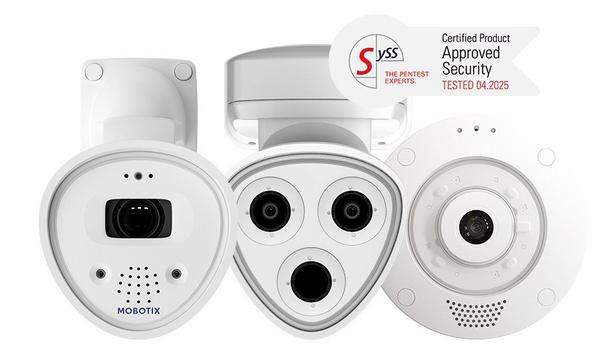
MOBOTIX receives three new SySS certifications for the MOBOTIX ONE and MOBOTIX 7 platform, and MOBOTIX c71 NurseAssist – powered by Kepler Vision Technologies. This is the first SySS certification for the new MOBOTIX ONE platform and the MOBOTIX c71 NurseAssist, which specializes in the healthcare market. All tests were carried out by the renowned SySS GmbH, a pioneer provider of penetration tests in Germany. MOBOTIX cyber security “For MOBOTIX, cyber security is an integral...
News
The Association of University Chief Security Officers (AUCSO), the prioneer global organization for security professionals in Higher and Further Education, is pleased to announce the launch of a new suite of free online training courses exclusively for its members. This initiative is part of a newly signed three-year partnership with Ciphr eLearning, a cloud based HR software company that integrates HR, payroll, learning and recruitment, that is transforming how organizations deliver training and development. Through this collaboration with Ciphr eLearning, who work with over 80 universities across the UK and Ireland, AUCSO will provide members with access to up to 30 professionally developed courses from its extensive training portfolio. Courses on a wide range of topics The courses will cover a wide range of essential topics including: Neurodiversity, Islamophobia, Antisemitism, Fraud Awareness, Modern Slavery, Gender Equality at Work, Safeguarding in Higher Education, Customer Service, Mental Health Awareness, Freedom of Speech, Bystander Training, Personal Safety, Managing Self-Care and Wellbeing, Responding to Student Mental Health Issues, Disclosure of Sexual Violence, Consent on Campus, and Supporting Students Experiencing Domestic Violence, among others. Julie Barker’s comments Commenting on the launch, Julie Barker, COO at AUCSO, said: “We are delighted to partner with Ciphr eLearning to offer our members a wide-ranging and high-quality set of online learning opportunities. This collaboration allows us to continually update and tailor our Learning and Development offerings to meet the evolving needs of the sector.” “It’s a significant value-add for our members, supporting their professional growth, wellbeing, and the continued development of skills to serve and safeguard our diverse campus communities effectively.” Ciphr eLearning’s Founder’s words David Marshall, Founder and Managing Director of Ciphr eLearning, also welcomed the partnership: “We are proud to be supporting AUCSO in delivering critical training to security professionals across the Education sector.” “Our mission at Ciphr eLearning is to help organizations unlock the power of learning, and we’re excited to see how our platform can enhance AUCSO’s training capabilities and support their members’ ongoing development.” Licenses AUCSO currently holds 200 user licenses, with each license granting full access to all available courses through the AUCSO training platform free of charge. Additional licenses can be purchased by member organizations at a competitive rate.
MetTel, a five-time pioneer of the Gartner Magic Quadrant for Managed Network Services, will deliver a fully managed suite of AI-driven, secure access service edge (SASE) network security solutions to government and commercial enterprises using the Netskope One platform, enabling secure access to applications and data for users anywhere. MetTel managed SASE delivers both network connectivity and security services through a single managed network services (MNS) provider, simplifying network management and the ability to quickly and directly address network threats. Zero trust principles and AI innovations The purpose-built architecture of Netskope One applies zero trust principles and AI As one of the pioneering SASE providers, Netskope helps organizations modernize by converging critical security, network, and analytics products into a powerful, unified platform, Netskope One. The purpose-built architecture of Netskope One applies zero trust principles and AI innovations designed to optimize access, protect data wherever it moves, prevent threats, and enable secure, work-from-anywhere connectivity. AI-powered operations Among important capabilities, Netskope One includes fully integrated SD-WAN, Cloud Access Security Broker (CASB), Secure Web Gateway (SWG), Zero Trust Network Access (ZTNA), Remote Browser Isolation (RBI), Unified Data Security, including data security posture management (DSPM), Firewall-as-a-Service (FWaaS), and Digital Experience Management (DEM). Netskope One SASE also leverages AI-powered operations to monitor the network at all levels – including users, branches, and clouds – and detect anomalies, enable proactive troubleshooting, and automatically address any poor network conditions to deliver the highest network performance. Evolving cyber threat landscape Netskope One SASE also leverages AI-powered operations to monitor the network at all levels "The rapidly evolving cyber threat landscape demands a security architecture that is omniscient and protective not only at the core but all the way to the edge, whether a data center, remote office, road warrior or home/hybrid worker," said MetTel Chief Technology Officer, Ed Fox. Ed Fox adds, "This agreement with Netskope gives MetTel another full SASE stack within a stable of market-pioneering technologies and partners to expertly deliver a comprehensive network security solution and managed WAN service to our enterprise and government customers as their networks quickly morph to support the AI tidal wave, as well as the threats posed by AI." Digital transformation "Netskope One brings a modern, converged approach to security and networking that improves how teams work, protects data wherever it moves, and keeps performance and connectivity secure and optimized," said Parag Thakore, Chief Product Officer, SASE, Netskope. Parag Thakore adds, "We are very pleased to partner with MetTel to offer industry-pioneering SASE capabilities to joint customers to accelerate digital transformation and safely enable cloud- and AI-first environments." Modern security and networking Both MetTel and Netskope are Gartner Magic Quadrant Leaders, bringing the best of their technology, skills, and expertise to the market for network security. As a provider of modern security and networking and a Leader in the Gartner Magic Quadrant for Single Vendor SASE (renamed Magic Quadrant for SASE Platforms in 2025) and Gartner Magic Quadrant for Secure Service Edge since their inception, Netskope helps organizations address their most critical cloud, AI, SaaS, web, and private application security needs as well as their most persistent network performance challenges, all at once. The Netskope One platform enables both security and network infrastructure and operations (NI&O) teams to reduce risk, cost, and complexity. MetTel — a major in the Magic Quadrant for Managed Network Services for five consecutive years — combines best in class technology with managed network access to deliver a comprehensive turnkey secure solution for its clients.

At the end of NetApp's fiscal year, high-ranking representatives from NetApp and SHD met for a strategy meeting. SHD's Managing Directors Toralf Lips and Marco Graef, together with Udo Böhm, Head of Business Development and NetApp Alliance Manager, contributed their perspective as a long-standing partner. The focus was on their shared goal of driving innovation, leveraging market opportunities, and strategically developing their collaboration. Henning Rahe, Senior Director Partner Sales Germany, has set new goals for the upcoming fiscal year: "NetApp sees the commercial sector in Germany, among other places, as a key focus for growth." Leveraging market opportunities The IT manufacturer, headquartered in San Jose, currently employs over 12,000 people. The storage giant's new fiscal year begins in May. According to Statista, global revenue in the storage solutions market will reach approximately €60.1 billion in 2025, with around €2.5 billion of that coming from Germany. “Through years of continuous investment in excellent training for consulting, technical certifications, installations, and support and professional services for NetApp storage and cloud solutions, SHD is among the leading partners,” emphasizes Marco Graef. Data infrastructure solutions Toralf Lips adds: “The experience and expertise of our long-standing IT professionals, as well as the fresh impetus brought by up-and-coming talent, are key to our success. SHD has a strong tradition in the SME sector and, together with NetApp, pursues the clear goal of consistently realizing growth potential there – to the mutual benefit of both parties. Accordingly, SHD relies on the broad innovation portfolio of the Californian company, whose intelligent data infrastructure solutions provide optimal support for customers in the commercial environment.” "NetApp's strategic focus on growth areas such as data security, data compliance, hybrid cloud services, and intelligent data infrastructure is an excellent fit for SHD as a systems integrator and guarantees further joint growth. Our solution and service portfolio aligns with many of NetApp's top technology partners. This enables us to offer our customers not only a comprehensive data management solution but also a worry-free, all-inclusive package with our 24/7 support services," says Udo Böhm. Comprehensive data management solution He has overseen SHD's strategic NetApp partnership from the outset and understands what long-standing NetApp customers value. “As Partner Manager, I am delighted to be supporting SHD. This partner possesses excellent technical expertise and, with over 25 years of experience, is one of the oldest NetApp business partners in Germany,” said Ulrike Zacheiß. She only took over the strategic management of the partner in the fall of 2024. SHD has relied on NetApp’s high-quality, reliable solutions since 1998.
Lenovo announced its largest storage portfolio refresh in company history, unveiling new Lenovo Data Storage Solutions that prepare enterprise IT for the age of AI with better efficiency, performance and scalability. Ushering in a new era of AI-optimized storage that propels business transformation, the complete portfolio includes storage arrays, software defined storage (SDI), and new AI and virtualization innovations to flexibly address rapidly evolving data operations. Lenovo’s ongoing commitment Using the solutions, businesses can easily run AI and data modernization workloads on the next generation of trusted Lenovo ThinkSystem and ThinkAgile infrastructure, unleashing data to power real-time reasoning and confidently deploying AI and data modernization workloads at scale. Businesses can easily run AI and data modernization workloads on the next generation of trusted Lenovo ThinkSystem As business pioneers seek tangible ROI on AI investment, EMEA IDC research commissioned by Lenovo found that data sovereignty, compliance and quality data are the most important AI implementation success factors among CIOs while scaling AI and data quality are among the biggest obstacles. The new portfolio reflects Lenovo’s ongoing commitment to delivering innovative storage solutions that meet the evolving needs of modern data centers while helping businesses get the most out of their data. New Lenovo Data Storage Solutions “The new Lenovo Data Storage Solutions help businesses harness AI’s transformative power with a data-driven strategy that ensures scalability, interoperability, and tangible business outcomes powered by trusted infrastructure,” said Scott Tease, Vice President and General Manager of Infrastructure Solutions Product Group at Lenovo. “The new solutions help customers achieve faster time to value no matter where they are on their IT modernization journey with turnkey AI solutions that mitigate risk and simplify deployment.” Next-generation data storage solutions Marco Pozzoni, Director, EMEA Storage Sales at Lenovo Infrastructure Solutions Group commented, “This is a pivotal moment for our customers across EMEA. With organizations facing a range of complex challenges, our largest-ever data storage portfolio refresh delivers the performance, efficiency, and data resiliency required by Data Modernization and Enterprise AI workloads." "At a time when businesses are increasingly looking for ROI on their tech investments, these next-generation data storage solutions will empower our customers to unleash the power of their data, securely.” Solutions for Enterprise AI, Virtualization, and Sustainability Portfolio spans 21 new ThinkSystem and ThinkAgile models designed with accelerated computing and efficiency The portfolio spans 21 new ThinkSystem and ThinkAgile models designed with the accelerated computing and efficiency that companies need to kickstart their AI journey, supporting employee productivity and maximizing value with solutions for enterprise AI, virtualization and sustainability. Key innovations include turnkey AI Starter Kits, the industry’s first liquid-cooled HCI appliances and converged hybrid cloud and virtualization solutions. The Data Storage Solutions are finetuned for easy deployment, faster inferencing, workload consolidation and lower total cost of ownership (TCO), delivering enhanced capabilities: Lenovo ThinkAgile SDI V4 Series provides full-stack, turnkey solutions that simplify IT infrastructure and accelerate computing for data-driven reasoning and faster time to value for AI LLM inferencing workloads. Engineered to put actionable data insights to work more quickly in business operations, the new Lenovo ThinkSystem Storage Arrays deliver up to 3x faster performance while reducing power consumption1, providing up to 97% energy savings and 99% density improvement over a Lenovo device featuring 10K HDDs for smaller data center footprints and lower TCO and when upgrading legacy infrastructure2. New converged Lenovo ThinkAgile and ThinkSystem hybrid cloud and virtualization solutions deliver flexible and efficient independent scaling of compute and storage capabilities, reducing software licensing costs up to 40 percent, maximizing business value3. New Lenovo ThinkAgile HX Series GPT-in-a-Box solutions featuring Lenovo Neptune™ Liquid Cooling leverage the industry’s first liquid cooled HCI appliance to deliver turnkey AI inferencing that takes AI from concept to success across distributed applications, from edge to cloud, yielding up to 25% energy savings over previous generation to increase ROI and achieve data-driven breakthroughs4. New AI Starter Kits for Lenovo Hybrid AI Platform deliver a validated, flexible, and easy on-ramp for enterprise inferencing and retrieval-augmented (RAG) workflows. Kickstart the enterprise AI journey Businesses are moving to a disaggregated infrastructure model, turning compute, storage, and networking With AI on the rise and the challenge of supporting both legacy and modern workloads, organizations are rethinking how they approach IT. Businesses are moving to a disaggregated infrastructure model, turning compute, storage, and networking into on-demand, shared resources that can adapt to changing needs to boost scalability, efficiency, and flexibility. AI Starter Kits for Lenovo Hybrid AI Platform The AI Starter Kits for Lenovo Hybrid AI Platform are pre-configured infrastructure solutions engineered to simplify and accelerate the adoption of enterprise AI deployments. The validated configurations, comprising compute, storage, GPUs and networking, are built to scale alongside an organization’s needs. Configured with the AI Starter Kits, the new ThinkSystem Series Storage Arrays deliver unified file, block, and object storage to eliminate data silos and leverage high-performance SSD flash technology for faster time to insight. Additionally, the AI Starter Kits include the new AI-powered autonomous ransomware protection, encryption for greater data protection and synchronous replication with transparent failover to ensure maximum solution uptime. Powering the new age of enterprise AI and data modernization Enterprise AI projects depend on high-performance storage systems to keep up with the pace of model training Bringing accelerated computing to the source of enterprise data is critical to business success, and the infrastructure must evolve to meet this demand. Enterprise AI projects depend on high-performance storage systems to keep up with the pace and scale of model training, inference, and RAG. The Lenovo ThinkAgile SDI V4 Series and new Lenovo ThinkSystem Storage Arrays deliver full-stack, turnkey AI-ready infrastructure for enterprises beginning AI implementations while delivering faster inferencing performance for LLM workloads. The offerings are purpose-built for a broad range of enterprise AI and data modernization workloads, from databases, ERP and CRM, to virtualization, hybrid cloud, backup and archive. Primary AI use cases include AI inferencing, RAG, and fine-tuning AI models. Hybrid cloud and virtualization solutions Capitalizing on AI while optimizing virtualization requires a major evolution of storage infrastructure to accelerate data, optimize costs, and secure data assets. New converged hybrid cloud and virtualization solutions deliver flexible and efficient independent scaling of compute and storage capabilities. For example, the new Lenovo ThinkAgile Converged Solution for VMware brings together the enterprise-class features of ThinkAgile VX Series, such as lifecycle management and operational simplicity, with the robust data-management offered by the ThinkSystem DG Series storage arrays to provide a unified cloud platform that is flexible and supports hybrid storage workloads. Industry-first liquid-cooled HCI brings GPT-in-a-box Lenovo now offers the industry’s first liquid-cooled HCI appliance as part of the ThinkAgile V4 series In addition to providing the broadest, most open set of data storage solutions, Lenovo now offers the industry’s first liquid-cooled HCI appliance as part of the ThinkAgile V4 series, improving efficiency for high-powered AI workloads and achieving up to 25 percent energy savings compared to previous generations4. Using this innovation, the new Lenovo GPT-in-a-box with Liquid Cooling full-stack generative AI solution with Lenovo ThinkAgile HX jumpstarts AI integration using a repeatable solution that lowers energy costs for faster data-powered AI reasoning that delivers faster ROI and innovation anywhere. Driving the Future of AI Evolution Lenovo’s next-generation technology combined with Lenovo Premier Enhanced Storage Support, supports IT teams with tailored expertise and rapid response times, delivering scalability, performance and reliability so organizations can deploy AI with confidence and innovate without the constraints of outdated infrastructure. “Innovation is embedded in OneNet’s DNA and partnering with Lenovo represents a commitment to modernizing the data center with cutting-edge solutions that drive efficiency and sustainability,” said Tony Weston, Chief Technology Officer at OneNet. “Backed by Lenovo solutions and Lenovo Premier Support, OneNet can deliver high-availability, high-performance private cloud services that our customers can depend on.” Next generation of Lenovo ThinkSystem and ThinkAgile ThinkSystem DG and DM storage arrays feature new AI-powered autonomous ransomware protection The next generation of Lenovo ThinkSystem and ThinkAgile solutions are also designed with integrated data security and resiliency features to lower operational risk and provide greater data protection, such as tamper-proof snapshots and software-based encryption. ThinkSystem DG and DM storage arrays feature new AI-powered autonomous ransomware protection, which elevates cyber resiliency by leveraging machine learning models to proactively detect and mitigate attacks. Lenovo’s XClarity systems management software The Lenovo Data Storage Solutions also feature Lenovo’s XClarity systems management software support, giving businesses comprehensive security features to ensure management, encryption, compliance, and communication for all managed storage solutions. With the next generation of AI-optimized, integrated solutions, Lenovo is empowering organizations to move quickly to modernize systems while ensuring the future-proofing of tech stacks, so customers across all industries can harness data to transform.
Hikvision has achieved two prestigious international certifications: ETSI EN 303 645 and EN 18031. The certifications were awarded by Bureau Veritas, a globally renowned third-party inspection, testing, and certification organization. This achievement underscores Hikvision’s commitment to security and compliance in its IoT products. ETSI EN 303 645 certification ETSI EN 303 645 certification is a European standard focused on the security of IoT devices The ETSI EN 303 645 certification is a European standard focused on the security of consumer IoT devices. Obtaining this certification validates that a company's IoT products meet international standards in terms of privacy protection and data security, demonstrating their capability to create a safer IoT environment for users. EN 18031 certification The EN 18031 certification standard was developed by the Joint Technical Committee CEN-CENELEC JTC 13, Working Group 8 (WG8), which specializes in cybersecurity and data protection. The primary objective of this standard is to strengthen radio equipment's capability to protect security, network, privacy, and financial assets from common cybersecurity threats while mitigating known exploitable vulnerabilities. Hikvision security capabilities Hikvision has partnered with the Secura laboratory to jointly advance international certification In addition, Hikvision has partnered with the Netherlands-based Secura laboratory to jointly advance international certification cooperation related to the standards EN 303 645, EN 18031, and IEC 62443. The collaboration focuses on product security development processes, standardizing the security requirements of IoT devices, and ensuring data security in radio equipment. By deepening cooperation in global security standards, Hikvision continues to enhance the security capabilities of its products provide global users with safer and more reliable intelligent security solutions. Smart IoT applications Leveraging its technical expertise and in-depth industry understanding in IoT perception and artificial intelligence, Hikvision has innovatively expanded its smart IoT applications. Multiple cybersecurity technologies developed by Hikvision have earned national-level scientific and technological innovation awards. Looking ahead, Hikvision remains committed to strengthening the construction of the security operations system, ensuring that every link complies with industry security standards, and contributes to the development of a secure ecosystem.
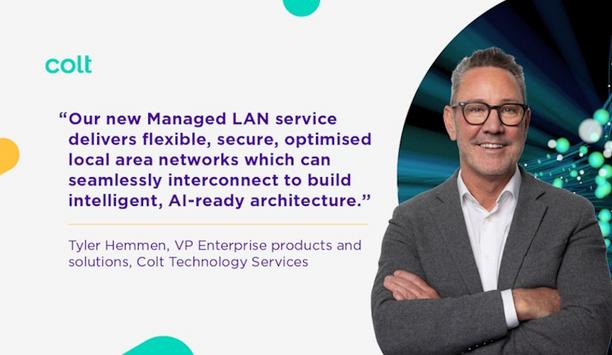
Colt Technology Services expanded its product portfolio with the launch of a new Managed Local Area Network (LAN) solution, available now across Colt’s 40+ countries. Ideal for businesses looking for enhanced performance, security, and cost efficiency benefits of a Local Area Network without the complexity and expense of managing it themselves, Colt’s new Managed LAN solution combines powerful digital infrastructure with an effortless service experience. Real-time data sharing Organizations are increasingly using Local Area Networks for fast, efficient and secure real-time data Organizations are increasingly selecting Local Area Networks for fast, efficient and secure real-time data sharing between devices within office buildings, local government or manufacturing sites, hospitals, retail stores and production facilities. This comes as more businesses explore AI-generating and processing higher volumes of data traffic and seek new ways to protect their organizations from sophisticated security threats. Colt’s Managed LAN solution Colt’s Managed LAN solution can quickly, easily and securely connect to a company’s cloud or on-premise network environment via networking services such as Colt’s SD WAN (Software Defined Wide Area Network) solution, providing businesses with a high-performing, secure, interconnected digital infrastructure – particularly valuable for organizations streamlining real estate, integrating newly-acquired sites through M&A or expanding into new premises as they grow organically. Benefits from Colt’s Managed LAN Businesses choosing Colt’s Managed LAN benefit from: Proactive network monitoring by an expert team using best-in-class software platforms, ensuring high performance and reliability without the hassle or investment of managing this directly Improved data security and network security, with Colt’s robust security standards, tools, and practices, including Colt’s Corporate Binding Rules Fast delivery times Better resource allocation, as IT teams are freed from day-to-day network management to focus on delivering business transformation goals Transparent and reduced operating costs and improved power consumption, as businesses only pay for and use power for the services they need Futureproofed technology as Colt invests in the latest energy-saving network technology trends, so their network is current, efficient, and supports their sustainability goals The peace-of-mind that comes from being a part of Colt’s industry-pioneering, proactive, and supportive customer experience New Managed LAN service Tyler Hemmen, VP – Enterprise products and solutions, Colt Technology Services, said, "Organizations are reimagining their workspaces to meet changing consumer and employee needs. Connecting these spaces with powerful, secure digital infrastructure is critical, but it’s easy for businesses to lose their way as they try to link this intricate maze of different networks across different sites." Tyler Hemmen adds, "Our new managed LAN service removes this effort and complexity, delivering flexible, secure, optimized local area networks which can seamlessly interconnect to build intelligent, AI-ready architecture."

Expert commentary

Security technology has witnessed huge advancements in recent years, particularly for those protecting critical assets or information. Facial and fingerprint recognition, ANPR and even 'mac addresses' or a person of interest's gait, now all make up the technology toolbox of forward-thinking organizations' security policy. However, humans remain the weakest link in any security chain, and the only way to correct this is to eliminate the human burden, argues Richard Hilson, head of sales for security access management specialist, Parking Facilities. Here, he examines the pitfalls in relying upon human intervention in critical national infrastructure (CNI) settings, and the future of biometrics to keep assets, information and personnel safe. Recent Verizon report 74 percent of corps are saying that insider threats are becoming more of a concern for them As with any workplace initiative, be it a simple recycling policy or a corporate password protection directive, technology is only as good as those who implement or operate it. While technology can be fallible and gremlins do arise, it’s never as flawed as us mere humans with our unreliable ‘on/off’ switch. Likewise, we carry the ability to reason, to override procedures, or ignore policy, should we wish. Or as it happens, just make mistakes. In fact, according to a recent Verizon report, two out of three insider attacks happen as a result of negligence, and 74 percent of organizations are saying that insider threats are becoming more of a concern for them. Fundamental security practices Security breaches aren’t limited to external threats either, whether intentionally or not, they can come from within. Humans can, and do, ‘go rogue’, whether that’s pre-meditated criminal or malicious intent, or just by taking shortcuts. While data breaches court most news headlines in this digital era, some of the most significant security risks are those posed when employees neglect fundamental security practices such as sharing passwords or access cards. Employee negligence and insider threats Insider negligence remains one of the pioneering causes of security breaches Insider negligence remains one of the pioneering causes of security breaches. Employees who share passwords or access cards may do so out of convenience, ignorance, or a misplaced sense of trust. Unfortunately, this creates vulnerabilities that are left open to exploitation. When multiple employees share credentials, it becomes difficult to trace actions to a single individual. This lack of accountability can complicate incident investigations and allows malicious activities to go undetected. Emergency services resources Furthermore, the sharing of passwords or access cards means inaccurate accounting of personnel, and in the event of an evacuation or major incident, central IT systems will hold misleading information of employees’ locations which could have a huge impact upon safety and potentially emergency services resources. Employees with malicious intent can exploit shared credentials to carry out unauthorized activities while shifting blame to others, increasing the risk of deliberate sabotage or theft of sensitive data. Even when there is no malicious intent, employees who share access credentials risk unintentionally exposing them to unauthorized individuals, such as contractors, visitors, or external attackers. What happens when employees compromise security? Access cards are designed to limit entry to restricted physical locations. When shared, unauthorized personnel could enter secure areas such as control rooms, rail lines, large construction sites, data centers, power plants or indeed any site meant to be kept secure. This creates opportunities for sabotage, theft, or corporate espionage. Sensitive data held within critical sites, such as blueprints, system controls, and customer records Likewise, shared passwords can lead to unauthorized entry into IT systems, allowing hackers to install malware, ransomware, or spyware. For example, a cybercriminal gaining access to an energy grid system could shut down power to entire regions, causing chaos to millions of people, and disrupting essential services. And not all data breaches are caused by online hackers gaining entry through unsecure firewalls. Sensitive information held within critical sites, such as blueprints, system controls, and customer records, becomes vulnerable when access credentials are shared too, and the disclosure of such information can have a serious impact upon a company’s bottom line, operations, and ultimately its reputation. Eliminating the human burden One way to prevent human error, or to thwart malpractice is to reduce the burden upon employees to be compliant, and eliminate our flaws by using technology that requires no intervention, decision-making or reason. Facial recognition is widely used in the civil world now, despite the concerns of various lobbyists. Used correctly it is not a ‘catch all’, but an instant recognition of persons of interest cross referenced against a database of known suspects. Our car parks are governed by automatic number plate recognition (ANPR) to gain access in and out, while border controls are using advanced biometrics for everything from facial and fingerprint recognition, through to recognition of human characteristics and gait, for both entry and to apprehend. The UK Home Office is even accelerating its transition to digital border management, using biometric technology to improve efficiencies, safety, and to track and capture known or illegal persons. What of the CNI sites? But what of the corporate world? What of the CNI sites, our airports, our national construction developments such as HS2 or our high-rise office spaces? We always ask this very question, and also ‘can you afford a security breach’ in whatever environment you’re in? Because the smart, cloud-based technology being used by governments, law enforcement authorities and Border Force have cascaded down through the civil and corporate worlds. Immediate safety and security Security-conscious corps are diligently removing human error, by eliminating the human burden Security-conscious organizations are now diligently removing human error, by eliminating the human burden. With cloud-managed software not only are access points managed through biometric integration, but it also overcomes the issues mentioned earlier around accountability - in that the cloud will always register who has passed through an access point, or out of it. This is critical for both immediate safety and security but also for matters arising from a crisis, or emergency situation. It’s also less admin-heavy, more cost-effective and can manage and store employee records, including background checks. Employee or contractor data is encrypted, their information is safe, their interactions are secure, and businesses are protected. Implement robust access management systems Simple acts of negligence, such as sharing passwords or access cards, can open the door to catastrophic consequences, operational disruption, financial loss, and even, in the case of CNI, national security risks. To mitigate this, organizations can do worse than to implement robust access management systems, and in doing so, release employees from having to be accountable for ensuring the security of the sites in which they work. As artificial intelligence evolves, I see even more robust biometrics coming to the fore, until such time we work and live in environments that are controlled without us even knowing security checkpoints are all around us, and access management happening at every step. It will become as ‘every day’ as an automatic door allowing entry into our local supermarket - but we’re not quite there yet.

It’s no secret that the data security sector is constantly changing. It has an annual CGR of about 12.3%. Future trends in data security Much of this has to do with the rise of cybercrime in recent years, with reports showing that cyberattacks happen as often as every 39 seconds. To combat the growing rate of cybercrime, data security has been on the rise. As we journey further into this era, it becomes evident that a spectrum of significant trends is molding the future of data security. This exploration delves into a selection of these trends, unraveling their importance and the potential implications they carry 1. AI security tools will increase Artificial Intelligence is also being used in the development of smart attacks and malware The introduction of Artificial Intelligence in the data security industry brought significant changes, especially in cybersecurity. AI has been the golden standard for face detection, natural language processing, automated threat detection, and automated security systems. Additionally, Artificial Intelligence is also being used in the development of smart attacks and malware, bypassing even the latest security protocols in data control. And as time progresses, AI security tools will flourish and dominate the scene. Let’s take a more in-depth look at three of the top AI security tools. Targeted attack analysis tool Manufacturers utilize targeted attack analysis tools to uncover targeted and stealthy attacks. Artificial Intelligence can be applied to the program’s capabilities, processes, and knowledge. For instance, Symantec launched this tool to combat the Dragon 2.0 attack in 2022. The phishing attack reprimanded multiple energy companies while trying to gain access to their operational networks. Targeted Attack Analysis Tools can analyze incidents and look for similarities from previous situations. They also help detect suspicious activities and collect all the necessary data to determine whether a specific action is malicious. Intercept X tool Results from the Intercept X Tool feature high accuracy and a low false positive rate Sophos, a British security hardware and software company, launched the Intercept X Tool. It engages a neural network that records and analyses data like a human brain. Sophos’ Intercept X Tool can extract features from a single file and perform a deep analysis. It detects malicious activities within 20 milliseconds. Plus, it’s also trained to work on bi-directional sharing and real-world feedback of threat intelligence. Results from the Intercept X Tool feature high accuracy and a low false positive rate. IBM Watson Technology IBM’s QRadar Advisor uses IBM Watson Technology, a unique AI tool for fighting cyber attacks. Artificial Intelligence can auto-investigate activities and indicators for potential exploitation or compromise. With cognitive reasoning, IBM Watson Technology can present critical insights to accelerate the response cycle. Security analysts can utilize this technology to search for threat incidents, reducing the risk of letting them fly under the radar. 2. Blockchain as a security solution It guarantees no points of failure or hackable entrances that can expose datasets inside the system Blockchain is a type of distributed ledger technology (DLT) that aims to establish trust within an untrusting ecosystem. Today it’s one of the most robust cybersecurity technologies in the industry. Blockchain utilizes a decentralized ledger system, but your team members can still gain access to transparent information in the cloud. Members can also record, pass along, and view necessary transactional data in the blockchain. The entire blockchain process maintains data integrity within the system while establishing trust among team members. It guarantees no points of failure or hackable entrances that can expose datasets inside the system. Cybersecurity, biometrics Cybersecurity primarily benefits from these features because blockchain can create a secure and robust wall between data and hackers. On top of that, blockchain ledgers can include biometrics like fingerprints and retina scans. These prevent hackers from accessing any private data. Because blockchain is decentralized, it also limits hackable data. Together with the technology’s record-keeping system, each node is provided insight into data manipulation exposing real-time cybercrime attempts. 3. Increased and widened access control Without access control, expect your company to be open to security issues, including theft, data loss, and breach of data Access control is critical in data security. More than a valuable security tool, business leaders can use access control to regulate people accessing any given resource. A company with an IT security setting can control who has the liberty to edit certain files. One of the primary goals of access control is to minimize threats or attacks to organizations and businesses to keep people and data secure. Without access control, expect your company to be open to security issues, including theft, data loss, and breach of data protection laws. Benefits The benefits of increased and widened access control include: Identifying who can access and control your data at specific time intervals. Protecting data from overwriting, accidental deletion, and malicious intent. User permissions that can be readily changed. Compliance and regulation with data privacy laws. Central management of access to data through a reporting portal or a dashboard. Multi-factor authentication Access control comes in various types and systems, so it’s critical to know the features of what you’re looking for. The most common type is multi-factor authentication or MFA. It involves multiple steps before logging in, requiring the user to enter other relevant information besides the password. Some other examples of information include biometrics, answering a security question, or entering a code sent to the user’s email address. Two-factor authentication, role-based access control Two-factor authentication further prevents unauthorized entries that can result in unnecessary data possession Two-factor authentication further prevents unauthorized entries that can result in unnecessary data possession. Another type of access control is role-based access control. In this setup, only one individual can set up access guidelines and grant permissions to specific team members within an organization. 4. Greater use of the zero-trust security model The zero-trust security model is a framework that requires every user within and outside the organization to undergo authentication, authorization, and validation. These are all essential to ensure proper security configuration before access is granted to the company’s applications and data. A zero-trust model assumes that anyone can cause data breaches and that a traditional network edge is not taken into effect. Moreover, it addresses the following modern-day challenges: Hybrid cloud environments. Security of remote workers. Ransomware threats. This framework utilizes the combination of multiple advanced technologies, including: A risk-based multi-factor authentication. Endpoint security. Identity protection. Cloud workload technology. The zero-trust model uses all these innovative tools for system identification, user verification, access consideration, and system security maintenance. Constant validation and monitoring Enforcing strict policies and compliance with data privacy laws are also essential Additionally, it also considers data encryption, email security, and asset verification before establishing connections with applications. The architecture of a zero-trust framework requires constant validation and monitoring of the users and the devices they are using. Enforcing strict policies and compliance with data privacy laws are also essential. More importantly, the zero trust architecture requires all organizations to be aware of all their available services and accounts to gain complete control of data handling and manipulation. 5. Increased privacy regulations Privacy regulations and policies guide organizations in proper data control, handling, and security. These policies guide organizations in proper data control, handling, and security. As a responsible business owner, you must comply with these regulations to avoid legal issues. With cybersecurity attacks becoming common, expect increased and stricter privacy regulations to be released in the next few years. While current policies are still taken into effect, various modifications and adjustments will occur to compete with the rising numbers of data breaches, thefts, data loss, and more. California Privacy Rights Act (CPRA) Currently, the California Privacy Rights Act (CPRA) is the most comprehensive legislation on state data privacy. It only started to take effect on January 1, 2023. The CPRA introduces the following principles: Broad individual consumer rights. Significant duties of people who need to collect sensitive and personal information. Additional definitions of data privacy and security. An individual’s duties include releasing information about data collection to concerned data subjects and proper access, correction, and deletion of information. Final thoughts 2023 is a big year for data security. Trends such as increased adoption of zero-trust policies, a greater reliance on AI security tools, and the implementation of blockchain as a security solution are all things we expect to see shortly. Staying up-to-date with these trends is important for keeping your business current and ensuring that you’re adhering to new and changing regulations. Doing so can give you an edge over the competition and keep you out of legal hot water.

Global transportation networks are becoming increasingly interconnected, with digital systems playing a crucial role in ensuring the smooth operation of ports and supply chains. However, this reliance on technology can also create vulnerabilities, as demonstrated by the recent ransomware attack on Nagoya Port. As Japan's busiest shipping hub, the port's operations were brought to a standstill for two days, highlighting the potential for significant disruption to national economies and supply chains. Transportation sector The attack began with the port's legacy computer system, which handles shipping containers, being knocked offline. This forced the port to halt the handling of shipping containers that arrived at the terminal, effectively disrupting the flow of goods. The incident was a stark reminder of the risks associated with the convergence of information technology (IT) and operational technology (OT) in ports and other critical infrastructures. This is not an isolated incident, but part of a broader trend of escalating cyber threats targeting critical infrastructure. The transportation sector must respond by bolstering its defenses, enhancing its cyber resilience, and proactively countering these threats. The safety and efficiency of our transportation infrastructure, and by extension our global economy, depend on it. Rising threat to port security and supply chains XIoT, from sensors on shipping containers to automatic cranes, are vital to trendy port functions OT, once isolated from networked systems, is now increasingly interconnected. This integration has expanded the attack surface for threat actors. A single breach in a port's OT systems can cause significant disruption, halting the movement of containers and impacting the flow of goods. This is not a hypothetical scenario, but a reality that has been demonstrated in recent cyberattacks on major ports. Adding another layer of complexity is the extended Internet of Things (XIoT), an umbrella term for all cyber-physical systems. XIoT devices, from sensors on shipping containers to automated cranes, are now integral to modern port operations. These devices are delivering safer, more efficient automated vehicles, facilitating geo-fencing for improved logistics, and providing vehicle health data for predictive maintenance. XIoT ecosystem However, the XIoT ecosystem also presents new cybersecurity risks. Each connected device is a potential entry point for cybercriminals, and the interconnected nature of these devices means that an attack on one, which can move laterally and can have a ripple effect throughout the system. The threat landscape is evolving, with cybercriminals becoming more sophisticated and their attacks more damaging with a business continuity focus. The growing interconnectivity between OT and XIoT in port operations and supply chains is also presenting these threat actors with a greater attack surface. Many older OT systems were never designed to be connected in this way and are unlikely to be equipped to deal with modern cyber threats. Furthermore, the increasing digitization of ports and supply chains has led to a surge in the volume of data being generated and processed. This data, if not properly secured, can be a goldmine for cybercriminals. The potential for data breaches adds another dimension to the cybersecurity challenges facing the transportation sector. Role of Cyber Resilience in Protecting Service Availability Cyber resilience refers to organization's ability to prepare for, respond to, and recover from threats As the threats to port security and supply chains become increasingly complex, the concept of cyber resilience takes on a new level of importance. Cyber resilience refers to an organization's ability to prepare for, respond to, and recover from cyber threats. It goes beyond traditional cybersecurity measures, focusing not just on preventing attacks, but also on minimizing the impact of attacks that do occur and ensuring a quick recovery. In the context of port operations and supply chains, cyber resilience is crucial. The interconnected nature of these systems means that a cyberattack can have far-reaching effects, disrupting operations not just at the targeted port, but also at other ports and throughout the supply chain. A resilient system is one that can withstand such an attack and quickly restore normal operations. Port operations and supply chains The growing reliance on OT and the XIoT in port operations and supply chains presents unique challenges for cyber resilience. OT systems control physical processes and are often critical to safety and service availability. A breach in an OT system can have immediate and potentially catastrophic physical consequences. Similarly, XIoT devices are often embedded in critical infrastructure and can be difficult to patch or update, making them vulnerable to attacks. Building cyber resilience in these systems requires a multi-faceted approach. It involves implementing robust security measures, such as strong access controls and network segmentation, to prevent attacks. It also involves continuous monitoring and detection to identify and respond to threats as they occur. But perhaps most importantly, it involves planning and preparation for the inevitable breaches that will occur, ensuring that when they do, the impact is minimized, and normal operations can be quickly restored. Building resilience across port security and supply chains In the face of cyber threats, the transport sector must adopt a complete method of cybersecurity In the face of escalating cyber threats, the transportation sector must adopt a comprehensive approach to cybersecurity. This involves not just implementing robust security measures, but also fostering a culture of cybersecurity awareness and compliance throughout the organization. A key component of a comprehensive cybersecurity strategy is strong access controls. This involves ensuring that only authorized individuals have access to sensitive data and systems. It also involves implementing multi-factor authentication and regularly reviewing and updating access permissions. Strong access controls can prevent unauthorized access to systems and data, reducing the risk of both internal and external threats. Network segmentation Network segmentation is another crucial measure. By dividing a network into separate segments, organizations can limit the spread of a cyberattack within their network. This can prevent an attack on one part of the network from affecting the entire system. Network segmentation also makes it easier to monitor and control the flow of data within the network, further enhancing security. Regular vulnerability assessments and patch management are also essential. Vulnerability assessments involve identifying and evaluating potential security weaknesses in the system, while patch management involves regularly updating and patching software to fix these vulnerabilities. These measures can help organizations stay ahead of cybercriminals and reduce the risk of exploitation. EU’s NIS2 Directive EU’s NIS2 Directive came into effect, and member states have until October 2024 to put it into law The transportation sector must also be prepared for greater legislative responsibility in the near future. The EU’s NIS2 Directive recently came into effect, and member states have until October 2024 to put it into law. The Directive aims to increase the overall level of cyber preparedness by mandating capabilities such as Computer Security Incident Response Teams (CSIRTs). Transport is among the sectors labeled as essential by the bill, meaning it will face a high level of scrutiny. Getting to grips with the complexities of XIoT and OT integration will be essential for organizations to achieve compliance and avoid fines. Global transportation infrastructure Finally, organizations must prepare for the inevitable breaches that will occur. This involves developing an incident response plan that outlines the steps to be taken in the event of a breach. It also involves regularly testing and updating this plan to ensure its effectiveness. A well-prepared organization can respond quickly and effectively to a breach, minimizing its impact and ensuring a quick recovery. In conclusion, mastering transportation cybersecurity requires a comprehensive, proactive approach. It involves implementing robust technical measures, fostering a culture of cybersecurity awareness, and preparing for the inevitable breaches that will occur. By taking these steps, organizations can enhance their cyber resilience, protect their critical operations, and ensure the security of our global transportation infrastructure.
Security beat
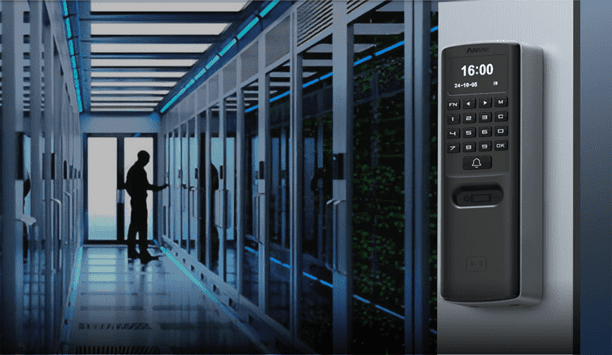
The pattern of veins in the hand contains unique information that can be used for identity. Blood flowing through veins in the human body can absorb light waves of specific wavelengths. Irradiating the human palm with near-infrared light waves yields an image of the vascular pattern. A venous distribution map can be processed and compared to pre-registered data to match and confirm identity. Palm vein biometrics The idea of palm vein biometrics goes back to the 1980s when palm vein scanners emerged as commercial products in the 1990s. The devices gained some traction in military-grade and high-security applications, although the technology was too expensive to become popular among mainstream applications such as physical access control. Anviz Global is expanding palm vein technology into mainstream applications, featuring a lower price point that will open new market opportunities. Palm vein technology “Palm vein technology has been viewed as a boutique product because it is costly and has not developed as a mainstream product,” says Mark Vena, Senior Director of Business Strategy and Development for Anviz Global. “With a more compelling price point, the market can see the technology more broadly. We can change the game in terms of how people think about palm vein technology.” FAR and FRR Palm vein technology is more accurate than either fingerprint (0.0001% FAR) or facial recognition (0.001% FAR) Iris recognition is considered the gold standard in biometric identification, but palm vein technology can almost achieve the accuracy of iris. The false accept rate (FAR) for palm vein technology is 0.00008%, compared to 0.00005% for iris recognition systems. The false reject rate (FRR) is comparable at 0.01% for either technology. Palm vein technology is more accurate than either fingerprint (0.0001% FAR) or facial recognition (0.001% FAR). Palm vein identification occurs in less than half a second. M7 Palm “Anviz is seeking to bring a high level of capability to more mainstream commercial applications,” says Vena, specifically providing a lower-cost palm vein unit. The M7 Palm by Anviz can achieve next-generation biometric access control for greater security and intelligence. The door-mounted unit combines palm vein recognition with an RFID card reader and PIN code (using a 17-button keypad), all configurable for multi-factor authentication. Outdoor applications The robust unit, including a narrow metal exterior design, provides strong vandal resistance (IK10) and stability for outdoor applications. To ensure a weatherproof design, the IP66 rating indicates the product is completely protected against dust and can withstand strong jets of water from any direction. Power-over-ethernet (PoE) enables centralized power management and the ability to remotely reboot devices. Wiegand-out interface The unit communicates using RS-485 or TCP/IP and can connect locks, exit buttons, door contacts, doorbells, etc The unit communicates using RS-485 or TCP/IP and can connect locks, exit buttons, door contacts, doorbells, etc. The Wiegand-out interface can connect to standard third-party controllers, or a built-in relay can trigger a lock directly. Capacity is 500 users. Because palm vein recognition originates from the physiological characteristics of the human body, it represents a “credential” that cannot be forged, lost, or left at home. It is not easily counterfeited or worn out. Multi-factor authentication Applications include industries requiring high security such as government, judicial, and banking. Multi-factor authentication eliminates fraud and ensures safety at banks, data centers, airports, prisons, and government. An end user might opt for higher levels of access control for a laboratory or server room. For dealers and integrators, palm vein technology, including multi-factor authentication, provides an additional option for customers seeking to protect high-security areas on a large campus. Card readers Card readers may suffice for most of the doors, but an important laboratory or cash-handling area requires more protection. Palm vein technology can secure a casino cash cage or a room containing corporate secrets. Time of Flight ToF laser-ranging uses a laser to measure the distance to an object by calculating the time Time of Flight (ToF) laser-ranging achieves accurate measurement to ensure the right distance for operation. ToF laser-ranging uses a laser to measure the distance to an object by calculating the time it takes for the laser light to travel to the object and back. Palm vein technology operates in the range of 10 to 30cm (4 to 12 inches). The proprietary BioNANO palm vein recognition algorithm enables accurate and fast scanning speed. Non-contact biometric The non-contact biometric performs in touchless environments and does not contribute to lingering health concerns in the post-COVID world. The technology is accurate across all hand types and skin tones. Users may feel more comfortable scanning their hands than their eyes. Optimal human-machine interaction M7 Palm’s optimal human-machine interaction and user experience include a low-power-consumption OLED screen to deliver clear text notifications to the user. Advantages of M7 Palm include accuracy, stability, security, and privacy. Features include easy installation with standard processes and no special tools, centralized power management, simplified cabling, and less maintenance. Managing the system is expedited by integration with the Anviz CrossChex Standard access control and time management dashboard, used by more than 30,000 enterprises, and the system can be integrated with any access control system. Security for SMBs Anviz Global is a converged intelligent security provider for SMBs and enterprise organizations Anviz Global is a converged intelligent security provider for small- and medium-sized businesses (SMBs) and enterprise organizations. The company’s product line includes biometrics, video surveillance, and security management solutions based on the cloud, Internet of Things (IoT) and artificial intelligence (AI) technologies. Privacy concerns Anviz is part of the Xthings family of companies, which includes Ultraloq (smart locks), Utec (smart home), Bright (smart lighting), Secu365 (SaaS Platform), and Ulticam (smart cameras). Privacy concerns are minimized because palm vein recognition does not directly store the original image but rather extracts feature information through algorithmic models. Personal data is protected through obfuscation and encryption.
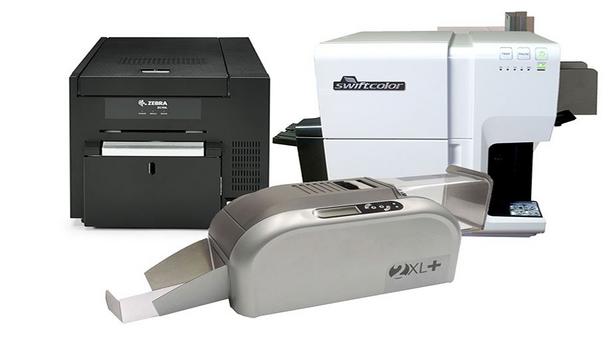
Large-scale events, including both corporate and sporting events, are coming back strongly in the aftermath of the pandemic. With the increase in activity comes more demand for oversized credentials preferred by many event planners and end users. Pent-up demand due to the pandemic has caused a tremendous uptick in the entire ID card industry in 2022. The return of large-scale events and in-person trade shows will extend the higher demand for cards well into 2023 and beyond, says Andrew Schonzeit, President of Idesco, a provider of ID card solutions. Supply chain concerns Supply chain concerns will continue as companies seek to upgrade and purchase new ID printers and badges An impact of the pandemic was a shortage of supplies related to the ID card industry, says Schonzeit. Like other industries, several leading ID card and printer manufacturers had supply chain issues, and some deliveries were delayed at times for more than six months. Supply chain concerns will continue into 2023 as more companies return to the workplace and others seek to upgrade their current systems and purchase new ID printers and badges. Persistent price increase concerns “The shortage created hardships for end users and often resulted in them purchasing any solution that was readily available even if it was not the preferred one,” says Schonzeit. Another issue during the pandemic was persistent price increases, due both to inflationary pressures and a shortage of products. The industry was used to stable prices with infrequent increases, but the pandemic changed this quickly. Some companies also decided to upgrade their entire system as employees returning to the office increased demand. Oversized credentials advantages Among the advantages of oversized credentials is the ability to print more information on the card, says Schonzeit. For example, a larger credential allows event organizers to preprint the corporate agenda on the back of the card to increase efficiency. In addition, companies can enhance their brand presence by distributing a nice thick plastic badge to attendees. Two categories Standard credit card size These are generally CR100 size, which is around 40% larger than the standard credit card Oversized badges fall into two main categories. One category is for cards that are larger than the standard credit card size (CR80), but smaller than event badges. These are generally CR100 size, which is around 40% larger than the standard credit card. They are generally used by law enforcement or healthcare institutions. It is easier to see an oversized badge more clearly from a distance than a regular-sized badge. Oversized ID badges The other category of oversized ID badges is used for events, these badges are typically 3.5” by 5.5” and are usually worn around the neck. These events include categories such as sporting events, corporate events, music festivals, and trade shows. The badges are generally used only for the duration of the event and are often kept as souvenirs. Anticipating the needs “My advice for event planners is to manage your expectations about badges as it is very hard to order extra badges at the last minute,” says Schonzeit. “It is important to plan well in advance and anticipate your needs upfront to help avoid a shortage.” Idesco often gets requests from customers to include some type of technology on the credentials. The most common technologies are proximity cards, NFC, and/or UHF. “It is a much ‘cleaner’ and safer solution if the chip can be embedded within the credential as opposed to putting a sticker on the outside of the credential,” says Schonzeit. Additional technologies in credentials Customers wanting technology in their credentials should allow additional lead time Generally, these additional technologies are used for gaining entry to a location (access control), or they can be used for gathering valuable information regarding an event, including attendance at seminars, crowd flow, vending, and food services information, among others. Supply chain issues have led to less availability of many of the most common chips, which can impact delivery times. Customers wanting technology in their credentials should allow additional lead time, says Schonzeit. Applications In addition to corporate events, sporting events, and trade shows, other markets can also benefit from oversized ID badges. Industries include healthcare, government, and law enforcement. Oversized badges are becoming more popular in hospitals, for example, where color coding can make it easy to identify doctors, nurses, and hospital personnel from a distance, even in congested hospital spaces. ID card necessity Could there be a negative impact on the ID card industry if more companies allow employees to work from home? It’s always a possibility, says Schonzeit. “However, with many hybrid options out there, most employees are required to come to the office either one or two days a week,” he says. “Employees will still need a way to access their workplace for meetings, conferences, etc., and will require an ID card to do so.” Mobile vs. physical credentials The growing popularity of mobile credentials has created some concerns in the ID card marketplace The growing popularity of mobile credentials has created some concerns in the ID card marketplace about the continuing need for a physical credential. So far it has not been an issue. “[Mobile credentials] have not had any type of meaningful effect on the physical ID card market,” says Schonzeit. Relying on smartphones “Sometimes these disruptive technologies can linger in the background for some time and then suddenly have a massive effect on the market. This is something to be concerned about, but I don’t think there is an imminent threat.” A big issue with using only mobile credentials is the need for a backup plan rather than relying only on a smartphone to enter a facility. Also, for mobile credentials to work, specialized readers are required, which requires a large investment. “In my opinion, ID badges are here to stay for the long haul,” says Schonzeit.

Mergers and acquisitions are among the most disruptive forces in the security marketplace. However, they are also both a reality and a growing trend. Whenever there is value to be leveraged, companies tend to enter into business transactions to maximize that value. For the security industry, the result is a continually shifting collection of manufacturer companies seeking new ways to provide value to customers. M&A activity continued unabated in 2021, despite residual industry challenges such as dysfunctional supply chains and lingering consequences of a global pandemic. Here are some of the larger and/or most impactful M&A transactions of 2021. Stanley Black & Decker sells to Securitas Stanley Black & Decker announces an agreement to sell most of its Security assets to Securitas AB for $3.2 billion in cash. The transaction includes Stanley Black & Decker's Commercial Electronic and Healthcare Security business lines. The businesses carry 2021 forecasted revenues of approximately $1.7 billion. “The business is well-positioned for ongoing growth within Securitas, a global pioneer in the security industry,” says James M. Loree, Stanley Black & Decker's CEO. Openpath’s solution makes businesses more secure with multi-factor authentication Motorola acquires Openpath and Envysion Motorola Solutions adds to its security industry portfolio with the acquisition of Openpath Security Inc.., a cloud-based mobile access control provider. Openpath’s solution makes businesses more secure with multi-factor authentication, enables a contactless entry experience, and can be easily scaled and managed due to its cloud-based architecture. Motorola also announces the acquisition of Envysion, a provider of video security and business analytics solutions for quick-service restaurant and retail industries. Delta Electronics buys March Networks Delta Group, a provider of power and thermal management solutions, purchased 100% of the shares in Infinova (Canada) Ltd., owner of Canadian-based video surveillance and business intelligence company March Networks, from Infinova International Ltd. through its subsidiary Delta International Holding Limited B.V. Following the close of the transaction, it was expected that March Networks will continue to operate from its Canadian headquarters, and the March Networks executive management team will continue to lead the organization. Delta Electronics is also the parent company of VIVOTEK. APi Group acquires Chubb Fire and Security Business APi Group Corp. acquire the Chubb Fire & Security Business from Carrier Global Corporation for an enterprise value of US$ 3.1 billion. Headquartered in the United Kingdom, Chubb has approximately 13,000 employees globally and a sales and service network that spans 17 countries, serving more than 1.5 million customer sites in Europe, Asia Pacific, and Canada. APi Group is a business services provider of safety, specialty, and industrial services in more than 200 locations worldwide. Teledyne Technologies Inc. will acquire FLIR in a cash and stock transaction valued at approximately $8.0 billion Teledyne acquires FLIR Teledyne Technologies Inc. and FLIR Systems, Inc. jointly announced that they have entered into a definitive agreement under which Teledyne will acquire FLIR in a cash and stock transaction valued at approximately $8.0 billion. Jim Cannon, President and Chief Executive Officer of FLIR, said, “We could not be more excited to join forces with Teledyne through this value-creating transaction.” Resideo adds Norfolk Wire and Electronics Resideo Technologies, Inc. acquired privately held Norfolk Wire & Electronics, based in Richmond, Virginia. Norfolk was founded in 1985 and is a regional distributor of security, telecom, network, and audio-video (AV) related products, supplies, and tools. With 11 full-service retail locations and a 43,000 sq. ft. distribution center, Norfolk serves customers across the mid-Atlantic region and will be part of Resideo's ADI Global Distribution business, a wholesale distributor of security, AV, and low-voltage products. Triton acquires ACRE, which acquires Feenics and Matrix Triton Partners acquired ACRE, an end-to-end security solutions provider based in Dallas/USA and Dublin/Ireland. Triton is investing alongside the current management team of ACRE. Weeks later, ACRE acquired cloud-based workplace solutions company Time Data Security (TDS). Later in the year, ACRE announced acquisition of Feenics and Matrix Systems. Feenics brings cloud-based access control solutions brings cloud-based access control solutions to ACRE’s rapidly growing network of global customers while also expanding its portfolio to support the growing demand for cloud-based security solutions. Matrix enables ACRE to expand the addressable market for the company’s technology portfolio. Brivo, Inc. and Crown PropTech Acquisitions have entered into an agreement making Brivo a publicly listed company Brivo becomes publicly traded through the merger Brivo, Inc., a cloud-based access control and smart building technologies company, and Crown PropTech Acquisitions, a publicly traded special purpose acquisition company (SPAC), have entered into a definitive merger agreement that will result in Brivo becoming a publicly listed company. The transaction values the company at a pro forma enterprise value of $808 million. Upon closing, the combined company will operate as Brivo, and its Class A common stock is expected to be listed under the ticker symbol “BRVS.” Nice buys Nortek Security Nice, a global manufacturer of smart home, security, home, and building automation solutions, , acquired Nortek Security & Control from Melrose Industries. Nortek Security & Control is a developer of technology for security, home automation, control, power, AV and entertainment, access control, health, and Artificial Intelligence (AI) systems, for residential and commercial markets. Eagle Eye acquires Uncanny Vision Eagle Eye Networks, a cloud video surveillance solutions company, has acquired Uncanny Vision Solutions, an artificial intelligence (AI) analytics and Solutions Company. The acquisition accelerates the company’s leadership in providing AI and analytics, to make customers’ businesses more efficient and the world a safer place. The acquisition also includes research and development (R&D) capabilities and a new regional office located in Bangalore, India.
Case studies

A premier cancer research and treatment institute in India, renowned for advancing oncology, serves as a national center for specialized healthcare. Committed to delivering innovative treatments and holistic care, the institute integrates state-of-the-art technology with a highly skilled medical team. It emphasizes comprehensive patient management, pioneering research, and educational initiatives to enhance oncology expertise. The institute's cutting-edge facilities are tailored to support groundbreaking research, driving progress in cancer treatment and care. Challenges/requirements The research institute relied on a legacy network setup that gradually introduced multiple challenges: Integration with Existing Infrastructure: The institute sought a Unified Communication System that could effortlessly adapt to its intricate legacy setup. Maintaining compatibility was essential to preserve seamless connectivity and ensure the continuity of critical daily operations. Scalability for Future Growth: With plans for expansion, the institute foresaw growing communication needs, including enhanced connectivity and advanced functionalities. Matrix was entrusted to provide a solution that not only resolves present challenges but is also designed to scale effortlessly for future requirements. Secure Communication: With the critical sensitivity of medical communications, ensuring data security and compliance with healthcare standards was paramount. Matrix was tasked with delivering a robust solution designed to safeguard privacy and protect against security risks. Solution The Matrix Unified Communication System incorporated a VoIP-PRI gateway and an embedded IP-PBX server, effectively integrating with third-party IP phones. This configuration bridged modern communication technology with the institute's legacy systems, ensuring seamless functionality. The solution highlights are as follows: Integration with Legacy Network: The Matrix Unified Communication System incorporated two SETU VTEP1P VoIP-PRI gateways, seamlessly connecting with the existing legacy PRI network to ensure smooth integration and enhanced communication capabilities. IP Network: The embedded IP-PBX server, PRASAR UCS-SPARK200, facilitates the IP network connection via a router, enabling seamless communication across the system. Integration with Third-Party IP Phones: The IP-PBX server, connected via the LAN, powers the IP network to support over 300 third-party IP phones, creating a comprehensive and unified communication system. Results The implementation of the Matrix Unified Communication System significantly enhanced the Cancer Research Institute's communication infrastructure. The key outcomes were: Smooth Transition with Legacy Infrastructure: The system effortlessly connected with the institute’s existing PRI network, allowing the retention of its current setup while introducing modern VoIP capabilities. This ensured operational continuity and efficient workflows without the need for costly upgrades or disruptions. Future-Ready Scalability: The IP-PBX server, capable of supporting up to 2100 users, provides the institute with a flexible and adaptable communication solution. Designed to accommodate future growth, the system ensures increased connectivity and the integration of advanced features, aligning seamlessly with the institute’s expanding needs. Optimized Licensing Structure: The deployment of the Matrix SIP server enabled the institute to reduce licensing costs by up to 20%, delivering significant savings while maintaining high-quality communication capabilities. Enhanced Device Connectivity: Reliable IP connectivity across over 300 third-party IP phones has streamlined internal communication within the institute. This seamless integration allows staff to collaborate efficiently across departments, enabling quicker decision-making and more unified operations. The Matrix Unified Communication System empowered the Cancer Research Institute to transition to a scalable and integrated communication infrastructure. This solution not only supports current operations but also accommodates future growth, effectively resolving core challenges with a seamless and sustainable approach.

The Salvation Army's mission is to meet human needs wherever and whenever necessary. Their presence spans 13 Western states, plus Guam, the Marshall Islands, and Micronesia. This commitment to service is supported by local programs that are tailored to each community’s specific needs, and technology plays a crucial role in ensuring that these operations run smoothly. Addressing security challenges As part of their long-term goal to modernize security and streamline operations, the Salvation Army Western Territory turned to Verkada to address growing security challenges across more than 700 sites in diverse urban environments. "We're in some of the most colorful neighborhoods in every major Western city, like Watts, California, and downtown Denver," says Randy Haan, Director of IT Infrastructure. "With these locations come security challenges, and having reliable surveillance and access control is critical." Centralized command for streamlined management Many systems had unreliable access control, outdated NVRs, and scattered surveillance setups Before implementing Verkada in 2017, The Salvation Army managed disparate, localized security systems that required significant maintenance and support. Many systems had unreliable access control, outdated NVRs, and scattered surveillance setups, which resulted in time-consuming troubleshooting and poor visibility in critical moments. Cloud-based approach "When we were looking at different camera systems, Verkada's cloud-based approach stood out. We didn’t need NVRs or complex server setups—it was a no-brainer," Randy explains. "Verkada’s platform centralized everything, allowing us to manage access control and surveillance from anywhere." Simplifying day-to-day operations This centralization not only enhanced security coverage but also simplified day-to-day operations. Joshua Brown, Endpoint Security Administrator, adds, "We used to need a large team to handle security across all our sites. Now, with Verkada, we’ve reduced the need for staffing by about 50 to 70 percent for IT support, and it’s allowed us to expand security at a much faster rate." Saving over $1.5 million with Verkada’s scalable solutions Randy attributes this significant cost reduction to the elimination of hardware maintenance Since implementing Verkada, The Salvation Army Western Territory has saved over $1.5 million. Randy attributes this significant cost reduction to the elimination of hardware maintenance, reduced staffing requirements, and minimized support needs. "We’ve gone from needing a dedicated technician at each of our 240 locations to just two people managing all 3,000 cameras across these sites," Randy notes. Management from one platform "For a nonprofit like The Salvation Army, where every dollar counts, this shift has been invaluable." Joshua also points out that the ease of managing systems from one platform has been transformative. "With Verkada, I can snapshot configurations, roll them out, and get everything up and running quickly. It’s 10 times easier than before." Expanding capabilities with Verkada's integrated system In addition to security cameras, the Salvation Army has integrated Verkada’s access control solutions across many of its locations. One recent highlight is the TD52 Intercom system, which Randy and his team highly anticipated. "We’ve been waiting for an intercom system that integrates with access control and surveillance for years," Randy says. New alarm panels "Now, with the TD52, we have seamless entry management at critical locations." Joshua is also excited about the new alarm panels being rolled out. "We’ve seen legacy systems fail repeatedly, but now we can replace those with Verkada’s alarms, which offer better value and integration across our facilities." Seamless cloud migration and Azure AD integration Verkada’s cloud-based platform has made this transition easier for its security systems The Salvation Army Western Territory has been migrating to the cloud for nearly a decade, and Verkada’s cloud-based platform has made this transition easier for their security systems. "Verkada’s integration with our Azure AD was a game changer," Randy says. One-stop-shop solution "We no longer need separate systems to manage users. Everything is streamlined, adding or removing access takes seconds, and it’s all automated with our primary directory." Joshua adds, "Before Verkada, we had sites with multiple NVRs, each with different passwords, and nobody knew how to manage them. Now, it’s all in one pane of glass, and it’s much easier to handle security across all our locations." Looking forward while expanding with confidence As The Salvation Army continues to grow and expand its operations, Randy and Joshua are confident that Verkada will remain a critical part of their infrastructure. "Why wait?" Randy advises other organizations to consider a switch to Verkada. "The initial investment may seem high, but the return on investment over time is massive. You reduce staffing needs, streamline operations, and can manage everything with just a few people." Cost-saving measures With a mission as broad and impactful as The Salvation Army's, every cost-saving measure allows them to reinvest in the communities they serve. Randy sums up, "Verkada’s solutions have been invaluable for a nonprofit like us. The cost savings and ease of management allow us to focus more on what matters: helping people."
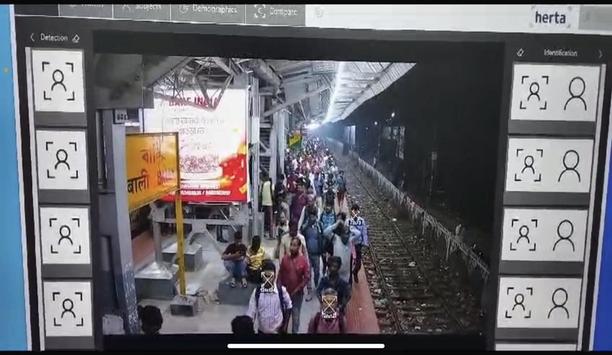
In a groundbreaking initiative to bolster security measures, Indian Railways has successfully implemented Herta's state-of-the-art facial recognition solutions across its extensive network of train stations in the Eastern region. This transformative project marks a significant step towards ensuring the safety and well-being of passengers and staff throughout the railway system. The project becomes the largest one in the world in the transport sector. Herta has also been awarded two more regions that will be implemented after the Eastern one. Facial recognition technology The deployment of Herta's cutting-edge facial recognition technology is part of IndianRailways' commitment to embracing advanced solutions for enhancing security. By leveraging Herta's expertise, the railway network aims to create a safer environment for passengers, mitigate potential security threats, and streamline operational efficiency. Key features Key features of Herta's facial recognition solutions implemented at 230 train stations using thousands of video surveillance cameras include: Real-time Identification: Herta's technology provides real-time facial identification capabilities, allowing for swift and accurate recognition of individuals within the train station premises. Enhanced Security: The implementation of facial recognition enhances security by automatically identifying and alerting authorities about the presence of individuals with potential security concerns, contributing to the overall safety of passengers and staff. Efficient Monitoring: Herta's system enables efficient monitoring of the train stations, offering a proactive approach to security management. The technology assists in the quick response to incidents and ensures a rapid resolution of security issues. User-Friendly Interface: The intuitive user interface of Herta's solutions facilitates easy integration with existing security systems, providing a seamless experience for railway personnel responsible for monitoring and managing security. Stringent security requirements Mr. Rahat Jain, IDIS INDIA - MD, expressed his enthusiasm about the successful implementation, stating, "We are delighted to announce the successful integration of Herta's facial recognition solutions at Indian Railways." Startologic, the official partner overseeing the deployment of Herta's facial recognition solutions at Indian Railways, is proud to be part of this transformative project. The successful implementation showcases the capability of Herta's technology to meet the stringent security requirements of one of the world's largest railway networks.
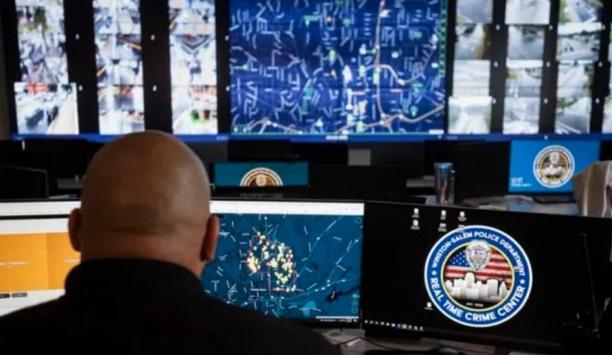
The Winston-Salem Police Department (WSPD), internationally accredited by the Commission on Accreditation for Law Enforcement Agencies (CALEA), is dedicated to proactive, data-driven approaches to law enforcement. Through initiatives like "Smart Policing," a collaboration with the local community and Winston-Salem State University, the department aims for systemic change in crime reduction and community safety. Real-time intelligence Lieutenant Ben Jones oversees the Real Time Crime Center (RTCC) housed in the Criminal Intelligence Bureau, a crucial nerve in the department’s operations. Under his stewardship, the team assists officers in protecting over 253,020 people across 133.7 square miles. “A more informed officer makes better decisions. We provide as much real-time intelligence as possible to detect, deter, and solve crime.” The challenge Get Connected Winston-Salem campaign integrates community-owned cameras into the police's video security Facing violent crime and an annual increase in homicides, the WSPD emphasizes rapid responses underpinned by precise and accurate data. A particularly innovative step is the "Get Connected Winston-Salem" campaign, which integrates community-owned cameras into the police's video security system through Fūsus. This not only broadens the scope of crime monitoring but also exemplifies the department's commitment to collaborative crime-fighting. However, finding suspects’ vehicles was a logistical nightmare and still relied heavily on witness accounts. “We began looking at LPR solutions to assist in shootings, homicides, and cases involving vehicles.” Intelligence gathering with LPR and Multisensor To elevate its crime-solving capability, the city has strategically placed Verkada License Plate Recognition (LPR) and Multisensor cameras at traffic light intersections. “Our goal is to improve the solvability and speed of investigations by being able to identify suspects' vehicles across different intersections. We tie LPR with the Multisensor, which gives a four-way view across the intersection. No other solutions we evaluated offer this capability.” The nature of the incident When an incident is reported, the initial call is directed to the Patrol Divisions, and first responders are dispatched accordingly In partnership with the Winston-Salem Department of Technology (DoT), Jones plugs Multisensor cameras directly into the city system where there's Fiber and power. When an incident is reported, the initial call is directed to the Patrol Divisions, and first responders are dispatched accordingly. The nature of the incident determines its next course: for instance, serious shooting incidents are relayed to the Violent Firearms Investigative Team, while homicides are dealt with by the Criminal Investigation Division. Real-time Verkada Analytics “Before, we relied on witness information. Now, with Verkada and Fūsus, finding what we need can take just minutes instead of days.” The Verkada software, in conjunction with Fūsus, enhances the accuracy and speed of investigations, particularly in locating vehicles associated with a crime and finding missing people. People and Vehicle Analytics allow for the swift identification of both suspects and missing people throughout the city. Finding missing people - Detailing a success story, Lt. Jones recounts, “We found a missing person on a Verkada camera, and used People Analytics to find her at different times. We were able to confirm that she was alive at particular times, which gave investigators a starting point.” Coupled with ShotSpotter, a gunfire detection system, the team swiftly locates suspects using real-time analytics Finding suspects by vehicle - Coupled with ShotSpotter, a gunfire detection system, the team swiftly locates suspects using real-time analytics. “As soon as there is a shooting, the team uses Verkada to quickly locate suspects’ vehicles based on their description and color." "A high percentage of violent crimes involve suspects who arrive, leave, or commit the crime from a vehicle. Verkada helps us identify where they’ve been, where they are, and where they’re headed.” Alerting with video context - Verkada goes a step beyond the image of a vehicle tag, providing a video of the car, its tag, and other vital details. “In the past, we might’ve stopped every red car. With Verkada, we have higher accuracy and less chance of mistaken identity." "I've been in the LPR market for a while and found that most solutions only give you a picture of the tag and vehicle. Verkada associates a video with each tag, so we have additional context easily available for intelligence gathering.” What's next Entering phase two, the goal is to place Multisensors closer together and increase the Verkada security These use cases with Verkada are just the beginning. Lt. Jones envisions a future where the department can seamlessly locate vehicles from one intersection to another, making suspect identification efficient and precise. Entering phase two, the goal is to place Multisensors closer together and increase the Verkada security coverage across the city. Real-time problem solving "The LPRs and Multisensor fit into our overlapping technology strategy, and we plan to increase the density of our deployment. If we’re pursuing an active shooter for example, having the cameras near our shotspotter areas allows us to use both technologies in conjunction with one another to locate the shooter.” Furthermore, by showcasing the efficacy of Verkada to other police departments, Winston-Salem aims to set a benchmark in crime-solving on the East Coast. Lt. Jones adds, “My goal is real-time problem solving; witnessing events as they unfold, not after. With Verkada, we’re turning that goal into reality.”
Ipsotek, an Eviden Business at Atos Group, has announced that it was appointed to provide its AI video analytics technology at the soon-to-be-opened new Midfield Terminal Building at Abu Dhabi International Airport, in Abu Dhabi, UAE. Delivered in partnership with Atlas Security, deployment of Ipsotek’s AI video analytics solutions is anticipated to improve operations, security, and safety across various areas of the Midfield Terminal Building, which is renowned for its iconic architecture and recently gained international attention as a filming location for Mission: Impossible - Dead Reckoning Part One. Advanced surveillance capabilities Ipsotek's AI video analytics technology is well-equipped to address these circumstances Safety and security are clearly paramount in any airport environment, and Ipsotek's AI video analytics technology is well-equipped to address these concerns. The advanced surveillance capabilities of the solution enable operators to detect and identify potential threats across various zones of the airport. By leveraging intelligent algorithms and machine learning, the system can recognize suspicious behaviors, unauthorized access attempts, or other pre-defined security risks in real-time, allowing for swift response and mitigation. Ipsotek's AI video analytics By leveraging Ipsotek's cutting-edge video analytics solutions, the airport aims to enhance its security measures by effectively detecting abandoned baggage scenarios. Security teams at the airport will be able to quickly identify and respond to any unattended baggage, reducing potential security risks and ensuring a safe environment for passengers and staff. "The deployment of Ipsotek's AI video analytics solutions at the Midfield Terminal Building signifies a significant leap forward for the aviation industry," said Sophiene Marzouk, Ipsotek’s UAE Country Manager. Sophiene Marzouk adds, "We are proud to collaborate with Atlas Security to deliver state-of-the-art technology that enhances operations, security, and safety in one of the world's most iconic airport buildings." Ipsotek's solutions Ipsotek's solutions also play a crucial role in optimizing que management and crowd control “Atlas Security aspires to implement the best technology for security systems in airports and we therefore look to partner with companies bringing innovation in security applications with Artificial Analytics. One company that brings this cutting-edge technology is Ipsotek and Atlas Security is proud to work in the Midfield Terminal Building with Ipsotek,” said Khizer Rehman, Project and Technical Manager at Atlas Security. Ipsotek's solutions will also play a crucial role in optimizing que management and crowd control throughout the airport. By analyzing video feeds, the software can determine que lengths and alert airport staff to potential bottlenecks. New standards for excellence The intelligent system will empower operators to proactively manage queues, allocate resources effectively, and ensure a smooth flow of passengers. As travelers eagerly anticipate the unveiling of the Midfield Terminal Building, the deployment of Ipsotek's AI video analytics solutions is set to improve the airport experience, from safety to security and operations setting new standards for excellence in the aviation industry and turning an impossible mission into a successful deployment.

The Rewley Road Swing Bridge, an integral part of Oxford's industrial history, underwent a remarkable transformation in 2023 from rusting to restoration. Through a collaborative effort between the Oxford Preservation Trust, the Railway Heritage Trust, Historic England, and input on security solutions from Jacksons Fencing, this iconic landmark was meticulously restored and safeguarded for the enjoyment of present and future generations. A journey through time Dating back to 1851, the Rewley Road Swing Bridge played a pivotal role in the movement of goods and people during the 19th century in Oxford. However, changing times lead to its disuse and subsequent state of disrepair. By the 1980s, the bridge stood permanently fixed in an open position. Recognizing the historical and cultural significance of the bridge, the Oxford Preservation Trust embarked on a restoration journey to bring this historical treasure back to life. Jacksons Fencing was specified by the Railway Heritage Trust and Historic England to provide demarcation fencing around the landmark, playing a vital role in ensuring the successful establishment of the bridge as a visitor attraction. Modern security meets historical elegance Fencing's unique vertical bar design not only exudes visual grace but also serves as a robust barrier To ensure the safety of visitors and protect the bridge from potential vandalism, Jacksons Fencing provided a thoughtful protection plan that seamlessly integrated modern security features with the bridge’s historical esthetic. In the pursuit of safeguarding the Rewley Road Swing Bridge, Jacksons Fencing introduced a total of 57 meters of 1.25 m high Barbican Imperial® fencing which seamlessly harmonized security with the bridge's historical charm. The fencing's unique vertical bar design not only exudes visual elegance but also serves as a robust barrier against unauthorized access. This fence choice is ideal for a heritage project as it offers the look of traditional metal railings but with a modern, stronger, and more sustainable tubular design. Barbican Imperial fencing Concealed connectors and the absence of visible bolts or fixings further amplify the fencing's security prowess while maintaining a clean and uncluttered appearance. As an integral part of the protection strategy, a 3.6 m wide double leaf gate was integrated, complete with a pad-lockable slide latch. This innovative latch ensures controlled access, reinforcing security without compromising convenience. The specification of high-quality materials was paramount for this project. The selected Barbican Imperial fencing was meticulously crafted from high-quality hot dip galvanized steel, equipping it with exceptional strength and resistance against the corrosive forces of time. To ensure the bridge's appearance would not wither, a black polyester powder coating was applied. This not only adds a touch of timeless sophistication but also guarantees durability and a long-lasting finish. By embracing modern techniques, the bridge's protective features are seamlessly integrated into its historic context, allowing it to confidently stand the test of time. A safe haven for local wildlife Gaps between the pales of the fencing facilitate the free movement of animals through the site Jacksons Fencing's commitment extended beyond human safety to encompass the thriving local ecosystem. With a profound understanding of the importance of coexistence with nature, the new security solution was intentionally designed to accommodate the movement of local wildlife. Gaps between the pales of the fencing facilitate the free movement of animals through the site ensuring that while security remains uncompromised, the natural ecosystem can flourish undisturbed. Now fully restored, a new life has been breathed into the Rewley Road Swing Bridge. Beyond its full restoration, the bridge now symbolizes a link between the past and the future. Author's quote Peter Jackson, Managing Director, Jacksons Fencing, comments: "We're thrilled to have been part of restoring the Rewley Road Swing Bridge's historic charm while infusing modern security. Our commitment to eco-conscious solutions mirrors the Oxford Preservation Trust's vision for a biodiverse landscape. He adds, "By strategically integrating wildlife-friendly features, we've created a haven for both heritage and nature. The bridge's removal from the Heritage at Risk Register and its recognition with the Railway Heritage Trust Conservation Award in 2022 spotlight our collective dedication to preserving history while embracing security and sustainability."
Round table discussion

Headlines of violence in our schools are a reminder of the need to keep educational institutions safe. In fact, if there is a positive aspect to the constant bombardment of headlines, it is that it keeps our attention perpetually focused on how to improve school security. But what is the role of physical security systems? As the new school year begins, we asked this week’s Expert Panel Roundtable: Are schools safer because of physical security systems? Why or why not?
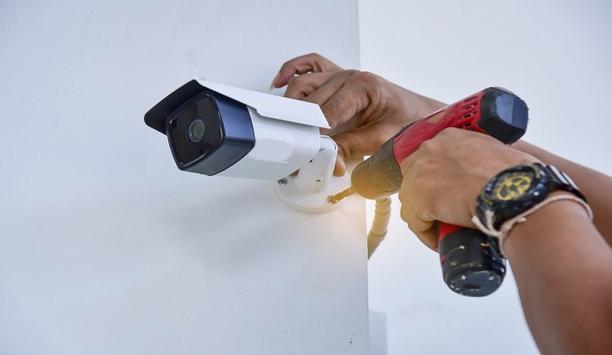
The role of the integrator/installer in the physical security marketplace is shifting as technologies evolve and applications expand. Integrators are being faced with a need to augment their expertise both in a wider range of systems and deeper into the specifics of each increasingly complex technology. At the end of the day, it falls to the integrator/installer to ensure a system performs as promised, however much a consultant or even a manufacturer might be involved in the process. We asked this week’s Expert Panel Roundtable: How is the role of the security installer/integrator changing?

The upcoming ISC West trade show in Las Vegas will offer innumerable networking and learning opportunities for attendees. Manufacturers will take the opportunity to promote their businesses and showcase products and services to a targeted audience. Best of all, the event will be "in person," an advantage we should never again take for granted. We asked this week's Expert Panel Roundtable: What big announcements do you expect at ISC West 2023?
Products