Casino security

Casinos are tasked with monitoring vast gaming floors, cashier cages, and access points. The market for casino security and surveillance demands software and hardware that provide high-definition, multi-angle visual coverage to ensure the integrity of the games and to protect players, staff, and the public. Like other vertical markets for physical security technology, the casino market is undergoing change and facing challenges. We asked our Expert Panel Roundtable: How are new technologies...
On the banks of the Arkansas River in Tulsa, Oklahoma, the River Spirit Casino Resort is the second largest of nine casinos owned by Muscogee Nation Gaming Enterprises where, on any given day, an enormous amount of money exchanges hands - requiring a comprehensive security framework to protect those who are playing with, handling, transferring, and protecting such large sums. From a security posture, it is a complex, cross-site operational challenge that needs to follow a simple set of procedur...

North American Video (NAV), the security integrator with more casino security system installations and gaming partners across the U.S. than any other systems integration firm, returns to the World Game Protection Conference (WGPC) as its Surveillance Technical Integration Sponsor. NAV’s sixth year of sponsorship reinforces the company’s commitment to being a trusted integration partner to gaming surveillance teams. With more than 30 years of expe...

G2E Asia @ the Philippines, a special edition of G2E Asia, officially opens now at the Manila Marriott Hotel, welcoming thousands of industry professionals, including many of the sector’s prominent pioneers. Running from December 10-11, the two-day event showcases the latest trends and offerings in the Philippine gaming and entertainment market. The event features an exhibition of more than 100 brands, many of which have no local presence, a focused conference on the Philippine gaming ind...

New data from IDScan.net has revealed a significant rise in the use of false identity documents, signaling a growing threat to security and compliance in the gaming sector. Derived from an analysis of over 18 million ID scans conducted across casinos in the US, the findings show that the prevalence of ID fraud increased 204% from 2024 to 2025. The spike marks an accelerated trend in fraudulent activity, outpacing the 23% increase recorded between 2023 and 2024. Combinati...
As self-service technology continues to transform customer experiences across industries, NRT Technology, a major provider of cutting-edge payment and guest service solutions for the gaming industry, and IDScan.net, a pioneer in identity verification technology, are proud to announce the launch of a new self-service ID verification kiosk designed for casinos and retail enterprises seeking to automate customer verification. In 30 seconds or less, the newly introduced kiosk redefines how business...
News

Amthal Group Companies has partnered with MERKUR Casino to manage life safety across its growing UK estate. The collaboration is focused on ensuring full compliance with fire safety regulations and maintaining safe environments for customers, colleagues and visitors. Now comprising more than 220 high street slots venues, the relationship with MERKUR Casino is built on close communication, including with its Facilities Management function and Fire Safety Officer (FSO). Maintenance of fire alarm systems Amthal supports each site with maintenance of fire alarm systems and emergency lighting, as well as responsive remedial work where issues are identified. This ensures life safety systems are always maintained in compliance with current legislation. “Our priority is creating safe, welcoming spaces where people can enjoy our gaming facilities with complete confidence,” said Ben Hunter, Head of Construction & Facilities at MERKUR Casino. “In a highly regulated leisure sector, fire safety is non-negotiable and Amthal brings the right level of expertise and responsiveness. They understand our estate, work efficiently and allow us to stay on top of our compliance obligations with minimal disruption.” Integrated security measures Amthal’s team works closely with MERKUR to carry out planned maintenance and respond quickly to remedial needs. Site visits are coordinated around operational schedules, ensuring business continuity while maintaining a consistent standard of safety across the estate. Amthal has also supported MERKUR in the design and maintenance of integrated security measures across several sites. This includes, access control and intrusion detection technologies, all designed to blend with the venue environment and operate seamlessly 24/7. Amthal’s collaborative approach “MERKUR’S sites are consistently busy, which brings real operational pressure when it comes to maintaining compliance,” said Matt Johnson, Strategic Accounts Manager at Amthal Group Companies. “Our role is to alleviate that pressure by responding quickly, understanding each site’s requirements, and making sure life safety systems are always up to date. We’re helping them stay ahead of risk, so they can focus on running their business and delivering a great experience for their guests.” Amthal’s collaborative approach ensures each site benefits from tailored solutions aligned with operational requirements and industry regulations. With a national footprint and flexible service model, it is well-positioned to support MERKUR as its portfolio evolves.
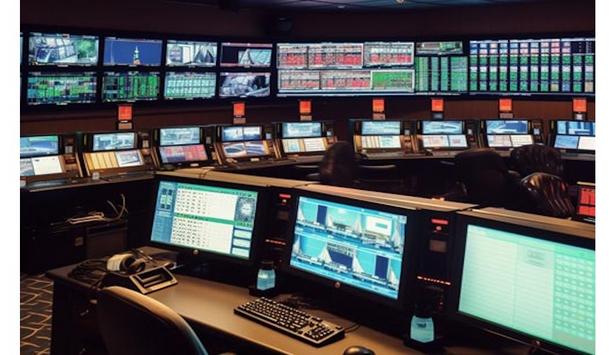
The vibrant and perpetually bustling environment of casinos, with high monetary stakes perpetually exchanging hands, necessitates an impermeable layer of security. To ensure the safety of patrons, staff, and assets, casinos worldwide have long invested in sophisticated casino security systems that amalgamate surveillance, access control, and data protection into a unified safety net. The complexities of safeguarding a space that is simultaneously a leisure hub and a fortress of significant financial turnover illustrate the pivotal role and multifaceted nature of security systems within the casino sphere. Surveillance systems The role of CCTV surveillance in casinos transcends beyond merely monitoring the premises and becomes an integral tool for ensuring fair play, preventing theft, and safeguarding all individuals within the casino’s walls. With a myriad of activities occurring concurrently – from the gaming tables to the slot machines, bars, and performance areas – having a comprehensive and seamlessly integrated surveillance system is paramount. Modern CCTV systems employed within casinos are equipped with advanced functionalities like facial recognition, motion detection, and AI-powered analytic capabilities, which collectively enhance the security team’s ability to monitor, detect, and respond to any discrepancies or threats effectively. Regulations and compliance Casinos, being hubs of substantial financial transactions and gambling activities, are subject to stringent regulations and compliance standards. In the UK, for instance, the Gambling Commission mandates a rigorous set of guidelines aimed at ensuring that gambling activities are conducted fairly and transparently, and that the establishment provides a secure environment for patrons. Compliance with these regulations is not merely a legal obligation but also serves to protect the casino from fraud, theft, and other security threats. This intertwines regulatory adherence with the operational aspects of casino security systems, ensuring that the technologies and protocols implemented serve to uphold legal standards, while also providing robust security coverage. Multifaceted access control In an environment where restricted areas coexist with public gaming floors, establishing a meticulously layered and personalized access control system becomes vital. Employing technologies such as biometric scans, RFID cards, and PIN codes, modern casino security systems ensure that access to sensitive areas, such as cash handling rooms or data centers, is stringently restricted to authorized personnel. The dual objective of safeguarding assets while providing a seamless and unhindered experience for patrons articulates the necessity for a multi-tiered access control system. This ensures that while patrons engage freely in leisure activities, the operational integrity and security of the casino remain uncompromised. Cybersecurity Given the technological integration within modern casinos, cybersecurity emerges as a critical component of overall casino security. Protecting sensitive data, financial transactions, and ensuring the integrity of digital surveillance and access control systems underscores the need for a robust cybersecurity framework. From firewall protections and encryption to regular security audits and data backup protocols, cybersecurity in casinos is an invisible yet pivotal guard, ensuring that the digital aspects of casino security systems remain impervious to breaches and functional in safeguarding both assets and data. Proactive security management The copious amounts of data generated within the realms of casino operations hold invaluable insights that, when harnessed effectively, serve to enhance and fortify security measures proactively. Through integrating data analytics within casino security systems, patterns of behavior, transaction anomalies, and potential threats can be identified before they escalate into tangible issues. For example, data analytics can flag repeated patterns of suspicious betting, irregular card play, or anomalous transaction behaviors that may indicate fraudulent activities. In this regard, the security system transitions from being a reactive setup to one that proactively identifies and mitigates potential risks, ensuring that the environment remains not only secure but also fair and in adherence to gambling ethics and regulations. Customer safety Ensuring that patrons feel secure and are secure is indispensable in maintaining the reputation and operational stability of a casino. Casino security systems, therefore, also play a crucial role in fostering a safe, inclusive, and responsible gambling environment. From ensuring that age and identity verifications are seamlessly integrated into entry protocols to maintaining an ambience that is free from disruptive or harmful behaviors, the security setup acts as a guardian of customer safety and experience. Furthermore, with increasingly stringent regulations around responsible gambling and customer due diligence, having systems that monitor, manage, and enforce these aspects becomes tantamount to both the ethical and legal operational standing of the casino, thereby accentuating that security in casinos is not merely a back-end operation but is intrinsically tied to customer service and experience. Regulatory and ethical standards Through weaving together technologies, analytics, and a customer-centric approach, the casino security systems stand as a linchpin, ensuring that the thrills and excitements of the gambling world are experienced within a framework that is secure, fair, and in stringent adherence to regulatory and ethical standards. The multifaceted and continually evolving nature of these systems underscores not only the technological advancements within the security domain but also reflects the dynamically shifting landscapes of the gambling industry at large.
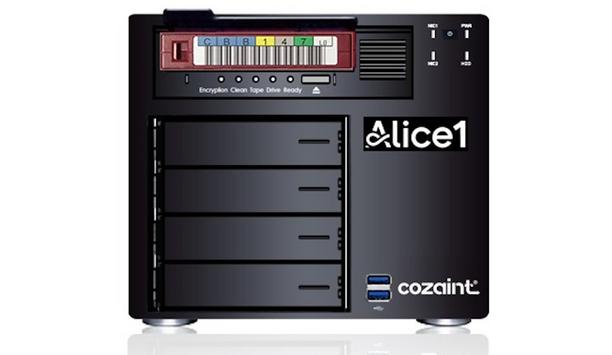
Cozaint, a pioneer in innovative video surveillance solutions, announces the launch of ALICE1™, the first self-contained video surveillance recording and storage system that provides businesses with decades of secure, affordable video retention. By leveraging the proven reliability of Linear Tape Open (LTO) technology with a cloud-based search platform, ALICE1 makes it possible for organizations to store unlimited video footage at a fraction of the cost of traditional hard-drive solutions. The growing storage crisis Surveillance cameras are recording in higher key than ever before, but the cost of retaining video Surveillance cameras are recording in higher resolution than ever before, but the cost of retaining video for the required time by regulators is skyrocketing. For industries such as cannabis, gaming, healthcare, and retail, failing to maintain long-term archives can result in fines, license loss, frivolous litigation, or compliance violations. ALICE1 directly addresses this challenge with a simple, scalable approach–each LTO8 tape costs under $70–can record petabytes of video, and last up to 30 years. Businesses can finally record at the highest resolution, full frame rate, continuously without any additional compression and keep every second, indefinitely. Transforming the economics of video retention Up to 70% cost savings compared to expanding hard drive storage 30+ years of durability per tape, creating a permanent archive of evidence Scalable, pay-as-you-go growth just add a new ~$70 tape as needed Centralized management across multiple locations, ensuring compliance and operational efficiency With ALICE1, multi-location businesses can record video locally, send tapes securely to a central archive, and quickly retrieve footage using Cozaint’s intuitive cloud-based search tool with no manual hunting required. Customer-centered innovation “Businesses shouldn’t have to choose between video quality and compliance,” said Jay Jason Bartlett, CEO of Cozaint. “With ALICE1, we’ve eliminated the endless cycle of costly storage upgrades. For the first time, companies can affordably keep every second of video evidence —for years and years—without compromise.” Video retention requirements ALICE1 is designed to cut expenses by more than half and simplify compliance by making footage retrieval Industry analysts and early evaluations advocate that ALICE1 can deliver dramatic reductions in storage costs while helping organizations feel confident in meeting strict regulatory mandates. In sectors such as cannabis and healthcare -where video retention requirements are both lengthy and costly- ALICE1 is designed to cut expenses by more than half and simplify compliance by making footage retrieval timely. A new standard for video surveillance storage ALICE1 isn’t just about cost: it’s about compliance, confidence, and peace of mind. Cannabis businesses can easily meet strict multi-year retention requirements. Casinos can protect against fraud and disputes with decades of footage. Healthcare facilities can secure patient safety video for as long as required by law. Retailers can maintain continuous, high-resolution footage to combat shrinkage. Businesses can combat relentless litigation from false claims -such as slip and falls- by providing unlimited useable video evidence, not just the typical industry 30-days of highly compressed video By making long-term storage affordable and accessible, ALICE1 sets a new benchmark for how organizations approach video evidence retention. Availability The ALICE1 system is available immediately. Businesses can learn more, request a demo, or speak with a Cozaint representative on the website.
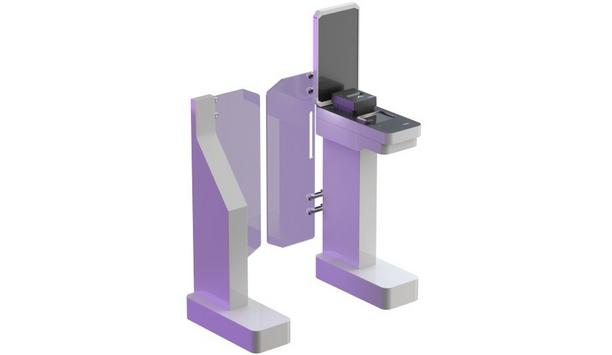
Regula, a global developer of forensic devices and identity verification solutions, introduces a new embedded document reader—the Regula 7223E—designed to streamline ID card checks at self-service kiosks and e-gates. Built specifically for ID-1 format documents, such as driver’s licenses and national ID cards, the compact scanner helps borders and businesses speed up identity checks, reduce user errors, and deliver a better customer experience at scale. Self-service solutions Self-service solutions are the new norm in airports, hotels, casinos, and secure facilities. But verifying ID cards—especially when users insert them incorrectly or need to scan both sides separately—remains a common point of friction. The Regula 7223E solves this problem with: Dual-side scanning in a single step. No wrong-way card insertion. Automatic ejection after scanning. The result: faster lines, fewer errors, and a smoother process for customers and operators alike. The Regula 7223E The Regula 7223E is based on the desktop ID card reader Regula 72X3 The Regula 7223E is based on the desktop ID card reader Regula 72X3, which was released several years ago. The new OEM version responds to new challenges and can be used as a standalone document reader at kiosks, e-gates, or other self-service points. The Regula 7223E also has enhanced capabilities thanks to full compatibility with Regula’s embedded full-page document reader Regula 70X8M, enabling businesses to automatically route different document types—passports or ID cards—to the correct device. The built-in indicator guides users through the process, improving usability and speeding up verification workflows. Regula Document Reader SDK Like all Regula document readers, the 7223E is backed by Regula Document Reader SDK Like all Regula document readers, the 7223E is backed by Regula Document Reader SDK, a comprehensive document verification software solution that enables multiple automated checks (including analyzing MRZ data, barcodes, RFID chips, and visual elements) to prove IDs’ authenticity. It draws on Regula’s proprietary world’s largest identity document template database, which includes over 15,000 templates from 252 countries and territories. Accurate data capture “We designed the Regula 7223E to remove unnecessary friction in ID checks. With this launch, we now offer a complete suite of embedded readers tailored to document type, with shared software tools and synchronized operation,” says Alex Lewanowicz, Director of Hardware Engineering at Regula. “Whether verifying a passport or an ID card, organizations can count on fast, reliable, and accurate data capture and authentication from a single trusted provider.”
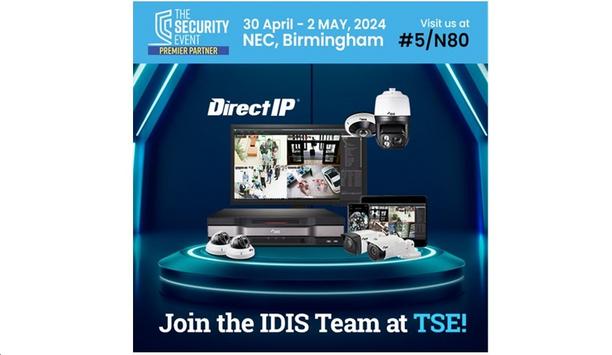
An expanded range of edge AI cameras and a new, highly robust 2MP video intercom will be showcased by IDIS at The Security Event (Birmingham NEC, 30 April – 2 May, stand 5/N80), a range that is part of IDIS’s end-to-end solutions offering which encompasses everything needed for the widest range of video surveillance projects, from cameras, NVRS, AI box devices, and network accessories, to a choice of VMS. IDIS, South Korea’s largest in-country manufacturer of video tech, will lead the field at TSE 2024, demonstrating how it’s easier than ever for customers to benefit from industry-best deep learning video analytics, with applications spanning commercial premises, public spaces, and perimeters. NDAA-compliant CCTVs Plug-and-play and NDAA-compliant IDIS edge AI range will reduce the nuisance of false alarms IDIS has expanded its business in 2023, supporting its integration partners in a wider range of projects, from NDAA-compliant public area CCTV monitoring and video systems for the NHS to powerful but affordable solutions for the education sector, hospitality, casinos, retailers, and small to medium commercial businesses. Highly accurate, plug-and-play, and NDAA-compliant IDIS edge AI range will reduce the nuisance of false alarms, improve the responsiveness of security teams, and support greater efficiency with faster forensic search and investigation thanks to metadata. IDIS Deep Learning Engine Equipped with the up to 98% accurate IDIS Deep Learning Engine on the edge, the nine new models including 2MP, 4MP, and 5MP bullets, domes and turrets, and PTZs deliver accurate and dependable detection and auto-tracking of suspicious individuals and vehicles enabling a rapid response to alerts for intrusion, line cross, and loitering events. The new models feature NIR Lightmaster technology for evidential image capture in the dark, true WDR, H.265, and IDIS Intelligent Codec offering significant storage and bandwidth savings. Video intercom DC-I6212WRX can withstand extreme temperatures and harsh environmental conditions Meanwhile, IDIS’s new 2MP outdoor-ready video intercom (DC-I6212WRX) is the first NEMA 4X, IK10, and IP66-rated product of its kind offered by any video surveillance vendor. Housed in the toughened casing with two color options and a choice of flush and surface mount options, the DC-I6212WRX can withstand extreme temperatures and harsh environmental conditions such as heavy rain, dust, and pollution. It gives systems integrators an affordable yet powerful new access control device and their customers a host of performance benefits, including advanced user functions from the cost- and license-free VMS, IDIS Center, and unmatched durability. High-performance and robust video solutions “IDIS will once again be taking the lead, showcasing high-performance and robust video solutions at The Security Event in Birmingham,” says James Min, Managing Director, IDIS Europe. “Our team is looking forward to meeting systems integrators and end-users and showing how the latest innovations. These include a choice of AI analytics options to meet project requirements of any size, scope, and scale that strengthen security, enhance safety, and deliver business intelligence in retail and hospitality settings while delivering increased operational efficiency to any surveillance solution.”
North American Video (NAV), the security integrator with more casino security system installations and gaming partners across the U.S. than any other systems integration firm, is thrilled to announce its continued support of the World Game Protection Conference (WGPC) 2024 as the exclusive Surveillance Technical Integration Sponsor. The WGPC 2024, taking place February 28-29 at the Tropicana Las Vegas, marks NAV's fourth consecutive year holding the prestigious title. Sponsorship of WGPC 2024 "We view our longstanding sponsorship of the WGPC as an investment in the industry itself and all the people that work tirelessly behind the scenes to ensure a fair and safe gaming environment,” said Laurie Smock, Vice President, NAV. Laurie Smock adds, “We look forward to engaging with these industry professionals firsthand to learn more about their most pressing security needs and how we can tailor our cutting-edge solutions to address these evolving challenges.” Innovative integration solutions BriefCam is a recognized pioneer in video analytics with software solutions that provide valuable insights Having served the gaming market for twenty-nine years, NAV continues to drive the migration from reactive to proactive integrated systems solutions with partners like BriefCam®, who will be featured in NAV’s WGPC booth T2. BriefCam is a recognized pioneer in video analytics with software solutions that provide valuable insights for accelerating investigations, increasing situational awareness, and enhancing operational intelligence. Show attendees will have the opportunity to meet NAV’s team of professionals to discuss new and innovative integration solutions that proactively address emerging threats to gaming facilities. Surveillance and security technology NAV’s primary focus is designing, selling, installing, and servicing enterprise-class video management and security systems that are tailored specifically for casino surveillance applications. NAV holds gaming licenses in multiple geographical and tribal jurisdictions in order to support their long-term tribal and corporate gaming customers who rely on NAV to meet their surveillance and security technology needs. NAV’s technology expertise spans IP video management, AI, access control, networking, point-of-sale, facial recognition, license plate recognition, intrusion detection, emergency call, intercom, and visitor management solutions, all coupled with a premier reputation for outstanding customer service.

Expert commentary

The average business owner or investor has some kind of security precaution in place, especially in the after-hours when there are fewer deterrents to inhibit criminal activity. Security guards, video surveillance systems, motion sensor lights, or even just fake cameras placed around the property are some of the common options people choose. Future of overnight security Smart business owners are starting to realize, however, that some of these traditional security measures are becoming antiquated and no longer cutting. The now and future of overnight security is in remote guarding. Pioneered by companies like Los Angeles-based Elite Interactive Solutions, which was founded back in 2007, remote guarding is revolutionizing the overnight security business. Minimizing criminal activity Remote guarding is fast becoming the most popular choice among commercial end-user property owners Remote guarding utilizes a combination of cutting-edge technology, “digital guards,” highly trained security agents, and local law enforcement if and when necessary to minimize the potential of criminal activity. For those adequately enlightened to its overwhelmingly impressive crime prevention capabilities, remote guarding is fast becoming the most popular choice among commercial end-user property owners to secure and protect their investments. What Is Remote Guarding? Remote guarding is a revolutionary concept and increasing trend in security systems that utilize a combination of methods to effectively analyze potential threats to property. Cameras and/or other monitoring devices running highly advanced algorithmic software are installed in strategic areas or vulnerable places onsite and remotely located security agents are immediately notified of any activity within a designated perimeter of the property. A blend of AI, cybersecurity, and video analytics When properly deployed by an expert provider, the technology stack includes a proprietary blend of video analytics, artificial intelligence, cybersecurity, and more. Done right, “noise” is effectively filtered out, allowing agents to act on legitimate alerts and achieve zero false alarms communicated to first responders. Today, there are a lot of terms and descriptions tossed around about remote guarding, remote video, virtual guarding, etc., but those attributes must be present to represent the true definition of the offering and its many virtues. Realtime situational awareness Many systems have a two-way speaker that allows the security agent to give a verbal warning When specially trained security agents are alerted to trespassers, possible intruders, or other suspicious activity, they analyze the situation in real time and determine the necessary level of action. Many systems have a two-way speaker that allows the security agent to give a verbal warning, known as a voice-down, to the individual(s) that they are being watched. Most perpetrators, often believing the response is emanating directly from security personnel on the property itself rather than from a remote command center, flee immediately. However, if the threat persists, the security agent enlists local law enforcement to get on the scene. Customized remote guarding When properly deployed, remote guarding systems are also customized to specific properties. A team of consultants visits the client’s property to evaluate its vulnerabilities and where to best place cameras and/or other monitoring devices for system efficacy. Traditional Security Shortfalls According to Keith Bushey, a retired commander for the Los Angeles Police Department, there is much frustration between law enforcement officers and potential victims of crime due to the historically unreliable performance of traditional burglar alarm systems and central monitoring stations. He states about 90% of security-related calls are false alarms, a problem that has been well-documented through the years. Onsite challenges When a legitimate emergency does occur, the perpetrators have often already done their damage When a legitimate emergency does occur, the perpetrators have often already done their damage and/or escaped by the time law enforcement arrives. Onsite security guards are not the remedy either as they bring their own set of issues and challenges. Unexpected costs Traditional security systems can also have unexpected costs. The cost is not only in the security guards’ paycheck or the cost of the equipment itself. The cost comes when an actual incident occurs. In worst-case scenarios, the security guard(s) are injured, the business suffers inventory loss, and/or damage is sustained to the property. The medical and other costs for the security guard(s), the loss of inventory, property damage, deployment of law enforcement resources, and possible fallout of legal expenses all add up. Even in the best-case scenario, false alarm expenses incur if law enforcement is dispatched. These, among many others, are some of the primary issues that remote guarding resoundingly answers as a superior alternative. A Bounty of Benefits Remote guarding systems have been proven to cut costs and be more effective than traditional security systems. Even though the monthly monitoring costs of remote guarding are significantly higher than traditional intrusion detection system monitoring, the much higher effectiveness in crime reduction, elimination of false alarms, and augmenting or replacement of manned guards result in a substantially higher return on investment (ROI) to the end user. Easy tracking of threats The security cameras already have their image captured on record, making them easier to track down For example, case studies have demonstrated reduced security costs for clients by 60%, on average. These reductions have come from the costs of security staff, inventory, or property loss, plus saving money on insurance premiums and deductibles. The nature of remote guarding reduces the risk and costs of false alarms, with professional security agents able to determine an actual threat before law enforcement is called. In a rare instance when a perpetrator escapes before law enforcement arrives or can detain the individual(s), the security cameras already have their image captured on record, making them easier to track down and identify. Reduction of false alarms The significant reduction in false alarms is greatly appreciated by law enforcement, as it allows them to focus on real emergencies or crises. Better relationships are also developed between clients and law enforcement, as remote guarding systems are highly reliable in providing accurate and real-time information to officers as they approach the scene. In short, it assists law enforcement in doing their job more effectively, as well as more safely thanks to having eyewitness information before engaging in an active crime scene. Partnership When you combine the decreased cost with the increased efficiency and success rate, it is easy to see why many commercial end-user property owners across the country are making the shift to remote guarding. It’s also an outstanding opportunity for professional security dealers and integrators to partner with a remote guarding services provider to bring a superior solution to their end customers and pick up a recurring monthly revenue stream in the process.

It’s no secret that the data security sector is constantly changing. It has an annual CGR of about 12.3%. Future trends in data security Much of this has to do with the rise of cybercrime in recent years, with reports showing that cyberattacks happen as often as every 39 seconds. To combat the growing rate of cybercrime, data security has been on the rise. As we journey further into this era, it becomes evident that a spectrum of significant trends is molding the future of data security. This exploration delves into a selection of these trends, unraveling their importance and the potential implications they carry 1. AI security tools will increase Artificial Intelligence is also being used in the development of smart attacks and malware The introduction of Artificial Intelligence in the data security industry brought significant changes, especially in cybersecurity. AI has been the golden standard for face detection, natural language processing, automated threat detection, and automated security systems. Additionally, Artificial Intelligence is also being used in the development of smart attacks and malware, bypassing even the latest security protocols in data control. And as time progresses, AI security tools will flourish and dominate the scene. Let’s take a more in-depth look at three of the top AI security tools. Targeted attack analysis tool Manufacturers utilize targeted attack analysis tools to uncover targeted and stealthy attacks. Artificial Intelligence can be applied to the program’s capabilities, processes, and knowledge. For instance, Symantec launched this tool to combat the Dragon 2.0 attack in 2022. The phishing attack reprimanded multiple energy companies while trying to gain access to their operational networks. Targeted Attack Analysis Tools can analyze incidents and look for similarities from previous situations. They also help detect suspicious activities and collect all the necessary data to determine whether a specific action is malicious. Intercept X tool Results from the Intercept X Tool feature high accuracy and a low false positive rate Sophos, a British security hardware and software company, launched the Intercept X Tool. It engages a neural network that records and analyses data like a human brain. Sophos’ Intercept X Tool can extract features from a single file and perform a deep analysis. It detects malicious activities within 20 milliseconds. Plus, it’s also trained to work on bi-directional sharing and real-world feedback of threat intelligence. Results from the Intercept X Tool feature high accuracy and a low false positive rate. IBM Watson Technology IBM’s QRadar Advisor uses IBM Watson Technology, a unique AI tool for fighting cyber attacks. Artificial Intelligence can auto-investigate activities and indicators for potential exploitation or compromise. With cognitive reasoning, IBM Watson Technology can present critical insights to accelerate the response cycle. Security analysts can utilize this technology to search for threat incidents, reducing the risk of letting them fly under the radar. 2. Blockchain as a security solution It guarantees no points of failure or hackable entrances that can expose datasets inside the system Blockchain is a type of distributed ledger technology (DLT) that aims to establish trust within an untrusting ecosystem. Today it’s one of the most robust cybersecurity technologies in the industry. Blockchain utilizes a decentralized ledger system, but your team members can still gain access to transparent information in the cloud. Members can also record, pass along, and view necessary transactional data in the blockchain. The entire blockchain process maintains data integrity within the system while establishing trust among team members. It guarantees no points of failure or hackable entrances that can expose datasets inside the system. Cybersecurity, biometrics Cybersecurity primarily benefits from these features because blockchain can create a secure and robust wall between data and hackers. On top of that, blockchain ledgers can include biometrics like fingerprints and retina scans. These prevent hackers from accessing any private data. Because blockchain is decentralized, it also limits hackable data. Together with the technology’s record-keeping system, each node is provided insight into data manipulation exposing real-time cybercrime attempts. 3. Increased and widened access control Without access control, expect your company to be open to security issues, including theft, data loss, and breach of data Access control is critical in data security. More than a valuable security tool, business leaders can use access control to regulate people accessing any given resource. A company with an IT security setting can control who has the liberty to edit certain files. One of the primary goals of access control is to minimize threats or attacks to organizations and businesses to keep people and data secure. Without access control, expect your company to be open to security issues, including theft, data loss, and breach of data protection laws. Benefits The benefits of increased and widened access control include: Identifying who can access and control your data at specific time intervals. Protecting data from overwriting, accidental deletion, and malicious intent. User permissions that can be readily changed. Compliance and regulation with data privacy laws. Central management of access to data through a reporting portal or a dashboard. Multi-factor authentication Access control comes in various types and systems, so it’s critical to know the features of what you’re looking for. The most common type is multi-factor authentication or MFA. It involves multiple steps before logging in, requiring the user to enter other relevant information besides the password. Some other examples of information include biometrics, answering a security question, or entering a code sent to the user’s email address. Two-factor authentication, role-based access control Two-factor authentication further prevents unauthorized entries that can result in unnecessary data possession Two-factor authentication further prevents unauthorized entries that can result in unnecessary data possession. Another type of access control is role-based access control. In this setup, only one individual can set up access guidelines and grant permissions to specific team members within an organization. 4. Greater use of the zero-trust security model The zero-trust security model is a framework that requires every user within and outside the organization to undergo authentication, authorization, and validation. These are all essential to ensure proper security configuration before access is granted to the company’s applications and data. A zero-trust model assumes that anyone can cause data breaches and that a traditional network edge is not taken into effect. Moreover, it addresses the following modern-day challenges: Hybrid cloud environments. Security of remote workers. Ransomware threats. This framework utilizes the combination of multiple advanced technologies, including: A risk-based multi-factor authentication. Endpoint security. Identity protection. Cloud workload technology. The zero-trust model uses all these innovative tools for system identification, user verification, access consideration, and system security maintenance. Constant validation and monitoring Enforcing strict policies and compliance with data privacy laws are also essential Additionally, it also considers data encryption, email security, and asset verification before establishing connections with applications. The architecture of a zero-trust framework requires constant validation and monitoring of the users and the devices they are using. Enforcing strict policies and compliance with data privacy laws are also essential. More importantly, the zero trust architecture requires all organizations to be aware of all their available services and accounts to gain complete control of data handling and manipulation. 5. Increased privacy regulations Privacy regulations and policies guide organizations in proper data control, handling, and security. These policies guide organizations in proper data control, handling, and security. As a responsible business owner, you must comply with these regulations to avoid legal issues. With cybersecurity attacks becoming common, expect increased and stricter privacy regulations to be released in the next few years. While current policies are still taken into effect, various modifications and adjustments will occur to compete with the rising numbers of data breaches, thefts, data loss, and more. California Privacy Rights Act (CPRA) Currently, the California Privacy Rights Act (CPRA) is the most comprehensive legislation on state data privacy. It only started to take effect on January 1, 2023. The CPRA introduces the following principles: Broad individual consumer rights. Significant duties of people who need to collect sensitive and personal information. Additional definitions of data privacy and security. An individual’s duties include releasing information about data collection to concerned data subjects and proper access, correction, and deletion of information. Final thoughts 2023 is a big year for data security. Trends such as increased adoption of zero-trust policies, a greater reliance on AI security tools, and the implementation of blockchain as a security solution are all things we expect to see shortly. Staying up-to-date with these trends is important for keeping your business current and ensuring that you’re adhering to new and changing regulations. Doing so can give you an edge over the competition and keep you out of legal hot water.

Open platform video technology software is more than just a product; it's a tool that helps customers achieve their desired business outcomes. Safety, round-the-clock security, and increased operational efficiencies are now the norm due to video technology. Responsible Technology Despite humanity’s impressive technological advances, we also recognize the immense responsibility that comes with technological innovation. It's not enough to focus solely on the positive impact video technology can make, we must also be vigilant in identifying and addressing any potential negative consequences it can have on society and its citizens. This is the role of Responsible Technology. Data privacy We want to use all the good things that technology innovation brings, whether it be video, AI, ML, facial recognition, etc. We want to use all the good things that technology innovation brings, whether it be video, Artificial Intelligence, machine learning, facial recognition, etc. to serve people in societies in a responsible way. That means making sure that we regulate technology in a way that respects human rights and data privacy. Addressing the challenges The challenge is, that rather often technology leaders and policymakers either have conflicting interests or collaborate too late. To be responsible, business leaders must support their societies and policymakers in making regulations in the interest of the common good. At Milestone Systems, we are actively looking at how we develop our software responsibly, how our partners responsibly sell our software, and very importantly, how our customers use our software with a responsible mindset. Ensuring good corporate governance As a long-time partner within the security industry, we’re celebrating our 25th Anniversary this year, we are supporting the regulation of video technology for the good of society. However, it of course needs to strike the fine line between the right legislation and not hindering innovation. UNGP The UNGP is the most authoritative and widely adopted set of principles for responsible business At Milestone Systems, we want to play an active role in this and that is why we have pledged our support to the UN's Guiding Principles on Business and Human Rights (UNGP). The UNGP is the most authoritative and widely adopted set of principles for responsible business. The principles call on governments and companies to identify, prevent, mitigate, and remedy actual and potential human rights abuses. Since its launch in 2011, the UNGPs have received wide support from states, civil society organizations, and the private sector, making them the key global foundation for business and human rights. Protect, respect, and remedy Through this commitment, we are taking steps to ensure good corporate governance and ethical standards in the development of our technology. We're generating mechanisms to prevent misuse and we are building educational practices internally. Based on the UNGP’s three pillars: protect, respect, and remedy, we are developing a set of Responsible Technology Principles and procedures for the development, selling, and use of our products. Need for video technology regulation In addition, we are currently evaluating all the various technology areas in which our video software can be used, such as with third-party integrations that utilize e.g., facial recognition. We are mapping out the advantages and disadvantages for societies. One key area of concern is how local authorities are mapping and storing data about us as individuals. This is the reason why we're inviting more legislation to regulate video technology rather than less. Engaging With policymakers We are meeting ministers and trade organizations as we believe this needs to be a joint effort where all parties are heard We are proactively reaching out to and connecting with policymakers and other relevant stakeholders to discuss our approach to and take on Responsible Technology and encouraging the political landscape to work with us around regulation and legislation. We are meeting ministers and trade organizations as we believe this needs to be a joint effort where all parties are heard and where we can openly weigh the advantages and the challenges of technology, whether it is video, facial recognition, machine learning, Artificial Intelligence, or other technologies. Striking a balance Implementing Responsible Technology is a journey, not a destination. To give it the focus needed, we have created a dedicated team to implement this initiative at Milestone Systems. At the same time, we are reaching out to the political landscape to discuss how we balance regulation without hindering innovation. Video technology used ethically We are a global company with worldwide operations, and we are having dialogues about how video technology is being used and how we can have meaningful talks about what regulation and legislation should look like. However, we don’t necessarily want to limit access to the technology itself. Facial recognition We encourage the policymakers to engage with us in the industry so that together we can strike the fine line Facial recognition is a great example of this. The EU is considering making live facial recognition illegal. That would be a huge inhibitor of proactive terrorism prevention. For example, if a well-known terrorist is walking down the street and is being mapped out against Interpol’s most wanted list, the authorities should be able to react. However, if a person walking down the street but is not mapped out or does not have any priors then the city should not be allowed to store the data of that individual’s whereabouts at that point in time. This potential legislation is concerning to me as a citizen of Europe. Instead, we encourage the policymakers to engage with us in the industry so that together we can strike the fine line for the better good of all of us. Maintaining high ethical standards We have a firm understanding and expectation that ethical standards are a huge driver in the security business. Citizens are not in favor of technology companies abusing data about them and monetizing from things that they have not opted in to do. Soon, I think we will see many more companies and governments leaning toward suppliers that do have a responsible mindset and high ethical standards for partnerships. Ethical practices Our journey toward Responsible Technology is an ongoing process, and we must remain steadfast in our commitment to ethical practices and the protection of human rights. We recognize that the rapidly changing technological landscape continually presents new challenges and opportunities. For this reason, we continuously look into how we can improve, for example, our end-user license agreements to avoid potential human rights abuses. An industry responsibility Security companies must prioritize careful planning and preparation, including developing policies and procedures For Responsible Technology to truly become a reality, compliance with international human rights laws and data privacy regulations is critical. Security companies must prioritize careful planning and preparation, including developing policies and procedures that govern the ethical use of video surveillance systems. The secure and ethical community In today's technology environment where deep integrations, machine learning, and artificial intelligence are becoming the norm, Responsible Technology is more relevant than ever. The security industry has a unique opportunity to set an example for other sectors by promoting a secure and ethical development community that prioritizes Responsible Technology, trustworthy data collection, and the protection of human rights. We must all rise to this challenge and embrace our role as ethical leaders for the greater good of both people and societies.
Security beat

Casinos offer several attractive applications for LiDAR, including security and business intelligence. Using laser sensors, the technology can replace the use of surveillance cameras. For casino security, LiDAR can track player movement and provides complete coverage and accuracy that have not been achievable by surveillance cameras. Massive coverage areas can save on costs of sensor deployment versus other technologies. LiDAR and its applications LiDAR is a method for determining ranges by targeting an object with a laser and measuring the time for the reflected light to return to the receiver. LiDAR sensors emit pulsed light waves into a surrounding environment, and the pulses bounce off surrounding objects and return to the sensor. The sensor uses the time it took for each pulse to return to the sensor to calculate the distance it traveled. LiDAR is commonly used in markets such as robotics, terrestrial mapping, autonomous vehicles, and Industrial IoT (Internet of Things). Today, casinos offer a lucrative emerging market for technology. LiDAR tracking enables casino operators to understand the guest path, journey, queue time, count Crowd management LiDAR can contribute to a casino’s guest experience by counting people at doors or in sections of the gaming floor to provide intelligence about crowd size to track occupancy. LiDAR tracking enables casino operators to understand the guest path, journey, queue time, count, and other statistical information by comparing previous time frames to current occupancy levels. This approach allows them to understand digital media advertisement and experience placement. Aid in advertisement “Inside a casino, sensors are deployed like surveillance cameras,” says Gerald Becker, VP of Market Development & Alliances, Quanergy. “But instead of security, they are used to provide anonymous tracking of all people walking through the gaming floor. We can get centimeter-level accuracy of location, direction, and speed of the guests. With this data, we can access the guest journey from the path, dwell count, and several other analytics that provides intelligence to operations and marketing to make better decisions on product placement or advertisement.” Quanergy Quanergy is a U.S.-based company that manufactures its hardware in the USA and develops its 3D perception software in-house. Quanergy has various integrations to third-party technology platforms such as video management systems (VMSs) in security and analytics for operational and business intelligence. Perimeter security Sensors can be mounted to a hotel to monitor for potential objects being thrown off the hotel LiDAR is deployed in both exterior and interior applications. For the exterior of a casino or resort, sensors can be mounted to a hotel to monitor for potential objects being thrown off the hotel, or people in areas where they should not be. For example, they can sense and prevent entrance to rooftops or private areas that are not open to the public. Some clients install sensors throughout the perimeter of private property to safeguard executives and/or a VIP’s place of residence. Flow tracking and queuing capabilities Tracking crowd size can initiate digital signage or other digital experiences throughout the property to route guests to other destinations at the property. It can also help with queue analysis at the reservation/check-in desk or other areas where guests line up to tell operations to open another line to maintain the flow of guests passing. Flow tracking and queuing capabilities help casino operators to understand which games groups of customers frequent and allow for the optimization of customer routing for increased interaction and playtime on the casino floor, quickly impacting the financial performance and return of the casino. No privacy concerns LiDAR provides a point cloud; its millions of little points in a 3D space create the silhouettes of moving or fixed objects The main hurdle right now is market adoption. LiDAR is an emerging technology that is not so widely known for these new use cases, says Becker. “It will take a little bit of time to educate the market on the vast capabilities that can now be realized in 3D beyond traditional IoT sensors that are available now,” he comments. One benefit of LiDAR is that it poses no risk of personally identifiable information (PII) and therefore no privacy concerns. No PII is captured with the technology. Cameras can capture images and transmit them over the network to other applications. However, LiDAR provides a point cloud; its millions of little points in a 3D space create the silhouettes of moving or fixed objects. IoT security strategy There is a lot of interest from surveillance and security to include marketing and operations, says Becker. “LiDAR will become a part of the IoT security strategy for countless casinos soon. It will be common practice to see LiDAR sensors deployed to augment existing security systems and provide more coverage.” Also, the intelligence gained with the accuracy of tracking guests anonymously provides peace of mind to the visitors that they are not being singled out or uniquely tracked but provides valuable data to the casinos that they have not been able to capture before. “This will help them maximize their operations and strategy for years to come,” says Becker.

Knightscope’s long-term mission is to “make America the safest country in the world,” says William Santana Li, Chairman and CEO. “The company was started six years ago as we had grown tired and horrified by the ongoing violence in our country and decided to do something about it.” But are security robots the solution to crime and violence in the United States? “There are 2+ million law enforcement and security professionals trying to secure 328+ million people across the 50 states,” Mr. Li says. “The math just doesn’t work, which is why our country pays $1+ trillion in negative economic impact annually – a hidden tax we all pay in blood, tears and treasure.” Robots provide professionals with new tools. “We make really smart eyes and ears that operate 24/7/365 for an affordable price,” says Mr. Li. “We have actually operated more than 700,000 hours in the real world, both outdoors and indoors, across 15 states and are now operating across five time zones – fully autonomous without any human intervention.” Utilizing Robotics And AI AI helps Knightscope robots interact better with humans and perform activities like identifying peopleKnightscope is a security technology company that utilizes self-driving technology, robotics and artificial intelligence to provide security professionals additional eyes and ears to do their jobs much more effectively – as well as provide a consistent around-the-clock physical deterrence to help minimize negative behavior. Knightscope says its K1, K3 and K5 security robots, and accompanying user interface, the Knightscope Security Operations Center (KSOC), continue to make significant contributions to the safety of its client base. Artificial intelligence helps Knightscope robots interact better with humans and perform activities like identifying people, looking up license plates, detecting rogue wireless devices, having a machine-to-human dialog and, in the future, detecting dangerous objects in a scene automatically. “Our long-term plan is to have the machines be able to see, feel, hear and smell, so advances in sensor capabilities, efforts in sensor fusion, and the future with 5G capabilities will make for profound advances,” says Mr. Li. Facial Recognition Software At ISC West 2019 was Knightscope’s fourth time exhibiting at ISC West, and they have also exhibited at GSX/ASIS, ISC East, numerous other trade shows, and have hosted some of their own. Mr. Li has seen the reaction to security robots evolve over the years. People are realizing that the technology is not science fiction but science fact and looking to see how it can be an integral part of their respective security programs “At first, it was typically ‘what is that?’ or ‘what does it do?’ But the last 12 to 18 months have been very different. There has been much more meaningful, implementation-focused dialog, feedback, requests for new features, etc. Now folks are realizing that our technology is not science fiction but science fact and looking to see how it can be an integral part of their respective security programs.” Their ISC West presence this year highlighted facial recognition software that utilizes deep learning to detect, analyze and compare faces. Pechanga Resort Casino in Temecula, Calif., an existing Knightscope customer, is using the beta format on its K1 security robot platform. Additional Benefits Of Using Robots Knightscope has raised over $40 million to develop and deploy its technology and is backed by more than 6,000 family offices, accelerators, funds, private investors and four major corporations, says Mr. Li. As the machines get smarter and more capable over time – the number of applications will become endless" Robots also provide additional benefits beyond security, says Mr. Li, such as branding, community relations and public relations opportunities for clients. “In some cases, our clients have utilized our Concierge feature to allow for human-to-machine customer service interactions,” he says. “We have also been able to showcase and inspire STEM (science, technology, engineering and math) students with practical applications of technology for the good of society. And robot selfies have certainly become a thing.” Endless Number Of Applications In terms of vertical markets, in the near term, Knightscope has seen positive scaling and growth on corporate campuses and at logistics facilities, manufacturing plants, hospitals, casinos, commercial real estate and malls. “As the machines get smarter and more capable over time – the number of applications will become endless,” says Mr. Li. They currently drop new software code every two weeks and new hardware typically a couple of times a year. “In my opinion, it is ill advised for early stage technology companies to utilize B2G (business-to-government) sales as the initial go-to-market strategy,” says Mr. Li. “For Knightscope we have been primarily focused on B2B (business-to-business) sales and actually until 2017 were geographically constrained to California only. What we are doing is technologically extremely difficult as these are effectively self-driving cars. Additionally, despite the never-ending international interest, we are laser focused on the United States.”
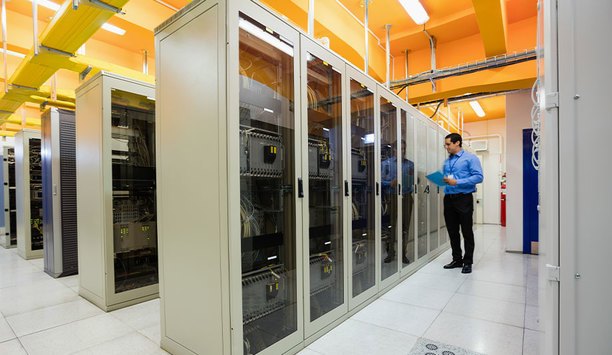
A hyperconverged infrastructure is a software-defined environment in which various elements of a physical security system – computing, storage and networking – are combined together and run more efficiently on fewer hardware devices. Rather than each element of a system being represented by a physical hardware device, those elements are combined on a cluster of hardware devices. Hypervisor software separates a computer's operating system and applications from the underlying physical hardware. The elements continue to function as before, and software keeps them separated virtually, while also enabling the system to run more economically on less hardware. Virtualization Within Hyperconverged Systems Hypervisor software separates a computer's operating system and applications from the underlying physical hardware Software companies such as VMWare, Microsoft Hyper-V and Nutanix provide virtualization software that enables hyperconverged systems in the IT world. However, bringing hyperconverged systems to the world of video surveillance requires special handling, and security integrators may not be aware that hyperconverged software from the IT market does not work seamlessly with video data. Specifically, these hypervisor software systems have latency problems that are not compatible with video. Therefore, hyperconverged software systems must be adapted to meet video’s needs. Companies working to bring hyperconverged systems to the video market are taking proper measures to ensure that those systems deliver on expectations of security integrators and end users while also providing economic and operational advantages of hyperconverged systems. Why A Virtual Machine Can Aid Your Server Solution A hyperconverged system can transition a stack of 10 or more application servers down to three servers, with all the applications still virtually separated on fewer machines. Each server is used to 100 percent of its capacity, which is more efficient. Companies working to bring hyperconverged systems to the video market are taking proper measures to ensure that those systems deliver on expectations Both operating and maintenance expenses are lower, and if more computing resources are needed for a virtual machine, the software interface enables an end user to allow more processing power, RAM or disk space to that application. Less servers equate to less equipment costs, and also less costs for rack space, cooling and other related expenses. When a video system is working on a hyperconverged cluster, what happens if there is a hardware failure? The virtual system gets moved to a cluster that is working, but there might be a 30-second gap in video, which would not be acceptable for a critical application. All video must therefore be saved in two places. Virtualized Server Stacks From BCDVideo BCDVideo has entered into an engineering partnership with Scale Computing to develop an optimized hypervisor based on Scale Computing’s HC3 software that is also efficient for writing video.Less servers equate to less equipment costs, and also less costs for rack space, cooling and other related expenses Virtualization in the physical security market can create traffic patterns that are unlike traditional IT, and changes need to be implemented to accommodate for that. To avoid a “bottleneck” that can occur during the virtualization process, the virtual machine and the underlying physical hardware must be optimized to account for the virtualization process. “Performance and high-availability are critical in the video surveillance market and not all HCI solutions will adapt to video data,” said Dan Pierce, VP of Strategic Sales at Scale Computing. “With Scale Computing’s HC3 platform and BCDVideo’s ‘purpose built’ approach, customers will benefit from a solution that’s adapted to meet industry wide requirements while simplifying the management and maintenance of their infrastructure.” Hyperconverged infrastructure will become more and more prevalent in the video market, especially for large systems that have high camera counts and longer video retention times. Hyperconverged systems offer a more efficient use of resources and save costs because hardware is more fully utilised. Previous problems of using hyperconverged systems for video have been solved, which paves the way for much more widespread deployment. Over time, we should expect hyperconverged system to become more common for larger video installations, such as gaming, sports arenas, large cities, universities, corporate campuses and airports. The key to success is applying knowledge both of the needs of video systems and of how hyperconverged systems can be adapted to meet those needs.
Case studies

Casinos are cash-based industries that rely on physical controls and strict documentation procedures in order to safeguard large amounts of cash and chips. One of the most critical areas of casino security where these controls come into play is key management. Physical keys are used for access to virtually all of the most sensitive and highly secured areas of the casino, including counting rooms and drop boxes. By maintaining tight control of keys with sophisticated key control and management systems, the casino can minimize incidents of loss and fraud for these and other sensitive areas. Electronic key control systems Genesis Resource, Inc., a provider of Morse Watchmans KeyWatcher® electronic key control systems to the casino industry, has firsthand experience in understanding how important key control systems are to a casino’s security operation. They know where and why key control systems need to be placed; they know how they are used and who uses them; and they stay aware of the various regulatory and licensing commission regulations that must be met. Their clients include most of the casinos in Arizona, Nevada and New Mexico. “While all markets – including corrections, hospitals, universities, and others – will have unique requirements regarding key control and management, the gaming industry is perhaps the most regulated and has the most number of in-house areas requiring key control,” states Genesis Resource Technical Manager Ken Olson. “Morse Watchmans addresses these requirements with the most robust and complete key control feature set available. In fact, Morse not only sets the bar for features, they are also, in my opinion, the gold standard for usability, support and system reliability.” Sensitive drop box keys Genesis established their business in the gaming market with the casino’s slot departments, which led to controlling access to sensitive drop box keys, counting room keys, and drop box cabinet keys. With a Morse Watchmans solution in place, these keys and key sets are secured in a KeyWatcher key control cabinet that will not open until the system verifies that the user has permission for the specific key(s) requested. All other key sets remain locked in place. Since key sets for counting rooms and drop boxes are highly sensitive, gaming regulations generally require the three man rule to access key sets – one person each from three different departments is required to log in. Typically the three individuals would include a drop team member, a cage cashier and security officer. Often the KeyWatcher is either located in the cage mantrap or chip bank area, with a secondary combination remote keypad and display console located inside the cage to allow cashiers to log in without leaving their workstation. Manual log systems The Morse Watchmans system is programmable to recognize specific keys or key sets and only open the cabinet door and release them once the three required logins are complete and the credentials verified. As a user convenience, KeyWatcher will prompt for the additional logins only once, regardless of how many sets were initially requested. A non-disputable key control log is maintained to substantiate control over the keys. One of many reasons KeyWatchers are so widely accepted is because they exceed the level of security offered by manual log systems. Unscheduled drop sets According to Mr. Olson, returning highly sensitive keys is also tightly regulated with multiple levels of security required. He says, “The KeyWatcher system is configurable to meet these gaming regulations. For example, “Full Secure” requires the same users who removed a key to return the key, while “Department Secure” would only require the first user’s credentials to match exactly while the two other users would have to match by department.” Access to table game drop box release keys is limited to the specific employees who are authorized to remove the table game drop boxes from the tables. A different set of employees would have access to the unscheduled drop sets, and the KeyWatcher system can be configured to reinforce this safety procedure. Individuals are precluded from having access to table game drop box content keys at the same time they have the table game drop box release keys out. Overcoming any language barriers In emergency situations such as machine jam, customer dispute, machine relocation or maintenance, where key sets must be accessed outside of regularly scheduled times, the KeyWatcher cabinet can be pre-programmed with “notes”. Before a key is released, the system will prompt the user to select a predefined note plus enter a freehand comment indicating the affected machine and table numbers. Outside of special key access or emergency situations, it is useful for certain keys or key sets to be immediately available to their authorized users. With the KeyWatcher instant key release feature, the user only needs to input their credentials, and the system knows whether they already have their specific keys or not. If not, the system unlocks and their keys are immediately available to them. Returning keys is just as fast and easy with KeyWatcher. This saves time, reduces training and helps to overcome any language barriers. Computerised key security system Another convenient feature of the KeyWatcher utilised frequently by casinos/resorts is key cycling. Casino/resort staff including housekeepers and slot floor attendants can be organized into “groups” by the system administrator. For these individuals or groups, the hotel and casino has multiples of the same respective key sets available. The KeyWatcher can be programmed to release the next available set to each authorized user from a group, which cycles through the sets so that each gets equal usage. Gaming regulations require a number of different types of audits on a regular basis to assure the casino is in full compliance with regulations. For example, for employees signing the table game drop box keys in or out, Nevada Gaming requirements call for maintenance of separate reports indicating the date, time, table game number, reason for access, and signature or electronic signature. An “electronic signature” includes a unique employee PIN or card, or employee biometric identification validated and recorded through a computerised key security system. Robust reporting system Morse Watchmans key management systems feature software that enables the user to set up all these and many other types of custom reports, which can run and be delivered automatically to management on a regular basis. The robust reporting system will also greatly assist the casino in tracking and improving processes, assure employee honesty and minimize security risks. Auditors can be given access only to print reports, without access to key sets. Additionally, robust SMS text messaging and emailing allows for the key set user or select management to automatically receive alerts when specified key sets are removed and/or returned, along with select alarm notifications. Common user database With the advent of network systems and technology, Genesis reports a greater demand from casinos for key control systems that operate as an enterprise client-server application with a common user database. Since each system includes an unlimited site license, there are no site licensing fees to be concerned with. A common user database helps to ensure an employee’s HR-issued ID is recognized across all systems in an organization, which allows for auditing transactions and history even after an employee’s departure. This also makes it possible for the slots, cage and security departments each to have their own system, with users part of the same common user database but different access for each system. Access control system Using employee IDs also opens the door for optional 3rd party integration with existing card access control systems. For instance, when new employees are added, or terminated employees are removed from the access control system, they are automatically added or terminated in the KeyWatcher system. This integration can also pay dividends in terms of security policies and/or procedures as well as compliance with government agencies. Mr. Olson says, “Synchronizing the same information across multiple KeyWatchers happens automatically behind the scenes with the KeyWatcher software. It tremendously simplifies keeping all KeyWatchers updated with current user key access and enrollment information. Profiles (which include user access level, key set permissions, time durations, department and more) can be created and assigned to each user and any changes to the profile are cascaded down to the users assigned to it.” Local key cabinet Enterprise systems are highly scalable and key control cabinets can be distributed across the casino’s network to help relieve usage congestion. For example, at the start of a morning shift upwards of 500 housekeeping staff will need to access keys or key sets. By locating KeyWatcher cabinets adjacent to the areas where the keys will be used, bottlenecks in accessing/returning the keys can be avoided. In another example, KeyWatcher cabinets can be installed at an employee entrance/exit door. When an employee leaves the building temporarily for a scheduled break, keys can be returned to the local key cabinet and then accessed again when the employee returns from the break. Enhancing service offerings Casinos and other gaming establishments are 24/7 operations and as such need 24/7 support. However, quality of support varies from manufacturer to manufacturer and from dealer to dealer. Telephone support from Morse Watchmans is included with the system and Genesis supplements that support with extended warranties, after hours phone support, training and a variety of service/ maintenance contracts. To further enhance their service offerings, Morse has offered free firmware and software updates for over a decade. “Too often, customers find the product works and the service doesn’t or the service works and the product doesn’t,” said Mr. Olson. “Together with Morse, we offer the casino the best of both.”
The Tohono O’odham Nation is one of the largest tribes in Arizona, with more than 31,000 enrolled members. It owns and operates four Desert Diamond Casinos located in Glendale, Tucson, Sahuarita, and Why, Arizona. To stay competitive, the Nation continually seeks to improve their properties with new gaming and hospitality amenities. They also invest in the physical security infrastructure, including key control and key management from Morse Watchmans. Diamond Casinos needs to comply with a variety of State and tribal regulations pertaining to control and management of all the keys for their facilities. Key control systems When the Nation learned about all the features and capabilities of the new Morse Watchmans KeyWatcher Touch, they decided to upgrade to new key control systems for all locations, replacing the existing earlier generation KeyWatcher systems. This investment allows the Nation to more quickly and easily comply with State and tribal regulations for management of facility keys. Compliance requires the Nation to record all key activity transactions including time, date, and authorized user. The KeyWatcher Touch system automatically records all these transactions and provides a “notes” feature for users to indicate why unscheduled drops may have occurred. Usage reports can also be generated as needed. To meet gaming regulations that require a three-man rule to access sensitive or restricted key sets, the KeyWatcher Touch is programmable to recognize the keys or key sets and open the cabinet door and release them only when the three required logins are complete and the credentials verified. Access control system For added convenience, the KeyWatcher Touch system is configured to use the same employee proximity ID badge that is used with the Casino’s access control system. The KeyWatcher Touch cabinet will not open until the system verifies that the user has permission for the specific key or group requested. A time restriction feature helps management keep tighter control on sensitive keys because it can be set to notify security when a key is overdue. The KeyWatcher Touch upgrade allows Desert Diamond Casino management to have centralized control of the entire key control system. To simplify user key access, enrolling information, and updates, the KeyWatcher Touch allows synchronization of the same information across all key control cabinets. Profiles can be created and assigned to each user and any changes to the profile cascade down to the users assigned to it. The move to a common user database ensures system integrity and even allows auditing transactions and history after an employee’s departure. Other innovative features Because the system is integrated with the casinos’ business and communications network, email and SMS texts can be sent automatically to authorized individuals. Locating keys or determining when a key is scheduled to be returned is faster and easier with the new features of the KeyWatcher Touch. Other innovative features of the KeyWatcher Touch ideal for casino applications include the time-savings KeyAnywhere capability that allows the return of a key to any KeyWatcher Touch system within the enterprise, and the KeyFind feature that enables users to quickly locate which KeyWatcher Touch a specific key is in or determine who has it out.

Elegance, design and entertainment – that’s what the new Grand Sapphire Resort & Casino in Iskele, in the east of the Turkish Republic of Northern Cyprus (TRNC), stands for. This exclusive hotel complex, located directly on the beach of the Karpaz Peninsula, offers guests top-level service, stunning architecture and a very special highlight: a casino with 42 live game tables and over 300 slot machines across a 2,700 m² gaming area. To ensure that guests not only have an impressive but also a safe experience, Grand Sapphire relies on a customized video surveillance solution from Dallmeier. The “Made in Germany” video technology ensures around-the-clock security and efficient processes – not only through high product quality, but also through the highest standards for data protection and data security. Data protection requirements One of the main requirements was the complete monitoring of gaming areas When the casino was opened, the security team at the Grand Sapphire Resort faced the task of implementing a modern casino security solution that would ensure both guest safety and smooth operations. “Our goal was to create a top-tier casino environment – and that includes a security concept that combines quality, data protection and efficiency,” explains Bayram Tegay, General Manager at Grand Sapphire. One of the main requirements was the complete monitoring of gaming areas, especially the live game tables, without interfering with day-to-day operations. At the same time, an exceptionally high level of data protection had to be maintained. Strict compliance regulations “In Northern Cyprus, casinos face especially strict compliance regulations,” says Yücel Çalişkan, Surveillance Manager at the resort. “Our department operates in full isolation from the rest of the organization. Protecting sensitive data is not optional for us – it is the very foundation of our work.” Integrated surveillance concept The team opted for a comprehensive video surveillance system from Dallmeier The team opted for a comprehensive video surveillance system from Dallmeier, planned and implemented by Dallmeier Türkiye. The customized security concept was visualized and preconfigured using the 3D camera planning tool PlanD. “PlanD offered the customer 100% planning reliability,” says Orhan Yörükoğlu, Director of Dallmeier Türkiye A.Ş. “Project stakeholders could see in advance exactly which camera would cover which area and what the overall project scope would be. That was enormously helpful for decision-making.” Precision from eight meters above All cameras were installed at a height of approximately eight meters on the ceiling All cameras were installed at a height of approximately eight meters on the ceiling – a technical challenge solved through the use of high-resolution cameras with suitable optics. For seamless surveillance of the 42 live game tables, slot areas and entrances, the installation combines Dallmeier PTZ and dome cameras. To provide a full overview of the gaming floor, a Panomera S8 multifocal sensor system is used. Thanks to its unique optical design, Panomera delivers a complete overview of the casino floor while still allowing detailed zoom-in views where needed. Central control room In the central control room, four operators work per shift on three 27-inch monitors each, while 18 large-format monitors provide overall visual control. Recording is handled redundantly via IPS 10000 network video recorders. The entire system is managed using the Hemisphere VMS platform operated on four VMC Touch workstations. For non-public areas, ONVIF-compatible third-party cameras are used, and their data is also fully integrated into the Dallmeier system thanks to Hemisphere’s open system architecture. Facial recognition Another key feature is the integration of a Corsight facial recognition system, operated on dome cameras Another key feature is the integration of a Corsight facial recognition system, operated on dome cameras. The system automatically identifies blacklisted individuals when they approach the casino entrance and notifies both front desk and security personnel in real time. “This feature not only helps us enforce bans, but also strengthens our guests’ sense of security,” says Çalişkan. “We receive alerts within seconds if a blacklisted individual tries to enter the casino.” Although the casino is open from 12:00 noon to 6:00 am, the surveillance system operates 24/7. This ensures that potential threats such as break-ins or tampering outside of business hours are reliably detected. In day-to-day operations, the system significantly speeds up incident resolution – for example, in the case of misunderstandings between dealers and guests. Closed network architecture The entire system operates within a completely closed network – with no physical or wireless interfaces to other systems, no cloud connectivity, and no mobile access. This architecture ensures full data security and regulatory compliance. Internally, strict policies are in place: surveillance staff are not permitted to have contact with employees from other departments. This underscores the critical role of data protection in the casino environment of Northern Cyprus. The current system architecture is designed for seamless future expansion. AI-based functions and video content analytics (VCA) can be integrated at any time if required. Security meets efficiency With the Dallmeier solution, Grand Sapphire benefits from a state-of-the-art surveillance system that not only meets the highest security standards but also supports operational efficiency. Casino Manager Bayram Tegay concludes: “The image quality, system responsiveness and support have really convinced us. For us, it was absolutely the right decision. Thanks to Dallmeier, we can make well-founded decisions at any time – quickly, reliably and based on high-quality data.”

International guests arriving at South Korea’s largest foreigner-only casino, INSPIRE Entertainment Resort, now enjoy a significantly faster and more seamless check-in experience. Customer onboarding times have noticeably improved following the integration of Regula’s advanced identity verification technology. Regula Document Reader SDK, the most comprehensive ID verification solution in the world, integrates with the resort’s anti-money laundering (AML) procedures, boosting operational efficiency and compliance. Operational efficiency Following vendor evaluations, INSPIRE selected Regula Document Reader SDK Seeking to enhance operational efficiency and meet evolving AML requirements, INSPIRE Entertainment Resort sought a faster and more accurate solution. The resort, which features a high-volume casino catering exclusively to foreign guests, needed a system capable of recognizing passports from around the globe with minimal friction. Following vendor evaluations, INSPIRE selected Regula Document Reader SDK for its superior document reading speed, intuitive interface, and unmatched global ID coverage. Regula’s solution is powered by the company’s proprietary ID template database—the world’s largest—covering 15,000+ document templates across 254 countries and territories. Critical ID data Deployed across six entrance stations, Regula Document Reader SDK enables real-time extraction and validation of critical ID data, such as name, date of birth, nationality, and passport number. This data is then passed directly to INSPIRE’s AML system, which in turn performs automated screening against external compliance and watchlist databases. Since deploying Regula Document Reader SDK, INSPIRE Entertainment Resort casino has experienced: Faster document processing and guest entry. Significant reduction in manual rescans and staff workload. Consistently smooth onboarding, even during peak entry hours. Passport scanning “As the team responsible for passport scanning at the casino, we’re very satisfied with the improvements Regula has brought,” says Dr. Ilnam Lee, IT Director at INSPIRE Entertainment Resort. “The speed of document processing has noticeably increased, and guest entry has become much smoother. It’s a reliable solution that has elevated the efficiency of our daily operations.” Secure guest onboarding experience “In industries like hospitality, every second counts. We’re happy to support INSPIRE Entertainment Resort in creating a faster and more secure guest onboarding experience while meeting strict AML requirements.” “Our focus is to make accurate identity verification seamless, even in complex international scenarios, and this project is a great example of that in action,” says Ihar Kliashchou, Chief Technology Officer at Regula.
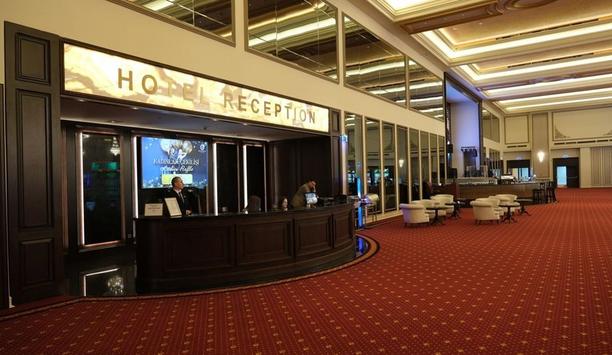
The new GoldenEye Hotel and Resort on the Bulgarian and Turkish border, Europe’s largest casino development, opened in 2024 by BC Industries is providing enhanced security with more efficient guest services thanks to a 600-camera video surveillance solution from IDIS. The advanced camera system combines 24/7 visibility over gaming tables and public areas, fault-free image capture and recording of UHD video footage, a more efficient real-time monitoring platform for multiple users, and options for rapid targeting of AI analytics. End-to-end visibility As well as meeting the higher security requirements typical of casino operations, the system from South Korea’s largest in-country video tech manufacturer supports the GoldenEye resort in providing a more impressive welcome for hotel guests with full visibility over corridors, communal areas, and back-of-house operations ensuring the ultimate guest experience. The end-to-end solution has been installed by Volga Elektronik to cover the casino, hotel, and car parks. High-definition image capture IDIS 12MP Super Fisheyes, 8MP IR, and 5MP IR dome cameras allow broad scene surveillance A combination of IDIS 12MP Super Fisheyes, 8MP IR, and 5MP IR dome cameras allows broad scene surveillance of all internal areas, without blind spots, plus targeted coverage of priority locations such as cashier cages and slot machines. High-definition image capture allows gaming tables to be monitored in fine detail with operators able to identify card suits, and chip denominations and quickly detect any suspicious player activity, regardless of low light or cigarette smoke. Instant and smooth dewarping Instant and smooth dewarping of the fisheye images supports efficient real-time viewing and playback, allowing incidents to be resolved rapidly and preventing game stoppages. This ensures positive experiences, and confidence, for both customers and staff. External areas, including parking bays and entrances, are covered using IDIS 5MP IR bullet cameras and 2MP IR PTZs. IDIS Solution Suite VMS, NVRs IDIS Solution Suite VMS allows 24/7 monitoring by six operators and two supervisors, using a control room video The system also comprises seven 64-ch NVR recorders; and IDIS Solution Suite enterprise-class VMS and Critical Failover to protect continuous access to video and provide full redundancy in the event of a range of fault conditions. IDIS Solution Suite VMS allows 24/7 monitoring by six operators and two supervisors, using a control room video wall, with live viewing and simultaneous playback. The solution is NDAA compliant, with inherent cybersecurity protection; and it meets GDPR requirements, with IDIS’s dynamic video privacy masking allowing footage to be easily exported without privacy infringement. Advanced surveillance capabilities “IDIS video technology is perfectly designed for casino security,” said Mert Çalışkan, BC Industries’ Casino Operations Director. “Our new system gives us all the advanced surveillance capabilities we need to protect our guests and our facilities. And we’ll be able to easily adapt and extend it in the future and take advantage of exciting new capabilities.” ERP software The resort would be taking advantage of this future-proofing capability that comes with all IDIS technology In the next project phase analytics data integration with the casino’s ERP software is being introduced, along with transaction data overlaid on recorded video for efficient incident investigation. Koray Ozyildirim, IDIS Türkiye Country Manager confirmed that the resort would be taking advantage of this future-proofing capability that comes with all IDIS technology. IDIS AI video solutions and integration “Across the casino sector there is huge potential for adopting IDIS AI video solutions and integration capabilities,” he said. “IDIS’s industry-pioneering analytics are flexible and powerful and can be targeted at specific locations to enable highly accurate people counting, heat maps, and occupancy monitoring. Along with seamless systems integration, this will increasingly deliver a host of competitive advantages including enhanced security, better customer service, and, ultimately, greater profitability.”
RGB Spectrum® announced a new deployment at Red Hawk Casino, a premier destination for entertainment, dining, and gaming located just north of Sacramento. The casino has recently elevated its sports bar experience with a captivating new entertainment system. Galileo video wall processor RGB Spectrum's Galileo video wall processor was the natural choice for the project due to its versatility, support for diverse digital and IP-based signal sources, display layout flexibility, exceptional 4K image quality, and straightforward installation process. The processor seamlessly integrates with the casino's existing setup and offers many benefits that enhance the viewing experience. Video processing performance The Galileo processor powers a colossal 27.8-foot by 8.9-foot video wall, composed of Planar's brilliant TVF1.8 LED Cal Coast Telecom, an audio-visual design and installation integrator based in San Jose, California, selected RGB Spectrum's state-of-the-art Galileo video wall processor to power the casino's new video wall, resulting in an outstanding visual experience for casino patrons. The Galileo processor powers a colossal 27.8-foot by 8.9-foot video wall, composed of Planar's brilliant TVF1.8 LED displays, boasting an impressive resolution of 4480 x 1440. This cutting-edge processor delivers top-tier video processing performance, ensuring a captivating, real-time viewing experience with stunning 4K image quality. Display 44 images simultaneously With this solution, the bar offers an array of sports events and highlights that keep patrons engaged and entertained. From professional to collegiate and amateur sports, the video wall showcases football, baseball, basketball, hockey, horse racing, and much more worldwide. David Hallmark, Audio Video Engineering Manager for Cal Coast Telecom, expressed his enthusiasm for the Galileo processor, stating, "One of the key benefits of RGB Spectrum's Galileo processor is its remarkable ability to display 44 images simultaneously with the flexibility to resize and re-position the images." Customizable layouts Operators can swiftly switch and route input sources, choose from customizable, pre-set display layouts, and resize and reposition display windows using the processor's intuitive, built-in GUI. The Galileo processor supports all types of video walls, offering features such as image overlap for projector-based video walls, custom timings to accommodate LED wall resolutions, and bezel compensation for optimal viewing on LCD video walls.
Round table discussion

Video surveillance has been a dominant factor in the casino market since the 1950s when video replaced the use of elevated walkways that allowed casino security personnel to monitor the gaming floor from above. As technology continues to evolve, we can expect to see more innovative uses of video in the casino market. Beyond video, other technologies are also transforming the casino experience. We asked this week’s Expert Panel Roundtable: How are new technologies impacting the casino surveillance and security market?

Headlines of violence in our schools are a reminder of the need to keep educational institutions safe. In fact, if there is a positive aspect to the constant bombardment of headlines, it is that it keeps our attention perpetually focused on how to improve school security. But what is the role of physical security systems? As the new school year begins, we asked this week’s Expert Panel Roundtable: Are schools safer because of physical security systems? Why or why not?

As physical security technologies become more complex, it is incumbent on the dealer/integrator to have the skills and expertise needed to ensure that a system operates smoothly. The value of integrators increasingly rests on the skill sets they bring to bear when installing a system. If the skills are missing, there is a problem. We asked this week’s Expert Panel Roundtable: What missing skills among security integrators can cause problems for customers?
Products