Biometric Security

RISCO has strengthened its UK & Ireland leadership team with the appointment of David Rimmer as Commercial Director, reinforcing its commitment to supporting installers and driving growth across the region. David brings more than 20 years’ experience in business development and partnerships, with a background in connected security and smart home technology. He previously held a European business development leadership role at Alarm.com. Wider range of customer needs His appointment...

i-PRO Co., Ltd. a pioneer in professional security and medical imaging solutions, announced a new leadership structure and business organization for the Americas, designed to strengthen its focus on key sectors and support the region’s next phase of growth. Under the new structure, the Americas business will be organized into four dedicated Virtual Companies: i-PRO Edge Technology, Video Insight, i-PRO Public Safety and i-PRO Medical Vision of Americas. Each Virtual Company will have dedi...

DigiCert, a pioneer in intelligent trust, today announced it has achieved ISO/IEC 27001:2022 certification for its information security management system (ISMS) supporting its global Certification Authority (CA) and Trust Services operations. The certification covers the issuance and management of publicly and privately trusted digital certificates, underlying Public Key Infrastructure (PKI) processes, and supporting corporate functions, independently validating DigiCert's risk-based approach to...

Zenitel, a provider of unified critical communication solutions, announces the global launch of Zenitel Connect Essential. Designed for smaller deployments, Zenitel Connect Essential brings the technology foundation of Zenitel Connect to customers who need secure, reliable communication without platform license fees. The launch marks the next step in Zenitel’s Unified Critical Communication vision, introduced with Zenitel Connect Pro in 2024. That vision addresses a familiar challenge: cr...
Allegion US, a provider of security solutions, technology and services, will be exhibiting and demonstrating interoperable electronic access control technologies and software at ISC East 2026 (booth #601), the security industry’s premier trade show in the Northeast occurring November 4–5, at the Javits Center in New York City. “Security leaders and integrators across the Northeast are under constant pressure to modernise infrastructure quickly without overcomplicating daily op...

Brivo, the AI innovator and global pioneer in cloud-native physical security, launches Brivo Reseller MCP, the first Model Context Protocol server for security systems integrators. By connecting AI assistants and partner portal tools through the MCP, resellers can create dashboards, identify customers up for renewal, review service tickets, understand growth patterns, and do analysis in minutes that would normally take days or weeks—all from inside the LLM they normally use. Brivo also int...
News

Intersec Europe will make its debut in Frankfurt am Main from 14 to 16 September 2027. For the first time, this new European platform brings together solutions for physical security, cybersecurity and AI in an integrated approach – with a clear focus on the protection of buildings, businesses and critical infrastructure. At the heart of the event are the specific requirements of operators and end users, as well as decision-makers who shape security strategies and are responsible for investment decisions. With Intersec Europe, Messe Frankfurt is expanding the globally recognized Intersec brand with a standalone event in Frankfurt am Main. Specific requirements of operators With Intersec Europe, taking place in Frankfurt am Main from 14 to 16 September 2027, Messe Frankfurt is establishing a new international trade fair for integrated security solutions for the European market. Emerging threats and new EU-level regulations are changing the requirements placed on businesses, public authorities and operators. Intersec Europe addresses these developments by combining the exhibition with a conference, networking and business matchmaking. The focus is on products, technologies and services designed to protect buildings, business premises, public spaces and infrastructure. Exhibiting companies will present integrated security solutions ranging from video surveillance, access control and perimeter protection to fire detection and alarm systems, cybersecurity and AI applications. Leading industry players are supporting Intersec Europe right from the start, thereby underlining the importance of the trade fair. Integrated security solutions These include: Abus, Assa Abloy, Dormakaba, ECO Schulte, GEZE, Hodapp, NSC, Salto and Winkhaus. Wolfgang Marzin, President and Chief Executive Officer of Messe Frankfurt, comments: “For more than 20 years, we have been staging Intersec Global in Dubai, one of the world’s leading international trade fairs for the security industry. In Frankfurt, we are now drawing on this experience, our global network and the strength of our international trade fair portfolio, comprising 13 events. With Intersec Europe, we are creating a dedicated platform for the European market.” As a pan-European event, Intersec Europe brings leading security technology providers together with the decision-makers who plan, procure and deploy products and solutions for buildings and critical infrastructure. These include specialist planners, engineering and consultancy firms, system integrators, security professionals, building and infrastructure operators, as well as technical procurement professionals. Technical procurement professionals Intersec Europe is the latest addition to Messe Frankfurt’s global ‘Safety, Security & Fire’ trade fair portfolio and builds on the internationally established Intersec brand. The portfolio comprises 13 events in total and supports the dynamic growth of the security industry in key markets worldwide. Intersec is represented in Dubai, Argentina, Saudi Arabia and China. Under the Secutech brand, Messe Frankfurt offers platforms in Taiwan, Thailand, India and Vietnam. Further specialist conferences and events in Bulgaria, Romania, Croatia and India complete the portfolio.

Cortech Developments and Secure Logiq have completed their joint Resilience by Design CPD series, held at the British Library in London on 16 September and The Lowry in Salford on 7 October. Aimed at security consultants, specifiers and industry professionals, the sessions, titled A Collaborative Approach to Business Continuity in Critical Environments, looked at how security management platforms, resilient infrastructure and effective system design work together to keep critical operations running. Presentations from both companies covered redundancy, failover and continuity planning with attendees using the sessions to discuss challenges from their own projects. Extremely powerful platform Feedback was strong on both content and format. Asked for their key takeaway, one attendee said: “That Cortech Developments & Secure Logiq have an extremely powerful platform and product, I am contacting building security teams to discuss the products and potential opportunities.” Another enjoyed “the family like flow of the day and the knowledgeable speakers”, while taking the second session outside London also went down well: “The welcome and friendly atmosphere provided by Cortech personnel and the interesting venue. Great to attend a non-London-centric event.” Facing critical environments Jason Blundell, Head of Sales and Marketing at Cortech Developments, said: “Resilience is about more than the technology itself; it’s about understanding how systems, infrastructure and people work together to maintain continuity when it matters most.” “These events have provided a valuable opportunity to bring security professionals together, share knowledge and explore the challenges facing critical environments. The feedback from attendees has been particularly encouraging, and it reinforces the importance of creating opportunities for meaningful discussion and collaboration across our industry.” Bringing right technologies Hayley Joseph, Markets & Channel Manager at Secure Logiq, said: “Hosting events with technology partners is always a rewarding experience. Bringing together best-in-class software and hardware creates a powerful combination, delivering real value to our audience. Our recent CPD events, Resilience by Design, hosted with Cortech Developments, demonstrated the importance of education and knowledge-sharing, adding real depth to the solutions and opportunities presented to specifiers.” “We thoroughly enjoyed collaborating on these sessions and would like to thank everyone who attended and contributed to the engaging Q&A discussions that brought each event to a close.” Together, the sessions reflected a shared commitment from Cortech Developments and Secure Logiq to knowledge exchange across the security sector. They also reinforced a central message: where availability and continuity are essential, resilience depends on bringing the right technologies, infrastructure and expertise together to help organizations prepare for disruption and keep critical operations running.

The National Security Inspectorate (NSI) has today launched NSI Advantage, a new program offering NSI-certified companies’ exclusive benefits, preferential rates and added-value services to support their businesses. Launched as part of NSI’s 55th-anniversary celebrations, NSI Advantage builds on the value of independent certification by connecting certified companies with a carefully curated network of trusted suppliers across key business service categories that value quality-oriented businesses. Quality-oriented businesses With initial discounts as high as 50%, the first tranche of NSI Advantage partners spans insurance, training, marketing, fleet management, business software and other specialist services. The inaugural partners are: Alarminsure – Specialist insurance for the security and fire sectors, including efficacy cover BSIA – The trade association representing the UK’s private security sector Ember Compliance – Technical training and compliancy consultancy Expressions Partnership – Learning, training and development programmes to improve individual, team and organizational performance FIA – The UK’s largest not-for-profit trade association for the fire safety sector Lollipop Local – Marketing agency specializing in the UK security and fire sectors Ogilvie Fleet – Vehicle fleet specialists helping organizations reduce costs and improve efficiency Proactive Medical and Life – Brokers specializing in medical and life insurance, income protection and critical illness protection Signs Express – Signage and vehicle livery services delivered through a network of specialist centres across the UK and Ireland Simpro – Field service management software designed to improve business efficiency Skills for Security – Specialist fire and security training and apprenticeship recruitment services Thornton & Lowe – Bid and proposal consultancy, training and software NSI-certified companies Richard Fogelman, NSI CEO said: “As we celebrate 55 years of NSI, we want to thank the companies that have supported us throughout that journey. NSI Advantage is a way of giving something back to these valued businesses, recognizing their continued commitment to NSI and providing tangible benefits that support them in return. As NSI Advantage develops, we look forward to welcoming more partners and expanding the range of offers to meet the needs of NSI-certified companies.” NSI-certified companies will find their NSI Advantage offers live on the NSI Connect portal.

Colt Technology Services, the global digital infrastructure company, announces the expansion of its secure networking portfolio with new Fortinet-based quantum-ready SD WAN and SASE solutions. By combining Colt's high-performance global network and managed services expertise with Fortinet's world-class security solutions, enterprises can now connect users, sites and applications more securely, simplify network management and strengthen protection against emerging cyber and quantum threats. The solution provides consistent security policies, secure access and flexible deployment options, all designed to support future business needs. Major sources of complexity As cyber threats grow, quantum risk emerges and IT environments become more complex, businesses need security that is robust and powerful without adding complexity. Colt’s recent Cost of Complexity research found that security and compliance are major sources of complexity for more than one in three (36%) organizations, while 53% say their security and compliance teams are frustrated by infrastructure complexity. Peter Coppens, VP Product, Colt Technology Services said, “Colt's new Fortinet-powered SD WAN and SASE solutions help customers simplify how they connect and protect employees, applications and data, bringing networking and security together in a single managed service. The result is stronger protection, simpler operations and a future-ready foundation that helps organizations stay ahead of emerging threats while defending against the risks they face today.” Future quantum computing advances Ramnath Shenai, Director of Products and Solutions, Fortinet says, “Customers need secure access that works consistently across branches, remote users and cloud applications, without adding operational complexity. Colt brings the reach of its global network and its managed services expertise; Fortinet brings secure SD WAN and unified SASE. Together, we can help organizations connect and protect their people and applications through a service designed to be managed as a whole.” Demand for converged networking and security services continues to accelerate. Dell'Oro Group forecasts the global SASE market will grow at a 15% compound annual growth rate (CAGR), reaching US$24 billion by 2030 as organizations seek simpler, more secure ways to connect people, applications and data. Colt's latest Fortinet-powered solutions strengthen its SD WAN and security portfolio, combining the reach and reliability of its owned global network with flexible management models and support for both single-vendor and multi-vendor environments. The solution is designed to support emerging post-quantum cryptographic capabilities, helping organizations address the risk that sensitive data intercepted today could be vulnerable to future quantum computing advances.

Reco, the pioneer in Agent Security, announces an integration with Cyera, the AI Security Platform, that helps enterprises identify which AI agents can reach sensitive data and prioritise remediation based on the business impact of that access. As AI agents gain access to the same repositories, records and workflows employees use, security teams need to understand what resources an agent can touch, whether they contain sensitive data and which connected systems, applications and workflows may also be exposed. Meaningful business risk Cyera identifies where sensitive data lives, Reco maps the agents, identities, permissions and application connections around it. Together, the integration helps teams distinguish routine access from agent activity that could create meaningful business risk. With this integration, Reco ingests Cyera's data classification labels, including business IP, financial, health and regulated records, and feeds them into the Reco Graph. Reco then uses that sensitivity context to show which agents can reach sensitive data, how that access was granted, what other systems they can connect to and whether their activity deviates from normal behaviour. Security teams can use that combined context to identify high-risk agent access paths and focus remediation where the potential business impact is greatest. Over-permissioned agent Not every over-permissioned agent presents the same level of risk. An agent with broad access to low-sensitivity content may warrant a different response than one that can reach regulated records, customer data or intellectual property. The integration helps security teams make that distinction and prioritise remediation based on both access and data sensitivity. “As agents gain access to more business systems, security teams need to know what those agents can reach and which access represents the greatest risk,” said Zoe Hillenmeyer, chief operating officer at Reco. “By combining Cyera’s data sensitivity context with Reco’s view of agent identities, permissions, connections and activity, customers can identify the access paths that matter most and remediate them with much greater precision.”
Cequence Security, the pioneer in application, API, and agentic AI protection, today announced that Russ Schafer, former Executive Vice President of Marketing at Fortinet, has joined as Chief Marketing Officer, reporting to CEO Ameya Talwalkar. Schafer joins as Cequence builds on major customer wins, the expansion of Agentic AI security solutions and industry recognition. Schafer brings more than 25 years of marketing leadership at billion-dollar companies and high-growth startups across cybersecurity, SaaS, enterprise software, semiconductors, and media. He has led global teams of 200+ professionals and managed budgets exceeding $300M (£222M), generating billions in pipeline. As CMO at Cequence, he leads corporate marketing, product marketing, demand generation, field marketing, analyst relations, and creative services. Most demanding organizations For 12 years, Cequence has stopped bots and secured APIs for some of the world’s largest and most demanding organizations in telecommunications, financial services, retail, and transportation. The Cequence Platform scales to process over 10 billion API calls per day while protecting 4 billion user accounts. AI agents now reach enterprise data through the same APIs Cequence already protects, and the company is applying that experience to secure them. To protect enterprises adopting AI, Cequence continues to expand its AI security solution to protect against the latest AI Agent threats, including: Cequence Application and API Protection v9: Helps security teams discover APIs and stop attacks, bots, and abuse, and is now AI-native, with a built-in AI assistant and MCP server. Agent Trust verifies agent identity and blocks harmful behaviour in real time. Cequence found Meta’s Muse at more than half of the customers studied within two weeks of the agent’s launch. AI Gateway: Treats agents as properly onboarded digital employees, tying tools, APIs, skills, LLMs, and permissions to Agent Personas, containing agents and preventing overreach in real time. AI Discovery brings shadow AI under governance, while LLM Continuity and Budgets & AI Spend deliver model failover and spend control. Agentic AI security Together, Application and API Protection, including Agent Trust, and AI Gateway secure both directions of agent traffic, from external agents reaching enterprise applications to an enterprise’s own agents reaching tools, data, and models. The demand for bot, API, and agentic AI security is surging, and Cequence’s record growth reflects that trend. Cequence reported its strongest quarter and largest deal in company history, with new customers in the United States, Japan, South Korea, Brazil, and the Middle East. NTT DOCOMO, Japan’s leading mobile operator with over 91 million subscribers, deployed Cequence’s application and API protection solution to safeguard its service infrastructure, applications, and APIs from sophisticated attacks, business logic abuse, and unauthorized access. Autonomous network initiatives Cequence is defining the security standards for the agentic era, co-authoring the CIS Critical Security Controls Companion Guides for AI agents, LLMs, and Model Context Protocol (MCP), while co-chairing TM Forum’s AI-Native Blueprint initiative. The company is also working with a dozen global telecommunications providers on their autonomous network initiatives to safely enable agentic AI. “Enterprise leaders are just beginning to realize the sheer scale of the AI agent security and governance challenge,” said Ameya Talwalkar, co-founder and CEO of Cequence. “Because AI agents rely on the very APIs Cequence already protects, we are uniquely positioned to give enterprises complete visibility and real-time control and governance of AI agents. Russ brings the strategic vision and proven marketing playbook to drive awareness, build pipeline, and establish Cequence as a leader in agentic AI security.” AI security challenges “Cequence is solving the exact agentic AI security challenges that enterprise leaders are just beginning to discover,” said Russ Schafer, Chief Marketing Officer, Cequence. “Cequence’s proven heritage in stopping bot and API abuse, combined with breakthrough innovations like Agent Trust and full-lifecycle AI governance, uniquely positions us to lead this market. I’m thrilled to join the team and empower enterprises to adopt AI agents with complete confidence and control.” Prior to joining Cequence, Schafer served as Executive Vice President of Marketing at Fortinet, driving global demand across a portfolio of 60+ network, cloud, and AI security products – experience that directly aligns with Cequence’s platform expansion. Schafer is a recognized thought leader and featured event speaker who presented on Agentic AI for Coordinated and Unified Cybersecurity Defense at RSAC 2026. He previously headed product marketing and analyst relations at Check Point Software and served as SVP & GM of Technology at THX. His earlier experience includes serving as VP of Product Marketing at Adap.tv (acquired by AOL for $405M), alongside senior leadership roles at Intel, IBM, Sybase, and Yahoo!. He holds an MBA from Duke University and a BBA from Texas A&M University.

Expert commentary

Control room operators face a tricky and ever-growing list of responsibilities. Every day, they're expected to monitor dozens, sometimes hundreds, of camera feeds, identify suspicious behavior, and respond quickly when something goes wrong. Add in a constant stream of alerts, many of which turn out to be false alarms, and it's easy to see how even the most experienced security professionals can become overwhelmed. Indeed, in the UK alone, there are an estimated six million CCTV cameras, with around one in 70 publicly owned. A human, or team of humans, cannot possibly be expected to keep on top of every single one of those devices without missing something. Monitoring multiple locations Recently, the UK's Centre for the Protection of National Infrastructure (CPNI), now part of the National Protective Security Authority (NPSA), uncovered a challenge faced by many security operators known as the vigilance decrement, where concentration can begin to decline after just 20 to 30 minutes of continuous monitoring. A study of 42 professional CCTV operators, published in Applied Ergonomics, found that they detected only around half of the target behaviours during a 90-minute video review task. For security teams working long shifts and monitoring multiple locations, this presents a significant challenge. Missing an incident can have serious consequences, yet expecting operators to maintain the same level of concentration throughout an entire shift simply isn't realistic. Identifying unusual activity The result is that operators spend less time reviewing routine activity, have faster responses to threats This is where AI-powered video analytics makes a huge difference. By automatically identifying unusual activity, filtering out unnecessary alerts, and highlighting events that require attention, AI can help operators work more effectively and focus on what matters most. The result is that operators spend less time reviewing routine activity, have faster responses to potential threats, and there are more opportunities for security professionals to apply their experience and judgement where it's needed. Breaking the cycle of alarm fatigue Traditional video surveillance systems have often relied on motion detection and basic rules to identify potential security incidents. While useful, these technologies can also generate large volumes of unnecessary alerts. A tree branch moving in the wind, an animal crossing a perimeter, or a delivery vehicle stopping near a building can all trigger a false alarm. Now imagine this happening across hundreds of cameras, throughout an eight- or twelve-hour shift. Operators can quickly find themselves dealing with a seemingly endless queue of notifications, most of which turn out to be harmless. Over time, this can lead to alarm fatigue. When operators are repeatedly presented with false alarms, they may become less responsive to new notifications, increasing the risk of a genuine threat being overlooked. This isn't a reflection of their professionalism or experience, but a natural response to information overload. Persistent alarm fatigue It can also make it harder for organizations to demonstrate the value of their security investments The consequences extend beyond missed incidents. Persistent alarm fatigue can contribute to stress and burnout, slow response times, and place additional pressure on security teams that may already be stretched. It can also make it harder for organizations to demonstrate the value of their security investments. Simply adding more cameras, hiring more operators, or increasing training isn't necessarily the answer. Instead, organizations need to consider how technology can reduce the volume of information operators must process and ensure that the alerts reaching them are genuinely useful. Smarter alerts, faster responses AI-powered video analytics is helping to address this challenge by making surveillance systems more intelligent and proactive. Rather than simply detecting movement, modern analytics can identify objects, recognize patterns and provide greater context around what's happening within a camera's field of view. For example, a traditional system might generate an alert every time something moves near a perimeter fence. AI analytics can help distinguish between an animal passing through, an authorized vehicle following its usual route, and someone loitering near a restricted entrance. Operators can then focus on the activity that warrants further investigation, rather than spending valuable time reviewing harmless events. Providing relevant information The system identifies potential concerns and provides relevant information Advances in vision-language models are taking this a step further. These technologies can interpret and describe activity within video footage, helping operators understand what's happening without having to manually review every camera feed. This shift is gaining momentum across the industry. The Security Industry Association's 2026 Security Megatrends report identifies the automation of security operations centres as a leading trend, highlighting opportunities for AI to support activities such as incident reporting and filtering lower-priority alarms. Importantly, the aim isn't to remove operators from the process. Much of this technology takes an agentive AI approach, where AI assists human decision-making rather than acting independently. The system identifies potential concerns and provides relevant information, while operators remain responsible for assessing situations and deciding how to respond. For security teams, this creates an opportunity to improve situational awareness while reducing the pressure of constant monitoring. Identifying threats before they escalate One of the most valuable capabilities of advanced video analytics is its ability to identify unusual behavior and patterns over time. Consider a vehicle driving slowly around a business park. On its own, this might not appear suspicious. However, if the same vehicle returns on three consecutive evenings, stopping near a restricted entrance before leaving, it could indicate someone assessing the site's security arrangements. An operator working a single shift might not notice the connection, particularly if the activity occurs across several days. But AI analytics can help identify recurring patterns and flag them for further investigation. Identifying recurring incidents These capabilities also offer benefits beyond immediate security monitoring The same principle applies to other scenarios. Someone repeatedly approaching a restricted area, a person remaining in an unusual location for an extended period, or a vehicle traveling against the normal flow of traffic could all trigger an alert based on predefined rules or patterns of behavior. With the right information available, security teams can investigate potential threats earlier and respond before an incident escalates. These capabilities also offer benefits beyond immediate security monitoring. Analytics can help organizations identify recurring incidents, understand how spaces are being used and make more informed decisions about patrols, staffing and security resources. For multi-site organizations, this can be particularly valuable, allowing security teams to identify trends across locations rather than treating each incident in isolation. Making investigations faster and more effective AI can also significantly reduce the time required to investigate incidents after they occur. Reviewing hours of recorded CCTV footage has traditionally been a painstaking process. Investigators may need to search through multiple camera feeds to identify a person, vehicle, or sequence of events, often under considerable time pressure. Advanced video search and synopsis technologies can simplify this process by condensing lengthy recordings into a much shorter visual summary. Events and objects captured at different times can be presented together, allowing investigators to identify relevant activity quickly while retaining links to the original footage and timestamps. For example, an investigator looking for a particular vehicle can search footage based on characteristics such as color, type, or direction of travel, rather than watching hours of recordings manually. For police forces, local authorities and private security teams, these capabilities can make a substantial difference to investigations, reducing the time spent searching through footage and helping important evidence reach the right people sooner. Demonstrating the value of intelligent video AI-powered video analytics can also deliver a measurable return on investment Alongside the operational benefits, AI-powered video analytics can also deliver a measurable return on investment. An Omdia survey of 140 end users across North America and Europe found that more than 85% of organizations achieved a return on investment from their video analytics deployments within one year. More than half reported seeing returns within the first six months, with banking and manufacturing reporting particularly strong results at 95% and 90%, respectively. Evidently, intelligent video can deliver value far beyond traditional surveillance. Improved incident detection Reducing false alarms can help operators use their time more effectively, while faster investigations can lower the resources required to review footage. Improved incident detection and response can also help organizations minimize disruption, protect assets and strengthen their overall security posture. There are benefits for installers and integrators too. By introducing advanced analytics into existing video management systems, they can help customers get more value from their security infrastructure, while offering additional capabilities that can evolve alongside operational needs. Rather than viewing video surveillance solely as a cost centre, organizations can increasingly use the intelligence it provides to improve security performance and inform wider operational decisions. Keeping people at the heart of security As AI becomes more capable, questions around human oversight and decision-making will become increasingly important. There is a distinction between AI that supports operators and fully autonomous systems that can independently make decisions and take action. While more agentic AI capabilities are emerging, many of the most practical applications in video security today are designed to assist people, not replace them. Making informed decisions This combination of machine intelligence and human experience is where the greatest value lies For instance, AI might identify a person behaving unusually near a restricted entrance, but an operator can assess the wider context, determine whether there is a genuine threat and decide on the appropriate response. Similarly, analytics can highlight a vehicle that has repeatedly visited a site, but it takes human judgement to establish whether that behavior is suspicious or entirely legitimate. This combination of machine intelligence and human experience is where the greatest value lies. AI can continuously analyze large volumes of footage, identify patterns across different cameras and shifts, and highlight events that deserve attention. Operators bring the contextual understanding, professional judgement and accountability needed to make informed decisions. An operator reviewing five relevant alerts, each supported by useful information, is in a much better position to respond effectively than someone attempting to process 50 notifications with little context. The goal is therefore not to automate every aspect of security, but to create a more effective partnership between people and technology. A smarter approach to security operations The demands placed on security teams are unlikely to decrease. Organizations are managing larger sites, more cameras and increasingly complex security environments, often without equivalent increases in staffing or resources. At the same time, the limitations of human attention remain unchanged. No matter how experienced or well-trained an operator may be, maintaining constant concentration across dozens of video feeds is an unrealistic expectation. AI-powered video analytics offers a way forward. By reducing unnecessary alerts, identifying suspicious patterns, and accelerating investigations, these technologies can help security teams become more proactive, efficient, and effective. Most importantly, they allow operators to concentrate on what they do best: understanding situations, making informed decisions and protecting people and places. The future of security isn't about replacing the people behind the screens. It's about giving them the intelligence and tools they need to do their jobs better.

One of the best business lessons I learned didn’t come from business journals or the boardroom. It came from a biography: Steve Jobs by Walter Isaacson. If you haven’t read it, you should! The book covers the full arc of Jobs’ career, and while many of the most talked about lessons center on his entrepreneurship, perfectionism, and brand building, the one that has stayed with me is his philosophy of design. Digital music player market I don’t mean design in the sense of aesthetics, although Apple certainly became famous for that. I mean design as an understanding of how people interact with technology. Examples of Jobs’ design philosophy appear throughout the book, but the chapters about the birth of the iPod are particularly compelling. If you’re too young to remember the era of downloading songs from Napster and loading them onto MP3 players, here’s the context. By the early 2000s, Apple was entering a crowded digital music player market. Companies like Sony, Creative and Rio had already introduced devices that were packed with technical innovation, and they were growing in popularity among college students, commuters, and early adopters who preferred the solid state devices over larger, glitchy portable CD players. Yet Jobs believed the entire MP3 player category possessed a fundamental flaw: all the products were too complicated. More intuitive experience In envisioning the iPod, Jobs became obsessed with creating a more intuitive experience Actually, Jobs used more blunt language. He said they all “were deeply flawed.” They held only a handful of songs, and users struggled with frustrating menu trees to access their most basic functions. As for the software managing the devices’ music libraries? To quote the book, “Only a genius could figure out half of their features.” Jobs saw something the existing manufacturers didn’t. Their MP3 players weren’t offering the one thing that consumers wanted the most, an easier way to listen to music. In envisioning the iPod, Jobs became obsessed with creating a more intuitive experience. He challenged his team to eliminate unnecessary complexity and established a simple rule for the user interface: if a person wanted a song or a function, they should be able to get there in no more than three clicks. Incredibly sophisticated technology The result was a product that felt completely different to use. Apple took an incredibly sophisticated technology and made it approachable. The complexity didn’t disappear; it was just moved behind the curtain where the user didn’t have to think about it. Despite being a late entrant to the MP3 industry, Apple quickly became the dominant manufacturer in the category because of the iPod’s unmatched usability. Plenty of successful companies cared about usability, but Jobs made simplicity a strategic priority. While competitors were adding features and complexity, Apple was asking, “How do we make this easier?” Twenty years later, I still think that’s one of the most important questions any technology company can ask, and one that is shaping the next generation of security technology. Stronger security practices Making a system more secure meant adding steps, procedures, and user responsibilities Which brings me to where I spend most of my time these days: Identity verification. For years, the security industry viewed convenience and security as competing priorities. Making a system more secure meant adding steps, procedures, and user responsibilities. What’s exciting about modern biometrics is that we’re increasingly able to improve both simultaneously. In many ways, we’re applying Jobs’ three click philosophy to identity verification, reducing the interaction required from the user without compromising the strength of the underlying security. And by reducing friction, organizations can implement more frequent identity verification that supports stronger security practices. Biometric authentication experience The simplicity of the biometric authentication experience can make people underestimate the sophistication of the technology behind it. Just as iPod users didn’t have to think about file formats, manually transferring songs to their device, or navigating cumbersome menus, users of modern biometric systems don’t have to think about how their faces, palms, or fingerprints are converted into encrypted, mathematical templates that cannot be reverse engineered. Or how the system verifies that a live person, not a photo, is standing in front of it. Or how AI quietly adjusts for the naturally occurring, gradual changes in a person’s appearance, whether from age, lifestyle, or a few extra pounds. Interacting with a biometric identity solution is like listening to music on an iPod or today, an iPhone. You don’t even think about the incredible technology working in the background that makes the experience possible. For example, with facial authentication, the most frictionless form of identity verification, you look at a reader without even stopping. In a fraction of a second, the system accurately matches you to your digital identity with a false match rate as low as 1 in 10 billion! I consider that more like a ‘zero click’ solution. Providing better protection The challenge for manufacturers will be resisting the temptation to make them more complicated As our industry embraces AI, we can expect to see a new generation of products that can automate more tasks, synthesise more data, and deliver more functionality than ever before. The challenge for manufacturers will be resisting the temptation to make them more complicated. Product teams should take a page from Jobs’ playbook. Instead of focusing on what the latest technology makes possible, they should be asking, “What do our customers genuinely want? And how can we use technology to make that experience better? Easier? Simpler? As effortless as using your face to access your phone?” That’s the lesson of the iPod, and why a guy who never developed a security product has provided one of the most important lessons for our industry. Companies that build products people want to use will also be creating solutions that are adopted more broadly, used more consistently, and ultimately provide better protection.

There was a time when physical security and cybersecurity occupied two very different worlds. One was concerned with the nuts and bolts of locks, doors and perimeter protection. The other focused on networks, software and digital threats. Today’s modern access control systems – used in everything from offices and hotels to hospitals and data centres – combine the two, fusing mechanical engineering and cloud platforms. That means that a door is no longer simply a physical barrier. Instead, it’s a connected endpoint within a much wider digital ecosystem. And it’s changing expectations across the industry. Increasingly, developers, architects and operators are turning their backs on separate products in favour of integrated access solutions that combine doors, locks, access controls, environmental monitoring and digital management into a single, connected system. A new connected approach to security This change is part of a wider shift in the way that security itself is perceived This change is part of a wider shift in the way that security itself is perceived. Traditionally, physical security was about keeping unauthorized people out. Today, it’s about making sure the right people have the freedom to move within a restricted space. That is particularly important in places such as hospitals, data centres and other critical infrastructure, where security helps protect essential services while minimizing disruption. And it’s why our Research & Security Center (R&S) in Berlin, Germany, brings together both disciplines under one roof. Their job is to test products against both physical attacks and cyber threats. Employing unconventional tactics Sometimes, that means employing unconventional tactics, such as using professional lockpickers to test the security and resilience of new physical products. While modern locks are still based on mechanical engineering, they are more advanced than they look. Improvements in design, materials, and manufacturing mean they are stronger, more reliable, and harder to tamper with. But there’s more to locks than just security. Some systems can even use the motion of inserting and turning a key to generate a small amount of electrical energy, which provides energy to power extra functions without wiring or batteries. This means they are not just standalone locks but can also be used as part of wider digital access systems. Bridging physical and digital security For instance, great strides have been made recently in terms of biometric authentication However, as everyone knows, digital systems have their own security risks, especially now that artificial intelligence (AI) is part of the emerging threat. This means the cybersecurity team needs to ensure that systems are robust enough to withstand a wide range of risks – from attempts to breach access platforms to phishing attacks – as well as other tactics designed to exploit human behavior. It’s here that researchers adopt a ‘hacker’s mindset’ to keep systems safe. And that means continuously testing, probing, and strengthening systems to identify vulnerabilities against existing real-world threats while also anticipating what might be around the corner. Mobile-based access control systems For instance, great strides have been made recently in terms of biometric authentication, including facial recognition and fingerprint scanning. Similarly, smartphones are increasingly being used to secure credentials for mobile-based access control systems. But improvements in technology also come with their own risks. For instance, For instance, AI-generated deepfake videos and voices are becoming more convincing, making it easier to trick people into giving access, sharing information or approving actions they should not. And as I alluded to earlier, criminals are now using AI and automated tools to identify weaknesses and exploit them much faster than before, sometimes with little or no human involvement. But it’s also true that it’s being used to bolster defences. Work is currently underway to use AI to analyze data in real time to identify unusual entry times, identify multiple failed authentication attempts, or spot any other anomalies that might suggest someone is trying to gain entry illegally. Modern access control Cloud-based platforms allow security teams to issue and revoke credentials remotely Increasingly, the value of modern access control lies not just in the hardware, but in the software that sits behind it. Cloud-based platforms allow security teams to issue and revoke credentials remotely, monitor activity across multiple sites and respond quickly to emerging threats. This makes security a real-time, always-on, continuously managed service rather than a collection of standalone products installed and largely forgotten about. The importance of regulation and compliance This is something that policymakers are aware of. In the European Union, for example, the EU’s NIS2 Directive relates to cybersecurity protecting network and information systems and significantly broadens both the scope and the obligations for compliance. It also takes an “all-hazard” approach to security, which means protecting not just digital networks and systems, but also the physical environments in which they operate. Similarly, the EU’s Cyber Resilience Act is designed to ensure that all digital products are safe from cyber threats. Its goal is to ensure that connected devices and software are built, updated, and maintained with security in mind, helping protect users in an increasingly connected world. And by introducing clearer requirements and standards, the CRA will help consumers and organizations identify products with strong security features and configure them more securely from the outset. Security by design Security can no longer be treated as something that is bolted on at the end of the development process In both cases, it is incumbent on vendors not only to meet or exceed these rules and regulations but also to keep customers, the wider industry, and other stakeholders informed about developments. For me, these regulations also reflect a broader shift in thinking. Security can no longer be treated as something that is bolted on at the end of the development process or addressed only after a vulnerability has been identified. Instead, it needs to be considered from the very beginning and maintained throughout a product's lifecycle. For manufacturers, that means continuously assessing risks, testing products against emerging threats and ensuring they remain resilient as technology and the threat landscape evolve. As I said at the beginning, the reason is simple. Today's buildings are no longer just bricks and mortar. They are connected environments where doors, locks, cameras, sensors and access control systems increasingly communicate with one another and with cloud-based platforms. You might want to think about that the next time you walk into a secure building.
Security beat

Deploying artificial intelligence (AI) tools should be seen as a business initiative rather than a technology initiative, says Martin Soukup, CTO of Solink, a cloud-based video security and data intelligence platform. The approach makes a difference that plays out in practical terms. A technology initiative is tactical and solution-oriented, often solving an isolated problem within a single department's silo. In other words, it might solve just a security problem. In contrast, a business initiative is cross-disciplinary, driven by executive leadership to impact the entire organization in a measurable way. “Viewing AI tools as a business initiative ensures they adapt to multiple departmental needs and drive high-level strategic growth rather than just fixing a localised technical issue,” says Soukup. AI platform combines video and business systems Demonstrating the value of embracing AI as a business initiative is Solink’s new video intelligence platform Demonstrating the value of embracing AI as a business initiative is Solink’s new video intelligence platform that combines video with business systems to detect threats and send real-time alerts. The capabilities are designed to help security teams operate smarter and more efficiently, supporting the next generation of lean, intelligence-driven security operations centers (SOCs). And benefits of the platform extend beyond security to include other parts of the business. “At the end of the day, video cameras only tell part of the story, much like looking at a 2D shape,” says Soukup. “They capture dimensions and colors, but only from a single perspective, even with powerful AI analysis providing traffic metrics, wait times, product interaction, and compliance logs. The addition of operational data, such as inventory, shipping, labor, and sales data, fills out that shape into 3D, adding critical context.” For example, while a camera simply shows three people standing in a line, and AI data flags that those individuals have been waiting for over five minutes, operational data lets you know also that a cashier has not checked into their shift yet. Combining these data streams gives businesses full situational awareness, turning passive observation into immediate, contextual intervention. AI agents handle repetitive tasks The Solink platform uses AI Agents, which are software that operates autonomously to handle manual, repetitive, or high-volume tasks based on specific instructions and tools. For Solink users, AI Agents unify their existing camera and data source investments into a single automated workflow. “AI Agents transform Solink from a security tool into an operational investment that benefits all departments,” says Soukup. “Modern operational leaders are turning to AI to scale productivity without increasing overhead.” Integrating business intelligence Operations checks compliance, loss prevention investigates theft, and security assesses threats Customers already use Solink to centralize video, integrate business intelligence, and trigger real-world responses like real-world alerts, two-way communication, or smart locks. AI Agents tie these pieces together, analyze the data and identify what matters most, and then take action either without human intervention or with humans in the loop. Businesses currently watch video manually across separate workflows. Operations checks compliance, loss prevention investigates theft, and security assesses threats. However, a human must always watch the footage to get results. Solink AI Agents automate this entire workflow. If an operational event can be seen on camera and matters to the business, a Solink Agent can be integrated to automatically review, assess, and trigger the next step in the workflow across hundreds or thousands of locations simultaneously. Calling all stakeholders to the discussion When discussing applications, stakeholders should include revenue and marketing officers, compliance officers, and line-of-business executives. Agents leverage existing infrastructure by adding an intelligent automation layer that drives efficiency and grows revenue across the entire organization without large capital investment. Solink AI Agents will not replace employees; they empower lean teams to maximize their existing resources. Job descriptions will shift toward human-in-the-loop workflows where humans and machines collaborate. The AI Agent handles the high volume, filtering out noise and processing data at scale. Human employees set up and guide the Agents, give feedback to improve performance over time, and step in to make final decisions, managing the nuanced situations that require critical thinking, empathy, and deep context. Passive data visualization In contrast, a Solink AI Agent is deployed with a clear mandate for a specific task, deliverable, or outcome Given the convergence of physical and digital security, AI Agents, not dashboards, are the right unit of enterprise AI deployment. Dashboards typically aggregate data without evaluating the context or importance of the source. Data looks identical whether it comes from 10 sources or 100. In contrast, a Solink AI Agent is deployed with a clear mandate for a specific task, deliverable, or outcome. This approach shifts the focus from passive data visualization to active intent, creating a direct path of accountability and clear attribution for business results. With dashboards, everyone can see the problem, but nobody owns it. An agent with a mandate either did the job or it did not, and you can audit exactly what it saw and why it acted or did not. Overcoming obstacles to deploy AI agents The primary obstacles to integrating AI Agents into the physical security workflow are change management, building trust, and system interoperability. Physical security requires absolute reliability, which demands rigorous initial configuration to establish trust. Furthermore, Agents are only as effective as the data they can access. Overcoming these hurdles requires comprehensive team training, shifting organizational mindsets, and ensuring seamless integration with existing tools so the Agents have the full context needed to execute tasks accurately and integrate with human workflows seamlessly. Addressing common security challenges Several use cases are driving the deployment of AI Agents among Solink's customers Several use cases are driving the deployment of AI Agents among Solink's customers. Overnight guarding, loss prevention, and store readiness will be the first wave of use cases. These are proven, high-frequency scenarios in which Solink provides pre-built template Agents to address common security challenges out of the box. The second wave of use cases will include highly customisable occupancy tracking, health and safety, and food quality. Pre-built template Agents are coming for these next. In addition, custom, niche operational use cases can be tailored to a specific business environment. Just like hiring a specialized contractor, companies can deploy custom Agents to tackle unique operational challenges rapidly across all locations. Measuring the effectiveness of AI agents The effectiveness of AI Agents can be measured by multiple factors. Core Accuracy, and consistency and accuracy of detections and automated outputs. Business Outcomes delivered, such as reduced inventory loss, reduced fraud, and faster incident resolution. Financial Impact, measured through recovered budget, reduced operational overhead, and increased per-store conversion. There is a perception that AI Agents possess predictive or flawless capabilities, like stopping crime before it happens or operating perfectly in dark, chaotic environments. Not true, says Soukup. AI cannot understand ambiguous requests like "look for suspicious activity." Success requires explicit parameters, tools, and skills, defining what is acceptable, what is unauthorized, and how to handle the gray areas. Another misconception is that Agents need a fundamentally different security model than people. “I run security for this company as well as engineering, and I hold our own Agents to the same standard I would hold a third-party vendor,” says Soukup. “That means least privilege, full audit trails, anomaly detection, random audits, and no action they can't explain after the fact.”
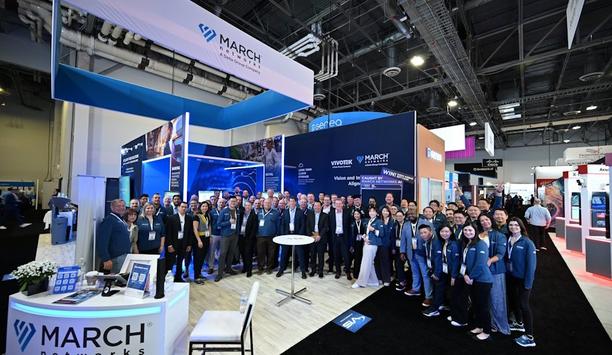
Combining VIVOTEK’s branded video security business with March Networks paves the way for the combined brands to meet customers’ increasing appetite for integrated solutions rather than individual components. The merger brings VIVOTEK's branded video security business together under one operating structure with March Networks’ enterprise-grade video surveillance, AI analytics, and cloud-managed security solutions. Customers now have access to a broader, more integrated portfolio spanning enterprise video management, advanced cameras, edge artificial intelligence (AI), cloud services, recording platforms, and business intelligence, says Net Payne, Chief Sales & Marketing Officer at March Networks and VIVOTEK. Distinct product strategies Given the combined companies, product development, sales, marketing, and customer support can move in step rather than in parallel. March Networks and VIVOTEK were already both part of the Delta Electronics family, but they previously operated as separate businesses with distinct product strategies, teams, and routes to market. March Networks and VIVOTEK announced the merger of their branded video security businesses last spring following Delta Electronics' acquisition of remaining VIVOTEK shares. “Aligning our complementary capabilities lets us innovate faster, simplify engagement, and respond more quickly to a market moving toward AI, cloud and intelligent video,” says Payne. This merger reflects a broader shift across the physical security industry, adds Payne. “Customers no longer see video purely as a tool for reviewing incidents after the fact,” he says. “They expect it to help identify risks earlier, simplify investigations, improve operations, and support better decisions across the organization.” Cloud video management Meeting customer expectations requires more than bolting AI features onto existing systems Meeting customer expectations requires more than bolting AI features onto existing systems. Rather, it requires cameras, edge intelligence, recording, software, cloud services, and business data working together as one coordinated platform. “By bringing March Networks and VIVOTEK together, we combine deep expertise across the full video technology stack while preserving the relationships, sector knowledge and customer focus both companies have built over many years,” says Payne. “Our goal is to make intelligent video more integrated, scalable, and practical for customers and partners worldwide.” Both entities bring strengths to the combined companies. March Networks brings experience in enterprise software, cloud video management and large-scale deployments; while VIVOTEK brings strength in imaging, camera technology and edge intelligence. Together they seek to ensure more choice when designing systems, a clearer path for future expansion, and technologies that work together more effectively without compromising the reliability, cybersecurity, and support customers expect from both companies. Advantages for channel partners Channel partners gain a broader portfolio to address a wider range of customer requirements, combining components as each deployment demands. Channel partners also benefit from expanded geographic reach, deeper technical expertise, and greater investment in training and enablement. “Importantly, this is designed to be a seamless transition,” says Payne. “Partners keep working with the teams and relationships they already know, while gaining access to new capabilities and certification opportunities. Over time, that alignment should make it easier to design, deploy and support complete solutions.” Because they are established and respected brands, March Networks and VIVOTEK branding will continue to be used. Rebranding is not a goal, and neither identity is being replaced by the other. Coordinated decision-making “The immediate priority is organizational alignment by making it easier for customers and partners to benefit from the combined portfolio,” says Payne. Product branding will continue to reflect the relevant portfolio and market context. As product roadmaps become more closely coordinated, customers can expect greater interoperability and a more cohesive experience, says Payne. Any future branding changes will be managed carefully and communicated clearly. Combining the businesses reduces duplication and enables coordinated decision-making across product strategy, engineering, sales, marketing, operations, and customer support. “Instead of developing capabilities independently, teams can share their expertise, align roadmaps, and direct investment to where it has the greatest customer impact,” says Payne. Combining specialized knowledge globally The combined organization operates across six continents and more than 75 countries The combined organization includes more than 300 research and development (R&D) engineers across four Centres of Excellence in Canada, Taiwan, Italy and Poland, thus bringing together a substantial base of specialist knowledge. The unified network also sharpens the ability to prioritise global opportunities, respond to regional needs and bring innovations to market faster. The combined organization operates across six continents and more than 75 countries, supported by more than 1,100 certified channel partners. That footprint provides greater capacity to support multinational customers while staying responsive to local market needs. Looking ahead, future growth will increasingly come from helping customers turn video into useful, actionable intelligence. “The market is moving beyond conventional surveillance toward solutions combining AI, cloud services, edge processing, video management and operational data — and our new structure brings these together as one connected solution rather than several isolated technologies,” says Payne. Broader technical expertise There will also be closer collaboration among specialists in imaging, hardware, software, analytics, and cloud, which is important given how much customer infrastructure, regulatory, and deployment requirements vary. The companies can support cloud, hybrid, and on-premise environments, giving organizations a practical path toward more intelligent video. More choice comes from bringing together complementary technologies across product groups. Greater scale is achieved through a larger engineering organization, broader technical expertise and more capacity to invest in innovation. Challenges for the industry at large Looking to the future for the industry at large, the greatest challenge will be managing the rapid growth of AI Looking to the future for the industry at large, the greatest challenge will be managing the rapid growth of AI responsibly, securely and at scale, says Payne. Video systems will generate more data and automate more decisions, but organizations must be able to trust how that intelligence is created, protected, and applied, he adds. “Cybersecurity, privacy, data sovereignty, system interoperability and AI accuracy are more important than ever,” says Payne. Addressing these elements requires expertise across the entire technology stack: from camera and edge processing to recording, cloud infrastructure, video management and analytics. “Together, March Networks and VIVOTEK can coordinate development across all these layers, giving customers flexible architectures that balance innovation with security, transparency and operational control,” says Payne.

IQSIGHT seeks to bring visual intelligence to environments where clarity, reliability, and trust matter the most, says CEO Sabrina Stainburn. Formerly Bosch Video Systems, IQSIGHT is an intelligence-first video security company, combining more than 60 years of engineering expertise with real-time intelligence to help organizations see clearly, act confidently, and improve outcomes in environments when every second matters. While the brand is new, the technology, reliability, and trust behind it are familiar— the products still carry the Bosch name, and the engineering teams remain the same to ensure the continuation of the Bosch legacy. As a result, customers can expect the same standards they rely on today. Embracing emerging technologies IQSIGHT is embracing emerging technologies. “We are applying AI where it delivers value by helping systems understand what is happening and surface the events and patterns that matter most—so customers can detect risk earlier, make faster decisions, and operate with confidence,” says Stainburn. With intelligence at the edge, the cameras act as sensors to secure premises, make buildings safer, and monitor perimeters — without requiring a cloud connection. Edge-based AI also supports integration into existing systems to add visual intelligence without a rip-and-replace — such as adding cameras with visual gun detection outside of entrances or supplementing systems with the ability to detect clothing color and other attributes. IQSIGHT combines the Bosch video portfolio with new AI-enabled capabilities AI-enabled capabilities IQSIGHT combines the Bosch video portfolio with new AI-enabled capabilities designed to remove blind spots IQSIGHT combines the Bosch video portfolio with new AI-enabled capabilities designed to remove blind spots and support earlier, better-informed decisions. The portfolio continues to include intelligent cameras, such as the FLEXIDOME, AUTODOME, DINION, and MIC models, AI-enabled Intelligent Video Analytics Pro (IVA Pro) offerings, and recording and video management solutions, such as BVMS software. This year, the portfolio will also expand with technologies and solutions built on IQSIGHT’s new intelligence-first platform. Vertical markets that are core to the strategy include government, critical infrastructure, education, and smart cities, all industries closely connected with safety, continuity, and operational performance. In these environments, visual intelligence helps organizations address practical challenges — securing perimeters, enhancing safety, and improving traffic flow — so they can operate securely and efficiently. Visual intelligence helps organizations address practical challenges Operating securely and efficiently “Reliability is essential in these industries, and our cameras are engineered to Bosch quality standards and designed to perform in demanding conditions, including extreme weather, while delivering dependable video and accurate analytics where it matters most,” says Stainburn. “These strengths make our video solutions ideal for any industry where security must be uncompromised.” IQSIGHT evolves from the sale of Bosch’s security and communications technology product business to European investment firm Triton on June 30, 2025. The product brands for video systems, access control, intrusion systems, and communications systems united under the roof of the new company Keenfinity Group. New organizational structure The Keenfinity Group now operates as a holding company consisting of four businesses In late 2025, Keenfinity Group introduced a new organizational structure designed to unlock the next chapter of growth and innovation. The Keenfinity Group now operates as a holding company consisting of four businesses, including the video systems business now called IQSIGHT. Bosch has a long history of partnerships and integrations, and partnerships will remain essential to how IQSIGHT delivers value and flexibility for customers. “We work closely with technology partners to ensure customers can use visual intelligence within the platforms and architectures that best fit their operations,” says Stainburn. Secure-by-design approach Deep integrations include VMS platforms, such as Genetec and Milestone, thus enabling real-time insights across on-premise and cloud environments. This approach gives customers choice — without compromising performance, security, or reliability, according to IQSIGHT. “Continually strengthening our existing partnerships is vital, and we regularly add capabilities to these integrations to deliver new features to enhance security and safety for customers,” says Stainburn. “Cybersecurity is not a feature for us — it’s a foundation,” Stainburn emphasises. “As video systems become more connected and intelligence moves closer to the edge, trust must be designed in from the start. We take a secure-by-design approach across our hardware, software, and integrations. That means protecting data at every stage — from capture to analysis to delivery.” Combining sight and intelligence Just as important, the company works closely with partners and customers to ensure systems fit into their broader security and IT strategies. “When organizations rely on video to make critical decisions, security and reliability must be non-negotiable,” says Stainburn. Stainburn sees video as evolving from traditional surveillance into “visual intelligence” — moving from simply recording events to understanding what is happening in real time. By combining sight and intelligence, organizations can see patterns, giving them the power to predict events that may happen. Proactively addressing risks Stainburn sees video as evolving from traditional surveillance into “visual intelligence” Traditionally, video security was based on video surveillance — an investigative tool for users to review what has already happened. With AI, users can take a different approach — looking at patterns to better secure their premises and have the foresight to intervene before incidents escalate. AI helps systems understand what is happening in a scene, enabling them to discern between a person standing at a train platform and an individual vandalising a train platform, someone holding a power drill versus someone holding a gun. “This level of visual intelligence brings clarity to unfolding events to assist users in proactively addressing risks,” says Stainburn. AI-enabled video systems With foresight, end users can prevent those events from occurring or other issues from escalating. The ability to discern patterns can also influence decisions around safety, resource use, and the customer experience, says Stainburn. “While security will always remain core, we expect visual intelligence to play an increasingly important role in improving operational efficiency across many environments over the next five years.” Not all AI-enabled video systems are equal. Edge, cloud, and GenAI-based tools have different strengths and selecting one approach over another depends on the application or the problem customers need to solve. IQSIGHT works closely with integrators and end users to understand the challenges they are addressing and to provide guidance on the best AI approach to reduce risks, lower response times, and improve operations. Proof of concept projects are important to demonstrating performance in the real world. That’s where IQSIGHT gains an advantage with solutions that deliver reliable results even in challenging conditions, says Stainburn.
Case studies

In a move to modernize campus operations and create a smoother experience for students and staff, Peru’s National Agrarian University has deployed a comprehensive Hikvision smart campus solution. From streamlined access to safer transportation, the university is building a safer, connected and efficient campus environment. Universidad Nacional Agraria La Molina (National Agrarian University) is one of Peru's most respected academic institutions. Its 102-hectare campus operates more like a small city than a traditional university, serving eight faculties, around 8,000 students, and about 600 teachers every day. Large campus area As campus activity continued to grow, the university wanted a more modern and efficient way to manage daily operations. Previously, visitor and vehicle access relied heavily on manual checks and handwritten records. The university also wanted better visibility over campus bus operations and more effective support for security teams patrolling the large campus area. Their goals included: Streamlining pedestrian and vehicle access Equipping patrol teams with mobile tools to enable them to respond to incidents faster Enhancing safety and visibility across campus bus operations Centralizing management through a single unified platform Smart campus solution To achieve these, the university worked with system integrator Consorcio Valtar Security y Serinfortel to deploy a unified Hikvision smart campus solution. To improve pedestrian access, the university installed 18 Hikvision Pro Swing Barriers (DS-K3B530X) and 28 Face Recognition Terminals (DS-K5671-ZV) at the main and side entrances. The solution helps students and staff move through gates quickly while improving entry management. The facial recognition terminals support recognition speeds of less than 0.2 seconds per user and accuracy rates above 99%. Anti-tailgating functions, which prevent people slipping in behind others, helps ensure only authorized individuals can enter. LED indicators, meanwhile, provide visual indicators guide people through the turnstiles in order to avoid bottlenecks. Reducing manual paperwork To further streamline visitor handling, the university deployed a Visitor Terminal (DS-K5032-D) together with an Enrollment Station (DS-K1F600U-D6E-F) at the main entrance. The dual-screen visitor terminal supports paperless registration, helping security staff process guests more efficiently while reducing manual paperwork. At the same time, the enrollment station simplifies face enrollment and user management through an easy-to-use touch-screen interface. For vehicle access, Hikvision deployed 6 ANPR Cameras (DS-TCG406-E(S)) together with 6 Barrier Gates (DS-TMG520-H/B) at two campus entrances. The system automatically recognises license plates and manages vehicle access in real time, helping reduce waiting times and improve traffic flow. Staff vehicles can be pre-registered through the university’s app, allowing smoother entry during peak hours. Adjustable barrier speeds and multiple anti-hitting protection mechanisms also help improve operational safety. To further improve the driver experience, LED Screens (DS-TVL224-4-5Y) display welcome messages and vehicle information in real time. Maintaining daily operations Because of the campus’s large size, motorcycle patrol teams play an important role in maintaining daily operations and responding quickly across different areas. To support these teams, the university has deployed 10 Hikvision Ultra Series Body Cameras (DS-MH2311) together with 2 Dock Stations (DS-MDS001). Several features make this solution particularly suitable for mobile patrol work: Clear 2 MP video recording with a wide 129° horizontal field of view Up to 8 hours of recording with a removable 3,300 mAh battery Wireless connectivity for improved communication Real-time positioning support through GPS Centralized charging, storage, and evidence upload through dock stations Professional campus operations The cameras are mainly used during routine motorcycle patrols and when responding to incidents on campus. Recorded footage helps clearly document security procedures and provides reliable records of how situations were handled, supporting transparent and professional campus operations. The university has also upgraded safety across its fleet of 11 campus buses with Hikvision onboard solutions. Each bus is equipped with: Mobile Dome Cameras (DS-2XM6726G1-IM/ND) and Mobile Network Cameras (DS-2XM6522G1-ID): These provide real-time HD video coverage inside and outside the buses, helping operators monitor passenger boarding, alighting, and road conditions clearly. DSM Camera (AE-VC1B1I-ISF(RJ45)): This improves driving safety by detecting critical safety indicators such as fatigue, distractions, and smoking. When potential risks are identified, alerts are immediately issued to the driver, helping encourage safer driving practices during daily routes. Touch Monitor (AE-MW1203): Drivers can view live camera feeds through the monitor. The display automatically switches to relevant views when doors open or when reversing, helping drivers monitor passenger movement and blind spots more effectively. Alarm Button (DS-1530HMI(AE)(O-NEU)): It allows drivers to immediately notify the control center for rapid assistance in emergency situations. Mobile NVR (AE-MN5043(1T/SSD)(RJ45)(O-STD)): This records and stores video while also supporting GPS positioning, geofencing, and route monitoring through Google Maps integration. Campus bus management Every solution, from access control and patrol operations to campus bus management, is centrally managed through HikCentral Professional. From this single platform, the university can: Monitor access events in real time Manage user permissions and visitor records Track campus buses through GIS-based maps Receive centralized alarms and event notifications Coordinate faster responses across campus Daily campus operations According to the university, the solution has significantly improved operational visibility and coordination across the campus. “With Hikvision’s smart campus solution, we now have a much more efficient and connected way to manage daily campus operations,” says Joseph Jimy Ordóñez Blanco, General Coordinator of the University’s Security Unit. “From access management to transportation safety, the platform gives our teams better visibility, faster response capabilities, and greater confidence in maintaining a safe environment for students and staff.”

Experiencing consistent growth over several decades while innovating the fashion world, a luxury retailer needed to find a solution that aligned with their company’s success. They wanted a system that could be easily scaled across locations while working with their stores’ most critical systems and devices, whether that was current third-party cameras, inventory management systems, barcode scanners, and other future innovations. Powerful video surveillance By working with OpenEye, this retailer utilizes an open cloud-managed video platform that enables streamlined scalability and integrates with their devices, with benefits including: Open Platform: OpenEye Web Services (OWS) enabled the business to integrate their existing cameras into the cloud video platform for more streamlined deployment and better cost savings. Reliable Support: The company leveraged reliable support through OpenEye, ensuring that whenever their team needed a new recorder or assistance with their surveillance, they had it. Improved Operations: OWS’ effective user management features equipped facilities, HR, and other teams throughout the business with access to powerful video surveillance. With OpenEye Web Services, this luxury retailer has been able to enhance operations across their stores while ensuring their employees, customers, and assets are secure.

Based in New York City, NY, Flushing Bank operates 30 branches and has been a staple in their community for nearly 100 years. With a heart for their customers, Flushing Bank needed a solution that could help protect their customers, employees, and assets. Hoping to streamline investigations when incidents occurred, Flushing Bank wanted a system that could optimize video retrieval and sharing. Improving response time By working with OpenEye, this financial institution utilizes an intelligent cloud-managed video platform that improves their ability to gather evidence and share it with law enforcement or other necessary parties, with benefits including: Remote Access: OpenEye Web Services (OWS) enables Flushing Bank to remotely access security video from wherever they are on any device. Clip Sharing: Thanks to the cloud, Flushing Bank can streamline investigations by utilising clip sharing in OWS to easily export and share video. Video Verification: Flushing Bank receives video verification during critical incidents or suspicious activity to improve response time while simultaneously reducing false alarms. With OWS, the bank has been able to focus on what matters most while staying vigilant and improving collaboration with police.

Salisbury Poultry Limited is a pioneering UK poultry processing company with a strong reputation for quality and efficiency. Established over 30 years ago, the company operates a state-of-the-art facility, supplying fresh and frozen poultry products to major retailers, wholesalers, and the food service industry. With a commitment to innovation and high standards, Salisbury Poultry continues to invest in advanced processing technology, ensuring excellent product quality and compliance with the highest food safety and welfare regulations The Challenge - Salisbury Poultry faced challenges in accurately tracking employee attendance across multiple shifts, leading to inefficiencies in workforce management and payroll processing. Manual processes made it difficult to monitor lateness, manage overtime, and ensure compliance with working time regulations. They needed a reliable, automated time and attendance solution to improve accuracy, streamline operations, and enhance overall workforce efficiency. Overall workforce efficiency The solution - Salisbury Poultry needed a robust, efficient, and GDPR-compliant time and attendance solution to manage their workforce of over 1000 employees. Their key requirements included accurate time tracking, a streamlined authorization process for overtime, and a comprehensive leave management feature to monitor holiday entitlement and identify sickness patterns effectively. timeware® Professional was the ideal choice due to its advanced functionality, reliability, customization capabilities and the ability to integrate seamlessly with Salisbury’s existing workforce management processes. The software ensures that all attendance data is processed quickly and accurately, minimizing disruptions and enhancing operational efficiency. Additionally, timeware® provides the necessary GDPR features, ensuring data security and compliance with strict regulations. For attendance points, we recommended Suprema’s BioStation 3 face authentication device. With over 1000 employees clocking in and out daily, speed and accuracy were crucial. Improved workforce management The BioStation 3 offers fast, contactless face recognition, eliminating bottlenecks at shift changes and ensuring a seamless experience for staff. Enrollment is simple, fast, and efficient, allowing new employees to be registered quickly without delays. Suprema’s hardware is fully GDPR-compliant, providing Salisbury Poultry with the reassurance that all data is encrypted and secure. This ensures both the protection of personal information and the integrity of Salisbury’s security infrastructure, making the BioStation 3 the perfect solution for their needs. KEY BENEFITS Since adopting the timeware® solution with Suprema BioStation 3, Salisbury Poultry has significantly improved workforce management. Sensitive workforce data Accurate time tracking has streamlined payroll processing, eliminating errors and reducing the administrative workload. The leave management feature now efficiently tracks holiday entitlement and identifies sickness patterns, ensuring better resource planning. Suprema’s fast and secure face authentication has improved clocking-in efficiency, reducing queues and preventing attendance fraud. The automated overtime authorization process ensures compliance and enhances productivity. With GDPR-compliant security features, Salisbury Poultry now has a reliable, efficient system that supports over 1000 employees while safeguarding sensitive workforce data.

Genetec Inc., the pioneer in enterprise physical security software, announces that the City of Carmel, Indiana, has deployed Genetec™ Security Center to unify security and operational systems across more than 40 municipal sites, helping city departments coordinate resources, improve emergency response, and manage day-to-day operations more efficiently. Carmel’s public safety teams use Security Center to monitor video, alarms, emergency calls, response vehicles, and IoT sensors through an interactive city map. First responders can access the same information from mobile devices, helping teams coordinate resources and respond more efficiently when incidents occur. Direct first responders That coordination proved especially valuable when a rare tornado struck Carmel. Using Security Center, city teams quickly mapped the storm’s path and assessed its impact across the community. They identified the hardest-hit areas and used that information to direct first responders, utility crews, and public works resources where they were needed most. “By bringing all our departments onto one city-wide platform, we’ve reduced complexity. The result is better decisions for our community, higher response efficiency, and more cost-effective operations that benefit our residents,” said Morgan Rinehart, Network Architect at the City of Carmel. Making informed decisions Beyond public safety, Carmel is using Security Center to support services across the community. With information from multiple systems available through a unified platform, departments can better understand conditions across the city and make informed decisions about how to deploy resources. For example: Engineering and street teams can monitor road conditions, coordinate snow removal, and manage traffic during construction detours without sending personnel into the field to assess conditions Parks teams can monitor crowd levels, facility usage, and safety across the city’s waterpark and trails Public events teams can monitor pedestrian traffic in community plazas and during gatherings The unified platform also gives Carmel’s IT team a centralized view of system health. Teams can monitor device status, identify potential vulnerabilities, review cybersecurity information, and manage firmware and software updates from one platform, helping the city manage its growing number of connected devices. Providing additional flexibility Carmel is also taking a hybrid approach to its security infrastructure, with the cloud-based Security Center SaaS platform providing additional flexibility when temporary projects or large events require expanded video coverage. The city can deploy mobile cameras and connect with systems operated by local schools, sports organizations, and critical infrastructure partners. Looking ahead, Carmel plans to continue expanding the platform as its smart city initiatives evolve. This includes connecting more systems and community partners. By building on an open platform, the city can add new capabilities as its needs change while maintaining a consistent approach to security and operations.

The Sanoat Qurilish Bank (SQB) in Uzbekistan enhanced its security and operations with Dahua’s integrated solution, combining ANPR, under-vehicle scanning, facial recognition, and DSS Pro for centralized management. This improved inspection accuracy, strengthened access control, and enabled faster, more efficient security responses. Overview - SQB is one of Uzbekistan’s key financial institutions, required a stronger, more intelligent security infrastructure to protect its facilities, personnel, visitors, and vehicle entry points. As a banking environment with high daily traffic and strict security requirements, SQB needed a solution that could reduce operational risks, improve inspection accuracy, and unify fragmented security systems under one centralized platform. Key financial institutions Challenges - The bank encountered several key challenges in its existing operations and security systems. Vehicle inspection at entry and exit points was not comprehensive enough, creating potential risks from unauthorized or hazardous vehicles. Manual inspection processes also increased operating costs and were vulnerable to human error. At the same time, visitor control needed improvement, as internal visitors could access important office areas without strict management. The bank’s existing security systems, including CCTV, access control, and under-vehicle scanning, came from different brands, making unified management difficult. Meeting rooms also suffered from low efficiency due to traditional presentation and note-taking methods. Smart security solution Solutions - To address these needs, Dahua provided an integrated smart security solution covering vehicle inspection, personnel access, visitor management, conference room modernisation, and centralized system control. At vehicle entrances, Dahua deployed bollards, under-vehicle scanning systems, ANPR cameras, and gate barriers to support comprehensive vehicle checks and maintain visual records for future audits. This helped improve perimeter security while making inspections smoother and more traceable. For personnel and visitor management, Dahua introduced access control, visitor management, elevator control systems, and facial recognition technology in key areas. These systems enabled accurate identity verification and stricter access permissions, helping SQB protect sensitive office spaces and improve overall site security. Reduced equipment maintenance Dahua also upgraded the bank’s meeting environment with integrated conference room equipment, including electronic whiteboards, lifting screens, and audio and video recording capabilities. This created a cleaner, more efficient meeting space, reduced equipment maintenance complexity, and made meeting content easier to record and trace. A major highlight of the project was the deployment of Dahua DSS Pro, which integrated CCTV, access control systems, and UVSS into one unified management platform. By connecting multiple subsystems, DSS Pro enabled security guards to monitor devices centrally, identify abnormal events faster, and respond more efficiently. Efficient daily operations Results - As a result of successfully implementing Dahua’s Integrated Smart Security Solution, SQB strengthened its physical security, improved vehicle and personnel management, reduced dependence on manual inspection, and achieved more efficient daily operations. The project also demonstrated the value of Dahua’s integrated security ecosystem, combining smart devices, AI-enabled identification, and centralized platform management to meet the demanding security needs of the banking sector.
Products
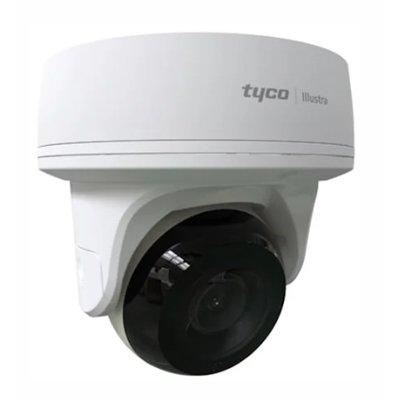
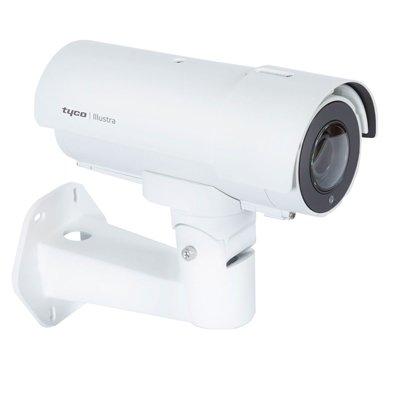
Round table discussion

Passwords originated in ancient times, used by Roman military forces around the first century BC. Since then, passwords have evolved from physical words to the computer access control tools used today. Passwords are easy to implement, widely supported, and familiar to users. However, they are easily forgotten, stolen through phishing, prone to reuse, and vulnerable to credential-harvesting or brute-force attacks. We asked our Expert Panel: What is the role of passwords in physical security?

Critical national infrastructure encompasses sectors such as energy, utilities, healthcare, and data centers – environments that underpin economic stability and public safety. With so much at stake, the importance of effective security systems is that much higher. We asked our Expert Panel Roundtable: What are the unique aspects of the critical infrastructure market, and how should the security industry adapt?

Biometrics today provide better security and frictionless user experiences. Biometric identifiers like fingerprints, facial recognition, and iris scans are unique and difficult to forge. They eliminate the vulnerabilities of traditional authentication and streamline secure access control. Identity verification reliably protects sensitive digital information and physical entry. We asked our Expert Panel Roundtable: How is the role of biometrics evolving in physical access control?
White papers

Technology's Role In Securing Banks And Financial Institutions
Download
Integrated Systems Enable Critical And Compliant Security For Transportation
Download
Modernizing Physical Access Control
Download
Access. Intrusion. One Estate.
Download
Minimizing Storage, Maximizing Focus
Download
Securing The Modern Data Center
Download
Security Technologies Promote Real-Time Awareness In K-12 Schools
Download
An End User's Guide To Physical Security For Data Centers
Download
Hospital Safety In A High Risk World
Download
How Digital Transformation Is Delivering New Opportunity
Download
Where Do We Go From Prox?
Download
The User-Centric Security Revolution
Download
Read This Before You Sign Off On A Weapons Detection System
Download
One System, One Card
Download
Aligning Physical And Cyber Defence For Total Protection
Download