Security Industry Authority UK - Experts & Thought Leaders




Latest Security Industry Authority UK news & announcements

The S12 Security Guarding Leadership Group (S12) is delighted to welcome five new members to its core committee. The S12 brings together security leaders to work as a collective with the Government, Security Industry Authority, and the Security Minister. Their mandate is to address and elevate critical industry issues, promote higher standards and professionalism, enhance public safety, and positively shape the perception of the security guarding sector. Latest round of nominations While the group was initially seeking two new members in its latest round of nominations, the strength and breadth of candidates led to four being invited to join. It is strengthened by the appointments of: Keith Middleton, Managing Director of Bidvest Noonan (UK) Ltd Steven Moore, Managing Director of OCS Kieran Mackie, Managing Director of Amulet Security Simon Alderson, CEO of First Response Group Ltd Representatives from five large companies It was stated that preference would be given to representatives from large and medium companies in this nomination round to help provide a more balanced committee. As nominations were received from two large and two medium firms, all four have been offered a place. These appointments provide complete balance to the S12, which will now be made up of representatives from five large companies, three medium, and five small businesses. New appointments are a major win for the S12 Paul Evans, Chair of the Security Guarding Leadership Group, said: “We thank all those who put themselves forward to give up their time and resources to help drive positive change in the security industry." “The appointments of Keith Middleton, Steven Moore, Kieran Mackie and Simon Alderson are all a major win for us, and between them they have a wide range of skills and experience that will be invaluable in helping the S12 achieve its goals. We welcome them all to the team and look forward to them getting stuck in – there’s a lot to do. These latest appointments also help balance out the committee in terms of the type and size of businesses represented." “Finally, we also warmly welcome Abbey Petkar of Magenta Security Services, who joins the committee following a resignation from the previous nomination round. Abbey was the next runner-up in the small business category in that initial voting round, and I equally look forward to benefiting from his years of experience and expertise in the Security Guarding industry.” Non-ACS representation The S12 has also confirmed plans to introduce two non-ACS board seats in the New Year. This will help ensure even broader inclusivity and representation as the group continues to engage with Government, the Home Office and the Security Industry Authority on critical issues such as Mandatory Business Licensing, Martyn’s Law, labor exploitation and raising professional standards across the sector. About the S12 The S12 meets regularly with the Security Minister, the Home Office and the SIA to drive the highest professional standards across the industry. The core committee lead a number of workstreams across a variety of areas, including MR8, Labour Exploitation, Training Malpractice, SIA Business Approval Scheme, Martyn’s Law and Integrated Policing and Private Security. The committee is so far being supported by more than 400 people from across the industry who are helping to represent the interests of the industry with one united voice, while working to raise standards, shape policy and improve public safety.
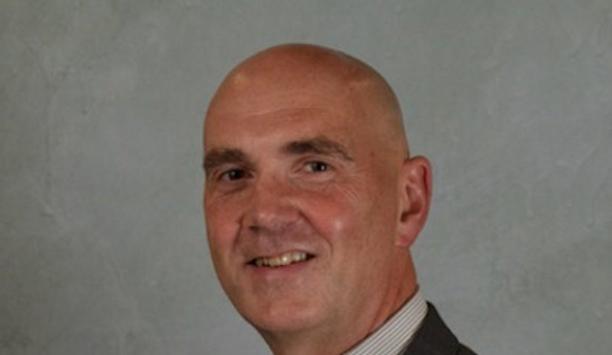
The S12 Security Guarding Industry Leadership Group has announced the appointment of Paul Fullwood as its Chief of Staff, marking a significant step forward in the group’s mission to strengthen industry collaboration, shape policy, elevate standards and enhance public safety. The appointment follows the formation period for the S12, including the completion of an industry-wide consultation survey, the establishment of 15 distinct workstreams, and the opening of registrations for stakeholders to join working groups focused on tackling the sector’s most pressing challenges. Prior roles of Paul Paul joins the S12 after an exemplary 37-year career in public service, spanning the HM Armed Forces, the UK Police Service, and most recently, the Security Industry Authority (SIA), where he served as Executive Director for Inspection and Enforcement. In his new role, Paul will serve as the central coordination lead for the S12, providing strategic, operational, and administrative support to the Chair, Deputy, S12 members and key stakeholders. As Chief of Staff, he will oversee the workstream activities, stakeholder engagement, and ensure effective communication across government departments, regulators, and industry leaders. Shaping the future of the industry Reflecting on the appointment, S12 Chair Paul Evans said: “Paul’s experience, integrity, and deep understanding of the UK’s security landscape make him uniquely positioned to help drive forward the S12’s ambitions. He is very well regarded and known across all areas of the industry, and this will be vital in ensuring the role achieves its required objectives.” Echoing the Chair’s remarks, S12 Deputy Chair Peter Harrison said: “His leadership will ensure the group remains focused, transparent, and effective as we continue shaping the future of the industry together.” Paul’s distinguished background Paul’s distinguished background includes serving as Assistant Chief Constable (Specialist Policing Services) for the tri-party Bedfordshire, Cambridgeshire and Hertfordshire constabularies, where he led major crime, counter terrorism, armed policing, public order, and emergency response functions. During his tenure, he was also the National Policing Chiefs’ Council (NPCC) lead for complex and sensitive crime investigations, advising senior law enforcement leaders and overseeing nationally significant cases. Paul's national operations and initiatives At the SIA, Paul spearheaded major national operations and initiatives including Operation Empower (labor exploitation) and Operation Benchmark (training malpractice) while advising the Home Office on regulatory and safeguarding policy, mandatory business licensing, and Martyn’s Law. Speaking on his appointment, Paul Fullwood said: “I’m honored to join the S12 as Chief of Staff at such a transformative moment for the private security industry. With collaboration and inclusion at the heart of our mission, I look forward to supporting our members and partners as we drive meaningful change, elevate standards, and strengthen public safety across the UK.” Paul's key role in ensuring effective communication As Chief of Staff, Paul will play a key role in ensuring effective communication, consistency, transparency and accountability across all S12 initiatives. His central involvement will ensure strategic objectives progress into tangible and measurable outcomes. The S12 continues to invite industry professionals, organizations, and stakeholders to join established working groups and help address the industry challenges that matter most to them. These working groups will drive critical engagements with the Security Minister, the Home Office, and the SIA throughout 2026.
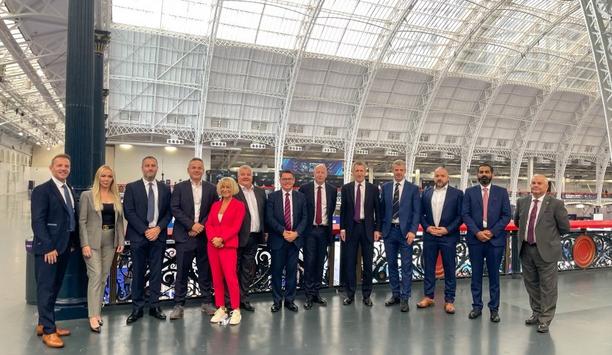
The newly formed Security Guarding Leadership Group (S12) met with Security Minister - Dan Jarvis MBE for the first time at the International Security Expo, Olympia London, and announced Paul Evans (CEO, Carlisle Security) and Peter Harrison (FGH Security) as Chair and Deputy Chair of the Group, which brings together a diverse team of elected leaders from across the security industry. The Group will regularly engage directly with the Minister, Homeland Security and the Security Industry Authority (SIA), offering a voice and insight from all areas of the industry. Its mission is to raise industry standards, help shape policy, accelerate the implementation of critical legislation and ensure that a diverse range of voices are heard to inform future decisions. Implementation of critical legislation Members range from the largest national providers to small and medium independent firms plus representation from industry trade associations. Each member is a senior security executive and will serve a minimum two-year term within the Group, meeting at least once a month. Each S12 member will lead on at least one industry initiative and seek to create enlarged sub-working groups from the widest possible reach into the industry. Transparent records of their objectives and actions will be found on the newly created website. Highest professional standards The S12 will meet with the Security Minister and engage with the SIA on a regular basis The S12 will meet with the Security Minister and engage with the SIA on a regular basis to drive the highest professional standards, drawing on industry wide data, and insights from trade associations, as well as supporting with the establishment of the Security Skills Academy. During his speech at the International Security Expo, Security Minister, Dan Jarvis, said: “I am very pleased to announce the formation of the S12, a new industry-led initiative to bring together various parts of the private security industry to be able to speak to Government with one voice.” He adds, “Earlier this morning we had a good and constructive meeting with the elected leaders who make up the S12. I was able to listen to what they had to say about how we can organize to improve standards within the security industry. I am keen for the government and for the SIA to work closely with them.” Enhancing public protection Paul Evans, Chair, Security Guarding Leadership Group (S12), said: “This Group has been built on the principles of inclusive representation, accountability and action. We recognize this is a critical time for our industry and the sense of collaboration has never felt stronger. However, we also face rising threat levels and there are still unfortunately reports of malpractice and shortcuts being taken which simply will not stand up against new legislation.” He adds, “A core part of our mission is to equip security professionals with tools and training that reflect the changing landscape and to improve standards that will further enhance public protection. With the support of the Security Minister, we look forward to making a lasting difference and making the country a safer place for all.”
Insights & Opinions from thought leaders at Security Industry Authority UK
The terrorism threat in the UK is very real. In fact, since July 2019, the threat level has never dropped lower than “substantial” or “severe.” To ensure preparedness across public places and events, the UK government has introduced the new Terrorism (Protection of Premises) Act 2025, more commonly known as Martyn’s Law in memory of Martyn Hett, a victim of the 2017 Manchester Arena bombing. Overarching aim The new legislation requires operators of public spaces and events to immediately assess and improve their readiness to respond to a terrorist attack. The overarching aim: being better prepared, protected and ready to respond should an attack occur. Everything from busy shopping centers to large stadiums must comply with Martyn’s Law by April 2027, and the Security Industry Authority (SIA) is charged with enforcing the rules. Upgraded security systems The smaller venues and events are only required to enforce low-cost solutions with no physical measures There are different rules depending on the capacity of public premises or the event, ranging from a standard-duty premises (200 – 799 people, including staff) to an enhanced-duty premise (over 800). The smaller venues and events are only required to implement low-cost solutions with no physical measures. Enhanced environments, however, must provide monitoring in and around the facility and document public protection measures. Many organizations will likely invest in upgraded security systems. However, effective responses depend not only on hardware but also on situational awareness and training, helping staff identify potential threats and respond effectively under pressure. Physical security information management systems Terror-related attacks are rare and unpredictable, and the most experienced personnel are not always on shift when something does occur. Even if they are, the most seasoned security professionals can’t ensure every decision they make is the right one. One solution gaining attention is physical security information management (PSIM) systems, which integrate siloed security tools — such as CCTV, access control, and fire sensors — into a unified platform. PSIMs enable rapid information processing, automated workflows and coordinated responses to incidents, whether routine or critical. Use PSIMs to handle emergencies PSIM systems have been around for many years and have been embraced by large airports and mass transit organizations PSIM systems have been around for many years and have been embraced by large airports, mass transit organizations and critical infrastructure companies. However, these systems are ideally suited to any larger-scale environment, such as those classified as an enhanced-duty premise by Martyn’s Law. For example, airports use PSIMs to handle emergencies, locate missing persons or assess potential threats like unattended luggage. Similarly, PSIMs can improve situational awareness for stadiums, shopping centers and event venues, aiding crowd management, emergency evacuations and collaboration with police or emergency services. External stakeholder intervention Should an incident require external stakeholder intervention, the PSIM becomes a mission-critical collaboration tool, enabling real-time information (including video footage) to be shared with decision-makers, emergency control rooms and first responders en route to the scene. This ensures they arrive with the appropriate resources and can deploy faster to the right places. PSIM systems also facilitate post-incident analysis, helping organizations improve protocols, demonstrate compliance and fulfill their duty of care. Impacted by terror-related tragedies Martyn’s Law aims to eliminate the complacent mindset of “it won’t happen here” when assessing the risks associated with public gatherings. Communities impacted by terror-related tragedies serve as a stark reminder that such incidents can and do occur. Within the security sector, it is crucial to promote discussions on how new approaches, technologies, and training can enhance preparedness. Equally important is the responsibility to raise awareness about Martyn’s Law and its role in fostering safer public spaces.
The Private Security Industry Act of 2001 gives the Security Industry Authority (SIA) the function of setting standards of conduct in the United Kingdom’s private security industry. Time is winding down to provide input during the SIA’s six-week consultation on a new draft code of conduct for SIA licence holders and applicants for SIA licences. The authority is inviting the industry, licence holders, and anyone with an interest in private security to have their say on the draft code of conduct by taking part in a survey. The consultation will end on 23 February. “The ethos of the code of conduct is that it will improve standards and public safety by setting out the standards of conduct and behavior we expect people to uphold if they are entrusted with protecting the public, premises and property,” says Ian Todd, Chief Executive, Security Industry Authority (SIA). Security's Code of Conduct A code of conduct sets out what standards of behavior professionals have to meet in order to work in the profession In security as in many professions, a code of conduct sets out what standards of behavior professionals have to meet in order to work in the profession. SIA is suggesting Six Commitments of behavior that will apply to all licensed security operatives and to applicants. If the code of conduct is sanctioned by the U.K. Home Office, it would become mandatory and incorporated into SIA’s licensing criteria Get Licensed. A commitment to certain standards of behavior is fundamental to what it means to be fit and proper, and to being part of a profession. The six commitments are: Act with honesty and integrity Be trustworthy Protect the people and property you are entrusted to protect Be professional at work Act with fairness and impartiality at work Be accountable for your decisions and actions “We will review the comments from the consultation once it concludes on 23 February, analyze the results and publish a report on our findings,” says Todd. “The SIA will then use the comments it has received to write a final version of the code of conduct. The introduction of a code of conduct will be subject to final approval by Home Office Ministers.” SIA’s current Standards of Behavior provide guidance on professional behavior but are not mandatory. The draft code of conduct builds on the Standards of Behavior. Upholding SIA's Standards The SIA’s Partnership and Interventions team is the unit that enforces the Private Security Industry Act “The majority of licence holders uphold the standards of behavior that the SIA, their employers and the public expect of them,” says Todd. “Their professionalism and dedication keep the public safe and tackle crime. However, there are incidents in which some licence holders do not behave in this way. This minority lower the standard of service the public receives, harm public safety, and bring themselves and the rest of the private security industry into disrepute.” The SIA’s Partnership and Interventions team is the unit that enforces the Private Security Industry Act. It is likely that they will be required to enforce the code of conduct should it become mandatory. The draft code of conduct is currently out for consultation and the proposal has been shared widely to licence holders, private security businesses, and enforcement partners encouraging them all to take part. “Once the consultation has concluded, we will analyze the findings from the feedback, produce a report and publish it on our website and share this widely via social media,” says Todd.