Samsung - Experts & Thought Leaders






Latest Samsung news & announcements

Safetrust today introduced the Safetrust Aliro 1.0 Migration Credential, a physical credential designed to help enterprises move from proprietary access technologies to the open Aliro standard without replacing their existing reader infrastructure. Enterprises can issue, manage, and update the credential themselves, while one organization-controlled identity can operate across Aliro-compatible readers from multiple vendors. Organization-controlled digital trust Traditional credentials often rely on proprietary keys controlled by an access control vendor. Aliro credentials instead use digital certificates the organization issues and controls. As with the certificates that secure websites and enterprise IT systems, the organization determines which identities are trusted, where they can be used, and how certificates are issued, updated, and revoked. Organizations can also authorize external partners, including landlords, parking operators, and workplace service providers, to trust the same credential. One badge can therefore provide access to corporate offices, shared buildings, parking facilities, and other approved environments without requiring a separate credential from each provider. For large enterprises, this provides direct control over credential security, less dependence on any single hardware vendor, and alignment across physical access, enterprise PKI, identity and access management, and Zero Trust strategy. The credential implements the Connectivity Standards Alliance's Aliro 1.0 specification and works with Aliro-compatible hardware from multiple vendors. Aliro was developed through collaboration among more than 220 CSA member companies, including Apple, Google, Samsung, and Safetrust. A new model for enterprise identity "Aliro represents the first time customers and vendors outside the government sector have come together around a common standard for organizational identity," said Jason Hart, CEO and co-founder of Safetrust. "For enterprise security leaders, this creates a path to stronger security and greater vendor choice without requiring a disruptive replacement of their existing access infrastructure." Passport model for access As an open, multi-vendor standard, Aliro is becoming the enterprise equivalent of a passport: the issuer establishes a trusted identity, while independent organizations decide whether and where to accept it. Moving beyond proprietary credentials For decades, physical access customers have migrated from one proprietary credential technology to the next, often replacing readers, credentials, and key infrastructure with each generation. While the cryptography improved, the underlying model often did not: the credential vendor continued to control the technology and the critical trust infrastructure. When that vendor-controlled trust infrastructure was compromised, the security of the credentials customers relied upon was compromised with it, restarting the migration cycle all over again. Open migration path Aliro changes that model. Instead of asking customers to migrate to Safetrust's next proprietary credential, Safetrust is providing a migration path to an industry standard that any compliant vendor can implement. The organization, not Safetrust, generates and controls its keys and establishes its trust relationships, bringing physical access in line with the certificate-based security practices already familiar to enterprise IT. Supporting legacy infrastructure The Safetrust Aliro credential simplifies migration by consolidating multiple legacy credentials onto a single card. Safetrust has independently developed emulation technology that enables interoperability with installed legacy reader ecosystems, including readers configured for HID® Seos® Standard and Elite credentials, LEAF credentials, vendor-specific credentials used with MIFARE® DESFire® data models, and more than 30 low-frequency proximity technologies. Safetrust independently developed these legacy-compatible applications, and they are not HID or other third-party credentials. This allows one physical credential to work with existing legacy readers without modifying the installed infrastructure, while also supporting migration to Aliro. Phased migration without disruption Organizations can therefore migrate to Aliro at their own pace without disrupting day-to-day operations. Existing readers can remain in service while Aliro-capable infrastructure is introduced progressively, starting with the highest-risk areas such as data centers, schools, production and warehouse environments, and other sensitive or unsupervised openings. As reader infrastructure is upgraded, the same credential transitions from legacy compatibility to Aliro's certificate-based trust model without requiring users to change cards again. The credential works with the infrastructure an organization has today and moves to a stronger trust model as Aliro-capable infrastructure is deployed. Expanding credential capabilities The migration credential is designed to become more capable over time. Beyond physical access, organizations can enable additional applications and services on the same credential, extending their investment without issuing another badge. Extending beyond physical access The same physical credential can also extend beyond the door. An optional full FIDO2 application enables the Safetrust Aliro credential to operate as an NFC FIDO2 authenticator for compatible workstations, applications, services, and mobile devices. NFC tap-to-enroll is also supported, allowing organizations to consolidate physical access and strong digital authentication onto a single employee credential and potentially reduce the need for separate FIDO2 security tokens. Future-proof credential management As security requirements and standards evolve, administrators update credentials in the field by tapping the card on a desktop reader or NFC-enabled phone. Specification updates, digital certificate changes, and support for additional legacy credentials apply without replacing the physical badge, extending its useful life and simplifying credential management. Tap-To-Authenticate workflows Safetrust's patented Tap to Authenticate technology extends the physical credential into digital workflows. By tapping the card to an NFC-enabled phone or computer, an organization can authenticate the credential and initiate an approved browser-based workflow, including identity verification, support services, emergency assistance, credential self-service, or mobile credential provisioning. For mobile wallet provisioning, organizations control which users are eligible and what identity verification is required before issuing an authorized credential to Apple Wallet, Google Wallet, Samsung Wallet, or Safetrust Wallet. Flexible deployment The credentials are available in multiple form factors and can be ordered preprogrammed, programmed onsite, or provisioned with an NFC-enabled mobile device. They are available today through Safetrust distribution partners and will be available online through retail channels in Q4 2026. Demonstrating Aliro At GSX 2026 Safetrust will demonstrate its Aliro physical credential alongside mobile credentials working across a range of vendors at the Global Security Exchange (GSX), September 14–16, 2026, at the Georgia World Congress Center in Atlanta. Visit Safetrust at Booth 3545 and attend One Credential, Any Reader: How the Aliro Standard Ends Vendor Lock-In on Tuesday, September 15, from 2:45–3:45 p.m. ET in Room B308/B309. Safetrust will also host the webinar Aliro: The Card on Wednesday, September 9, at 11 a.m.
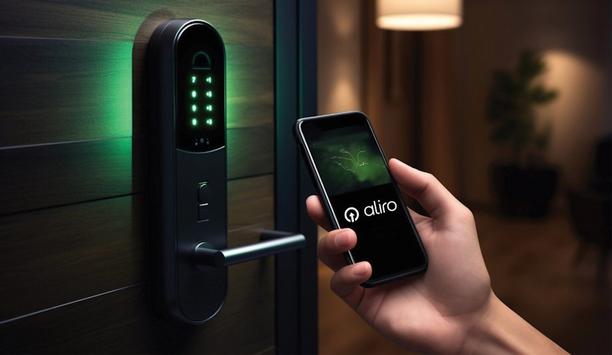
The Connectivity Standards Alliance (Alliance) announced the release of the Aliro 1.0 specification, a new communication protocol and credential standard designed to revolutionise how users interact with access points in every aspect of their lives. While the convenience of unlocking a smart home lock often captures public attention, Aliro is built for broader impact, aiming to streamline interoperability across varied access control use cases, including corporate offices, universities, hospitality venues, and single and multi-family residential homes. Driving adoption through major wallet integration A key differentiator for Aliro is the confirmed commitment from the world’s pioneer mobile wallet ecosystems. By aligning with Apple, Google, and Samsung, Aliro offers a standardized digital credential experience leveraging the smartphones and wearables people use every day. This strategic collaboration expands adoption pathways, empowering users to move easily between homes, workplaces, and public spaces using the secure digital wallets native to their operating systems. “Aliro is solving the fragmentation that has held back digital key adoption, replacing it with a single interoperability standard built through Alliance Member collaboration. By connecting the access control industry directly to leading mobile wallet ecosystems, it delivers a secure, frictionless experience that goes well beyond the front door. Lower integration complexity means faster innovation and shorter time to market. This is how the future of access control gets built,” said Tobin Richardson, President and CEO, Connectivity Standards Alliance. A unified standard for secured, seamless access The Aliro 1.0 specification establishes a robust framework utilising asymmetric cryptography to ensure secured and trusted interactions between user devices and readers, while respecting user privacy. This standardized protocol is designed for broad application across the entire access control ecosystem, providing a reliable experience in corporate offices, universities, hospitality venues, single and multi-family homes, and even areas without network coverage, such as underground parking garages and elevators. To meet diverse installation requirements, the specification supports a variety of transport technologies, including Near Field Communication (NFC) for tap-to-access, Bluetooth Low Energy (Bluetooth LE) for user-initiated long-range communication, and Bluetooth LE plus Ultra-Wideband (UWB) for a seamless, secured hands-free authentication method. To ensure global reliability, Aliro includes a comprehensive certification program and supporting test suites managed through Authorized Test Labs. This initiative unifies a global collective of over 220 Member companies - from lock manufacturers to silicon vendors and mobile platform leaders - working together to pave the way for a better, more secure mobile access experience. Through close collaboration, Member companies, including Apple, ASSA ABLOY, Google LLC, Infineon Technologies AG, Last Lock, Inc., Samsung Electronics, and STMicroelectronics pooled technologies, expertise, and innovations to enable the Aliro 1.0 specification, with Apple, Allegion, Aqara, Google LLC, HID, Kastle, Kwikset, Last Lock, Inc., Nordic Semiconductor, Nuki Home Solutions, NXP® Semiconductors, Qorvo, Samsung Electronics, STMicroelectronics, expected to be the first to achieve Aliro 1.0 certification. Empowering the value chain Aliro provides tangible benefits across the entire industry value chain by lowering implementation barriers and reducing overall complexity for stakeholders. For manufacturers, the standard acts as a universal arbiter for interoperability certification, significantly reducing research and development costs while simplifying the integration process with new partners. Integrators benefit from this streamlined approach through easier setup and more efficient troubleshooting across devices from multiple hardware providers. Ultimately, Aliro provides system owners with simplified maintenance and the flexibility to mix and match vendor-independent hardware and software across a wide variety of user devices. The path forward The release of Aliro 1.0 is the foundation of a living standard, not a one-time effort. This coalition is already looking toward future phases to integrate upcoming market and ecosystem requirements, such as expanded use cases like secure key sharing, while maintaining backward compatibility to ensure that current implementations are not compromised as the technology matures. By building this infrastructure to evolve alongside the market it serves, we are ensuring that Aliro remains the enduring, interoperable layer for universal digital credentials. As the specification enters the certification and commercialisation phases, this collective effort stands ready to deliver the scalability required for long-term global success.

HID, a worldwide pioneer in trusted identity solutions, announced the appointment of Jos Beernink as Vice President Europe for its Physical Access Control (PACS) business. In this role, Beernink will lead HID’s strategy, sales and operations across the whole European region, helping organizations leverage trusted identity and access control technologies to create a secure, smarter and more efficient workplace and physical spaces. Prior roles of Beernink Beernink brings more than 25 years of international leadership experience in the technology and security industries to HID. His career spans sales, go-to-market and general management roles at companies including Atari, Tech Data, Samsung Electronics, Honeywell Security & Fire, Genetec and Milestone Systems (part of Canon Group). “HID is the pioneer in secure identity and access solutions, with products and technologies that touch almost every part of modern life,” said Beernink. “It’s inspiring to join a company that combines such strong innovation with a clear, forward-looking vision. HID’s scale, expertise and technology make it uniquely positioned to help customers navigate the digital transformation of access control - from mobile and cloud-connected systems to the next generation biometric authentication methods.” Educational background of Beernink Since joining HID, Beernink has been focused on strengthening HID’s European presence through closer alignment with channel partners, increased support for enterprise end-users, expansion of HID’s sales and engineering teams and continued investment in strategic growth verticals including data centers, critical infrastructure, healthcare, government and smart buildings. Beernink holds a business degree in Commercial Economics, studied Business Administration in the Netherlands, and has completed executive programs at Harvard Business School, INSEAD, and Nyenrode University, where he published a paper on strengthening boardroom preparedness for cyber risks. European leadership team Outside of work, Beernink is a licensed private pilot, dedicated runner and an active board member of his local Lions International chapter, combining his enthusiasm for technology, travel and community service. “Jos brings a wealth of experience and a truly international perspective to our European leadership team,” said Gerald Grattoni, HID’s Vice President & Head of Mature Markets. “His deep understanding of the security landscape, coupled with a strong customer-first mindset, will be instrumental in driving our continued growth and innovation across the region.”
Insights & Opinions from thought leaders at Samsung

For the security market, the ‘fine ranging’ capabilities of ultra-wideband (UWB) technology opens up a range of new uses based on the ability to determine the relative position and distance of two UWB-equipped devices with pinpoint accuracy – within centimeters. UWB is more accurate and secure, even in challenging environments full of interference, compared to narrow band wireless technologies. UWB technology transmits a large amount of data over short distances using a small amount of energy. It will be used in seamless access control, location-based services, and device-to-device services across industries including smart homes, cities, retail services, and healthcare. Increasing the accuracy of ranging measurements UWB technology will support any application that benefits from knowing the precise location of a connected deviceUltra-wideband is a mature radio technology that transmits information spread over a large bandwidth, as described by the IEEE 802.154 standard. A new, enhanced amendment to the standard – IEEE 802.15.4z – focuses on improvements to existing modulations to increase the integrity and accuracy of ranging measurements. Moving forward, UWB technology will support any application that benefits from knowing the precise location or presence of a connected device or object. This reflects a move from data communication to secure sensing. New capabilities of UWB are largely unfamiliar to the market, but a new Consortium – the FiRa Consortium – has a mission to educate the market, provide use cases, and promote UWB technology. Delivering interoperability across devices “With a consortium, we can better deliver interoperability across devices, software, and chipsets,” says Ramesh Songukrishnasamy, Director and Treasurer of the FiRa Consortium, and SVP & CTO of HID Global. “This creates a frictionless experience for the user, which is vitally important with a new technology. People are more likely to adopt emerging technology when it runs smoothly without interruptions or errors.” The FiRa consortium is ensuring new use cases for fine ranging capabilities can thrive" An industry consortium can create a UWB ecosystem of interoperable technologies instead of individual companies launching products that consumers struggle to make work together, says Songukrishnasamy. “Simply, the FiRa consortium is ensuring new use cases for fine ranging capabilities can thrive.” Founding members of the FiRa consortium ASSA ABLOY and HID Global, pioneers in secure access and identity solutions, are founding members of the consortium. Their technology manages access to physical and digital places, things, and identities. Another founding consortium member, NXP Semiconductors, is a pioneer in secure connectivity solutions for embedded applications. Other founding members are Samsung, which creates top-of-the-line TVs, smartphones, wearables, and other connected devices; and the Bosch Group, a global supplier of technology and services that is at the forefront of IoT innovations. Sony Imaging Products & Solutions Inc., LitePoint and the Telecommunications Technology Association (TTA) are the first companies to join the newly formed organization. Immune to radio frequency interference UWB is also immune to radio frequency interference, so it functions in high traffic settingsUWB introduces higher levels of accuracy in positioning capabilities and increased security for ranging data exchange compared to existing technologies. Fine ranging with UWB technology can localize devices and objects to 10 centimeters of accuracy with or without line of sight. UWB is also immune to radio frequency interference, so it functions in high traffic settings. These capabilities will enable a variety of use cases like secure, hands-free access control in hospitals, location-based services for ride sharing, and targeted marketing for retailers. FiRa will demonstrate UWB technology at upcoming trade shows. The FiRa Consortium aims to build on IEEE’s work with an interoperable high rate physical layer (HRP) standard, including defining an application layer that discovers UWB devices and services and configures them in an interoperable manner. The consortium also plans to develop service-specific protocols for multiple verticals and define necessary parameters for applications including physical access control, location-based services and device-to-device services. Promoting the adoption of UWB solutions As a consortium, FiRa is not just setting standards but actively championing use cases for UWB technology. Creating the consortium addresses the need to develop interoperability and implementation standards; brings key players together to create a rich UWB ecosystem; allows for the sharing of intellectual property; and promotes the adoption of UWB solutions. The FiRa Consortium is committed to educating and promoting new use cases" “Since UWB is a mature technology with new potential uses, there is a general lack of awareness of potential applications that take advantage of the technology,” says Songukrishnasamy. “The FiRa Consortium is committed to educating and promoting new use cases.” The FiRa name comes from Fine Ranging to highlight UWB technology’s use cases and distinction from older UWB technologies and solutions. Enhanced security in challenging environments Fine ranging powered by UWB can outperform other technologies in terms of accuracy, power consumption, robustness in wireless connectivity, and security, especially in challenging, high density environments. UWB previously served as a technology for high data rate communication and as such was in direct competition with Wi-Fi. Since then, UWB has undergone several transformations: UWB has evolved from an OFDM-based data communication to an impulse radio technology specified in IEEE 802.15.4a (2ns pulses with Time of Flight); and A security extension being specified in IEEE 802.15.4z (at PHY/MAC level) makes it a unique secure fine ranging technology. Moving from data communication to secure ranging allows ‘spatial context capability’ to be utilized by a variety of applications: seamless access control, location-based services, and device-to-device (peer-to-peer) services. Information is available at firaconsortium.org.









