i-PRO - Experts & Thought Leaders










Latest i-PRO news & announcements

i-PRO Co., Ltd., a global pioneer in professional security and public safety solutions, today announced that its Spatial Integration Camera has received ‘Red Dot: Best of the Best’ in the Red Dot Award: Design Concept 2026, one of the competition’s highest distinctions. The award recognises the concept’s innovative approach to security equipment, bringing professional video protection together with the design and character of the spaces where it is used. Premium commercial spaces Security cameras play an essential role in protecting people, property, and places. Yet in environments where architecture and interior design are central to the experience (from luxury boutiques and museums to hotels and other premium commercial spaces), security equipment can also influence how a space looks and feels. Developed around i-PRO’s design approach centered on creating a safe and secure environment, the concept explores how professional security technology can become a natural part of its surroundings rather than simply being added to them. Its original structure houses the camera unit within the body, creating a form that is distinctly different from conventional security cameras. Inspired by the way lighting and other architectural elements are integrated into a space, the concept is designed to complement its surroundings while retaining the functionality expected from professional video protection. The result is a new design language for security, one that brings together protection, comfort, and aesthetics. Forward-looking concepts Widely recognized as one of the world’s pioneer design competitions, the Red Dot Award celebrates outstanding achievements in design. The Design Concept category focuses on forward-looking concepts and prototypes that demonstrate the potential of future products and services. The award notification letter read as follows: “In evaluating design concepts, the jury not only assessed the quality of the design, but also devoted considerable attention to understanding the ideas behind each project. Throughout the judging process, the jury was impressed by the high level of innovation and the thoughtful application of technology.” Makoto Terashima, Director, Design at i-PRO, said: “We are honored to receive international recognition for our approach to bringing technology and design together. The Spatial Integration Camera reflects our belief that innovation is not only about what technology can do, but also about how it becomes part of people’s everyday environments. We will continue to explore new ideas and use design and innovation to address the evolving needs of our customers.”

i-PRO Co., Ltd., a pioneer in professional security and public safety solutions, announces its new Remote Head Camera, a compact modular camera system designed to bring edge-AI to environments where conventional cameras are difficult to deploy due to space constraints, aesthetics, or installation requirements. Built on the proven i PRO S Series platform, the new Remote Head Camera delivers the full capabilities of standard i-PRO cameras, including advanced edge-AI analytics, cybersecurity, and seamless ecosystem integration, in locations traditionally beyond the reach of conventional cameras. Customer-facing environments By separating the camera head from the processing unit, the system enables discreet installation in tight spaces, customer-facing environments, and embedded applications, from point-of-sale (POS) terminals and ATMs to reception areas and equipment enclosures. Organizations can extend intelligent security into previously inaccessible locations without compromising performance, functionality, cybersecurity, or user experience, while maintaining a design that blends naturally into its surroundings. “Organizations across industries are increasingly leveraging AI to improve security, operational efficiency, and decision-making. From retail stores and banking branches to industrial facilities and other demanding environments, customers often face a common challenge: deploying advanced technology in locations where space and installation constraints limit their options,” said Gerard Figols, Chief Operating Officer at i PRO. Challenging lighting conditions “At i PRO, we believe technology should remove barriers, not create them. The Remote Head Camera extends the full power of our edge-AI platform into environments where conventional cameras cannot be deployed, ensuring that size is no longer a limitation. By combining advanced edge-AI, open-platform integration and cybersecurity by design, we continue to transform cameras into intelligent sensors that provide actionable insights and enable faster, more informed decision-making.” Key benefits include: Compact, discreet design for unobtrusive installation High-quality imaging with up to 144 dB wide dynamic range and a wide field of view of up to approximately 135 degrees for challenging lighting conditions frequently found in close-range and embedded use cases Zero-Trust Cybersecurity, including FIPS 140-3 Level 3 compliance, secure boot, and signed firmware Seamless integration with i PRO Active Guard, enabling advanced search, visualization, faster investigations, and operational insights The modular architecture also simplifies system design for integrators by supporting camera head options for both indoor and outdoor deployments, as well as flexible mounting configurations. This flexibility makes it easier to address a wide range of customer requirements using a single platform. The i-PRO Remote Head Camera is expected to be available in January 2027.

i-PRO Co., Ltd., a pioneer in professional security and public safety solutions, today marks seven years of innovation and transformation since becoming an independent company in 2019. Seven years ago, i-PRO began its journey as an independent company with an opportunity to build a new kind of organization: one that could make its own technology and business decisions, operate with greater agility and respond more directly to the changing needs of the security market. Strategic direction and future growth Since separating from Panasonic in 2019, i-PRO has steadily built the technology strategy, operations, partnerships and culture to support that vision. This year marked another important step in that journey. In March 2026, i-PRO completed the transition of wholesale and marketing functions for its products in Japan from Panasonic Connect, bringing these activities directly under the i-PRO organization. With development, manufacturing, sales and marketing now more fully connected under the i-PRO name in its home market, the company has brought more of its core business functions together to support its strategic direction and future growth. Global supply chain That evolution reflects a broader transformation that has taken place over the past seven years. Investments in manufacturing, AI, cybersecurity, open technology, education and people are helping i-PRO operate with greater agility and bring innovation to customers faster. As the company enters its eighth year, that foundation is positioning i-PRO for its next stage of growth and continued progress toward market leadership. In October 2025, i-PRO began operations at its Saga Factory in Japan, which now serves as a core i-PRO manufacturing facility, supplying Made-in-Japan products globally. As i-PRO transitions to an integrated production system spanning component manufacturing, assembly and inspection, the factory is advancing digitalisation and automation. This investment further strengthens i-PRO’s manufacturing capabilities, alongside those of its Suzhou plant, while enhancing flexibility and resilience across the global supply chain. Specific operational requirements Combined with the relocation of sales and marketing functions in Japan, these investments are helping to create a more integrated organizational structure by strengthening collaboration across development, manufacturing, and sales teams. This enables i-PRO to respond more effectively to continuously changing market needs through faster decision-making, closer collaboration and greater agility. The progress i-PRO has made across its operations is also reflected in the pace of its technology development. Its advances in AI are a case in point, reflecting the technology’s central role in i-PRO’s business strategy. After introducing generative AI for forensic video analysis in 2025, i-PRO expanded the technology into real-time video operations in 2026 with its X-series Fisheye Cameras featuring generative AI running fully at the edge. Capabilities such as AI On-Site Learning are also making it possible to adapt analytics to individual environments, giving customers greater flexibility to address specific operational requirements. Growing technology ecosystem Rather than treating AI as a standalone feature, i-PRO has focused on making advanced capabilities practical for customers to deploy within the infrastructure they already use. Its open-platform strategy and growing technology ecosystem give organizations greater choice in how they build and evolve their security systems. This approach has been reinforced through closer collaboration with technology partners such as Milestone Systems, which named i-PRO its Innovation & AI Solution Partner of the Year for the U.S. region. The recognition reflects i-PRO’s continued investment in edge AI and open technology, and its focus on making these innovations accessible across the wider security ecosystem. One example is its growing range of camera models compatible with cloud providers, giving customers greater flexibility to choose the infrastructure that best meets their needs. Changing security requirements Innovation also means anticipating how customer needs and requirements will evolve. Cybersecurity has therefore become an increasingly important part of i-PRO's product strategy. Through initiatives such as its Security Update Initiative, the company is strengthening hardware, firmware and product architecture to address emerging cybersecurity standards and regulations across major global markets and help customers prepare for changing security requirements. As i-PRO has transformed its technology and operations, it has also invested in building the knowledge needed to support a rapidly changing security industry. Changing customer requirements i-PRO University plays an important role in that effort. For the broader industry, technical and sales learning tracks provide education in areas including AI-enabled edge systems, cybersecurity, network configuration and consultative selling. Internally, the same emphasis on continued learning helps i-PRO employees develop the skills needed to keep pace with new technologies and changing customer requirements. The investment in people is also reflected in i-PRO's workplace culture. The company achieved Great Place to Work® certification for the second consecutive year across every region where it operates, including Japan, the Americas, EMEA, Asia Pacific and China. The global recognition reflects the culture i-PRO has continued to build alongside its business since becoming independent. Long-term business strategy As i-PRO grows, sustainability is also becoming more deeply integrated into how the company plans for the future. The appointment of Shohei Ozaki as Chief Sustainability Officer made sustainability a C-level responsibility, helping integrate it more closely into company decision-making and long-term business strategy. i-PRO has also strengthened its commitment through membership in the United Nations Global Compact, aligning the company with a global framework for responsible business practices. Together, these steps strengthen the role of sustainability as the company continues to grow. Driving meaningful transformation As i-PRO enters its eighth year, the investments made since becoming independent are helping position the company for its next stage of growth. With greater agility to respond to changing customer needs and advance new ideas, i-PRO will continue strengthening its position in the global security market. Masato Nakao, President & CEO, i-PRO Co., Ltd comments: "As i-PRO marks its seventh anniversary, I would like to thank our customers, partners, and employees for their continued trust and support. This milestone represents not only how far we have come, but also the beginning of our next stage of growth. Over the past years, we have strengthened our manufacturing, sales, and global business foundations while investing in a culture where people can thrive. Growth requires us not only to build on our strengths, but also to rethink conventional assumptions, embrace new perspectives, and drive meaningful transformation. We will continue creating value for our customers and advancing our global growth with confidence."
Insights & Opinions from thought leaders at i-PRO

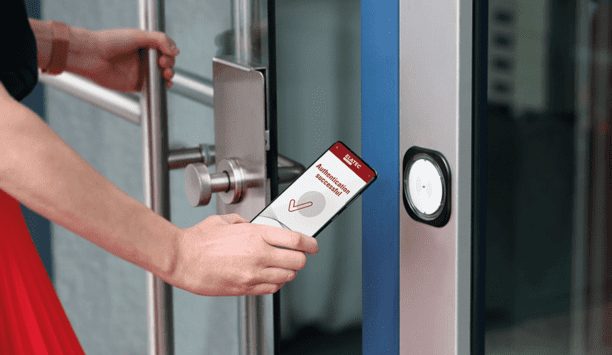
Passwords originated in ancient times, used by Roman military forces around the first century BC. Since then, passwords have evolved from physical words to the computer access control tools used today. Passwords are easy to implement, widely supported, and familiar to users. However, they are easily forgotten, stolen through phishing, prone to reuse, and vulnerable to credential-harvesting or brute-force attacks. We asked our Expert Panel: What is the role of passwords in physical security?
If AI is the dominant buzzword in the physical security industry, it is the second letter (I for intelligence) that is having the biggest impact. Simply put, intelligence transforms computer systems, including those used for physical security, from rigid, rule-following calculators into adaptable, problem-solving partners to human operators. We asked our Expert Panel Roundtable: What is the changing role of intelligence in physical security?
The biggest return on investment from an AI-enabled camera might have nothing to do with security. Organizations are increasingly discovering that the same cameras installed to protect people and property can also improve safety, streamline operations, automate routine workflows, and generate valuable business intelligence. Security remains the primary mission, but it is increasingly only the first customer for the intelligence these systems produce. AI-enabled cameras are rapidly becoming distributed IoT sensors that continuously observe, interpret, and describe their surroundings. Instead of simply producing video, they generate rich metadata about people, vehicles, objects, movement, and activities. That information has value far beyond surveillance. As organizations look for better ways to improve efficiency, reduce costs, enhance safety, and automate routine operations, they are discovering that the same camera installed to monitor a doorway or parking lot may also become one of the most valuable operational sensors on the network. From video to metadata For years, higher resolution dominated the conversation around video technology For years, higher resolution dominated the conversation around video technology. More pixels promised better evidence and clearer images. While image quality remains important, AI has fundamentally changed where the real value lies. Modern edge AI processes video directly inside the camera, identifying people, vehicles, objects, behaviours, and countless other attributes as events unfold. Instead of transmitting every frame for centralized analysis, the device generates lightweight metadata that describes what it sees. That metadata can be searched, filtered, shared, and consumed by other applications without requiring operators to review hours of video footage. This fundamentally changes the role of the camera. Rather than acting as a passive recorder, it becomes an intelligent sensor that continuously feeds structured information into operational workflows. Once organizations begin thinking in terms of metadata instead of video, entirely new applications emerge. Movement of critical equipment The security department may have purchased the camera, but it is increasingly supporting decisions made by operations, facilities, safety, transportation, and executive leadership. In healthcare, cameras can do far more than document incidents. AI applications can detect when someone has fallen, help staff locate misplaced wheelchairs, count ambulances arriving at emergency departments, or monitor the movement of critical equipment throughout a facility. These capabilities improve patient care while reducing the time staff spend searching for resources. AI-enabled cameras As an IoT sensor, the camera has become a shared resource across multiple departments Logistics organizations are seeing similar benefits. AI-enabled cameras can monitor for compliance issues, automate gate operations using license plate recognition, validate vehicle movements, and track pallet or trailer activity throughout a distribution center. Security remains important, but the same infrastructure also improves throughput, reduces manual processes, and provides operational visibility across the facility. Barnet Council in the United Kingdom initially modernised its video infrastructure to improve safety and security. Today, the same cameras generate people and vehicle counts that support planning decisions for parks, transportation, libraries, festivals, and other public spaces. Rather than serving only security personnel, the system supplies operational data that helps city planners make better infrastructure and investment decisions. As an IoT sensor, the camera has become a shared resource across multiple departments. Metadata is only valuable when it drives action Collecting more information just because it’s possible is not the objective. Organizations are already overwhelmed with data. The real opportunity lies in intelligent automation. The greatest operational value comes when AI-generated metadata automatically triggers meaningful workflows rather than simply identifying people or vehicles. When a person enters a restricted area after hours, a PTZ camera can automatically focus on the activity while lighting activates to deter loitering. Security personnel receive alerts only if the individual remains in the area. License plate recognition AI handles repetitive operational tasks while people remain responsible for judgment and response When a worker collapses inside a manufacturing facility, safety personnel are immediately notified while responders receive precise location information. At a logistics gate, license plate recognition can validate vehicle credentials, update operational systems, and document the transaction automatically. In each example, AI handles repetitive operational tasks while people remain responsible for judgment and response. This transition from detection to intelligent automation may ultimately deliver greater value because it focuses on outcomes rather than observations. The business case is getting stronger Perhaps the most significant consequence of this evolution is organizational rather than technical. Historically, video projects were often justified solely through security budgets. Return on investment depended largely on reducing theft, improving investigations, or strengthening compliance. Today, the value proposition reaches far beyond the security department. Facilities managers use camera data to understand occupancy and space utilization, operations teams streamline workflows, safety officers monitor hazardous activities, transportation managers optimize vehicle movement, and executives gain measurable operational metrics that support planning and resource allocation. The same camera infrastructure can now deliver value to multiple departments, making investment decisions easier to justify while improving long-term utilization of existing assets. Open ecosystems will determine who benefits most Metadata creates the greatest value when it flows freely between systems As cameras become operational sensors, another requirement becomes increasingly important: openness. Metadata creates the greatest value when it flows freely between systems. An AI-enabled camera may generate valuable operational information, but that information becomes significantly more useful when it integrates with video management systems, access control, public safety platforms, business intelligence software, facility management applications, or other third-party operational systems. Organizations want the flexibility to add new AI applications as needs evolve without replacing existing hardware. Developers benefit from standardized platforms that allow applications to run consistently across different environments, while integrators need the freedom to build solutions that reflect each customer's unique operational requirements rather than forcing every deployment into the same proprietary framework. Open architectures make that possible. Looking beyond security AI is expanding the role of the camera far beyond traditional security. Organizations are increasingly treating AI-enabled cameras as operational infrastructure that improves safety, streamlines workflows, and supports better decision-making across the enterprise. Every day, AI-enabled cameras observe facilities, generate metadata, automate workflows, and provide actionable information that helps organizations make faster, better decisions. Security remains the foundation, but the same intelligence now supports business operations, public safety, healthcare, logistics, transportation, and smart city initiatives. Organizations that recognize this shift early will find that one of the richest sources of operational intelligence is already installed throughout their facilities. They simply need to start thinking beyond security.