FLIR Systems - Experts & Thought Leaders







































Latest FLIR Systems news & announcements
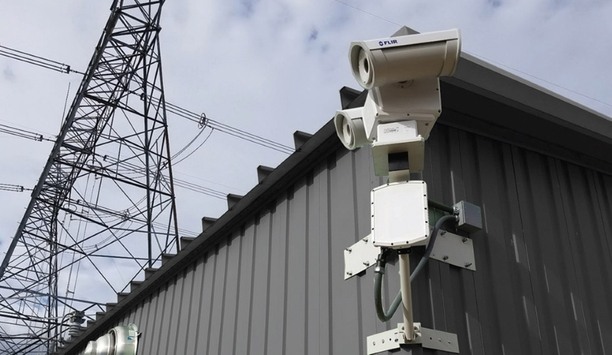
There are over 55,000 electrical substations in the United States. These substations, along with power plants and transmission lines, provide power for millions of people. It is imperative that these locations remain secure from intrusion and sabotage. If just a handful of these substations were rendered inoperable, the U.S. could face a serious blackout. The 2013 sniper attack on PG&E Corporation’s Metcalf transmission substation, which knocked out several transformers and totalled over $15 million in damages, was a catalyst for the Federal Energy Regulation Commission (FERC) establishing new security standards for utilities. One of the most notable policies introduced was the Critical Infrastructure Protection Standard 014 (CIP-014). This statute requires utilities to identify ‘mission critical’ facilities and assets, conduct a security inspection to identify threat, and implement a security system to address those risks. Replacing traditional fencing systems VTI Security has been servicing security needs in the commercial, utility, and oil and gas sectors for over 35 yearsIn response to security incidents such as Metcalf and other FERC activities, a large electrical utility with hundreds of substations across the country looked to expand security beyond its fence line. The end user wanted to enhance and possibly replace traditional fence protection systems – including fiber optics, microwave barriers, and video analytics – as these systems all proved to be costly, as well as time and labor intensive. In the end, the utility company relied on VTI Security, an industry-leading integrator, for a recommendation. Based in Burnsville, Minnesota, VTI Security has been servicing security needs in the commercial, utility, and oil and gas sectors for over 35 years. To determine the best system for its end user, VTI reviewed six different technologies, including some with multiple vendors. VTI also tested systems in field deployments and conducted cost analysis. The integrator concluded that SpotterRF’s product was superior to all others and selected it as its sole radar standard for perimeter solutions. SpotterRF perimeter protection solution “Our findings were that SpotterRF not only provided the most comprehensive detection in a substation environment, but SpotterRF was also by far the most cost-effective total solution based on the ability to mount equipment on existing structures,” said Jerry Klapak, Senior Account Manager for VTI Security. SpotterRF provides perimeter protection through its patented Compact Surveillance Radar (CSR) systems SpotterRF, based in Orem, Utah, provides perimeter protection through its patented Compact Surveillance Radar (CSR) systems, which provide up to 300 acres of radar tracking power in a hand held, four-pound device. The CSRs enable security monitors to never be blind, providing 100 percent coverage, 24 hours a day, in all weather conditions. They are designed to detect threats up to 3300 feet beyond the fence line and provide early warnings to staff before situations escalate. PT-Series thermal camera While radar casts a wide circle to detect the presence of potential intruders, the FLIR thermal camera provides visual verification along specific perimeters. Upon selecting a radar system, VTI needed a video manufacturer to supply cameras to deploy with the radar. In 2015, the integrator approached FLIR Systems for a solution and selected PT-Series thermal camera for the project. “The ability for FLIR's products to perform beyond published performance specifications was a surprise we don’t often see,” said Klapak. “Each product exceeded published performance metrics on our field testing and actual deployments.” Features thermal and visible-light imaging SpotterRF radars, combined with FLIR PT-Series cameras, deliver maximum coverage and perimeter protectionThe PT-Series is a pan/tilt camera that features both thermal and visible-light imaging. The pan/tilt mechanism gives end users precise pointing control, fully programmable scan patterns, and both radar slew-to-cue and slew-to-alarm functions. With the radar and thermal technologies selected, VTI worked to ensure seamless integration and performance between the two systems. “We worked with each company’s support and development teams, as well as the VMS manufacturer, to ensure the technologies not only worked with one another, but also met the client’s needs for bandwidth consumption and VMS interface and display,” said Klapak. Together, SpotterRF C20 and C40 radars, combined with FLIR PT-Series cameras, deliver maximum coverage and perimeter protection. Cost-effective solution for substations "The FLIR PT-Series, when deployed with SpotterRF, can cover a wide area of substation footprint. It is a cost-effective solution for substations needing to monitor the perimeter as well as inside the yard," said Michael Chaffee, Director of Business Development at FLIR Systems. “The speed at which the FLIR PT-Series slews to the cue of the SpotterRF detection is impressive." A number of environmental factors affected performance, including weather" When someone walks into the field of view of SpotterRF’s C20 or C40 radar, the radio waves bounce off the person and back to the radar, which then calculates the precise GPS location of the target, as well as its size. The radars then tell the FLIR PT-Series camera to zoom to that location. The camera automatically stays on and tracks the target. Because the radars control the cameras, the cameras only move upon detection, which significantly extends the shelf life of the cameras, allowing them to last for years without replacement. Locates person in a 15 or 100-acre space This FLIR and SpotterRF solution addresses an important pain point for the perimeter security and intrusion detection market. “In the past, utilities tried to use video analytics to find targets. Because these systems were outdoors, a number of environmental factors affected performance, including weather, lighting and moving trees,” said Logan Harris, CEO of SpotterRF. “However, by combining our radar with FLIR’s pan tilt thermal cameras, you’re able to solve this problem.” He added, “Together, SpotterRF’s radar technology and FLIR’s thermal imaging are able to locate a person in a 15 or 100-acre space, see hundreds of yards beyond the fence line, cue the camera, and alert the personnel, all without the help of an operator.” Activates security lighting based on motion One surprising benefit was the ability to use both the thermal cameras and radars for additional security and production uses"In the past, only military organizations could access this level of advanced technology. Now, the FLIR and SpotterRF solution makes this security capability accessible and affordable for critical infrastructure, power distribution and commercial applications. "Our client is very pleased with the ability of the technologies to provide security for their critical sites," said Klapak. "One surprising benefit was the ability to use both the thermal cameras and radars for additional security and production uses. They now use the radars to activate security lighting based on motion within and outside the fences. This provides not only a green approach to security by lowering energy costs but also improves customer relations by reducing light pollution in residential neighborhoods.” The entire team was also impressed by the solution’s minimal installation time. Unlike installing fiber optic cables on fence lines, which requires months for digging trenches, the FLIR PT camera and SpotterRF radar can be mounted easily on control shacks or lattice poles within a week. Four times faster installation of systems “The deployment occurred four times faster than it was anticipated,” said Harris. “VTI installed the systems at 25-30 sites in just three months.” VTI began installation in 2016, with plans to roll out the solution in a phased approach as part of a multi-year plan. Approximately 50-75 sites will deploy the camera and radar solution. On average, each substation has two FLIR PT-Series cameras and four SpotterRF radars. Some of VTI’s other clients are also expected to deploy the same solution at 10-20 sites over the next few years, based on the success VTI has proven in the utility environment.
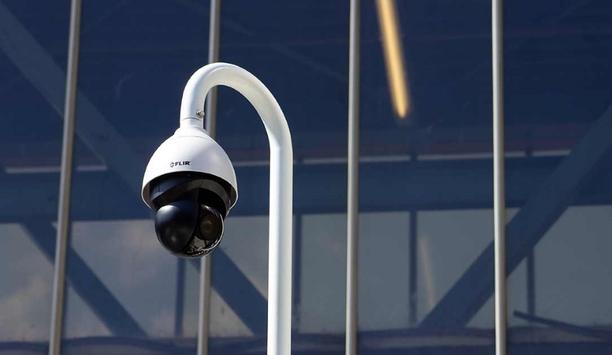
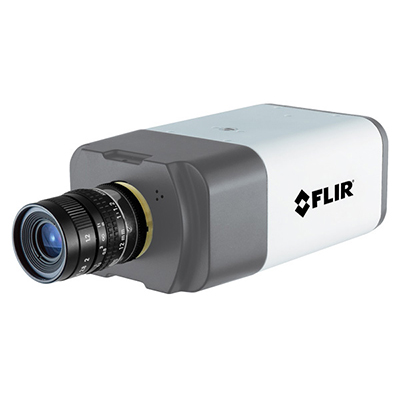
New Covent Garden Market is the largest wholesale fruit, vegetable, and flower market in the United Kingdom. Redevelopment work launched in 2015 included a new security monitoring system, as well as a migration from analog security equipment to an IP solution from FLIR Systems. New Covent Garden Market is a phenomenon in London, to say the least. The world-famous wholesale market provides 40 percent of London’s fresh fruit and vegetables eaten outside the home and serves 75 percent of London’s florists. With more than 175 affiliated businesses, New Covent Garden Market is the largest wholesale market in the UK. IP-Based Security System Redevelopment construction works started in 2015 and should continue until 2022 When London authorities decided to redevelop the entire site on Nine Elms and Battersea in order to meet future needs, it was clear that New Covent Garden Market was facing a huge operational challenge. Redevelopment construction works started in 2015 and should continue until 2022. In addition to a better road layout, improved waste management, and upgraded parking facilities, the market authorities wanted better security so that employees, tenants, customers and suppliers would feel safer. The organization wanted to upgrade its legacy analog CCTV technology to an IP-based security system capable of incorporating future upgrades. Surrey-based company Phoenix Integrated Security Limited, which had been the security solution provider for New Covent Garden Market for years, oversaw the security overhaul, as well. Future-Proof System “We designed a security system together with the end customer and the site constructor so that it could meet today’s security standards again,” said Trevor Hearn, Director at Phoenix Integrated Security Limited. “We were looking for a future-proof system that was able to monitor this complex site and that was easy to work with for our security guard personnel. We looked at various manufacturers for this, but FLIR Systems was the only company that ticked all the boxes.” Phoenix opted for FLIR United VMS, which includes FLIR’s enterprise-level software solution Latitude, and a wide range of FLIR IP cameras. At the end of 2018, New Covent Garden Market already had more than 300 IP cameras installed across the entire site it intends to gradually upgrade all analog systems over a five-year period. Wide Range Of Cameras The image quality of the FLIR IP cameras represents a huge improvement over analog The site combines a wide range of cameras, including the FLIR Quasar 4K fixed box camera, the FLIR Ariel Quad HD bullet camera, and the Quasar 1080p PTZ camera. The cameras offer high evidentiary detail and discreet, compact form factors. According to Hearn, the image quality of the FLIR IP cameras represents a huge improvement over analog. Image quality is not the only benefit of using United VMS. Another valued feature is the platforms scalability. From 2016 onwards, New Covent Garden Market has been gradually replacing analog cameras and storage equipment across the entire site, and Latitude has the flexibility to incorporate an unlimited number of channels. Body-Worn Cameras Operators have the flexibility to present their video sources on screen where they want and define user profiles to see only specific video sources from a given particular building, for example. “This project is an engineer’s dream,” said Hearn. “The FLIR Latitude system allows New Covent Garden Market to easily expand their camera network whenever they feel the need and to connect with practically any camera they want, including body-worn cameras. The Latitude system is also easy to couple with third-party systems, such as intercom and access control systems.”

As prominent in Belfast’s history as its cranes are on the city’s skyline, it’s hard to imagine Belfast without Harland and Wolff. Once the world’s greatest shipbuilder, Harland and Wolff today has evolved into a company that provides over 150 years of engineering excellence to the maritime, offshore, and renewable energy sectors. The Harland and Wolff facilities on Queen’s Island are now used to maintain some of the world’s largest ocean-going vessels, ranging from offshore platforms and cruise liners to offshore wind farms. The company is spread over two sites in Belfast and covers over 200 acres. Its main facility has a public-facing perimeter of no less than 1.5 kilometers. With safety as a primary consideration in the execution of projects, the company goes to great lengths to protect its investments from unwanted visitors, intruders, and vandalism. FLIR VMS Solution For over 15 years, Harland and Wolff has been using FLIR’s United VMS to manage a wide variety of security cameras For over 15 years, Harland and Wolff has been using FLIR’s United Video Management System (VMS) to manage a wide variety of security cameras. As technology innovations and features were being added onto the United VMS over the years, Harland and Wolff has always remained loyal to the FLIR brand. But with the increasing development of Queen's Island as an industrial, commercial, and tourist area came a greater public presence and an increased safety and security threat. That is why in recent years Harland and Wolff has been continuously investing in the latest security camera technology from FLIR, including enterprise security cameras, PTZ cameras, intelligent thermal cameras, and mobile and wearable cameras. Optical And Thermal Cameras “Today, over 140 FLIR cameras on-site and along the site’s perimeter make sure that we can detect any irregularity,” said Chris Neill, security operations manager at Harland and Wolff. “Whenever one of our cameras picks up an incident – an intruder for example – an alarm is generated and sent to our security control room, who can then follow up the incident. This ensures us that our investment and that of our customers is safe and secure at all times.” Due to the high impact and risk associated to a possible incident on site, the company’s security department follows a proactive approach for possible intruders. Even in complete darkness, in perimeter areas where there is no additional lighting, thermal analytic cameras can pick up the presence of intruders, animals, or vehicles automatically based on their heat signatures. Intruder Detection While thermal camera footage does not allow actual identification of intruders, it can still be used as evidence for insurance companies or law enforcers, especially when an intrusion pattern can be seen over different cameras. United VMS is FLIR’s enterprise-level software solution for video surveillance operations United VMS is FLIR’s enterprise-level software solution for video surveillance operations. The software is currently used at Harland and Wolff by four control room operators and eight managers, all of which have dedicated user rights. One of the strengths of the United VMS system is that it can connect with nearly any security camera on the market and that video streams and detection alerts can be presented on any screen, be it on a video wall, a PC, or a smartphone. United VMS But Harland and Wolff has been using United VMS for far more applications. “We also use the United VMS platform to monitor alarms coming from fire sensors on oil rigs, for example,” said Neill. “Another example is the detection of failed pumps on one of our drydocks. This information also comes in on United VMS, where we generate alarms and notify key staff in real time.” Harland and Wolff has indeed managed to make use of United VMS's flexibility and deploy it for much more than security applications only. "We are not in a static business," said Neill. "At Harland and Wolff, we are always taking on new challenges and solving new problems; FLIR’s United VMS platform helps us do that.” TruWITNESS Mobile Sensor Technology Harland and Wolff will also make use of TruWITNESS, the latest mobile and wearable sensor technology from FLIR. TruWITNESS will allow guards on patrol to stream video directly to the control room in real time and from anywhere on the Harland and Wolff sites. Harland and Wolff needs to comply with a minimum security level imposed by the UK Department of Transport" Guards will be able to bookmark events so that incidents or irregularities can be reported and can be followed up more efficiently. In case of incidents, camera footage from the TruWITNESS wearable devices can be used as evidence. In addition, control room operators will be able to track members of staff via the United VMS and display their location on a map. Security Technology Advancements “Our yellow gantry cranes have become a national icon,” said Neill. “Unfortunately, this also means that they are an attractive target for political messages or, as in the past, terrorism. As a port facility, Harland and Wolff needs to comply with a minimum security level imposed by the UK Department of Transport. But in reality, we always exceed these requirements. We owe this to our continuous investments in security technology, which we also consider as a commitment to our customers.” Maybe this is what connects Harland and Wolff with FLIR. “As committed as we are to our customers, we expect the same from our suppliers as well,” said Neill. “As someone with a technical background, I have always been convinced of the quality of FLIR security products. But there will always be a time when you need to rely on technical support, and that’s where FLIR really makes a difference.”
Insights & Opinions from thought leaders at FLIR Systems

Mergers and acquisitions are among the most disruptive forces in the security marketplace. However, they are also both a reality and a growing trend. Whenever there is value to be leveraged, companies tend to enter into business transactions to maximize that value. For the security industry, the result is a continually shifting collection of manufacturer companies seeking new ways to provide value to customers. M&A activity continued unabated in 2021, despite residual industry challenges such as dysfunctional supply chains and lingering consequences of a global pandemic. Here are some of the larger and/or most impactful M&A transactions of 2021. Stanley Black & Decker sells to Securitas Stanley Black & Decker announces an agreement to sell most of its Security assets to Securitas AB for $3.2 billion in cash. The transaction includes Stanley Black & Decker's Commercial Electronic and Healthcare Security business lines. The businesses carry 2021 forecasted revenues of approximately $1.7 billion. “The business is well-positioned for ongoing growth within Securitas, a global pioneer in the security industry,” says James M. Loree, Stanley Black & Decker's CEO. Openpath’s solution makes businesses more secure with multi-factor authentication Motorola acquires Openpath and Envysion Motorola Solutions adds to its security industry portfolio with the acquisition of Openpath Security Inc.., a cloud-based mobile access control provider. Openpath’s solution makes businesses more secure with multi-factor authentication, enables a contactless entry experience, and can be easily scaled and managed due to its cloud-based architecture. Motorola also announces the acquisition of Envysion, a provider of video security and business analytics solutions for quick-service restaurant and retail industries. Delta Electronics buys March Networks Delta Group, a provider of power and thermal management solutions, purchased 100% of the shares in Infinova (Canada) Ltd., owner of Canadian-based video surveillance and business intelligence company March Networks, from Infinova International Ltd. through its subsidiary Delta International Holding Limited B.V. Following the close of the transaction, it was expected that March Networks will continue to operate from its Canadian headquarters, and the March Networks executive management team will continue to lead the organization. Delta Electronics is also the parent company of VIVOTEK. APi Group acquires Chubb Fire and Security Business APi Group Corp. acquire the Chubb Fire & Security Business from Carrier Global Corporation for an enterprise value of US$ 3.1 billion. Headquartered in the United Kingdom, Chubb has approximately 13,000 employees globally and a sales and service network that spans 17 countries, serving more than 1.5 million customer sites in Europe, Asia Pacific, and Canada. APi Group is a business services provider of safety, specialty, and industrial services in more than 200 locations worldwide. Teledyne Technologies Inc. will acquire FLIR in a cash and stock transaction valued at approximately $8.0 billion Teledyne acquires FLIR Teledyne Technologies Inc. and FLIR Systems, Inc. jointly announced that they have entered into a definitive agreement under which Teledyne will acquire FLIR in a cash and stock transaction valued at approximately $8.0 billion. Jim Cannon, President and Chief Executive Officer of FLIR, said, “We could not be more excited to join forces with Teledyne through this value-creating transaction.” Resideo adds Norfolk Wire and Electronics Resideo Technologies, Inc. acquired privately held Norfolk Wire & Electronics, based in Richmond, Virginia. Norfolk was founded in 1985 and is a regional distributor of security, telecom, network, and audio-video (AV) related products, supplies, and tools. With 11 full-service retail locations and a 43,000 sq. ft. distribution center, Norfolk serves customers across the mid-Atlantic region and will be part of Resideo's ADI Global Distribution business, a wholesale distributor of security, AV, and low-voltage products. Triton acquires ACRE, which acquires Feenics and Matrix Triton Partners acquired ACRE, an end-to-end security solutions provider based in Dallas/USA and Dublin/Ireland. Triton is investing alongside the current management team of ACRE. Weeks later, ACRE acquired cloud-based workplace solutions company Time Data Security (TDS). Later in the year, ACRE announced acquisition of Feenics and Matrix Systems. Feenics brings cloud-based access control solutions brings cloud-based access control solutions to ACRE’s rapidly growing network of global customers while also expanding its portfolio to support the growing demand for cloud-based security solutions. Matrix enables ACRE to expand the addressable market for the company’s technology portfolio. Brivo, Inc. and Crown PropTech Acquisitions have entered into an agreement making Brivo a publicly listed company Brivo becomes publicly traded through the merger Brivo, Inc., a cloud-based access control and smart building technologies company, and Crown PropTech Acquisitions, a publicly traded special purpose acquisition company (SPAC), have entered into a definitive merger agreement that will result in Brivo becoming a publicly listed company. The transaction values the company at a pro forma enterprise value of $808 million. Upon closing, the combined company will operate as Brivo, and its Class A common stock is expected to be listed under the ticker symbol “BRVS.” Nice buys Nortek Security Nice, a global manufacturer of smart home, security, home, and building automation solutions, , acquired Nortek Security & Control from Melrose Industries. Nortek Security & Control is a developer of technology for security, home automation, control, power, AV and entertainment, access control, health, and Artificial Intelligence (AI) systems, for residential and commercial markets. Eagle Eye acquires Uncanny Vision Eagle Eye Networks, a cloud video surveillance solutions company, has acquired Uncanny Vision Solutions, an artificial intelligence (AI) analytics and Solutions Company. The acquisition accelerates the company’s leadership in providing AI and analytics, to make customers’ businesses more efficient and the world a safer place. The acquisition also includes research and development (R&D) capabilities and a new regional office located in Bangalore, India.
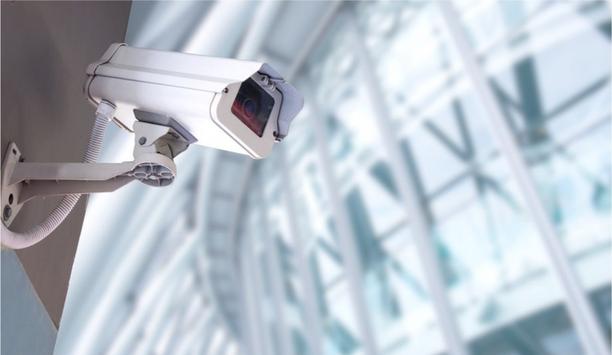
Blind spots in surveillance coverage, incompatible video and access control systems, lack of adequate perimeter measures—these are common issues that facility directors must address with their security teams. At the end of the day, facility executives need technology that accomplish more with less—that expand situational awareness, overall system functionality, and real-time response capabilities while generating cost-savings. By leveraging technology like thermal imaging, this is possible. Security directors who want to improve facility management—specifically 24/7 monitoring for heightened security and elevated skin temperature frontline screening for entry control—should consider incorporating thermal cameras into their next security upgrade or new installation project. Levelling up your security with thermal By using thermal security cameras, facility directors can better protect their property and tenants from external threats. Backed by decades of successful deployment in the government and defense sector for reconnaissance, thermal imaging is a trusted technology. New innovations have expanded the use cases for thermal cameras and made them widely available to commercial and industrial facilities. Today, corporate offices, manufacturing plants and healthcare campuses all use thermal cameras as a core component of their security strategy. All use thermal cameras as a core component of their security strategy Thermal security cameras perform in adverse conditions where standard surveillance cameras cannot. Visual cameras require a light source, and thus, additional infrastructure, to produce an image. If there’s no light, there’s no video. Because thermal cameras measure infrared radiation, or heat, they do not need illumination to produce imagery. In fact, thermal cameras can see in total darkness as well as in rain, smoke, and light fog. They truly enable 24/7 surveillance. Enhancing video analytics Further, thermal cameras yield high-contrast imagery, which not only enhances video analytics performance, but also situational awareness. For example, a security operator viewing a thermal camera feed can easily spot a trespasser attempting to camouflage in the foliage at night by alerting the operator of body heat on premise. Thermal cameras also enable alarm validation. While motion sensors, laser detectors and fiber optic cables need another technology to visually verify the alert, thermal cameras already provide this function. With onboard analytics, thermal cameras detect objects, classify whether it’s a human, animal or vehicle, and provide video clips for remote operators to assess the alert. Consequently, thermal cameras minimise unnecessary dispatch of guards or police for false positives, saving valuable time, money and resource for facilities. In the event of a true alarm, thermal cameras enable superior suspect tracking. Upon receiving an intrusion alert, a long-range pan-tilt thermal camera can widely monitor the area and scan the property. The camera can then follow the movements of an intruder, and if equipped with both thermal and optical sensors, provide both thermal and color video of the person. With this data, a security officer can ascertain the threat level and determine whether the person is an employee who forgot their ID or an unauthorised person trespassing on private property. It is important to note that thermal cameras cannot detect a specific individual or their personal information, rather they classify whether the object is a human and then further analysis is required through of the use of visual cameras for identification. For these reasons, facility directors, especially those managing large campuses or properties, should consider deploying thermal cameras to maximize their intrusion detection capabilities for stronger overall security. Thermal cameras maximize intrusion detection capabilities Streamlining entry control with temperature screening Facility executives can also improve their access and entry control security procedures by using radiometric thermal cameras for temperature screening. COVID-19, classified as a global pandemic in March 2020, has permanently changed how facility directors build security and environmental, health and safety (EHS) plans. Now, facility directors are prioritising protocols and technologies that minimise both the risk of exposure as well as the spread of infectious diseases among employees, visitors and contractors. Temperature checks have become one of the most widely adopted as a key component of frontline screening practices across facilities. In fact, General Motors plants and the Pentagon Visiting Center are notable examples of critical facilities deploying radiometric thermal cameras for skin temperature screening. Radiometric thermal cameras for skin temperature screenings allow for a non-contact, frontline diagnostic tool that enables high throughput. These thermal cameras specifically measure skin surface temperature at the inner corner of the eye, the region medially adjacent to the inner canthus, which is known to be the best measurement spot. The most reliable thermal cameras yield accuracies of ±0.3°C (0.5°F) over a temperature measurement range of 15°C to 45°C (59°F to 113°F). Available in a handheld, tripod-mounted or fixed-mount form factor, elevated skin temperature thermal cameras are deployed inside entryways, immediately screening people as they walk into the facility. These cameras scan a person up to one to two meters (or three to six feet) away. Premium thermal cameras can scan individuals in two seconds or less. Premium thermal cameras can scan individuals in two seconds or less Thermal cameras are intended for use as an adjunct to clinical procedures in the screening of skin surface temperature. Upon detection of an elevated skin temperature, a person must then undergo a secondary screening where a medical device can determine whether the person has an actual fever or should partake in virus specific testing. By implementing these screening procedures, facility directors ensure a faster, non-invasive method to quickly detect possible signs of infection before an individual enters a populous area. This minimizes the risk of communal spread of viruses among employees in the workplace, which ultimately increases workforce health, safety and peace of mind. Today, a total security solution designed to detect both physical threats as well as environmental and health hazards is one that includes thermal cameras for elevated skin temperature screening. Facility managers can strengthen their risk management plans by proactively expanding their security systems to include these solutions. Many physical security solutions are already in place at key entry points as well as additional checkpoints, such as indoor surveillance cameras, visitor management and access control. Implementing screening stations with specific radiometric thermal cameras is a logical integration at these locations. Choosing the right solution for your facility While thermal cameras for perimeter protection and elevated skin temperature screening are valuable components to the overall security system, facility directors need to know that not all thermal is created equal. Thermal cameras need to be carefully researched and evaluated before deployment. Here are a few best practices for choosing the right thermal camera for your facility and application. Define your application: A thermal camera made for long-range perimeter monitoring functions differently than a thermal camera built for elevated skin temperature screening. Make sure to choose a camera designed for your specific use case. Know the distinguishing characteristics: Be aware of which technological features separate high-performing cameras from low-end options. For perimeter thermal cameras, resolution, detection range and integration capabilities matter. For elevated skin temperature screening cameras, resolution, sensitivity, accuracy and stability are critical. Check for certifications: Select a thermal camera with proven interoperability. Consider one that is ONVIF-compliant to ensure integration with the overall security system and chosen video management software. Additionally, for elevated skin temperature cameras, consider one that has a 510(k) filing (K033967) with the U.S. Federal and Drug Administration as well as one that supports other screening standards such as ISO/TR 13154:2017 and IEC 80601-2-59:2017. Work with experienced partners: Work with a system integrator who is knowledgeable in thermal. Choose thermal cameras from manufacturers with a solid track record of success for both security and elevated skin temperature screening deployments. Leverage guidebooks, site planning tools and online trainings that these experienced manufacturers have to offer to maximize performance.
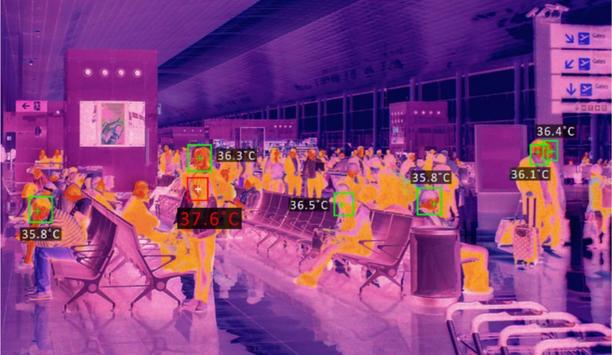
The COVID-19 global pandemic continues, and more and more companies are looking for ways to continue (or resume) operations while minimizing the coronavirus’s negative impact on their workforce, or potentially contributing to disease spread among the wider population. Thermal cameras have been proposed as a solution to screen individuals for elevated body temperature since the beginning of the pandemic. However, the technology has its detractors, and there are regulatory questions. We asked this week’s Expert Panel Roundtable: How can thermal cameras be used effectively for fever detection to screen for infectious diseases?