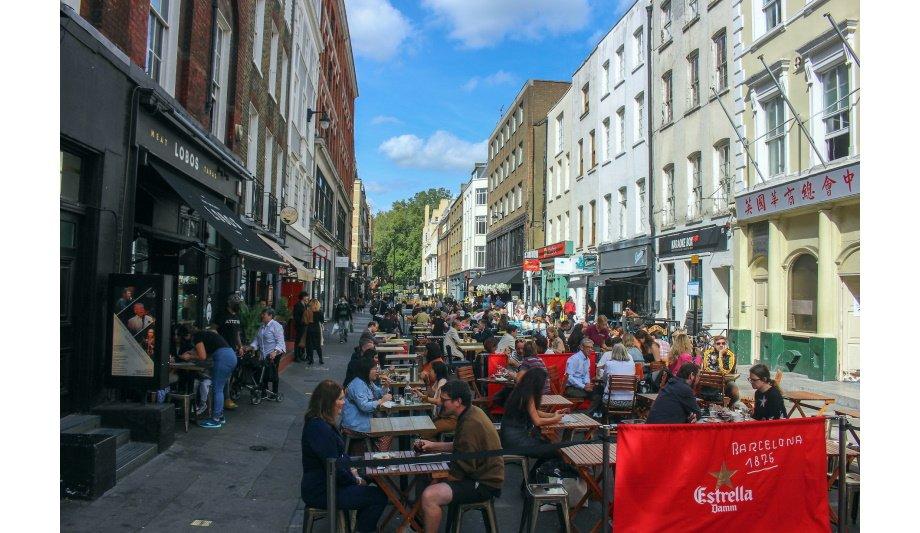

New research has found that nearly half (49%) of urban design professionals believe that the recent rise of pedestrianization in city and town centers is making public spaces more vulnerable to attack. The coronavirus pandemic has had a devastating impact on urban economies, with local authorities left in the novel position of needing to find ways to encourage people back into city centers.
Temporary pedestrianization of key locations has suddenly become commonplace as a result, offering an effective means of facilitating social distancing and increasing outdoor seating capacity for struggling bars and restaurants.
Temporary security measures
However, the survey of architects, planners and specifiers by ATG Access revealed that many are concerned about the potential security risks of widespread pedestrianization.
Large numbers of pedestrians gathered in a confined area increases the threat of vehicle-as-a-weapon attacks
Without the appropriate security solutions in place, large numbers of pedestrians gathered in a confined area greatly increases the threat of vehicle-as-a-weapon attacks. In response to this increased security threat, nearly a third (30%) of those surveyed said that investing in temporary security measures that can be installed and removed as needed will be essential to ensure the ongoing safety of civilians.
Comprehensive security solution
Iain Moran, director at ATG Access, commented: “While pedestrianization offers real benefits for businesses and consumers at this difficult time, we must ensure that the right security solutions are in place to avoid putting people in unnecessary danger.”
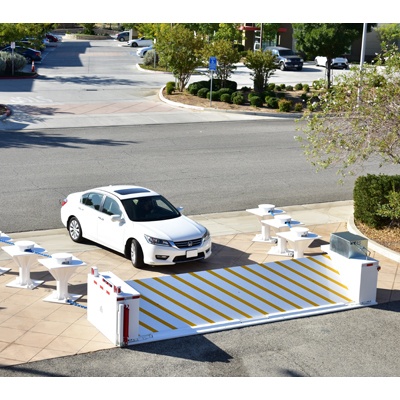
“It is clear that in some cases security could have been sacrificed for social distancing and designers are seriously concerned that security has become an afterthought. Temporary, surface-mounted security barriers offer a flexible, comprehensive security solution that can easily be adapted without the need for any construction work, making them invaluable in the current situation.”
Retrofitting security solutions
The research also found that many urban design professionals believe there is now a clear need for public spaces that can be easily adapted to respond to the changing needs, including security measures that can be replaced or upgraded whenever necessary. According to 43% of those surveyed, this will be the key to future proofing the cities going forward.
The pandemic has really brought to light the volatile nature of our relationship with our urban environments"
However, historically this has proved a challenge, with 32% suggesting that retrofitting security solutions into existing developments is one of the biggest design challenges they face. Iain Moran, director at ATG Access, added: “The pandemic has really brought to light the volatile nature of our relationship with our urban environments, with both the needs of the public and the security risks they face subject to change with very little warning.”
Redesigning public spaces
“When it comes to redesigning public spaces, it can prove difficult to retrofit security solutions without causing disruption to the surrounding area. Previously, impact-tested security products have required deep foundations, which means a lengthy, obtrusive installation process.”
“Fortunately, security technology has improved dramatically in recent years, and there are now many options available that can overcome these challenges. In addition to temporary products, permanent shallow mount bollards can now require a foundation depth of just 112mm, and as a result are far quicker to install with minimal disruption to the surrounding area.”