Government & public services security applications

When Brazil’s Taquari River threatens to overflow, the Municipality of Muçum no longer waits and watches—it knows. Using Hikvision’s water-level detection solution, the town gets faster, more accurate insights about the changing water levels in the river. This strengthens emergency responses and helps protect communities across the Taquari Valley. Located in Rio Grande do Sul, the southernmost state of Brazil, the Municipality of Muçum is part of a wider region t...
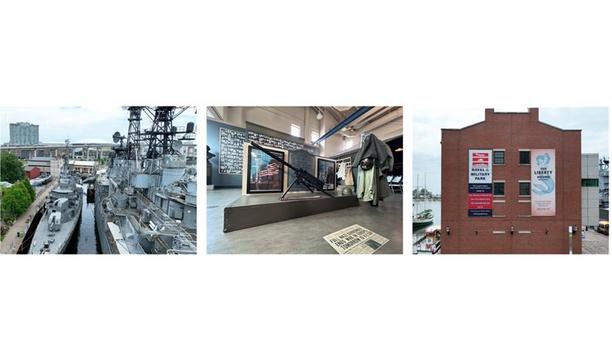
The Buffalo and Erie County Naval & Military Park, in Buffalo, N.Y., has a clear mission based on four pillars: to honor all veterans, educate the public about the sacrifices made by those who serve, inspire a sense of patriotism and appreciation for those protecting Americans’ rights and freedoms, and preserve the artifacts entrusted to the Park’s care. Buffalo Park The Park regularly hosts events and takes visitors inside America’s military histo...

The Buffalo and Erie County Naval & Military Park, in Buffalo, N.Y., has a clear mission based on four pillars: to honor all veterans, educate the public about the sacrifices made by those who serve, inspire a sense of patriotism and appreciation for those protecting Americans’ rights and freedoms, and preserve the artifacts entrusted to the Park’s care. The Park regularly hosts events and takes visitors inside America’s military history with in-depth tours of decommission...

The Salvation Army's mission is to meet human needs wherever and whenever necessary. Their presence spans 13 Western states, plus Guam, the Marshall Islands, and Micronesia. This commitment to service is supported by local programs that are tailored to each community’s specific needs, and technology plays a crucial role in ensuring that these operations run smoothly. Addressing security challenges As part of their long-term goal to modernize security and streamline operations, the Salva...

“BCD’s solution perfectly fit our scenario. All I needed to hear was ‘we have storage and scalability for the future’. As Suffolk is growing fast and is very land rich, we’re predicting a lot of growth and definitely need scalability,” Tim Forbes, Physical Security Administrator, City of Suffolk, Virginia. Customer overview When a mass shooting in which 12 people died occurred at a municipal building in Virginia Beach in 2019, it served as a wake-up call for...

The city of Jesús María in Argentina has invested in a 114-camera monitoring system from Dahua, to help provide safety to residents and to support security and emergency assistance departments (e.g. firefighting, ambulance) in case of emergency. Challenges Jesús María is a vibrant busy city located in Cordoba Province. As such, the city needed an intelligent monitoring system to improve traffic flows and help the emergency services through heavy traffic...
News

A prison is, by definition, a secure place. Those who supervise correctional facilities deal in levels of secure access – from the door on an individual cell to the door open to the facility’s external secure perimeter. According to a report featured on Security Management Online, a prison has certain probabilities for a number of security breaches, each with its own degree of consequence. Maintaining secure accesses The safety of the inmates, the facility’s staff and the surrounding community all depends upon maintaining secure access at all levels. And the most logical way to do that is by maintaining secure accesses to the prison’s keys. Supervisors need to know the condition of the prison at all levels. Frequent information gathering, on both a regular and random basis, is needed to assure that everything is running smoothly throughout the facility. Although various forms of electronic surveillance can be used to maintain that flow of information, there is no substitute for routine tours by trained officers carrying a fail-safe mechanism to keep them moving and recording incidences. All systems used to maintain security in a prison setting must be impervious to tampering and routine wear and tear. A correctional facility is operated all day, every day. Therefore, several individuals supervise large-scale security systems, and the system’s tools are used continuously. Clock recording system Client: The construction of a brand new correctional facility in Woodstown, New Jersey replaced an old, outdated structure and gave its supervisors the chance to take a fresh look at their security needs. As a direct supervision prison, the new Salem County Correctional Facility was to contain two maximum security levels – a security building level and a living level containing 1416 beds for inmates. Ray Skradzinski is the deputy warden for the new facility. Project: The facility’s guard tour system was one area where Skradzinski felt considerable improvement was necessary. Routine tours of the checkpoint stations would be needed to maintain security, but Skradzinski had another reason to reconsider the old facility’s outdated clock recording system. Security management products “By state mandate in New Jersey we’re required to make routine rounds every 30 minutes in the evenings inside the pod, from 10 PM to 7 AM,” he said recently. The purchase and use of a more efficient guard tour system to guide officers through their tours and record their presence at checkpoint stations, helping reduce liability and maintain security. Keeping track of keys was another concern. The keys to the old prison’s doors were kept in an old-fashioned locked key-box, and security personnel had to literally sign out keys. “When we built the facility we were looking to enhance our system,” Skradzinski stated. The key management system purchased for the facility would be used by a variety of personnel. The facility currently has about 130 employees, about 36 of whom have access to master keys of varying security. Skradzinski was looking for an enhanced system that would help him account for each key and restrict its access to the proper personnel. For both systems, Skradzinski turned to Morse Watchman, the world leaders in security management products. Professional football helmets Provider: The Morse Watchmans guard tour systems are made up of three components: checkpoint stations, placed in fixed locations throughout the facility; handheld data recorders that are carried on rounds and used to check into the stations and record other data; and EZ ™ Data Sorting Software, which converts recorder data to useful custom reports. Morse Watchmans guarantees its checkpoint stations for life. They’re built out of impact-resistant Lexan(r), the same material used for professional football helmets. “I remember we didn’t like some of the other data recorder systems that we researched, because they didn’t seem to be rugged enough,” Skradzinski recalled. “We wanted something we knew was going to hold up and last. We did like the design, style and reliability of The Boss 2002 that we eventually chose. The Morse Watchmans salesperson who came in and demonstrated it dropped it on the floor to show us how rugged it was and that was one of the major selling points for us.” User-selectable option In addition to durability, The Boss 2002 features “Auto Pilot,” which is a user-selectable option that displays the next station to visit on the tour. Thus Skradzinski can pre-program the order in which each checkpoint station is to be visited, and the recorder will lead the officer from one station to the next. The Boss 2002 can carry up to 99 incident codes, enabling officers to input any data that supervisors have coded into the system. As for the issue of key security, Skradzinski chose Morse Watchman’s Key-Rings(tm), which use a simple, yet efficient, close-and-lock system. Key management system For the overall accountability and management of the facility’s keys, Skradzinski selected Morse Watchman’s KeyWatcher key management system. The KeyWatcher system conceals keys in a high-tech, efficient wall-mounted cabinet that can expand to hold up to 1000 keys. Each key is individually locked in place, and can only be released by entering individual user codes. Audit trail reports can be generated through a standard printer. Keys are randomly returned to the box, reducing the opportunity for unauthorized access. Morse Watchman’s tamper-proof “Smart Keys” electronically monitor key release and return. A 1/8-inch thick tamper-proof stainless steel ring protects each key. Maximum-security control centers Skradzinski had been impressed with the KeyWatcher system and associated products back in 1994. “I liked the structure of the storage cabinet; it’s a well-made metal box. It certainly held up over the years that we’ve had it,” he expressed. “The design was attractive and it met the specifications that we were looking for.” Implementation: There are two KeyWatcher storage cabinets inside the Salem Country Correctional Facility, maintained in two maximum-security control centers, from which the keys are distributed. “The central control center is only manned by supervisory staff and specially trained staff that work that specific area,” Skradzinski mentioned. Skradzinski said facility staff installed the KeyWatchers and The Boss guard tour system on their own. “It was very simple to do,” he continued. Administrative point of view Benefits: Reaction among supervisors at the Salem County Correctional Facility to the two Morse Watchman systems has been positive. “The officers think the PowerCheck is a good system,” Skradzinski said of his supervisors. “From an administrative point of view, we like it – the reports that it generates are accurate and it’s something we certainly wouldn’t want to do without.” According to Skradzinski, the system has helped to raise the efficiency of his officers, as well as comply with state regulations regarding routine rounds. “The Morse Watchman handheld data recorders are a way of allowing us to make sure we have a definite record that the rounds are being made,” Skradzinski revealed. “And it’s also been there in a couple of instances where we had an internal investigation.” Maximum security building Success: Skradzinski said he has been satisfied with the way Morse Watchmans dealt with his staff. “The tech support system has been good,” he complimented, and “They’ve always been very pleasant with us.” Skradzinski remarked, “We wanted a good, efficient way of maintaining accountability of our high security keys and the ability to restrict who had access to them – and that’s exactly what we got.” Since implementing the KeyWatcher, the Salem Correctional Facility has not lost a single key. Without a doubt, Morse Watchmans has helped the Salem Correctional Facility put the lock down on accountability and access control throughout their maximum security building.
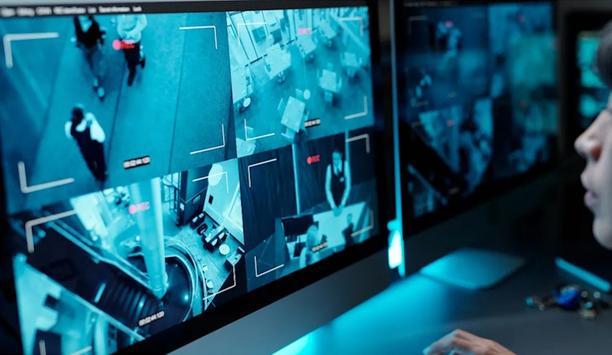
During the summer of 2025, the White House announced a 50% semi-finished copper import tariff that resulted in a 13% increase in the price of copper in just one day, making it the largest increase since 1968. The one-day price hike alarmed industries that depend on the import of semi-finished copper products, impacting heating, ventilation, and air conditioning (HVAC) manufacturers, the automotive industry, data centers, and more. Newly implemented tariffs As the price of copper increases, rising thefts of the metal have been reported across the country. In Raleigh County, West Viriginia, deputies reported thefts in the area following the arrest of four individuals who were charged with the “theft and sale of thousands of pounds of stolen copper.” The copper, valued at approximately $20,000, was allegedly stolen from Frontier Communications. The Sheriff’s office told WV News that they would “continue to address the spike in metal thefts across the region.” Similar reports of copper theft in Louisville, Kentucky, Saint Paul, Minnesota, and Sioux City, Iowa, this year suggest a nationwide trend of copper thefts that may only increase with the newly implemented tariffs that began August 1, 2025. Protecting valuable assets amid a crime surge Potential targets for copper thieves include dark buildings – unoccupied or vacant commercial buildings that can be stripped of copper from the electrical wiring in the walls – HVAC units usually located outside of buildings, as well as communications cables. A Midwest-based healthcare provider for seniors experienced two copper theft incidents over the first half of 2025, despite having existing cameras on the outside of their building. The cameras were not actively monitored, thus failing to alert the customer and law enforcement to the incident as the theft was ongoing. The customer approached Everon for a remote video surveillance solution to help combat the thefts before another occurrence. Proactive copper theft prevention with remote video monitoring Our dedicated team of experts at Everon provided a remote video monitoring solution with an Everon operator watching the cameras to proactively report unauthorized activity and prevent copper theft. Everon collaborated closely with the customer to design a surveillance system that included additional cameras to supplement the existing ones the customer had, then quickly implemented the new cameras as well as speakers and lights in an effort to deter unwanted activity. Other copper theft prevention tips include: Adding motion-activated lighting to exterior areas Securing HVAC units with protective cages Regularly inspecting vacant or dark buildings Using tamper-resistant copper wiring Stopping copper theft before it happens Before the installation of the remote video surveillance solution, the customer reported two separate incidents of copper theft this year. After the implementation of the solution that went live July 1, the customer has not reported any such incidents – demonstrating how the system has been a successful deterrent, allowing the client to focus on their critical day-to-day patient care and operations. “Ultimately, prevention and proactive monitoring to protect copper assets within outdoor condenser units, vacant commercial buildings, copper utility cables used by communications and internet providers, and more, has become increasingly important as copper prices – and the trend of crimes of opportunity – go up,” said David Charney, Senior Vice President, Video Command Center for Everon.

After two years of successful collaboration and following a comprehensive tendering procedure, Keynetics has been awarded a three-year contract extension with Westminster City Council to provide, install and manage its digital key management systems throughout the city. Keynetics’ solutions, which incorporate Bluetooth key safes, a cloud-based platform for access management and auditing, and an app for key safe access, are primarily used in (but not limited to) domiciliary care provision in Westminster. Benefits of the Keynetics solution The contract share was based on a number of strict criteria, including physical and digital security The contract allocation was based on a number of strict criteria, including physical and digital security, app functionality, software and service provision, supply chain management, social value and sustainability, amongst others. Furthermore, the ability to schedule and audit visit history, as well as grant and revoke access promptly on the platform, has been viewed as one of the primary benefits of the Keynetics solution throughout the initial two years of partnership. Benefits for organizations in private and public sectors Stuart Wheeler, Managing Director at Keynetics, says, “In addition to the well-known features of our products, sustainability is one of the most appealing benefits for organizations in both private and public sectors." “In Westminster’s case, the fact that we remove and redeploy our solutions at different locations is not only cost-saving but also environmentally friendly; it improves the visual appeal of the Westminster area by reducing key safe clutter, which is common at multiple occupancy sites, particularly in densely populated cities like London.” Relationship with Keynetics Jonathan Wills, Senior Delivery Manager at Westminster City Council, comments, “Our collaboration with Keynetics has enabled us to introduce a significant new technology to the Borough – the first of its kind to be used in a UK local authority – and to offer a cutting edge and best in class product and service to our residents. A successful pilot proved the efficacy and benefits of the products and cemented a very positive relationship with Keynetics – one which we are happy to see continue with a longer-term contract now in place.” Over the years, Keynetics systems have also been used on Westminster’s administrative buildings for quick and secure staff access to selective locations.
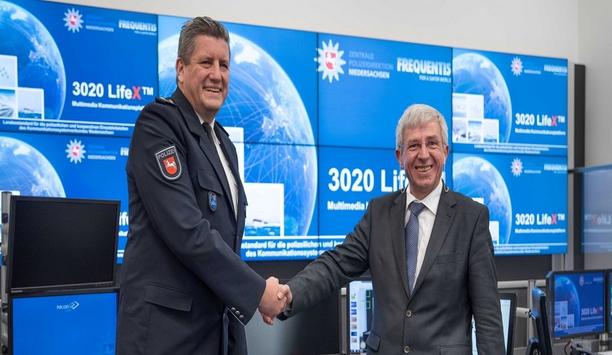
Police and local authorities in Lower Saxony, represented by ZPD, have commissioned Frequentis to supply its multimedia communication solution 3020 LifeX. The implementation of this system across eight control centers, one alternate control center, and one test system will take place in three phases. The project will establish a state-wide standard for the control center communication system within an IP-based system environment in Lower Saxony. Modernization of the control center "Throughout modernizing the police and cooperative control centers in Lower Saxony, one of the main requirements, among other things, was updating the communication system, as an essential technical component,” says Marc Stothfang, Project Lead, Operations Control System Lower Saxony (ELS NI). "Against the background of many years of good experience with the predecessor system, Frequentis ICCS 3020, in the state, the special challenges about a long-term migration phase from the old to the new system, as well as the fulfillment of future multimedia communication requirements, we opted for the Frequentis successor system, 3020 LifeX." Reliable communication system The existing Frequentis ICCS 3020 will be replaced by next-gen of Frequentis communication systems “With this, Lower Saxony has a reliable communication system with almost identical and extensive functional features at its disposal at all times, even during parallel operation, which provides the control centers with maximum technical performance, especially given the current security situation." The existing Frequentis Integrated Command and Control Solution (ICCS 3020), in operation for more than ten years, will be replaced by the next generation of Frequentis communication systems. Furthermore, it will realize the operational system interconnection of the control centers and enable interaction in case of overload or failure. An innovative approach “The decision of the State of Lower Saxony to choose the Frequentis state-of-the-art LifeX multimedia communication system for its modernization confirms the innovative approach we have taken during the development," says Robert Nitsch, Frequentis Vice President Public Safety. "The long-standing partnership between the State of Lower Saxony and Frequentis will be continued and together we will provide the control center operations with further new functions to meet future requirements."

Over the years, Dahua has continuously invested in the development and innovation of Full-color technology to solve the monitoring challenges brought by low illumination. In 2018, the company launched the Starlight and Starlight+ technologies which enable cameras to effectively capture color details in low-light environments. 24/7 color monitoring Focusing on further improving low-light monitoring, Dahua officially released the Full-color concept in 2020, realizing 24/7 color monitoring by introducing F1.0 super aperture, 1/1.8 '' high-performance sensor for large targets, and Dahua’s self-developed ISP 4.0 technology. The color information of key targets in the scene can be captured even at night, which can be used as evidence in case of an investigation or backtracking. Dahua Full color 2.0 technology Dahua TechMonth showcases some of the integrations of Full-color technology for customers and end users In 2021, the company continued to upgrade its technology and launched the Dahua Full color 2.0 technology. It further expanded the Full-color “family” and integrated 4K, panoramic, zoom, and other technologies to facilitate the development of high-end products, provide a more comprehensive product system, and enhance low-light surveillance. To elaborate more about this remarkable technology, Dahua TechMonth showcases some of the integrations of Full-color technology that create more business value for customers and end users. Recap of solutions Following is a short recap of these amazing solutions: Full-color + TiOC The TiOC (three-in-one camera) has 3 main features: Smart Dual Illuminators, Active Deterrence, and AI. It can effectively warn off intruders with active deterrence, and notify users in time with real-time alarm, providing pro-active video surveillance to properties that require 24/7 security. TiOC utilizes Full-color technology to capture color footage in dark scenarios. Also, its smart exposure technology realises time-sharing control and prevents the interference of flashing red & blue light in the image. To see TiOC in action, check out this video. Full-color + Panoramic The Dahua Full-color Dual Lens 180° Panoramic PTZ & IPC devices are equipped with dual sensors that deliver a 180-degree field of view. After the right and left lenses to capture an image, the camera calculates the feature values of the left and right images to avoid warping and pixel loss using standardized image correction technology. The Dahua advanced pixel-level metadata fusion algorithm then enables seamless splicing of the image, resulting in a seamless 180° wide-angle image. Panoramic IPC The Panoramic IPC offers EPTZ that provides a panoramic image of the scene, as well as sub-images that focus on specific areas or targets. For the panoramic PTZ camera, both panoramic and detailed views support AI functions and can be independently deployed in different directions to cover wider areas. Full-color + ZOOM The motorized varifocal lens of the upgraded Dahua Full-color 2.0 network cameras has approx. 5x optical zoom capability and auto-focus function, providing clear color details of the monitored scene even after zooming in. With its long-distance illumination capability, the camera can also capture a clear full-color image even from far distances. Full-color + 4K The Dahua Full-color 4K camera delivers enhanced color images and surveillance footage 24/7. It adopts a 1/1.2” image sensor (currently Dahua's best low-light IPC sensor) that provides a 110% pixel size increase compared to a common 8MP sensor. Its F1.0 large aperture can capture more available light and the maximum light energy that the sensor can receive is increased by 2 times. Success Case: Schwarze Berge Wildlife Park Located in Rosengarten Germany, the Schwarze Berge (Black Mountains) Wildlife Park covers an area of about 50 hectares. It is home to nearly a thousand of animals from approximately 100 species grazing in Europe. The administration of the park was looking for a comprehensive camera system that can perform many tasks. “We chose Dahua because it customized a complete solution to meet all our needs,” says Arne Vaubel, Managing Director of the Schwarze Berge (Black Mountains) Wildlife Park. Full-color and thermal imaging In this project, a full series of innovative cameras equipped with key technologies" “In this project, a full series of innovative cameras equipped with key technologies, such as Full-color and thermal imaging are adopted." "We are glad to see that through our cameras, the park can monitor the living environment and health status of wild animals at any moment without disturbing them, which also helps the park realize efficient operation and management,” explains Kai Wockenfuß, Pre-Sales Support Technical Engineer of Dahua Technology GmbH. Fixed-focal Warm LED Bullet WizMind Network Camera One notable Dahua camera deployed in the park is the 8MP Full-color Fixed-focal Warm LED Bullet WizMind Network Camera. It is equipped with a high-performance sensor and large aperture lens, enabling it to capture clear color images when it’s dark or during the night. With its photosensitivity technology, the camera can capture more available light and display more colorful footage of the monitored scene, providing 24/7 monitoring of the wildlife in the park. The future of Dahua Full-color technology With the success of Dahua Full-color in the market, what does the future holds for this amazing technology? For starters, minimizing white light pollution is at the top of the list. Some cameras with full-color capabilities in the market still use white light, which can affect the human eye and cause severe light pollution in the monitored scene. Touchless Full-color cameras are one solution that Dahua has been exploring through its multi-spectrum algorithm. The Dahua Multi Spectrum Fusion technology extracts the details and brightness of the visible spectrum and infrared spectrum to make the fusion brightness close to the visible light brightness, which then enables the camera to provide better images. AI integration Another aspect that Dahua is focusing on is the deeper integration of Full-color with AI Another aspect that Dahua is focusing on is the deeper integration of Full-color with AI. Full-color technology is continuously being upgraded, and with that comes more intelligent solutions that can realize clear HD images at night, like it is during day time. The TiOC, for example, combines Full-color, AI, and Active Deterrence (warning lights and siren) into one comprehensive solution, realizing a closed-loop system that involves early warning, active deterrence, and backtracking. It has been recognized by many authoritative organizations in the industry and even received distinctive awards. Intelligent analysis and computing What’s more, the constant development of this technology can enable Full-color imaging to be directly applied to intelligent analysis and computing. It will become a mainstream technology that everyone can avail and use to optimize their scenarios, which is in line with Dahua’s mission of “Enabling a safer society, and smarter living.”

More than one million electric vehicles are registered in the U.S.—and they all have to plug in somewhere. As EV charging stations pop up across the country, one of the chief questions will be how charging station users are identified, authenticated, and connected with membership or payment systems. Radio-frequency identification cards and tokens and smartphone authentication apps have emerged as two viable options for EV charging authentication. Which is best? It may depend on the user base they plan to serve. User authentication for EV charging Most electric vehicle owners have a spot to plug in while at home, either in their own garage or carport or in a designated charging spot in a tenant parking garage. But electric vehicles also need spots to charge while owners are out and about. The EV charging market is broadly divided into two tiers: Level 2 charging stations, which operate at 208-240 V and use AC power. These stations will add 20-25 miles of range in about an hour of charging. The U.S. Department of Transportation listed more than 22,800 public Level 2 EV charging stations across the nation as of mid-2020. They are commonly found in public parking lots and garages, hotels, grocery stores, malls, and other commercial areas. They may also be installed in private parking garages and business parking lots for use by tenants, employees or fleet drivers. Collecting membership data Direct Current Fast Chargers (DCFS) are designed to charge an EV battery to about 80% in 20-30 minutes. There are currently about 15,000 DCFC stations across the U.S., but their numbers are expected to explode as more people start taking EVs on longer road trips. They are commonly found along major interstate highways. As the market evolves, user authentication requirements for EV charging stations are likely to vary by type, location, and user base. Some commercial locations may provide Level 2 EV charging as a free amenity to shoppers, guests or employees. If there is no charge for the service, there may be no need to authenticate users at all— people can simply park and plug at any available spot. However, there may be a benefit to collecting membership data (e.g., shopper reward club). Private charging stations Public, for-profit EV charging stations, like gas stations, need a method to collect payment for their services. In some cases (especially at roadside DCFS stations), users may simply pay for the minutes used with a credit card—just like at the gas station pump. However, many EV charging station users are already accustomed to identifying themselves with an RFID membership card or a smartphone app. Charging networks like ChargePoint and Blink enable members to access any EV charging station within their networks with a card or smartphone app, which connects to their membership, account, and payment information. Private charging stations—such as those offered to tenants, employees or fleet drivers—may not require payment but need to ensure that only authorized drivers are accessing power and taking up valuable parking spots. An RFID card or smartphone app can be used to identify authorized drivers and track charging behaviors. Moving forward, many EV charging stations may find that they need a mix of options for users, including membership cards, smartphone apps, and a credit card payment option for out-of-network drivers. Choosing between RFID and smartphone apps In the long run, the answer may be ‘both.’ RFID cards are economical and easy to issue When user identification and authentication are desirable, which is the better option: RFID cards or smartphone authentication? Both have their uses in the EV charging market. In the long run, the answer may be ‘both.’ RFID cards are economical and easy to issue. And for some users bases, they may not have to issue a new card at all—they can take advantage of an RFID card they already carry. In many cases, it is possible to leverage existing employee IDs and membership cards for access to privately controlled EV charging stations. RFID membership cards may be a good bet for: Fleet drivers who already carry an RFID card for vehicle access. Employee parking lots and garages where people already use a card for entry. EV charging parking spots at gyms or other locations where users want to limit charging access to active members. EV charging stations Most consumers would prefer not to have to carry a physical membership card for every retail outlet On the other hand, public charging stations may find that consumers would prefer to use a smartphone app rather than receive another membership card to carry in a physical wallet. Many consumers prefer to carry only their phone and one or two essential cards (such as a driver’s license and a single credit or debit card). As more retailers enable consumers to pay via a digital wallet app on their smartphones, some don’t even carry a physical credit card anymore. Most consumers would prefer not to have to carry a physical membership card for every retail outlet they visit—and that includes EV charging stations. Smartphone apps for user authentication are simple to set up and highly secure. Instead of RFID, they typically use either Bluetooth® Low Energy (BLE) or Near-field Communication (NFC) protocols. Public charging stations For the user, the experience is almost identical to RFID authentication, except they wave a smartphone over the reader instead of a card. Apps have other user benefits, too. A custom app for EV charging can be configured to help users locate or reserve charging stations, check their balance and usage history, and change their payment options right on their phone. These features make smartphone authentication ideal for consumers These features make smartphone authentication ideal for consumers accessing a network of public charging stations. However, EV charging network managers should keep in mind that some users may still want a physical membership card. Smartphone-Based authentication There are still some user populations, such as older consumers and those from lower income brackets, where smartphone ownership is not ubiquitous. If users are primarily using EV charging for a fleet vehicle, they may not want to download an application for work on their personal cell phone. Other users may find smartphone apps confusing or simply prefer to have a card for other reasons. The answer for both public EV charging networks and private charging station owners is to have an RFID reader that is capable of both card-based and smartphone-based authentication. This will provide maximum flexibility as user preferences change. Finding the right RFID reader for EV charging The ELATEC TWN4 MultiTech family of readers is ideal for authentication at EV charging stations The best RFID reader for EV charging is one that is flexible enough to meet the needs of all user populations and evolve as requirements change. The ELATEC TWN4 MultiTech family of readers is ideal for authentication at EV charging stations. The readers support 60+ RFID transponder technologies along with BLE and NFC smartphone authentication. This means that one reader can support all common technologies already in use across the entire user base—both nationally and internationally. This capability becomes important for applications where users want to enable drivers to use an existing RFID card (such as their employee or fleet ID card or an access card for a tenant parking garage) for access to charging locations. It also provides more flexibility as technologies or preferences change in the future. Supporting advanced encryption TWN4 MultiTech supports advanced encryption and security configurations for highly secure transactions between the card or smartphone and the reader. This is important for EV charging applications tied to payment or employee/driver identification. ELATEC readers are mobile-ready. The ELATEC Mobile Badge BLE NFC App offers simple and effective components for building or extending a mobile application for EV charging networks. Non-managed mobile credentialing using the ELATEC app is free. TWN4 MultiTech readers also work with multiple existing third-party managed credential systems, such as KleverKey, Safetrust, and Transact. The TWN4 MultiTech is easy to customize with the powerful Software Development Kit (DevPack) and App Blaster and Director utilities. Readers can be easily configured to support custom functionality (such as LED light flashing sequences or sounds for user feedback) and integration with backend software for easier member management. The DevPack tools make the TWN4 family the most powerful, versatile, and sustainable readers on the market. Hardware communication interfaces As electric vehicles move from niche to mainstream, EV charging infrastructure will need to grow and evolve to accommodate millions more drivers—both in the consumer market and in commercial fleets. With TWN4 MultiTech, EV charging station managers will be ready. Interested in learning more about technical considerations for RFID? Download 11 Considerations for Embedded System RFID Readers for additional advice, including operating power and consumption requirements, antenna placement, hardware communication interfaces, and more.

Expert commentary

Access control solutions will continue their evolution in 2025 as organizations assess and adapt to dynamic and increasingly dangerous threats. Trends to watch include the growing adoption of mobile access credentials and digital IDs, and the integration of digital and physical security and other technologies. Other ongoing trends include the integration of AI into access control solutions and the increasing adoption of contactless biometrics for enhanced convenience. New access control innovations As these trends gather momentum, they highlight the pivotal role access control systems play in combining security and convenience, every hour of every day. Organizations must strike the ideal balance between a secure environment and satisfying user experience if they are to meet increasingly vocal demands for both. Achieving this balance not only delivers the expected user experience but also delivers multi-layered threat protection while introducing exciting new access control innovations. Digital technologies and open standards Modern access control solutions deliver a faster pace of innovation and dramatically improved capabilities Modern access control solutions deliver a faster pace of innovation and dramatically improved capabilities as compared to what was possible in the past. The primary objective is no longer simply to secure places and assets so they are beyond the reach of the wrong people. Now it also must be as easy as possible for authorized individuals to enter a building or access digital assets. Mobile access credentials and digital IDs are increasingly a preferred solution for achieving this seamless and convenient access experience. Technology convergence is happening at a rapid pace and this convergence makes it possible to integrate digital and physical security with real-time location systems and other technologies. Together, these converged technologies provide multi-layered protection against both cyber and physical threats while also enabling valuable new capabilities. 2024 State of Physical Access Control Report As AI is increasingly incorporated into access-control solutions, we will see even more powerful ways to leverage access control data for analytics use cases. Almost 40% of respondents to our 2024 State of Physical Access Control Report said they were looking to do this. Equally consequential is the rise of fast, frictionless and easy contactless biometrics solutions in a wide range of applications including healthcare, where 32% of respondents to our recent 2024 State of Healthcare Security Report said their facilities have already implemented this technology for authentication. Looking at the broader marketplace, nearly one in four (23%) respondents to our 2024 State of Physical Access Control Report cited biometrics when asked to “name the top three trends shaping the wider access control industry in the near future.” Evolution of access control solutions As access control solutions become increasingly central to secure and convenient daily life, these and other trends will have an ongoing impact on all market sectors from healthcare and banking to the corporate real estate enterprise and business and college campuses. At the same time, those responsible for a facility’s digital and physical assets know that these trends – and security in general – will never be a static proposition. The only constant is change. Threats will never stop evolving, and those tasked with protecting organizations against these threats must never stand still. The evolution of access control solutions that we saw during 2024 will continue through 2025 and beyond, and organizations will need to remain thorough and vigilant as they address today’s ever-expanding attack surfaces and ever-evolving attack schemes.

Changing customer needs can make specifying an alarm system that will continue to deliver in the long term a challenge. However, the latest modular alarm solutions provide the opportunity to build a more individualized system from the outset, as well as offering the ability to up-scale in the future without causing disruption. Martin Wilson, North EMEA Regional Director at Resideo, looks at how alarm specialists can use this style of solution to both benefit customers and build their own business opportunities. Holistic sense of home security An alarm system no longer needs to function on one level, alerting only to a break-in taking place In a survey of 1,000 homeowners undertaken by Resideo, the results revealed that, although deterring burglary was still a top priority, consumers were moving to a more holistic sense of home security, wanting to bring convenience, and property and life safety, into the mix. Indeed, an alarm system no longer needs to function on one level, alerting only to a break-in taking place. The latest modular alarm systems offer the flexibility to create a scalable security and life safety platform for homes and small businesses, as well as giving installers the ability to suggest future update options that can be added as and when budget or requirement allows. Valuable up-scales Finding an alarm that can be scaled over time has the obvious business benefit of ensuring it is easy to revisit and add to as customers naturally expand their existing security. With many modular designs connected via WiFi, this not only means installers can opt for the right mix of sensor options from the get-go but also that any additions can be connected to the panel and system with ease. Many control hubs have winning features in their own right. The ProSeries security panel by Resideo, for instance, has an intuitive touchscreen, easy-to-read, full-color display to reduce false alarms, plus a built-in camera, speaker and microphone, intuitive icons, and even five-day weather alerts. The ProSeries security panel by Resideo has an intuitive touchscreen Natural up-scale opportunities For instance, for those in a property prone to flooding, a flood sensor may be a worthwhile addition For the installer, it has a plug-in power connection, trouble-shooting videos, and end-user-replaceable batteries to reduce unnecessary callouts. However, to build a scalable system, this needs to be coupled with the right, flexible solutions to tackle customer concerns. Taking the time to find out what is important to the end user is vital here and can lead to natural up-scale opportunities. For instance, for those in a property prone to flooding, a flood sensor may be a worthwhile addition. Similarly, a panic button and even medical transmitters may be of benefit to others. All this, as well as other options, such as glass break detectors, door and window sensors, and indoor and outdoor MotionViewers™, are available within the ProSeries range, and can be updated or added to an installation as needed or as a property grows with minimum disruption. Adding life safety The ability to propose an alarm system that can bring together alerts for different threats – for both the home and life – under one platform, also has real appeal. Indeed, in a survey of 1,000 homeowners undertaken on behalf of Resideo, a system’s ability to alert to the dangers presented by fire and CO was mentioned as an important part of the decision-making process by 41% of participants. For many, this increased awareness may stem from the many regulation updates regarding smoke and carbon monoxide (CO) alarms that took place in 2022. In Scotland, for instance, carbon monoxide detectors were required to be fitted in any room with a carbon-fueled appliance in all homes, rented or owned. Social housing properties In England, smoke and carbon monoxide alarms were required in all social housing properties In England, from the 1st of October 2002, smoke and carbon monoxide alarms were required in all social housing properties, with carbon monoxide alarms now mandatory in the private rented sector. Wales followed suit in December for rented accommodation. The new guidance for England and Wales requires at least one smoke alarm to be installed on each storey of a property, to help alert to domestic fires more quickly, ensuring a quicker evacuation and reduced risk of fatality. For professionals, systems such as ProSeries, can be connected to a series of smoke and carbon monoxide detectors, in a ‘one-go-all-go’ setup that means the alarm will go off if one of these threats are identified. Smart and connected benefits The total Connect 2.0 app gives ProSeries end-users the ability to view and control the security platform remotely. The Resideo Pro app currently gives installers the ability to view the system and connect to the central monitoring system. The platform also supports home automation as it works with Zwave devices. The platform also supports home automation as it works with Z-wave devices. The platform also supports home automation as it works with Z-wave devices There are also extra benefits for alarm professionals too. The AlarmNet 360™platform on which ProSeries is configured gives greater insight to improve business operations, increase efficiency and deliver insights on accounts to identify additional upsell opportunities and ongoing services. Providing the ability to remotely diagnose brings valuable time-saving options and avoids unnecessary callouts. It also means the ProSeries panel and peripherals programming can be accessed anytime, anywhere, using the cloud, allowing ease of programming, troubleshooting and account management on the go. Needs and future possibilities Changing a complete alarm system to apply new functions is never going to feature highly with the end user, nor does it work where longevity and sustainability is concerned. Having the ability to build a modular system and add to this as needed, whether this is at a property or a small business, provides benefits for both customers and professionals when it comes to meeting immediate needs and future possibilities. Add connectivity and remote access to this and you have a platform that can help streamline business operations, putting professionals more in touch with customers, and helping to spot future opportunities.

The adoption of innovative and interconnected door hardware systems can help overcome the challenges associated with building security, explains Daniel May of Consort Architectural Hardware. The security of our built environment and the safety of its people is paramount throughout a building’s lifecycle. While these elements remain a primary focus at each touchpoint of a construction project, today’s design teams are sooner adopting modern access control systems to address this age-old challenge, but why? Modern access control Where systems were once rudimentary, modern access control has evolved into a revolutionary factor of building design, unlocking various benefits for its many users in the process. The Internet of Things (IoT) has enhanced building security as we know it, and as technology continues to advance, more options enter the market. Following more than a decade of innovation and integration, the access control market is projected to grow year on year, from £7.8 billion in 2023 to £11.8 billion by 2028. Modern user requirements have led to several operational and technological advancements Modern user requirements have led to several operational and technological advancements during this period, and decision makers and design teams alike can now choose from a versatile selection of options. Some door hardware products now utilize smart locks, cloud control and even biometrics for example, and most recently, there’s been a substantial change to the way access control systems operate, with focus moving towards end users and ease of use. Modern access control has evolved into a revolutionary factor of building design Smart door hardware From an operational perspective, interconnected access control systems gift users with an intuitive network that improves building security through the use of real-time status updates, while also providing them with the ability to grant instant access approval and denial at the touch of a button. Often, users can operate their building’s various access points through their mobile phone, which has led to improved flexibility and efficiency in most environments - whether at home or in a public access property. The security benefits also become clear when compared to the alternative of physical keys. If a traditional key is lost or stolen, the security of a building becomes at risk until it is found or replaced. Intuitive access control systems are designed to build upon the traditional lock and key methods. By seamlessly integrating smart door hardware into both new and retrofit projects, users can manage access points and improve security across the building - without stifling ease of access, stunting future scalability or unsettling the aesthetics. Users can operate their building’s various access points through their mobile phone Access control system The PSIA standard is one of the widely recognized and respected standards for access control products As many adopt Wi-Fi infrastructures, NFC technology and cloud services into their buildings, decision makers must also consider the need for better standards. While the introduction of IoT may advance security, performance and functionality, it can also introduce new risks which must be mitigated by adhering to both localised and international standards, such as ISO 27001 for example. The Physical Security Interoperability Alliance (PSIA) standard is one of the widely recognized and respected standards for access control products and provides comprehensive requirements for systems by focusing on interoperability, scalability, and functionality. While the introduction of IoT may advance security, it can also introduce new risks Providing comprehensive requirements This standard ensures that access control products from different manufacturers can seamlessly integrate and communicate with each other, allowing for greater flexibility and choice when designing a complete access control system. After all, a one size fits all access control solution simply doesn’t exist and decision makers would be remiss in not selecting a product that aligns with their building’s needs while meeting the required standards.
Security beat
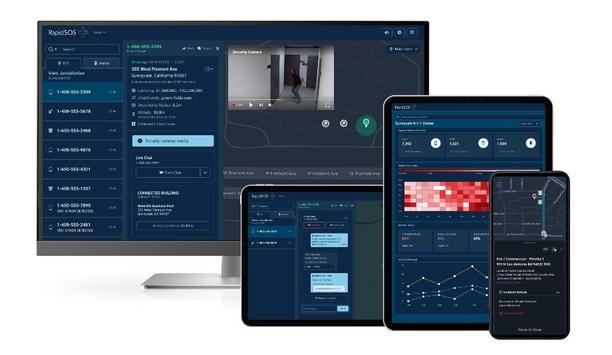
In an emergency, information is pivotal. More information provides better understanding of an emergency and empowers potentially life-saving decision-making. Emergency response teams depend on information to guide their efforts and to deliver targeted assistance. On the front lines of emergency response are 911 and field responder agencies, which must direct reaction to life-or-death situations rapidly and efficiently. Historically, 911 operators had to respond based on very little information, perhaps just a voice on the phone or a location on their screen. Providing critical information Today, there are literally millions of information sources available, ranging from connected buildings to vehicle telematics to live video streams to health information from wearable devices. In fact, there are 540 million connected devices, any one of which could provide critical information in an emergency. But how can those information sources be leveraged to improve emergency response? That’s the mission and value proposition of RapidSOS, an ‘intelligent safety platform’ company that connects 911 operators with the vast universe of information available to promote better and faster emergency response. Highly sophisticated operation The platform is integrated into every major public safety software system and first responder agency “RapidSOS fuses human and artificial intelligence to put critical information from any connected device directly into the existing systems and operating procedures of first responders across the United States,” says Michael Martin, CEO of RapidSOS. RapidSOS is widely used by first responders. The platform is integrated into every major public safety software system and first responder agency. There are more than 4,600 software integrations that serve more than 21,000 first responders and 911 agencies. In 2023, RapidSOS supported the lifesaving work of public safety across 171 million emergencies with 3.3 billion data payloads. The system is adaptable and configurable to support any agency, from a highly sophisticated operation in New York City to a local sheriff running their own 911 center. Intelligent analytics and reporting RapidSOS Unite is the latest evolution of the product, a single solution that includes AI automation, rich content pathways, redundant connection to caller phones, and access to millions of connected devices. In an emergency, Unite intelligently fuses data from among millions of sensor feeds into a unified picture of an incident, allowing public safety officials to view real-time location, health profile, telematics, alarm data, and more. RapidSOS Unite is the latest evolution of the product, a single solution that includes AI automation RapidSOS offers core modules that handle call, text, video, sensor, mapping, and administration tools, and that provide partner data from connected devices. Additional modules provide enhanced geographic information system (GIS) data, and automated translation and transcription. There is also a single sign-on (SSO) upgrade, intelligent analytics and reporting, and seamless integration into field responder applications. Field responder applications Consider how an emergency might unfold and how RapidSOS can help. In a car accident, data from a modern automobile telematics system can alert a 911 operator of the accident as it happens. Data from a passenger’s wearable device might provide information about their health and condition. A nearby video or traffic camera could fill in details of how the accident occurred. Useful information in an emergency might come from any one of thousands of sources, including public safety data, sensor feeds, enterprise security systems, smart phones, etc. In a train derailment, electronic access to the cargo manifest can identify which train cars contain hazardous materials and how to manage the specific type of hazmat. This information could save valuable time when responding to incidents like the Feb. 3, 2023, Norfolk Southern train derailment involving 38 cars in East Palestine, Ohio. Consider how an emergency might unfold and how RapidSOS can help Institutional security partners Norfolk Southern is one of the companies that provides information to first responders using RapidSOS; in effect, the company provides a direct digital link from their rail security operations to any first responder in the United States. Amazon’s global operations centers also interface with RapidSOS to provide critical information to first responders. Partnering with corporate security helps to better support the flow of data from institutional security partners and their solutions. Information can transform and guide emergency responses. For example, in a structure fire, real-time sensor feeds throughout a building can help 911 and first responders understand how the fire is progressing. Real-time security camera footage Having access to live feeds can save lives as 911 provides pre-arrival instructions such as CPR Leading the way to providing video feeds from private camera systems to 911 operators is an agreement between Eagle Eye Networks and RapidSOS, which was announced in April 2024. The agreement allows an enterprise to opt-in to share real-time security camera footage from an Eagle Eye video stream during a live 911 call. Having access to live feeds can save lives as 911 provides pre-arrival instructions such as CPR. “Security cameras are crucial in many locations, including schools, but previously those cameras could not be accessed by 911 during an emergency but were only used for investigation after an incident,” says Martin. Improving fire and life safety systems RapidSOS is also integrated with Honeywell’s Connected Life Safety Services (CLSS) system, a cloud platform that combines software and hardware to improve fire and life safety systems. Technology integrations between the two companies further modernize and digitize the public safety communications process to provide faster, more accurate communications with emergency centers (i.e., 911 agencies). RapidSOS technology securely transmits detailed data about an emergency CLSS provides real-time visibility and connectivity to help systems integrators and facilities managers make informed decisions and manage fire systems more efficiently. When combined with Honeywell's solutions, RapidSOS technology securely transmits detailed data about an emergency, such as the type of hazard, severity, and location within the impacted building, to emergency response centers. Video object detection Rapid SOS’s emerging Harmony artificial intelligence (AI) product serves as a ‘co-pilot’ for 911 operators, helping them manage the high volume of emergencies by making their response more efficient. Harmony pulls all the sensor feeds in an emergency and works to make only the most important information available in the hands of 911 and first responders. Harmony can take key insights from text and video data, use ‘sentiment analysis’ to determine the emotion tone of a message, and help 911 professionals using language translation, keyword alerts and video object detection. Harmony can help local agencies as they address a 25% average staffing shortage by providing additional support to 911 professionals while lessening the workload. Harmony is also working to help RapidSOS expand the ecosystem, stitching more data together and quickly making it more actionable than ever. Emergency response system RapidSOS also interfaces with Iamresponding, a comprehensive end-to-end emergency response system for first responders in the fire and other emergency sectors. Iamresponding’s field responder application is used by RapidSOS to get information out to first responders in the field. More than 650,000 first responders use RapidSOS’s field application RapidSOS’s recent acquisition of Iamresponding helps the company improve the connection with the last mile “in-the-field” piece of the puzzle, ensuring partners across computer-aided dispatch (CAD), integrated applications, mobile data terminals, body cameras and other responders have access to critical data. More than 650,000 first responders use RapidSOS’s field application. Enhancing emergency response RapidSOS’s Safety Pioneer Program formalizes the important partnership between RapidSOS and public safety agencies. Participants in the program receive early access to new platform features, contribute to the platform roadmap, and drive feedback to enhance emergency response. “911 and first responders do incredible lifesaving work,” says Martin. “Everything we have done and built at RapidSOS is a direct result of the engagement, partnerships, inside advice and insight we have gotten from public safety. We have learned from them, developed new technologies and tested them.” Martin adds: “Companies have data and we now know how to make that data actionable into the hands of 911 and first responders to save lives. This is an exciting moment for us continuing our mission in partnership with public safety, and for technology and security companies to have a major hand in that.” {##Poll1719488782 - What is the most valuable benefit of artificial intelligence (AI) in an emergency call center?##}

Security professionals are recognizing the intelligence value of leveraging publicly and commercially available information. This information can now be accessed more effectively from typically hard-to-reach regions. Also, the technological capabilities have matured in our age of artificial intelligence, machine learning, and data science. Intelligence has historically been based on classified data. However, today’s unclassified data, including open-source intelligence (OSINT), is increasingly being used to provide context and queuing for other types of intelligence. Advanced identity intelligence Babel Street is a technology company providing advanced identity intelligence and risk operations using an AI-enabled data-to-knowledge platform to unlock insights from a flood of data. The company provides advanced data analytics and intelligence for the world’s most trusted government and commercial organizations. Experts have predicted that by 2025 over 463 exabytes of data will be generated each day globally The sheer volume of data is growing exponentially. Experts have predicted that by 2025 over 463 exabytes of data will be generated each day globally. Not only are we seeing exponential growth in the volume of data, but there is also disparity in the veracity and the variety of data. This is being compounded by the ‘app economy’ in which data is created in a new format for every app added around the globe. Human language technology “The problem is that the data ‘junk’ and the ‘crown jewels’ are in the same bucket, and government and commercial entities need better and faster ways to extract intelligence from these torrents of data,” says Farid Moussa, VP, Strategy & Public Sector, Babel Street. Prior to joining Babel Street, Farid retired from the National Security Agency (NSA). He has guided video, image, speech, and text analytics (VISTA) and developed an appreciation for human language technology. An elusive source of data is the Dark Web, where every user, by design, is attempting to obfuscate their identity, and bad actors are hiding much better. “This presents a cat and mouse game – the cat must be smarter than the mouse, but the mouse is continually getting smarter,” says Moussa. Intelligence tools for data analysis SIGINT and HUMINT – while both vital – are also the most expensive forms of intelligence There are several intelligence tools for analyzing data. One of them is signals intelligence (SIGINT), which refers to electronic transmissions collected by ships, planes, ground sites, or satellites. Another is human intelligence (HUMINT), which is collected in a human-to-human fashion. Open-source intelligence (OSINT) is obtained by searching on topics or entities of interest that are publicly available on the Internet at large. Today, these various categories are often done in ‘silos of excellence.’ However, the best practice is using all forms together in a holistic fashion. SIGINT and HUMINT – while both vital – are also the most expensive forms of intelligence, while OSINT, which is growing in importance, is most cost-effective. All are vital forms of intelligence; OSINT is complementary and crucial to holistic intelligence practices. Holistic intelligence practices When it comes to physical security of people and places, OSINT has become a critical source of actionable information. Security directors leverage Publicly Available Information (PAI) to safeguard against threats to individuals, property, travel routes, and event sites. By monitoring PAI, security teams can detect and respond to potential dangers, including during and after events where thorough preparation is vital. Online information can contain warning signs of impending threats. It informs security professionals in uncovering digital traces, confirming intentions, and addressing risks across language barriers, ensuring proactive risk management for the protection of people and property. Role of Natural Language Processing (NLP) The Internet and social media were mostly English language by default, but that has changed exponentially Natural Language Processing (NLP) is a crucial capability that has evolved to recognize the richness and variety of words and names in multiple languages and scripts, and their use across cultures. Using machine learning and linguistics algorithms, the technology simultaneously considers numerous types of name variations. At one time, the Internet and social media were mostly English language by default, but that has changed exponentially. Babel Street’s world-class entity matching technology measures over 100 features to calculate the similarity of entities across multiple languages. Despite advances in data management and the cloud, there are still multiple challenges and complexities with integration of these data elements. Challenges include spelling variances/phonetics, language translation issues, criminal evasion, human error upon input, typos, etc. Accessing data from a scattered landscape While there have been advancements in cloud technologies, agencies utilizing open-source data are typically working within a highly scattered data landscape and must use a wide array of tools to get at the relevant pieces. This fragmentation makes it difficult to run analytics and apply AI and machine learning at scale in order to derive actionable insights. Unstructured and relationship data are visualised through advanced link analysis As with many disciplines, artificial intelligence (AI) is changing the game when it comes to intelligence. NLP and AI algorithms are employed to enhance datasets for greater quality, usability, and completeness. Unstructured and relationship data are visualized through advanced link analysis, geographic heat maps, influential entity carousels, topic clouds, and patterns by time and day. Geographic heat maps The advanced algorithms accurately score and prioritize critical entities within the relationship network while providing the citations from which an AI/ML-based decision was made. “With the democratization of AI, the world is becoming flat,” says Moussa. “Just like the most prosperous countries, even the poorest countries have the most advanced capabilities to do damage. Third-world economies often present a scenario where the financial gain of nefarious schemes and low-to-no regulation combine to incentivize bad actors.” The Challenges of Name Matching Identity has been an ongoing challenge for intelligence analysis due to the vast complexity of linguistics, spelling and cultural variances, human error, as well as human evasion. Technology and data science approaches are maturing, however machine translation can still struggle with meaning. The best-of-breed natural language processing capabilities run against the data while it still is in its native language. This minimizes the occurrence of analytic errors caused by inaccurate machine translations. This minimizes the occurrence of analytic errors caused by inaccurate machine translations It’s tempting to think that name matching is like doing a keyword search. The complexity of language makes it more challenging. New names are constantly created, with multiple spellings and no set of rules to encompass how names are formed. They are variable across languages, scripts, cultures, and ethnicities. Culturally specific nicknames and aliases add to the complexity. Replacing human involvement The investigation of the Boston Marathon Bombing in 2013 spotlighted an example of the significance of intelligence analysis. Even though the FBI had issued a detain alert for Tamerlan Tsarnaev back in 2011, Tsarnaev managed to travel to Russia in January 2012; and in July 2012, he returned to Boston. He was not detained on either occasion because there were too many names on the lists, and Tsarnaev’s last name had been spelled differently from the way it was on travel documents, thus enabling him to get through security. With the Internet, social media, and the dark web, there’s been an exponential increase in public communications in various languages, adding significantly to the amount of analysis required to keep societies safe. Name matching, using AI, analyses multiple contextual data points across languages to arrive at matches. Name matching, using AI, analyzes multiple contextual data points across languages to arrive at matches A common misconception is that this technology will replace human intelligence. “It’s more accurate to recognize its role as a force-multiplier, allowing humans to focus on the on the harder problems and/or vetting the results of AI,” says Moussa. “The technology can efficiently analyze massive volumes of data and distill it into actionable information in a timely manner. It augments human capabilities, enabling analysis at speed and scale beyond human capacity, without replacing human involvement.” Commercial Technology to the rescue “When it comes to threat and identity intelligence, we face a risk-confidence gap, underscored by the challenge of integrating traditional tactics with the modern digital landscape,” adds Moussa. “We cannot ‘hire’ our way out of this problem. Instead, it is imperative that we adopt technology to scale our efforts and free humans to solve the harder problems that machines cannot solve yet.” The public sector loves to build things, but there are time-to-value and return-on-investment considerations to the ‘build or buy’ decision. When commercial technology can be leveraged by government, it frees resources up to work on problems that the commercial world hasn’t yet figured out, says Moussa. “The public and private sectors need to come together – one team, one nation, working together with mutual trust and collaboration,” he says.

Already a strong player, particularly in New Zealand and Australia, Gallagher is still climbing in the U.S. market, which it sees as a big opportunity to invest in the company. Active in the United States for 10 years, Gallagher undertook a more aggressive growth strategy about five years ago. There are 52 employees in Gallagher’s U.S. security business, and about half the workforce has been hired in the last couple of years. They have grown from three sales territories to 16, operated by a full sales and engineering staff. Culture of innovation sets As it happens, Gallagher’s U.S. headquarters is located a short drive from my home office in the wider vicinity of Atlanta. I missed seeing them at GSX in Dallas, so we scheduled an in-person visit to catch up on their company. Gallagher’s strong culture of innovation sets them apart, as does their “people-first” commitment, says Scott Elliott, Gallagher’s Executive Vice-President, The Americas. “We have intentionally recruited for a diversity of thought that drives the business,” says Elliott. “We are a people business.” Melissa Vidakovic, Director of Marketing, Americas; and Scott Elliott, Executive VP, Americas, at Gallagher Security's office in Canton, GA. Unified approach An advantage Gallagher has in the market is total ownership of their supply chain; it manufactures each of the hundreds of products used across their solutions, from plastic components to readers to controllers to their own software systems. Among other advantages, the unified approach enables tighter control from a hardening and cybersecurity perspective, enabling them to minimize any threat vectors or vulnerabilities. The strategy also avoids dependence on third-party suppliers, which was a huge advantage during recent supply chain disruptions. While competitors struggled with availability issues related to third-party manufacturers, Gallagher’s supply was uninterrupted. Gallagher’s commitment Gallagher uses the same norms as the nation and subjects its effects to inner and outer penetration As a manufacturer serving a broad spectrum of markets, it’s Gallagher’s commitment to the high end of the market (e.g., high-security applications), where the company incorporates core tenets such as authentication and encryption. Gallagher uses some of the same standards as the government and subjects its products to internal and external penetration testing. These core strengths are also integral to Gallagher’s complete product line. “If it’s good enough for a high-level customer, it’s good enough for Mr. Business Owner,” says Elliott. The New Zealand company was founded in 1938 and was the first company to commercialize the electric fence, which it still uses for its agriculture business sector, separate from the security business. Gallagher entered the access control business 35 years ago in 1988 when a product used to restrict access to fuel pumps evolved into broader access control. Gallagher platform In the intervening years, the product has grown into a unified platform that incorporates access control, intrusion detection, and perimeter detection in a single ecosystem. “The platform is all-encompassing,” says Elliott. “No other platform does all three.” Augmenting access control, intrusion, and perimeter protection, there are other applications available in the Gallagher platform, such as workforce management, health and safety functions, and a spectrum of features useful to a wider stakeholder community. Fatigue management applications For example, Gallagher can implement routine randomized checks to proactively mitigate potential risks such as drug or alcohol abuse, thus ensuring workers are fit to work, to operate various machinery and that they do not pose a threat to fellow employees or the company. “Fatigue management” applications can monitor the use of equipment to avoid repetitive injuries or manage how long an employee works at a job site, requiring a worker to swipe or tap a card to a reader mounted on a machine to monitor and limit the time they operate that machine. Mobile mustering provides location and identification of evacuees in case of an emergency. Impact of digital transformation Gallagher’s “Better Ways of Working” concept zeroes in on the impact of digital transformation Gallagher is also embracing the “digital transformation” of the industry. Security companies must adapt to a more agile workforce and shifting processes, says Elliott. Gallagher’s “Better Ways of Working” concept zeroes in on the impact of digital transformation on their workforce. They also seek to address the changing workforce, where Gen-Z’ers work side-by-side with tenured, experienced workers, and where creating trust is the best approach to closing the generational gap. Gallagher also seeks to educate the market on trends such as artificial intelligence (AI), machine learning, cloud adoption, various service delivery models, and other issues. Industry consolidation Gallagher has more than 1,200 employees; operates in 140 countries, from South America to Canada, Europe to the Asia-Pacific and Australia; and serves almost 16,000 customers. Gallagher is part of New Zealand’s growing technology export sector, which is growing 30% faster than the overall economy and is now the second-largest export sector in New Zealand. In an age of industry consolidation and a market dominated by corporate conglomerates, Gallagher is a privately held organization seeking to be agile and innovative, and to deliver customer value more quickly. Gallagher re-invests about 15% of its profits into research and development. “Our customer service is the primary reason people buy from us,” says Elliott. Security integrators Security integrators quickly appreciate the breadth and strength of the product line Gallagher positions itself as an alternative in a market in the midst of disruption. Brand awareness continues to be a challenge in the United States, and the sales team often hears the question: “Who is Gallagher?” Once the introduction is made, security integrators quickly appreciate the breadth and strength of the product line, says Elliott. “We allow our customers to select among best-of-breed platforms, and [using open systems,] we are not limited by the technology we offer,” says Elliott. “Our value proposition to the integrator channel is our focus on the relationship,” says Elliott. Supporting end users through an authorized, certified channel, Gallagher also emphasizes value, cost-competitiveness, and cybersecurity. “Our partner relationships are built around cultural alignment,” says Elliott. Product innovation perspective What’s ahead for Gallagher and for the industry as a whole? Hard to say, notes Elliott, given the unfolding of unpredictable geopolitical and financial trends. However, from a product innovation perspective, Gallagher will continue to evolve, balancing a dependence on “cash cow” legacy product lines with investment in leapfrog innovations such as frictionless access control, cloud platforms, and mobile systems. In general, Elliott predicts AI will yield an opportunity to analyze a person’s pattern of behavior and intent, thus enabling a security system to adapt down the road. “With the ability to predict with some degree of certainty what might happen, these capabilities will evolve,” says Elliott.
Case studies

In 2020, the forest areas in Dali Prefecture, Yunnan Province were reported to have reached 1.855 million hectares, ranking among the top in the country. In addition to absorbing carbon dioxide, conserving water sources, and maintaining water and soil, these ancient forests also shelter a large number of rare wild animals and plants. These natural wonders are a risk if a forest fire breaks out, causing drastic damage and endangering the inhabitants of the forest. Wireless transmission systems Since 2020, Dahua has been assisting Dali Prefecture in building front-end systems and installing wireless transmission systems in key protected zones as well as areas prone to forest fires. More than 500 cases of illegal use of fire in the wild and 7 cases of forest fires have been detected since then. 24/7 real-time monitoring Dali Prefecture's forest coverage rate reached 65.51% in 2020. Twenty-eight nature reserves of various types and levels were established throughout the prefecture, with a total area of 181,000 hectares. The vast forest constitutes an ecological security barrier, but its massive area makes it difficult to monitor forest fires. "Burning straws, cooking fires, etc. are all common wildfires, but even seemingly insignificant areas can become the source of forest fires," a local forest ranger said. Visible light and thermal imaging technology The dual-spectrum thermal imaging cameras deployed in the forest enable the fire prevention video monitoring system Multiple round-the-clock patrol points were set up to monitor and observe the surrounding forest areas 24/7, with 3 people in each shift (changes every three days). The mountains are high and the slopes are steep, and sometimes thorns are everywhere, especially at night. Nevertheless, with the help of modern technology, these diligent forest rangers always persevere in accomplishing their tasks and duties. The dual-spectrum thermal imaging cameras deployed in the forest enable the fire prevention video monitoring system to complete an automatic cruising round in just 15 minutes. Based on visible light and thermal imaging technology, it can detect a fire source of about 2 square meters within a range of 5-10 kilometers. Accurate multi-dimensional positioning of fire source Flammable coniferous trees such as Yunnan pine and Huashan pine are widely spread in the forest areas of Dali Prefecture. Large-scale and high-intensity forest fires could start in these areas in a short period. In case of a sudden fire, quickly locating the source of the fire can add more significant time for firefighting. Smart fire detection system Technologies such as dual-spectrum video monitoring, intelligent image analysis and recognition, and three-dimensional positioning enable the smart system to detect a fire, quickly locate the fire source and automatically send an alarm to on-duty personnel. In forests with hundreds of hectares (or even thousands of hectares), the source of the fire can be accurately located within 50 meters, allowing the firefighting team to quickly reach the location and providing more time to control the fire. The efficient investigation, assessment, and handling of the fire situation Extinguishing forest fires requires the full cooperation of the frontline and the command center. The command center quickly communicates with the frontline about firefighting strategies based on the actual fire situation. But how can they understand the situation at the scene if they are far away? It enables operators to check and assess the situation in time, and quickly deal with the fire This particular job is handed over to the visual forest fire prevention video monitoring system. This smart security system synchronously displays real-time images in the monitoring center, combined with other corresponding data such as space, time, fire type, etc. It enables operators to check and assess the situation in time, and quickly deal with the fire according to the corresponding plan. Full coverage of network transmission in forest areas Considering its vast areas, transmitting valuable information from the forest could be a daunting task. "The mountain area is large and widely spread. Sometimes, there’s even no mobile phone signal. To allow the command center to see the scene in time, we also built a wireless transmission with front-end equipment." "The smart system covers all the video points in the forest and sends forest fire information back to the command center in real-time," a Dahua technical engineer explained. Early detection, reporting, and handling The forest fire prevention video monitoring system that Dahua helped build in Dali Prefecture offers wide-coverage, all-weather, high-precision, and intelligent 24/7 monitoring that can automatically detect fire and locate its source in time. Early detection, reporting, and handling of the fire situation using digital intelligence can effectively safeguard the safety of these local ecological barriers. With abundant experience in developing smart fire prevention systems, Dahua will continue to innovate and create technological breakthroughs to protect the environment and natural resources.

The Commonwealth of Puerto Rico needed to implement a centralized and efficient perimeter security system for all public schools on the island. Intrusions and assaults at educational institutions have increased, and Hurricane Maria further exacerbated problems with the destruction of infrastructure. The solution: The need to repair hurricane damage also provided opportunities to invest in modern improvements. The Department of Education chose to install a video surveillance system with more than 10,000 cameras, speakers, and other security devices in 856 schools. In the same way, a centralized control center was established using the Corporate version of Milestone Systems XProtect® video management software (VMS). Devices installed Milestone Systems: XProtect VMS Software XProtect Smart Client Milestone Interconnect Cameras from Axis Communications and Uniview DH-Vision Seneca Servers and Optex Sensors The advantages: Audiovisual material captured by the system helps agencies to evaluate and manage areas for public use Endowed with the same annual budget that allowed the monitoring of 250 institutions, the new system enabled the Puerto Rico Department of Education to cover all 856 public schools. Since the system has been operational, there has been a 97% reduction in intrusions within educational institutions. In addition to protecting the educational program, the audiovisual material captured by the system helps other government agencies to evaluate and manage areas for public use and investigate incidents. Need for a centralized security system Ensuring a safe environment is a growing challenge for schools and colleges: theft, fights, and bullying are some of the problems that not only affect students, but also teachers, employees, and, ultimately, the government entities that subsidize the educational system. In Puerto Rico, for example, the Department of Education was concerned about the increase in unauthorized intrusions, robberies, and assaults within its schools. This index shot up after Hurricane Maria destroyed much of the island’s infrastructure in 2017. Even before this natural phenomenon, there was no centralized security system that integrated an overview of all schools. There were disparate installations of video surveillance equipment (cameras, alarms, and lighting) but only in approximately 250 of the schools. Centralized command center González said the proposal was born to begin the process to acquire a video surveillance system for public schools After the hurricane, top priority was given to providing perimeter security for all schools through an effective centralized command center instead of investing in the repair and purchase of separate systems. “The hurricane damaged the island’s communication and lighting systems, a circumstance that promoted intrusions into schools and increased vandalism. We had no visibility of what was happening and we could not find a way to avoid these escalations,” said César González Cordero, Security Commissioner for the Puerto Rico Department of Education. He adds, “However, we could not afford to buy and repair equipment individually for all schools, so a centralized and coordinated effort was necessary.” Based on this context, González said, the proposal was born to begin the process to acquire a video surveillance system for public schools in Puerto Rico, focused on perimeter security. Perimeter security for all schools Genesis Security Services, Inc. of Puerto Rico was selected to develop the perimeter security project for the 856 public schools on the island. This Puerto Rican corporation was founded in 1997 in Yabucoa, Puerto Rico by brothers Roberto and Emilio Morales, who are leaders in security services at the government level. “We have provided security to the Department of Education for more than 15 years through our onsite guard service. That is why we knew the design, location, assets, and vulnerabilities of various educational establishments. This was a great advantage when executing the project,” said Yasel Morales, Technology Director at Genesis. Video system Milestone XProtect video management software supports more than 8,500 security and surveillance devices In October 2018, the installation of cameras and other devices began in all schools. The video system mission control was built inside the Genesis Central Station, located in the Carolina municipality (in the island's northeast region). Video data from all schools are returned to Central Station, where it is managed with the Milestone Systems XProtect Corporate open platform VMS. Leveraging the power of the open platform, Milestone XProtect video management software supports more than 8,500 security and surveillance devices, and more than 450 software integrations from more than 3,500 technology partners. NVRs, DVRs and cloud solutions Alliance partners include providers of network video cameras, cloud solutions, DVRs and NVRs, servers and storage equipment, alarm and detection systems, video analytics, GPS technology, laser and radar scanners, boxes of emergency calls, and more. “At the Central Station, we have fifteen workstations, with the same number of operators per shift. There we have a video of ten monitors distributed between the stations. Likewise, we have two dispatch centers that serve as backup: one in the municipality of Yauco and the other in San Juan,” Morales explained. Uniview DH-Vision 4-megapixel cameras, audio speakers As part of the project, approximately 10,000 Uniview DH-Vision 4-megapixel cameras were installed in 856 schools (an average of 12 cameras per campus). Audio speakers from Axis Communications and a range of Optex sensors also were integrated. The combination of these technologies made it possible for every school to have an anti-intrusions system with its alerts feeding back to the Central Station. XProtect Express+, Milestone Interconnect Milestone Interconnect connects remote sites for a low-cost video surveillance solution Each campus has a Seneca brand server with the XProtect Express+ software installed. This communicates with the Corporate version at the Central Station through Milestone Interconnect™, a licensing platform that opens a communication channel between different hardware that normally cannot communicate with each other. Milestone Interconnect connects remote sites for a low-cost video surveillance solution. It is the ideal surveillance for a wide variety of industries that want an inexpensive way to get centralized supervision of multiple locations spread across one region. Remote management and monitoring With Milestone Interconnect, engineers and managers can easily monitor critical and remote areas from one central location. This means faster intrusion management because operators in the central system can access the video and receive alarms from remotely connected sites. This reduces the need to have local security personnel, maintenance, operation, and other costs, including visits onsite. Virtual gates Genesis created virtual gates using cameras that protect school spaces and ensure the safety of substations and solar panels, which are considered important assets for institutions. If someone crosses the virtual gate, an alert is generated locally and passed to the Central Station through Interconnect. Operators then make a visual confirmation and, if applicable, the emergency protocol is activated. “The emergency protocol is to contact the Security Commissioner and the Department of Operations. For this liaison, we internally designate an inspector. Once informed, they activate the security officers at the sites, who are trained to give quick responses and inform the police,” said Morales. Identifying suspicious activities Due to the management software, Genesis can easily find any recording of the schools Due to the management software, Genesis can easily find any recording of the schools and send it to the Security Commissioner, who can also receive the alerts directly through an application on his mobile phone. It should be noted that all personnel handling the system, both operators and technicians, have Milestone Systems certifications, which they obtained on the manufacturer’s website. Security Commissioner González explained that the directors and residents of the schools may contact the Central Station if they wish to report any suspicious activity within a school after regular hours. Genesis operations center González also clarified that “if for any reason a school principal requires a recording, he must contact us, and we request the information from the Genesis operations center. This protocol is designed to respect the right to be in a place without feeling guarded at all times, as stipulated in the public policy of Puerto Rico. In total, this system directly benefits almost 400,000 people.” Increased security at a lower cost According to the Security Commissioner, since the first camera was installed, they went from two or three intrusions per day to one or zero. Even in October 2018, they had no record of intrusions. Genesis Security Services, Inc. confirmed that since the system has been operational, there has been a 97% reduction in school intrusions. Reduced physical assaults Video technology has helped dispel theft of property by employees and has helped reduce rates of physical assault Video technology has helped dispel problems such as theft of property by employees and, more importantly, has helped reduce rates of physical assault and bullying among students. These results have helped build trust among Puerto Rican families when they enroll their children in schools. “The system provides agility and precision. It is more efficient and immediate than communicating with a guard who has to enter a facility to verify what is happening. It’s great working with a system that has visibility 24/7 in schools,” said González. Cost savings On the other hand, due to this project, it was possible to reduce the cost of security in schools using technology, one of the main objectives of the Department of Education at the beginning. “We spent about $25 million annually covering just 250 schools with the guard system, and we had almost 600 schools left unattended. This project gave us the possibility of covering 100% of the public schools in Puerto Rico with the same budget,” González reported. Finally, it is important to note that many of these schools are located in vulnerable places on the island, so the system is also helping the Police and the Prosecutor’s Office to resolve cases that occurred around the educational facilities, and in general to contribute with the welfare of the community. Future projects On behalf of the Department of Education, the Puerto Rican Government is seeking ways to integrate this type of video analytics system with software programs and databases of organizations that advocate for sexual assault victims. “In the future, we want to have a system that is capable of identifying if a sex offender crosses the perimeter in school zones so that we can warn in time,” said González. On the Genesis side, Morales said that the next step with this project would be to develop video analytics for the VMS, not only to give perimeter security but also statistics such as counting people and vehicles. They also plan on integrating access control systems into all schools.

When the Utah Transit Authority (UTA) decided to expand their rail lines in 2013, they knew that their surveillance systems would need a major upgrade to keep both passengers and property safe and secure. An open platform video management software (VMS) solution and flexible storage proved to be the clear choice to efficiently support a growing public transit system as new business opportunities came to the region. Challenge: safe public transit sets the stage Local leaders know that a top-notch public transit system makes a region more desirable to relocating businesses. And while accessibility is foremost, security is of immense importance, with passengers placing a premium on safe transportation. The right choice was a VMS that was much more flexible and efficient In 2014, the UTA was building a new transit line and was eager to display an improved surveillance system to state dignitaries. Their video security system needed upgrading from one that was limited by the capacities of its servers, to accommodate a 500-camera expansion. The right choice was a VMS that was much more flexible and efficient. Solution: centralized expansion is on track: Milestone XProtect® VMS platform Network cameras from Axis, Panasonic, IQeye, and DW® HP servers from BCDVideo Implementation by Diamond Partner Stone Security Flexible software design to further expand the system Milestone VMS supports many different kinds of cameras and allows more devices on platforms while centralizing the control system. The security camera views are accessible by dispatch, commuter, rail control centers, and other authorized users. The 1000+ camera system as of 2015 operated with nine HP servers (eight for recording and one for management). With this system in place, UTA could expand to 2,000 cameras or more. Result: staying ahead and following up Milestone marries two critical components: a centralized system and a lot of diversity in its deployment Milestone marries two critical components: a centralized system and a lot of diversity in its deployment. The open platform provides a best-of-breed software integration model and ensures that UTA isn’t tied to any one technology, accommodating future growth. The significant improvement in video quality made it easier to monitor and investigate any adverse events. The system function called Evidence Lock allows extension of the retention time for video recordings from selected cameras. And the encrypted video footage has authenticated time stamps, which is useful when exporting video to be presented in court. The use of Milestone technology had a positive financial impact for UTA. Gate arms at rail crossings frequently get damaged or broken off by motor vehicles. Prior to the Milestone installation, these costly incidents would often go unresolved. The new camera deployments helped police to follow up on incidents and even recoup damages. Preventing serious incidents The Milestone VMS lets staff check the alarm by accessing the video remotely, saving time and money UTA equipped its system with monitoring alarms in 19 locations, mostly in remote buildings that require navigating through difficult terrain. The Milestone VMS lets staff check the alarm by accessing the video remotely, saving time and money. The system has also been used to prevent serious incidents. When a driver failed to report his truck stalled on a train track, the incident was observed in the VMS by a UTA technician who notified rail authorities. In that instance, Milestone helped avert a serious and potentially life-threatening accident. “Milestone has saved us tens of thousands of dollars by allowing us to better monitor and investigate transit incidents and accidents.” - Video Security Administrator, UTA.
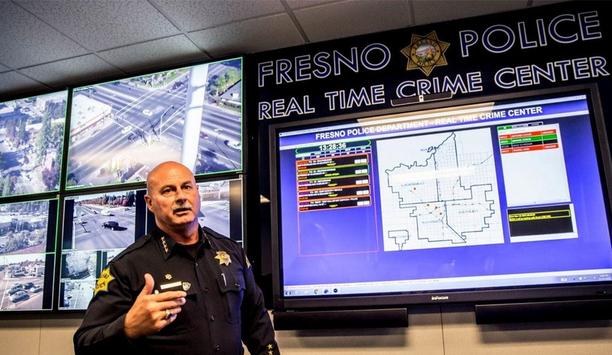
The City of Fresno, in California, USA is surrounded by some of the country’s most beautiful national parks. Fresno has a lively arts scene and a budding technology hub, along with an established large-scale agricultural community. Fresno Police Department serves the City and surrounding area, which covers approximately 115 square miles and has a population of approximately 515,000 residents. The department comprises five policing districts, supported by an auto theft team, mounted units, air support, tactical teams, canine units and a video policing program. Pelco video surveillance For more than 10 years, Fresno PD has utilized Pelco video surveillance in the video policing program, in order to help ensure a safer and more secure community. Images from the cameras installed throughout the downtown area in Fresno were monitored and archived at the city’s Communication Center. As technology advanced, the City of Fresno kept up with the changes, with new IP high definition cameras phased in to replace aging analog cameras and the program was expanded to cover additional areas of the city. Pelco camera technology Pelco camera technology also provided new opportunities for improving situational awareness Pelco camera technology also provided new opportunities for improving situational awareness, but the department’s existing system configuration could not take full advantage of the technology. Cameras were not monitored 24/7 at the Communication Center, they could not optimize use of the new panoramic cameras, and monitoring multiple scenes from multiple cameras on multiple platforms to quickly assess or investigate incidents was time consuming and inefficient. Operational enhancements The system was also closed in so the department could not view images from cameras installed by local businesses or schools. The Fresno Police Department's move from the Communication Center to its new Real-Time Crime Center (RTCC), and the addition of a new Regional Training Center (RTC), provided the opportunity for Fresno PD to initiate further operational enhancements and expand their video policing program. Pelco Spectra® and Spectra® Enhanced cameras With the move to the new RTCC, Fresno PD system operators can now monitor approximately 200 video surveillance cameras, which include both Pelco Spectra® and Spectra® Enhanced PTZ dome cameras, along with Pelco Optera® Panoramic multi-sensor cameras, on a 24/7 basis. These newer cameras feature Pelco SureVision™ technology for improved Wide Dynamic Range (WDR) performance and smart compression technology for reduced bit rate usage and storage savings. Pelco Spectra® Enhanced cameras feature a full suite of built-in analytics and single cable Hi-POE installation. Pelco Optera Panoramic cameras The Optera® Panoramic cameras capture superior images in difficult lighting conditions The cameras also feature HD optimized dome bubble technology, a revolutionary solid pendant design to eliminate vibration noise, 20X or 30X optical zoom, and precise 360° PTZ control. Pelco Optera Panoramic cameras provide completely stitched, seamless, and blended 360°, 270°, and 180° panoramic views with electronic PTZ capability across the entire panoramic image. With Pelco SureVision technology, the Optera® Panoramic cameras capture superior images in difficult lighting conditions, where highly contrasted lighting sources exist within the same scene. Enhanced monitoring and response capability “The advanced technology and imaging quality in our new Pelco cameras has significantly improved our monitoring and response capability,” said Sergeant Steve Casto of the Fresno Police Department, adding “In some locations we have both an Optera and a Spectra camera installed. This gives us a bigger picture and allows us to view what the PTZ may have missed.” He continues, “If something is noticed, we use the advanced optical zoom of the Spectra camera to zoom in and get more detail. The two cameras complement each other and heighten situational awareness.” VideoXpert™ VMS Control of the video surveillance system was upgraded from the Pelco Endura VMS to the company’s VideoXpert™ VMS, at both the RTC and new RTCC. Improvements over the previous VMS solution include a united user interface for improved centralized system management, incident management to easily and quickly correlate related video files, improved event management to customize event alerts with real-time visual notification, and immersive viewing of 180°, 270° and 360° panoramic images from Pelco Optera® Cameras. Third-party applications for operational improvements The VideoXpert’s open platform allowed Fresno PD to cast a wider net for monitoring and response The VideoXpert’s open platform allowed Fresno PD to cast a wider net for monitoring and response, by allowing video sources from local businesses, retail centers, schools and hospitals to be integrated into their resident VMS. It also allows Fresno PD to incorporate third-party applications for additional operational improvements. For instance, by integrating a mapping application within VideoXpert, the Department was able to simplify and speed up the process of addressing and responding to various and multiple alerts and calls. Benefits of 24/7 real-time monitoring The benefits of 24/7 real-time monitoring and better video management and control has been an increase in officer safety, according to Sergeant Casto. When officers are in the field at a scene, operators at the RTCC can quickly and easily pull up a video feed of the scene to assess and offer assistance. He says, “In one instance where an officer was in a physical altercation with a suspect and wasn’t able to broadcast that he needed help, the officers at RTCC could see the situation and dispatched help to resolve the situation safely. Additionally, by seeing and assessing the situation beforehand, we can provide details and warnings to the field so they know what to expect when they arrive on scene.” Pelco’s simple migration process VideoXpert was installed first at the Regional Training Center and then at the RTCC. Both locations have the capability for monitoring and control of the installed cameras. The changeover was simplified because Endura components map nearly one-to-one with VideoXpert. Pelco’s simple migration process transferred user names, roles, permissions, and the associations from Endura to VideoXpert, so that all user data would be maintained in the new system. The migration process also transferred all existing camera names, numbers, groups, and locations to VideoXpert, which made the transition faster and less susceptible to manual input errors. “We couldn’t be more pleased with this upgraded Pelco surveillance system,” said Sergeant Casto, adding “Law enforcement’s first job is safety, and not only are our officers and community safer, but we are more efficient and effective as a police department with the new Pelco cameras and VMS.”

The city of Neuilly-sur-Seine, in France, is home to Avenue Charles-de-Gaulle (RN13), an urban expressway, which is frequented by approximately 130,000 vehicles per day - from small cars to large buses and trucks. The avenue serves as a connection from Paris to the business district of La Defense, and is one of the busiest motorways in France. To get this avenue to keep on thriving, the municipality, in 2019, started a major modernization project called ‘Les Allées de Neuilly’. Traffic management for urban expressway Neuilly-Sur-Seine began a project in 2019 with the view of turning this urban expressway into an accessible, calm and welcoming boulevard lined with trees and walkways, and pavilions, in order to encourage soft mobility and local business development. Since the city is home to the headquarters of many businesses, the civil works of the project must be achieved without compromising on the road’s capacity for traffic flow in and through the city. Expected to finish in 2024, the project will result in a nice boulevard that guarantees transit capacity between Paris and La Defense for all types of mobility, such as vehicles, cyclists and pedestrians. ‘Les Allées de Neuilly’ project The project requires re-arranging of the 10 hectares of land that Avenue Charles-de-Gaulle occupies The project requires re-arranging of the 10 hectares of land that Avenue Charles-de-Gaulle occupies. Reconstructing such an infrastructure is no easy feat and getting it right is the key to the everyday functioning of the city in the future. It is also important that while the project is underway, the routes and traffic aren’t entirely disrupted. To adequately plan for traffic diversions and the potential impact this could have on daily commuters, the potential adverse effects to motorists and their safety needs to be measured, and for this is need for reliable traffic data. This is where Wintics came in. Wintics is a Hikvision Technology Partner that uses artificial intelligence (AI) to turn video stream into insightful data, with the vision ‘to make mobility a safer, more reliable and more sustainable experience’. Wintics Cityvision software and Hikvision cameras integration Wintics Cityvision software installed at Neuilly-sur-Seine analyzes video stream from 5 Hikvision thermal cameras. Cityvision uses AI to measure, analyze and visualize traffic data from the boulevard, to assist in measuring the state and type of traffic, as well as how and when people use the 10 traffic lanes. Once the project is complete, the installation will also assist the city in monitoring traffic to measure its positive impact and changes in travel methods. Hikvision thermal cameras (DS-2TD2136) installed To ensure the maximum reliability of its software, Wintics needs correct cameras to connect to Cityvision. This is where Hikvision cameras contributed to the solution. In May 2020, Wintics chose Hikvision thermal cameras (DS-2TD2136) to integrate with its own software, in order to film the traffic lanes, which then feeds into the Wintics system, which can differentiate between cars, motorbikes, buses, and other vehicles, thereby producing real-time data with more than 90% accuracy. Wintics used Hikvision cameras for several reasons. Firstly, Hikvision had the perfect balance between competitiveness and quality on the market, as Hikvision offers reliable and consistent products. In fact, Wintics usually defers to Hikvision cameras for its installations. Thermal cameras solve the issue of glare in images Secondly, the company opted for thermal rather than optical cameras for this case because thermal cameras solve an inevitable problem for optical cameras capturing traffic images – glare. Optical cameras may capture the glare from oncoming headlights, and strong sunshine, resulting in an obscured image, which in turn can obscure the data and analysis. Thermal cameras on the other hand don’t capture light at all, only heat – ruling out the possibility of glare obstructing the camera’s function. Privacy protection Where privacy is concerned, erring on the side of caution is made easier by using thermal cameras Thermal cameras also have an edge for potential GDPR issues. Since only the vehicle is recorded, the faces of drivers and their license plates are indecipherable. Where privacy is concerned, erring on the side of caution is made easier by using thermal cameras. Another plus to using thermal cameras is that they generally require less bandwidth to operate than optical cameras, making them an ideal solution if bandwidth is a potential constraint to effective operation. Accurate vehicle counting and classification Quentin Barenne, the Co-Founder of Wintics, said “We’ve audited the whole system and it resulted in over 90% accuracy - not only for counting the vehicles, but also in classifying them into different categories. By integrating Hikvision’s thermal cameras with our own AI application, I can now confidently discuss next steps for improving the safety of the road.” This installation is just one example of how Hikvision products can be easily and effectively integrated for various needs, creating intelligent, flexible solutions for many challenges – getting the most out of technology.
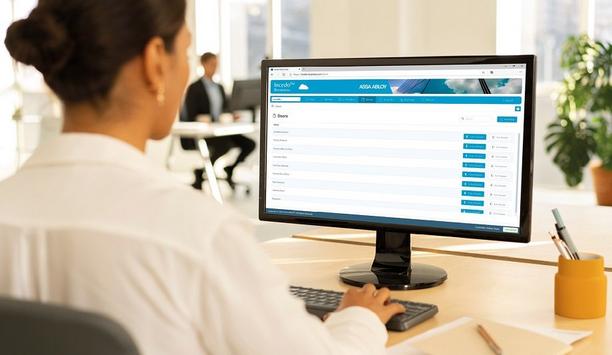
When businesses need to change, their access control must change with them. Flexibility, scalability, service packages, easy integration of new hardware: These are all critical when choosing an access system, whether for a small business or a multinational organization. The choice may impact the business in all kinds of ways. For example, security is maximized by finding locking devices for different types of opening doors or lockers, outdoors and indoors, high security and low. The ability to issue temporary or time-limited credentials for cleaners, contractors, or visitors improves efficiency. Incedo access control ecosystem Running multiple systems in parallel can be time-consuming. Switching to manage multiple security tasks and technologies from a single platform saves valuable staff time and reduces manual errors. ASSA ABLOY Opening Solutions’ Incedo access control ecosystem was created because every business has different requirements. Wired and wireless locking devices from across ASSA ABLOY’s vast range can be combined with a choice of software options: Local or Cloud management, plus the option to add third-party services like video and biometrics. Building users can carry physical credentials like smartcards or unlock with mobile keys stored on their smartphones. No two Incedo systems will look alike. But everyone can be built around the exact access management needs of the business. Incedo Business for flexible offices Work patterns are changing: The boom in hybrid working has propelled the growth of flexible offices and co-working spaces. Accommodating this flexibility demands a change in how security and access control are managed. Clockwise is a European provider of flexible office space for entrepreneurs and established businesses. Its diverse offering demands a broad choice of electronic locking devices to secure meeting rooms, private offices, communal spaces, and main entrances. Each one may require a different lock type. Electronic lock for every opening Clockwise’s portfolio itself will also evolve: Any access system must be able to scale instantly, up or down Because tenants come and go frequently, Clockwise facility managers need user access programming to be as easy as possible. Clockwise’s portfolio itself will also evolve: Any access system must be able to scale instantly, up or down. The diversity of Incedo-enabled devices enabled Clockwise to select the ideal electronic lock for every opening. Internal private office doors, “Zoom rooms” and meeting rooms as well as communal area doors and entrance/exits are secured with wireless devices from the Incedo Business range and controlled from the intuitive software interface. Incedo Business Cloud for dispersed locations Managing access control via the cloud allows start-ups to think differently. In Czechia, the remote management and instant scalability of Incedo Business Cloud helped Kolovna to reimagine bike rental on a national scale. The Kolovna Project aims to make cycling more widespread, not only by offering top-quality rentals but also by improving trip logistics. Kolovna‘s solution is to open a secured bicycle container at locations across Czechia. Kolovna’s containers must combine security with easy customer access, including unlocking via mobile keys on a smartphone. To achieve this, Kolovna needed a platform that could multitask without additional software or extra staff. They chose Incedo Business Cloud, installing readers, a controller, and a door module at every container. System integration for remote monitoring Incedo connects all of Kolovna’s security software and hardware within one seamless system. Cloud management keeps Kolovna staff in control of their premises from anywhere. They can work in an office, at home or mobile. The integrated Incedo solution includes remote cloud administration, a system for transmitting video surveillance signals, and flexibility to add more access and security features in the future. “Thanks to ASSA ABLOY’s custom solution, Kolovna management did not have to organize time-consuming meetings with multiple contractors or worry about the compatibility of individual systems,” says Kolovna’s Rostislav Posker.
Products
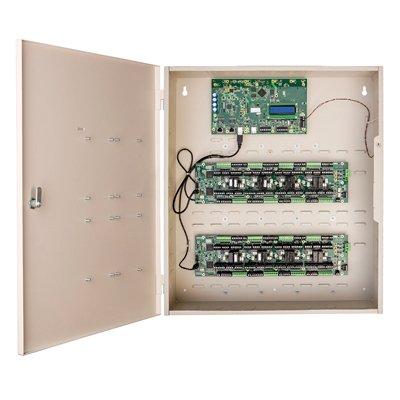
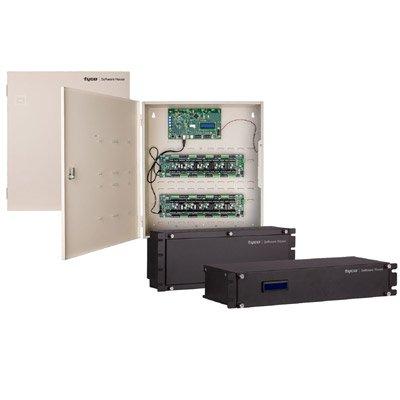

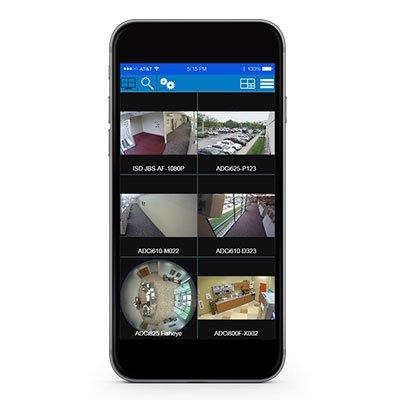
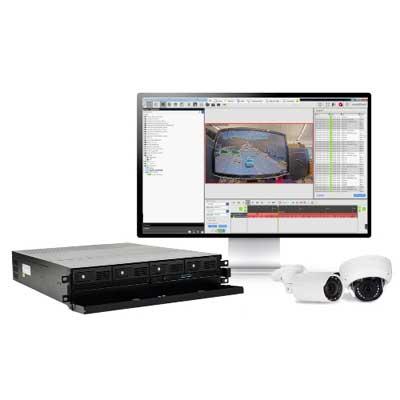

Round table discussion

If recent physical security events are a guide, the topic of artificial intelligence (AI) will be everywhere at the upcoming ISC West 2025 exhibition in Las Vegas. Cybersecurity solutions are another core focus at today's physical security events, and ISC West will likely follow the trend. Attendees will also be looking for advancements in access control systems, including biometric technologies and integrated security platforms, among other hot topics. We asked our Expert Panel Roundtable: What will be the big topics of discussion at ISC West 2025?

Technology innovations and an evolving threat landscape will be core factors impacting the physical security market in 2025. Technology elements such as artificial intelligence (AI), multi-factor access control, and mobile devices will continue to drive growth in the greater industry. We asked our Expert Panel Roundtable: What is the outlook for the physical security industry in the year ahead?

Trust is the foundation of successful relationships between buyers and sellers in the security marketplace. Trust facilitates collaboration, reduces risk, improves decision-making, and ultimately drives business growth and profitability. Transactions often involve significant investments, and trust minimizes the perceived risk for buyers, making them more likely to commit to a purchase. Our Expert Panelists weigh in on the subject of trust in response to this week’s Roundtable: A security end user asks: How trustworthy are integrators and/or manufacturers?