
There are many notable trends on the horizon for the physical security and surveillance industry. In the growing area of low-latency live video streaming applications, we will see the continued move to HTML5 playback. For the security industry, live video streaming is an enabling technology that provides many opportunities for dealers and integrators to leverage additional services for the customers.
Flash’s Loss, HTML5’s Gain
To be effective, the technology needs to be able to stream consistently and reliably from a variety of devices, platforms, browsers and mediums, such as NVRs, on-premise servers or the cloud. HTML5 is now an effective replacement for often-vulnerable Flash browser technology in live streaming workflows.
Flash, a plug-in to current browsers, has been a lightning rod for hacking vulnerabilities and malware. As such, most modern browser providers have begun to disable Flash by default, requiring additional actions by users, while support for the technology may be discontinued altogether in the near future.
HTML5 implementations can be either cloud-based, or peer-to-peer streamed without Flash technology. Users who can stream live from camera to their choice of device, while enabling low-latency HTML5, gain greater efficiencies and less-expensive platform bandwidth costs.Support for Flash-based technology may be discontinued altogether in the near future
Traditional Security Integration
In addition, peering live streaming video directly from on-premises cameras and NVRs will take off for security applications, based, in part, on the significant reductions possible in direct operating costs, and a lower total cost of ownership for the end user.
Peer-to-peer streaming reduces bandwidth costs and infrastructure requirements by streaming directly from IP cameras, mobile devices, drones, loT devices, to browsers, phones and tablets. It effectively removes implementation challenges from the physical IT infrastructure, while still permitting precise client control of content.
Other significant trends will include continued integration of traditional security and live video streaming products and applications into emerging home automation standards including Apple’s HomeKit, Google’s Home and Amazon’s Alexa. We will also see the ongoing move to metadata-driven analytics and smarter, real-time event notifications directly benefitting the physical security industry and providing a deeper, more targeted proactive response.
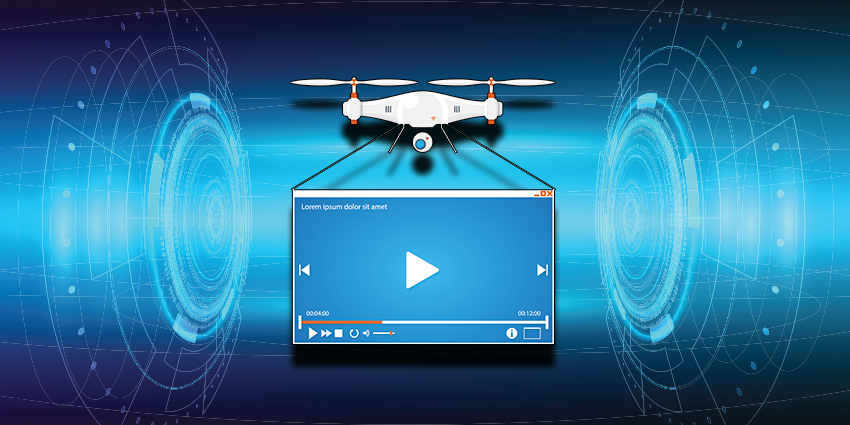 |
| Peer-to-peer streaming reduces bandwidth costs and infrastructure requirements by streaming directly from drones to browsers |
Winners And Losers
These will be the losers in 2018: manufacturers or software providers who continue using Flash-based players will begin losing significant market share; any company not looking to be more open with their integrations and APIs will lose ground as deployments become increasingly interconnected.
EvoStream In 2018
Last year was significant for EvoStream in peer-to-peer live video streaming, as we continued our goal to migrate OEMs off heavy back-end streaming and into peering workflows. As the market has become educated on the advantages, they have clearly stepped up to using metadata software that brings additional intelligence which results in reduced bandwidth requirements, high scalability and flexible deployments.Manufacturers or software providers who continue using Flash-based players will begin losing significant market share in 2018
We have continued to focus not only on peer video, but taking it to the next level – providing the metadata, commands and other various channels necessary to fully replace existing robust streaming back-ends – and this strategy made a big difference for us in the win column for 2017.
Much of the challenge for our company has revolved around the spotty support for both WebRTC and low-latency video streaming in HTML5. We’ve had to do more media player creation than we otherwise would have liked, to allow for the one-to-two second latencies we now can achieve in video-streaming surveillance from lens-to-lens.
Looking further into 2018 we’ll be interested in some of the emerging Forward Error Correction (FEC) protocols like SRT and how they can improve streaming directly from cameras and NVRs. In 2018 we’ll also be bringing easier integrations to connect devices embedding our software to home automation platforms such as Apple HomeKit, Google Home and Alexa.